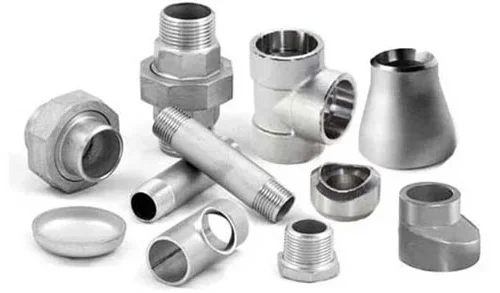
Industrial Applications of Alloy Steel Pipe Fittings
Alloy steel fittings are used in industrial systems where thermal stress, pressure and long-term mechanical performance influence material selection.
Power Generation: Suitable alloy steel components are used in steam piping, boiler-related systems and other pressure-containing applications operating at elevated temperatures.
Oil and Gas Industry: Alloy steel fittings and forged components are considered for compatible process systems, refinery installations and pressure-piping assemblies.
Petrochemical Plants: Chromium-molybdenum grades are used in selected process lines and equipment where elevated-temperature strength and material stability are required.
Refineries: Alloy steel components can support compatible heater systems, process piping and other installations exposed to thermal and mechanical stress.
Boilers and Steam Systems: Appropriate grades are selected for specified pressure and temperature conditions, with attention to creep performance and design-code requirements.
Industrial Heating Equipment: Selected alloy grades are used in thermal systems where oxidation resistance, temperature exposure and mechanical loading must be considered together.
Material selection should always account for the full operating envelope, including design pressure, temperature, thermal cycling, corrosion exposure and fabrication requirements.
Technical Specifications and Purchasing Requirements
When ordering alloy steel pipe fittings, confirming the material specification, product form and dimensional standard is essential.
Important purchasing details include:
- Material grade: F1, F5, F9, F11, F22 or F91, as specified for the required product.
- Product specification: ASTM A182/ASME SA182 for applicable forged components, or ASTM A234/ASME SA234 for qualifying wrought fittings.
- Fitting configuration: Elbow, tee, reducer, cap or another specified component.
- Dimensions: Nominal pipe size, wall thickness, schedule and fitting geometry.
- Dimensional standard: ASME B16.9 for qualifying factory-made wrought butt-welding fittings, or the relevant standard for the actual component.
- Heat treatment: The treatment required for the specified grade and applicable material standard.
- Inspection and testing: Dimensional inspection, chemical analysis, mechanical testing and additional requirements specified by the project.
- Documentation: Material test certificates, heat-number traceability and inspection records, where required.
For F91 and other high-temperature alloy steels, heat treatment and mechanical-property verification are especially important. The applicable requirements should be confirmed against the governing material specification and purchase order.