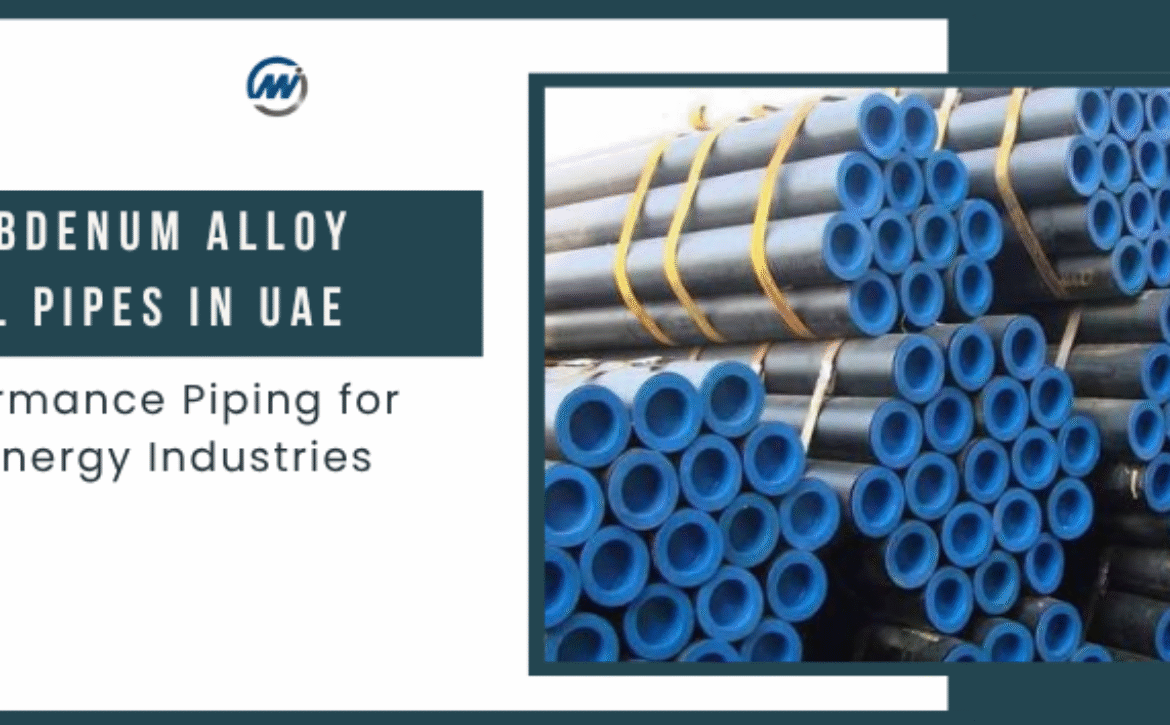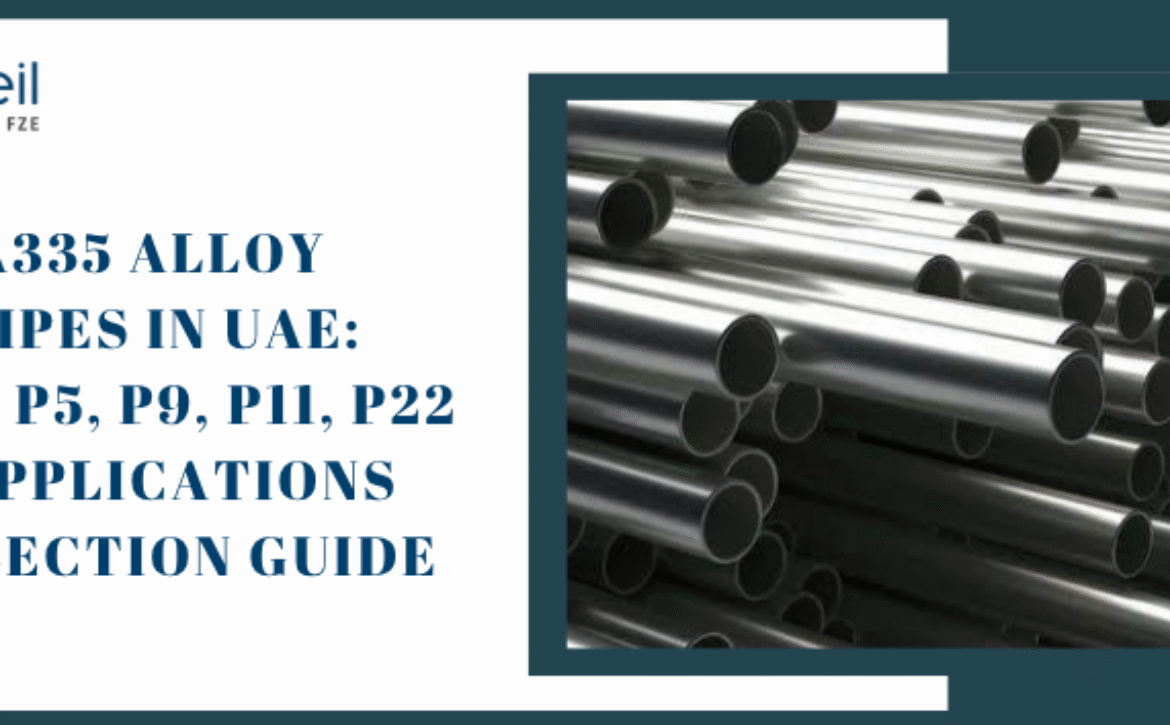
ASME SA335 Alloy Steel Pipes in UAE: Grades P5, P9, P11, P22 & P91, Applications and Selection Guide
When piping systems operate continuously under high temperature and pressure, material selection becomes critical. Conventional carbon steel may not provide the required long-term performance in demanding applications such as power plants, refineries, petrochemical units, boilers, and high-temperature process systems.
ASME SA335 alloy steel pipes are developed for these demanding services. Mcneil Alloys supplies ASME SA335 P5, P9, P11, P22, and P91 alloy steel pipes in the UAE, supporting local and export projects from its Sharjah facility.
What Are ASME SA335 Alloy Steel Pipes?
ASME SA335 is used for ferritic alloy steel pipes intended for high-temperature service. The grades supplied by Mcneil Alloys are chromium-molybdenum alloy steels designed to provide strength, heat resistance, and stability under demanding operating conditions.
The product range includes:
- ASME SA335 P5
- ASME SA335 P9
- ASME SA335 P11
- ASME SA335 P22
- ASME SA335 P91
These grades are used across power generation, refining, petrochemical processing, and other industrial applications where piping must withstand sustained thermal and mechanical stress.
Why Choose Alloy Steel Pipes for High-Temperature Applications?
High-temperature piping is exposed to more than just heat. Continuous temperature and pressure can affect mechanical strength, dimensional stability, and long-term service performance.
Chromium-molybdenum alloy steel grades are selected because they provide a combination of:
- High-temperature strength
- Resistance to oxidation and scaling
- Long-term structural stability
- Creep resistance
- Resistance to thermal stress
- Reliable performance under pressure
The exact performance depends on the grade and the actual operating conditions of the system.
ASME SA335 P5 Alloy Steel Pipes
P5 alloy steel pipes are intended for elevated-temperature applications where oxidation resistance and thermal stability are important.
Mcneil Alloys lists P5 with 4–6% chromium and 0.45–0.65% molybdenum. Its published specifications include a temperature range up to 600°C, minimum tensile strength of 415 MPa, minimum yield strength of 205 MPa, and maximum hardness of 85 HRB.
Typical Applications
P5 pipes are commonly used for:
- Heat exchangers
- Boilers
- Refinery piping
- High-temperature process systems
They are suitable for systems operating under relatively steady elevated-temperature conditions where material stability is important.
ASME SA335 P9 Alloy Steel Pipes
P9 provides increased chromium and molybdenum compared with P5.
Mcneil Alloys specifies approximately 8–10% chromium and 0.9–1.1% molybdenum for P9. Its published temperature range extends up to 650°C, with minimum tensile strength of 415 MPa, minimum yield strength of 205 MPa, and maximum hardness of 90 HRB.
Typical Applications
P9 pipes are used in:
- Refinery process lines
- Power plant systems
- Hot process piping
- Industrial systems operating continuously at elevated temperatures
The higher chromium content provides improved resistance to oxidation and surface scaling in high-temperature service.
ASME SA335 P11 Alloy Steel Pipes
P11 is widely specified for applications involving both elevated temperature and pressure.
Mcneil Alloys lists P11 with 1–1.5% chromium and 0.44–0.65% molybdenum. Its published specifications include a temperature range up to 600°C, minimum tensile strength of 415 MPa, minimum yield strength of 205 MPa, and maximum hardness of 85 HRB.
Applications of P11 Pipes
P11 alloy steel pipes are commonly used in:
- Steam lines
- Boilers
- Superheaters
- Power generation systems
- High-temperature pressure piping
P11 is particularly useful where long operating cycles expose piping to sustained heat and pressure.
ASME SA335 P22 Alloy Steel Pipes
P22 is intended for more severe operating conditions where high temperature, pressure, thermal cycling, and mechanical stress are significant.
Mcneil Alloys lists P22 with 1.9–2.6% chromium and 0.87–1.13% molybdenum. The published specifications include operation up to 650°C, minimum tensile strength of 415 MPa, minimum yield strength of 205 MPa, and maximum hardness of 90 HRB.
Applications of P22 Pipes
P22 is widely used in:
- Main steam lines
- Reheater systems
- Power plants
- Refineries
- Critical high-temperature piping
Its high-temperature performance and creep strength make it suitable for demanding thermal service.
ASME SA335 P91 Alloy Steel Pipes
P91 is designed for some of the most demanding temperature and pressure conditions in the P-series range.
Mcneil Alloys lists P91 with 8–9.5% chromium, 0.85–1.05% molybdenum, along with vanadium and niobium. The published specifications include a temperature range up to 700°C, minimum tensile strength of 620 MPa, minimum yield strength of 440 MPa, and maximum hardness of 100 HRB.
Applications of P91 Pipes
P91 is used in:
- Supercritical power plants
- Ultra-supercritical systems
- High-pressure steam systems
- Advanced industrial systems
- Critical high-temperature piping
Its high creep resistance and strength make it suitable for applications requiring long-term structural stability at elevated temperatures.
P5 vs P9 vs P11 vs P22 vs P91
| Grade | Chromium | Molybdenum | Published Temperature Range | Typical Applications |
| P5 | 4–6% | 0.45–0.65% | Up to 600°C | Heat exchangers, boilers, refineries |
| P9 | 8–10% | 0.9–1.1% | Up to 650°C | Refineries, power plants |
| P11 | 1–1.5% | 0.44–0.65% | Up to 600°C | Steam lines, boilers, superheaters |
| P22 | 1.9–2.6% | 0.87–1.13% | Up to 650°C | Main steam, reheaters |
| P91 | 8–9.5% | 0.85–1.05% | Up to 700°C | Supercritical power systems |
These specifications are based on Mcneil Alloys’ published product information. Actual allowable operating conditions must be established using the applicable design code and project requirements.
Applications of ASME SA335 Alloy Steel Pipes in the UAE
The UAE has extensive oil & gas, refining, petrochemical, power-generation, and industrial infrastructure. High-temperature alloy steel pipes are therefore relevant to projects where piping systems must operate reliably under demanding conditions.
Power Generation
ASME SA335 pipes can be used in:
- Boilers
- Superheaters
- Steam lines
- Main steam systems
- Reheaters
- High-temperature power piping
P11, P22, and P91 are particularly associated with increasingly demanding steam and power-generation services.
Refineries
Refinery process systems can involve continuous exposure to elevated temperatures and pressure.
Applications include:
- Hot process lines
- Refinery piping
- Steam systems
- Heat-transfer systems
- Critical replacement piping
P5 and P9 are specifically identified by Mcneil Alloys for refinery-related applications.
Petrochemical Plants
Petrochemical units require piping materials capable of handling demanding process conditions.
SA335 alloy steel grades can be used for appropriate:
- Process lines
- Steam systems
- High-temperature piping
- Pressure systems
- Thermal processing equipment
ASME SA335 Pipes for Shutdown and Replacement Projects
Material availability becomes particularly important during refinery and power-plant shutdowns.
When equipment is offline for scheduled maintenance, incorrect materials or missing documentation can delay installation and extend downtime.
Mcneil Alloys highlights replacement piping during shutdowns as one application for its SA335 range and emphasizes material condition, inspection documentation, and supply coordination for UAE and export projects.
Technical Specifications
Mcneil Alloys’ published specifications for the individual grades include the following:
| Grade | Tensile Strength | Yield Strength | Hardness |
| P5 | ≥ 415 MPa | ≥ 205 MPa | ≤ 85 HRB |
| P9 | ≥ 415 MPa | ≥ 205 MPa | ≤ 90 HRB |
| P11 | ≥ 415 MPa | ≥ 205 MPa | ≤ 85 HRB |
| P22 | ≥ 415 MPa | ≥ 205 MPa | ≤ 90 HRB |
| P91 | ≥ 620 MPa | ≥ 440 MPa | ≤ 100 HRB |
All five grades are listed to ASTM A335 / ASME SA335 on the product page.
What Should You Consider When Selecting an SA335 Grade?
Choosing between P5, P9, P11, P22, and P91 should be based on the actual operating conditions.
Operating Temperature
Determine normal, maximum, and design temperatures.
Operating Pressure
Confirm the system’s design pressure and required pipe wall thickness.
Thermal Cycling
Frequent heating and cooling can introduce additional thermal stresses.
Service Life
Long-duration operation under heat and pressure requires careful consideration of creep and long-term mechanical performance.
Process Conditions
The process medium and operating environment should also be reviewed when selecting the material.
Applicable Standards
Confirm the required ASTM, ASME, EPC, end-user, and project specifications before procurement.
Heat Treatment and Inspection
For high-temperature pressure piping, documentation and inspection are as important as the material grade.
Mcneil Alloys states that its SA335 pipes are supplied with material test certificates containing chemical and mechanical test results. Additional requirements such as PMI, NDT, and supplementary inspection reports can be arranged according to project or client specifications.
For critical projects, buyers should clearly specify requirements for:
- Material Test Certificates
- Chemical analysis
- Mechanical testing
- Heat treatment
- PMI
- NDT
- Hydrostatic testing
- Dimensional inspection
- Third-party inspection
- Material traceability
Why Choose Mcneil Alloys for ASME SA335 Pipes in UAE?
Mcneil Alloys supplies ASME SA335 P5, P9, P11, P22, and P91 alloy steel pipes in the UAE, with supply coordinated from its UAE facility in Sharjah. The company also supports export projects.
According to its published product information, Mcneil Alloys focuses on:
- Helping customers select the appropriate SA335 grade
- Proper heat treatment
- Inspection-ready documentation
- Material traceability
- Project-specific requirements
- UAE and export supply
- Packing and marking for shipping and site requirements
The company lists its address as SAIF-Zone, Sharjah, UAE.
Conclusion
ASME SA335 alloy steel pipes are designed for high-temperature and high-pressure piping applications where long-term strength and material stability are essential.
The P5, P9, P11, P22, and P91 grades cover a broad range of demanding applications. P5 and P9 are commonly used for elevated-temperature refinery and process services, P11 is widely used in boilers and steam systems, P22 is suited to more severe steam and thermal conditions, while P91 is designed for demanding applications such as supercritical and ultra-supercritical power systems.
For UAE projects, the correct grade should be determined by considering temperature, pressure, thermal cycling, service life, process conditions, applicable standards, heat treatment, and inspection requirements.
Mcneil Alloys supplies ASME SA335 P5, P9, P11, P22, and P91 alloy steel pipes in the UAE and for export projects, with documentation and inspection requirements coordinated according to project specifications.
Frequently Asked Questions
What are ASME SA335 alloy steel pipes used for?
They are used in high-temperature and high-pressure systems such as boilers, steam lines, refineries, power plants, reheaters, superheaters, and petrochemical process systems.
Which SA335 grades does Mcneil Alloys supply?
Mcneil Alloys lists P5, P9, P11, P22, and P91 grades.
What is the difference between P11 and P22?
P11 is commonly used for high-pressure steam, boilers, and superheaters, while P22 is intended for more severe service involving higher thermal stress and demanding main steam and reheater applications.
What is P91 alloy steel pipe used for?
P91 is used for extreme temperature and pressure applications where high creep resistance and long-term structural stability are required, including supercritical and ultra-supercritical systems.
What standards apply to these pipes?
Mcneil Alloys lists ASTM A335 / ASME SA335 for its P5, P9, P11, P22, and P91 alloy steel pipes.
Does Mcneil Alloys supply SA335 pipes in the UAE?
Yes. The company states that it supplies ASME SA335 alloy steel pipes across the UAE and also supports export projects.
What documents are available with SA335 pipes?
The company states that material test certificates containing chemical and mechanical test results are supplied, while PMI, NDT, and supplementary inspection reports can be arranged according to project requirements.
Where is Mcneil Alloys located?
Mcneil Alloys lists its address as SAIF-Zone, Sharjah, UAE.