Manufacturer & Exporters of:
Instrumentation Pipe Fittings & Valves

Category: Pipes

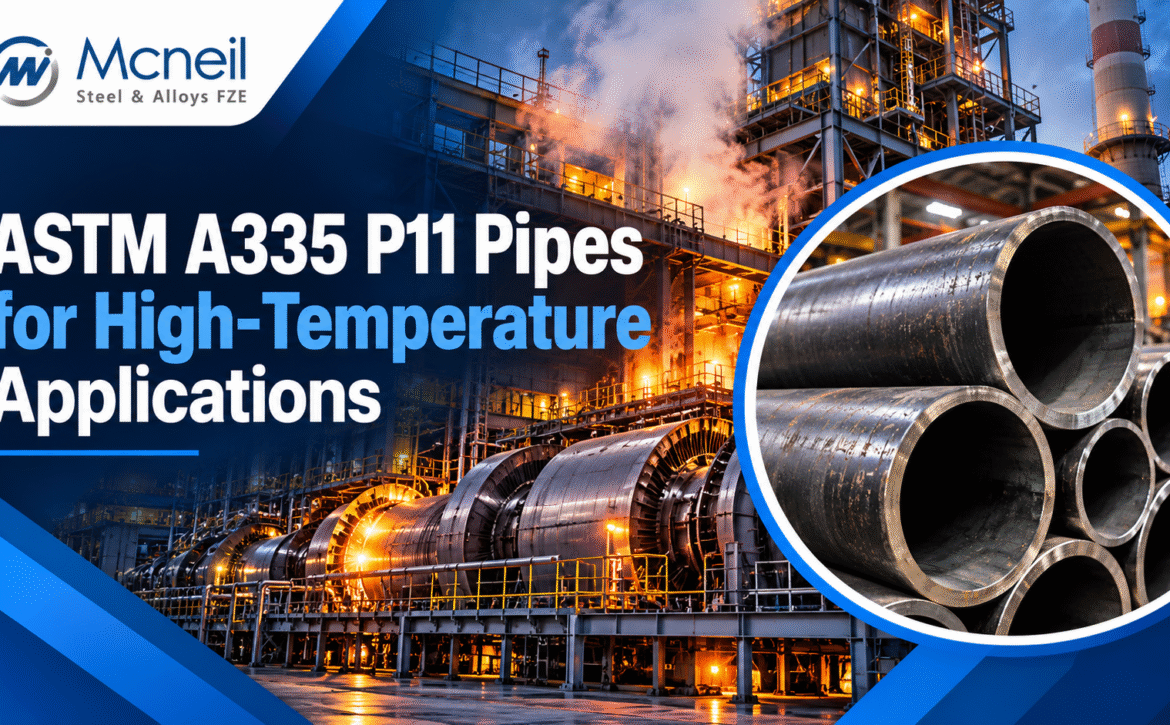
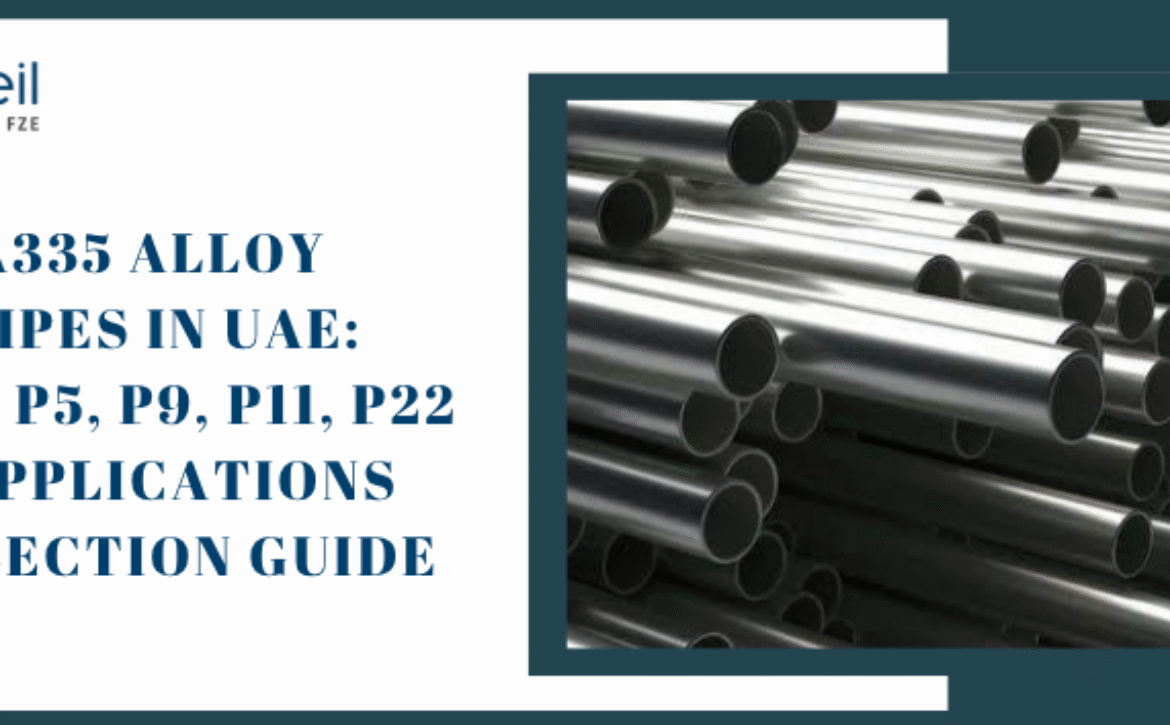
ASME SA335 Alloy Steel Pipes in UAE: Grades P5, P9, P11, P22 & P91, Applications and Selection Guide

When piping systems operate continuously under high temperature and pressure, material selection becomes critical. Conventional carbon steel may not provide the required long-term performance in demanding applications such as power plants, refineries, petrochemical units, boilers, and high-temperature process systems.

ASME SA335 alloy steel pipes are developed for these demanding services. Mcneil Alloys supplies ASME SA335 P5, P9, P11, P22, and P91 alloy steel pipes in the UAE, supporting local and export projects from its Sharjah facility.

What Are ASME SA335 Alloy Steel Pipes?

ASME SA335 is used for ferritic alloy steel pipes intended for high-temperature service. The grades supplied by Mcneil Alloys are chromium-molybdenum alloy steels designed to provide strength, heat resistance, and stability under demanding operating conditions.

The product range includes:

  • ASME SA335 P5
  • ASME SA335 P9
  • ASME SA335 P11
  • ASME SA335 P22
  • ASME SA335 P91

These grades are used across power generation, refining, petrochemical processing, and other industrial applications where piping must withstand sustained thermal and mechanical stress.

Why Choose Alloy Steel Pipes for High-Temperature Applications?

High-temperature piping is exposed to more than just heat. Continuous temperature and pressure can affect mechanical strength, dimensional stability, and long-term service performance.

Chromium-molybdenum alloy steel grades are selected because they provide a combination of:

  • High-temperature strength
  • Resistance to oxidation and scaling
  • Long-term structural stability
  • Creep resistance
  • Resistance to thermal stress
  • Reliable performance under pressure

The exact performance depends on the grade and the actual operating conditions of the system.

ASME SA335 P5 Alloy Steel Pipes

P5 alloy steel pipes are intended for elevated-temperature applications where oxidation resistance and thermal stability are important.

Mcneil Alloys lists P5 with 4–6% chromium and 0.45–0.65% molybdenum. Its published specifications include a temperature range up to 600°C, minimum tensile strength of 415 MPa, minimum yield strength of 205 MPa, and maximum hardness of 85 HRB.

Typical Applications

P5 pipes are commonly used for:

  • Heat exchangers
  • Boilers
  • Refinery piping
  • High-temperature process systems

They are suitable for systems operating under relatively steady elevated-temperature conditions where material stability is important.

ASME SA335 P9 Alloy Steel Pipes

P9 provides increased chromium and molybdenum compared with P5.

Mcneil Alloys specifies approximately 8–10% chromium and 0.9–1.1% molybdenum for P9. Its published temperature range extends up to 650°C, with minimum tensile strength of 415 MPa, minimum yield strength of 205 MPa, and maximum hardness of 90 HRB.

Typical Applications

P9 pipes are used in:

  • Refinery process lines
  • Power plant systems
  • Hot process piping
  • Industrial systems operating continuously at elevated temperatures

The higher chromium content provides improved resistance to oxidation and surface scaling in high-temperature service.

ASME SA335 P11 Alloy Steel Pipes

P11 is widely specified for applications involving both elevated temperature and pressure.

Mcneil Alloys lists P11 with 1–1.5% chromium and 0.44–0.65% molybdenum. Its published specifications include a temperature range up to 600°C, minimum tensile strength of 415 MPa, minimum yield strength of 205 MPa, and maximum hardness of 85 HRB.

Applications of P11 Pipes

P11 alloy steel pipes are commonly used in:

  • Steam lines
  • Boilers
  • Superheaters
  • Power generation systems
  • High-temperature pressure piping

P11 is particularly useful where long operating cycles expose piping to sustained heat and pressure.

ASME SA335 P22 Alloy Steel Pipes

P22 is intended for more severe operating conditions where high temperature, pressure, thermal cycling, and mechanical stress are significant.

Mcneil Alloys lists P22 with 1.9–2.6% chromium and 0.87–1.13% molybdenum. The published specifications include operation up to 650°C, minimum tensile strength of 415 MPa, minimum yield strength of 205 MPa, and maximum hardness of 90 HRB.

Applications of P22 Pipes

P22 is widely used in:

  • Main steam lines
  • Reheater systems
  • Power plants
  • Refineries
  • Critical high-temperature piping

Its high-temperature performance and creep strength make it suitable for demanding thermal service.

ASME SA335 P91 Alloy Steel Pipes

P91 is designed for some of the most demanding temperature and pressure conditions in the P-series range.

Mcneil Alloys lists P91 with 8–9.5% chromium, 0.85–1.05% molybdenum, along with vanadium and niobium. The published specifications include a temperature range up to 700°C, minimum tensile strength of 620 MPa, minimum yield strength of 440 MPa, and maximum hardness of 100 HRB.

Applications of P91 Pipes

P91 is used in:

  • Supercritical power plants
  • Ultra-supercritical systems
  • High-pressure steam systems
  • Advanced industrial systems
  • Critical high-temperature piping

Its high creep resistance and strength make it suitable for applications requiring long-term structural stability at elevated temperatures.

P5 vs P9 vs P11 vs P22 vs P91

Grade Chromium Molybdenum Published Temperature Range Typical Applications
P5 4–6% 0.45–0.65% Up to 600°C Heat exchangers, boilers, refineries
P9 8–10% 0.9–1.1% Up to 650°C Refineries, power plants
P11 1–1.5% 0.44–0.65% Up to 600°C Steam lines, boilers, superheaters
P22 1.9–2.6% 0.87–1.13% Up to 650°C Main steam, reheaters
P91 8–9.5% 0.85–1.05% Up to 700°C Supercritical power systems

These specifications are based on Mcneil Alloys’ published product information. Actual allowable operating conditions must be established using the applicable design code and project requirements.

Applications of ASME SA335 Alloy Steel Pipes in the UAE

The UAE has extensive oil & gas, refining, petrochemical, power-generation, and industrial infrastructure. High-temperature alloy steel pipes are therefore relevant to projects where piping systems must operate reliably under demanding conditions.

Power Generation

ASME SA335 pipes can be used in:

  • Boilers
  • Superheaters
  • Steam lines
  • Main steam systems
  • Reheaters
  • High-temperature power piping

P11, P22, and P91 are particularly associated with increasingly demanding steam and power-generation services.

Refineries

Refinery process systems can involve continuous exposure to elevated temperatures and pressure.

Applications include:

  • Hot process lines
  • Refinery piping
  • Steam systems
  • Heat-transfer systems
  • Critical replacement piping

P5 and P9 are specifically identified by Mcneil Alloys for refinery-related applications.

Petrochemical Plants

Petrochemical units require piping materials capable of handling demanding process conditions.

SA335 alloy steel grades can be used for appropriate:

  • Process lines
  • Steam systems
  • High-temperature piping
  • Pressure systems
  • Thermal processing equipment

ASME SA335 Pipes for Shutdown and Replacement Projects

Material availability becomes particularly important during refinery and power-plant shutdowns.

When equipment is offline for scheduled maintenance, incorrect materials or missing documentation can delay installation and extend downtime.

Mcneil Alloys highlights replacement piping during shutdowns as one application for its SA335 range and emphasizes material condition, inspection documentation, and supply coordination for UAE and export projects.

Technical Specifications

Mcneil Alloys’ published specifications for the individual grades include the following:

Grade Tensile Strength Yield Strength Hardness
P5 ≥ 415 MPa ≥ 205 MPa ≤ 85 HRB
P9 ≥ 415 MPa ≥ 205 MPa ≤ 90 HRB
P11 ≥ 415 MPa ≥ 205 MPa ≤ 85 HRB
P22 ≥ 415 MPa ≥ 205 MPa ≤ 90 HRB
P91 ≥ 620 MPa ≥ 440 MPa ≤ 100 HRB

All five grades are listed to ASTM A335 / ASME SA335 on the product page.

What Should You Consider When Selecting an SA335 Grade?

Choosing between P5, P9, P11, P22, and P91 should be based on the actual operating conditions.

Operating Temperature

Determine normal, maximum, and design temperatures.

Operating Pressure

Confirm the system’s design pressure and required pipe wall thickness.

Thermal Cycling

Frequent heating and cooling can introduce additional thermal stresses.

Service Life

Long-duration operation under heat and pressure requires careful consideration of creep and long-term mechanical performance.

Process Conditions

The process medium and operating environment should also be reviewed when selecting the material.

Applicable Standards

Confirm the required ASTM, ASME, EPC, end-user, and project specifications before procurement.

Heat Treatment and Inspection

For high-temperature pressure piping, documentation and inspection are as important as the material grade.

Mcneil Alloys states that its SA335 pipes are supplied with material test certificates containing chemical and mechanical test results. Additional requirements such as PMI, NDT, and supplementary inspection reports can be arranged according to project or client specifications.

For critical projects, buyers should clearly specify requirements for:

  • Material Test Certificates
  • Chemical analysis
  • Mechanical testing
  • Heat treatment
  • PMI
  • NDT
  • Hydrostatic testing
  • Dimensional inspection
  • Third-party inspection
  • Material traceability

Why Choose Mcneil Alloys for ASME SA335 Pipes in UAE?

Mcneil Alloys supplies ASME SA335 P5, P9, P11, P22, and P91 alloy steel pipes in the UAE, with supply coordinated from its UAE facility in Sharjah. The company also supports export projects.

According to its published product information, Mcneil Alloys focuses on:

  • Helping customers select the appropriate SA335 grade
  • Proper heat treatment
  • Inspection-ready documentation
  • Material traceability
  • Project-specific requirements
  • UAE and export supply
  • Packing and marking for shipping and site requirements

The company lists its address as SAIF-Zone, Sharjah, UAE.

Conclusion

ASME SA335 alloy steel pipes are designed for high-temperature and high-pressure piping applications where long-term strength and material stability are essential.

The P5, P9, P11, P22, and P91 grades cover a broad range of demanding applications. P5 and P9 are commonly used for elevated-temperature refinery and process services, P11 is widely used in boilers and steam systems, P22 is suited to more severe steam and thermal conditions, while P91 is designed for demanding applications such as supercritical and ultra-supercritical power systems.

For UAE projects, the correct grade should be determined by considering temperature, pressure, thermal cycling, service life, process conditions, applicable standards, heat treatment, and inspection requirements.

Mcneil Alloys supplies ASME SA335 P5, P9, P11, P22, and P91 alloy steel pipes in the UAE and for export projects, with documentation and inspection requirements coordinated according to project specifications.

Frequently Asked Questions

What are ASME SA335 alloy steel pipes used for?

They are used in high-temperature and high-pressure systems such as boilers, steam lines, refineries, power plants, reheaters, superheaters, and petrochemical process systems.

Which SA335 grades does Mcneil Alloys supply?

Mcneil Alloys lists P5, P9, P11, P22, and P91 grades.

What is the difference between P11 and P22?

P11 is commonly used for high-pressure steam, boilers, and superheaters, while P22 is intended for more severe service involving higher thermal stress and demanding main steam and reheater applications.

What is P91 alloy steel pipe used for?

P91 is used for extreme temperature and pressure applications where high creep resistance and long-term structural stability are required, including supercritical and ultra-supercritical systems.

What standards apply to these pipes?

Mcneil Alloys lists ASTM A335 / ASME SA335 for its P5, P9, P11, P22, and P91 alloy steel pipes.

Does Mcneil Alloys supply SA335 pipes in the UAE?

Yes. The company states that it supplies ASME SA335 alloy steel pipes across the UAE and also supports export projects.

What documents are available with SA335 pipes?

The company states that material test certificates containing chemical and mechanical test results are supplied, while PMI, NDT, and supplementary inspection reports can be arranged according to project requirements.

Where is Mcneil Alloys located?

Mcneil Alloys lists its address as SAIF-Zone, Sharjah, UAE.

Read More
admin August 27, 2026 0 Comments

Molybdenum Steel Pipes P5, P9, P11, P22 & P91: Properties, Applications and Selection Guide


Molybdenum steel pipes are designed for industrial systems where conventional piping materials may not provide sufficient performance under sustained heat and pressure. The chromium-molybdenum P-series grades P5, P9, P11, P22, and P91 are commonly specified for high-temperature piping in power generation, refineries, boilers, steam systems, and other demanding process applications.
Mcneil Alloys manufactures and supplies these molybdenum-grade pipes from the UAE for local and export projects. Its product range covers ASTM A335 / ASME SA335 P5, P9, P11, P22, and P91 grades.

What Are Molybdenum Steel Pipes?

Molybdenum steel pipes are alloy steel pipes containing molybdenum, often alongside chromium and other alloying elements. These additions help the material retain strength when operating temperatures rise and the piping remains under load for extended periods.
The P-series grades are pressure-piping materials, with different grades intended for different levels of temperature, pressure, thermal stress, and long-term service requirements.
Mcneil Alloys supplies:
P5 Molybdenum Grade Pipes
P9 Molybdenum Grade Pipes
P11 Molybdenum Grade Pipes
P22 Molybdenum Grade Pipes
P91 Molybdenum Grade Pipes

Why Is Molybdenum Added to Alloy Steel Pipes?

Molybdenum helps alloy steel maintain its mechanical performance at elevated temperatures. This becomes particularly important when a piping system operates continuously under pressure and heat.
In practical terms, molybdenum-grade pipes are selected when the system needs:
High-temperature strength
Long-term structural stability
Resistance to deformation
Improved creep performance
Reliable operation under sustained thermal loads
The specific performance depends on the grade and its complete alloy chemistry.

Molybdenum Grade P5 Pipes

P5 is a chromium-molybdenum alloy steel pipe grade used for elevated-temperature service.
Mcneil Alloys lists P5 with approximately 4–6% chromium and 0.45–0.65% molybdenum. Its published technical information specifies a temperature range of up to 600°C, tensile strength of at least 415 MPa, yield strength of at least 205 MPa, and hardness up to 85 HRB.
Common Applications
P5 pipes are used in:
Refinery piping
Heat exchangers
Process systems
High-temperature industrial piping
P5 is generally considered where elevated temperature is present but operating conditions remain relatively steady.

Molybdenum Grade P9 Pipes

P9 contains a higher chromium and molybdenum content than P5.
Mcneil Alloys specifies approximately 8–10% chromium and 0.9–1.1% molybdenum, with a published temperature range up to 650°C. The listed minimum tensile strength is 415 MPa, minimum yield strength is 205 MPa, and maximum hardness is 90 HRB.
Applications
P9 pipes are commonly used in:
Hot process lines
Refinery units
Power-related installations
High-temperature piping systems
The grade is selected where prolonged high-temperature operation requires greater heat resistance than lower-alloy options.

Molybdenum Grade P11 Pipes

P11 is a widely used chromium-molybdenum grade for applications involving both elevated temperature and pressure.
Mcneil Alloys lists P11 with approximately 1–1.5% chromium and 0.44–0.65% molybdenum. Its published specifications give a temperature range up to 600°C, minimum tensile strength of 415 MPa, minimum yield strength of 205 MPa, and maximum hardness of 85 HRB.
Typical Applications
Boilers
Steam lines
Power plants
Industrial steam systems
High-temperature process piping
P11 is particularly useful where the piping system operates continuously under combined heat and pressure.

Molybdenum Grade P22 Pipes

P22 is a higher-alloy chromium-molybdenum pipe grade used for more demanding thermal and mechanical conditions.
Mcneil Alloys specifies approximately 1.9–2.6% chromium and 0.87–1.13% molybdenum for P22. The published technical data gives a temperature range up to 650°C, minimum tensile strength of 415 MPa, minimum yield strength of 205 MPa, and maximum hardness of 90 HRB.
Applications
P22 is commonly used for:
Main steam lines
Reheaters
Power systems
Refinery piping
High-load steam systems
The grade is particularly relevant where thermal cycling, stress, and long service life are major considerations.

Molybdenum Grade P91 Pipes

P91 is the highest-performance grade in Mcneil Alloys’ listed P-series range.
Its published composition includes approximately 8–9.5% chromium, 0.85–1.05% molybdenum, with vanadium and niobium. Mcneil Alloys lists a temperature range up to 700°C, minimum tensile strength of 620 MPa, minimum yield strength of 440 MPa, and maximum hardness of 100 HRB.
Applications
P91 pipes are used for severe service conditions, including:
Advanced power generation
Supercritical power plants
High-temperature steam systems
Critical power piping
Applications requiring long-term creep resistance
P91 is selected when temperature and pressure are particularly demanding and long-term structural stability is critical.

P5 vs P9 vs P11 vs P22 vs P91

Grade Chromium Molybdenum Mcneil Listed Temperature Range Typical Applications
P5 4–6% 0.45–0.65% Up to 600°C Refineries, heat exchangers
P9 8–10% 0.9–1.1% Up to 650°C Refineries, power systems
P11 1–1.5% 0.44–0.65% Up to 600°C Boilers, steam lines
P22 1.9–2.6% 0.87–1.13% Up to 650°C Main steam, reheaters
P91 8–9.5% 0.85–1.05% Up to 700°C Advanced power generation
The figures above follow Mcneil Alloys’ published product specifications. Actual allowable service conditions must be determined using the applicable design code, material specification, and project requirements.

Molybdenum Steel Pipes for Power Generation

Power plants are among the most important applications for P-series alloy steel pipes.
Steam systems can operate continuously at elevated temperatures and pressures, creating demanding conditions for piping materials.
Depending on the design requirements, molybdenum grades can be used in:
Boiler systems
Steam lines
Main steam piping
Reheaters
Superheaters
High-temperature power piping
Mcneil Alloys specifically identifies P11, P22, and P91 for increasingly demanding power-generation applications.

Molybdenum Pipes for Refineries

Refineries contain process lines that may remain hot for long periods.
Molybdenum-grade pipes can be used in suitable:
Hot process lines
Refinery units
Steam systems
Heat-transfer systems
High-temperature process piping
P5 and P9 are identified by Mcneil Alloys for refinery and hot-process applications, while P22 is listed for more demanding refinery services.

Molybdenum Pipes for Boilers and Steam Systems

Boiler and steam piping must maintain integrity while exposed to sustained temperature and pressure.
P11 is commonly used for boiler and steam-line applications, while P22 can be selected for more demanding steam systems involving higher stresses and thermal cycling.
The correct grade should always be established from the system’s design temperature, pressure, allowable stresses, code requirements, and service conditions.

Molybdenum Pipes for High-Temperature Process Systems

High-temperature industrial systems place continuous thermal loads on piping.
A suitable Cr-Mo grade can provide the required combination of:
Strength
Thermal stability
Resistance to deformation
Long-term service performance
This is why P-series pipes are generally specified for applications where standard piping materials are not sufficient for the operating conditions.

Benefits of Molybdenum Grade Pipes

High-Temperature Performance

Molybdenum alloying helps these pipes maintain useful mechanical performance at elevated temperatures.
Long-Term Strength
Grades such as P11, P22, and P91 are used where piping remains under heat and pressure for extended operating cycles.
Creep Resistance
Higher grades, particularly P91, are selected for applications where long-term creep resistance is a major design consideration.
Resistance to Thermal Stress
P22 and P91 can be considered for applications involving demanding temperature conditions and thermal cycling.
Industrial Versatility
The P-series range covers applications from refinery and heat-transfer systems through demanding power-generation applications.

ASTM A335 and ASME SA335 Standards

Mcneil Alloys lists ASTM A335 / ASME SA335 as the applicable standards for its P5, P9, P11, P22, and P91 molybdenum-grade pipes.
When specifying these pipes, buyers should confirm the complete project requirement, including:
Grade
Pipe size
Wall thickness
Schedule
Length
Heat-treatment condition
Testing requirements
Inspection requirements
Material certification
Traceability


How to Select the Right Molybdenum Pipe Grade


Grade selection should start with the actual operating conditions.
1. Operating Temperature
Determine normal and maximum operating temperature.
2. Operating Pressure
Confirm the design pressure and required wall thickness.
3. Service Duration
Continuous long-term service places different demands on the material than intermittent operation.
4. Thermal Cycling
Frequent heating and cooling should be considered when selecting the grade.
5. Process Medium
Review the chemical nature of the fluid and potential corrosion mechanisms.
6. Applicable Design Code
Confirm the relevant ASTM, ASME, project, EPC, or end-user requirements.
7. Inspection and Documentation
For critical applications, specify required:
Material test certificates
Chemical analysis
Mechanical testing
Heat-treatment records
NDE
PMI
Third-party inspection
Traceability documentation


Why Choose Mcneil Alloys for Molybdenum Steel Pipes?


Mcneil Alloys states that it manufactures and supplies P5, P9, P11, P22, and P91 molybdenum-grade pipes from the UAE for local and export projects. The company highlights grade selection, heat-treatment condition, testing, documentation, inspection coordination, and material traceability as part of its supply process.
The company is based in SAIF-Zone, Sharjah, UAE, and lists support for UAE projects as well as export orders.

Conclusion

Molybdenum steel pipes are an important choice for industrial piping systems that operate under sustained heat and pressure.
The P5, P9, P11, P22, and P91 grades provide different levels of chromium-molybdenum alloying and are used for different service requirements. P5 and P9 are used in refinery and high-temperature process applications, P11 is widely associated with boilers and steam systems, P22 is used for demanding steam and thermal applications, and P91 is intended for severe conditions such as advanced power-generation systems.
The right grade should never be selected based on temperature alone. Pressure, service duration, thermal cycling, process conditions, creep requirements, applicable codes, heat treatment, and inspection requirements all need to be considered.
Mcneil Alloys supplies ASTM A335 / ASME SA335 molybdenum-grade P5, P9, P11, P22, and P91 pipes in the UAE, supporting both local and export industrial projects.

Frequently Asked Questions


What are molybdenum steel pipes?
Molybdenum steel pipes are alloy steel pipes containing molybdenum and other alloying elements to improve performance in demanding temperature and pressure conditions.
Which molybdenum pipe grades does Mcneil Alloys supply?
Mcneil Alloys lists P5, P9, P11, P22, and P91 grades under its molybdenum steel pipe range.
What are P11 pipes commonly used for?
P11 pipes are commonly used in boilers, steam lines, power plants, and industrial steam systems where high temperature and pressure occur together.
What are P22 pipes used for?
P22 is used for demanding applications such as main steam lines, reheaters, power systems, and critical refinery piping where thermal cycling and durability are important.
What makes P91 different?
P91 is designed for more severe service conditions and is used in advanced power-generation systems where high temperature, pressure, and long-term creep resistance are critical.
What standards apply to these pipes?
Mcneil Alloys lists ASTM A335 / ASME SA335 for its P5, P9, P11, P22, and P91 molybdenum-grade pipes.
Are molybdenum pipes suitable for long-term operation?
Yes. The P-series grades are selected for long-term service in systems that remain under heat and pressure for extended operating cycles, provided the grade and design are appropriate for the actual conditions.
How do I choose between P5, P9, P11, P22 and P91?
Start with the operating temperature, pressure, service duration, thermal cycling, and application. Mcneil Alloys recommends discussing these operating conditions before finalizing the material grade.

Read More
admin August 26, 2026 0 Comments

Inconel Pipes in UAE: P5, P9, P11, P22 & P91 Grades for High-Temperature Industrial Applications

The UAE’s oil and gas, petrochemical, power generation, refinery, and industrial sectors depend on piping systems capable of handling high temperatures, pressure, and demanding operating conditions. Selecting the right alloy steel pipe is therefore critical for maintaining system reliability and long-term performance.

ASTM A335 alloy steel pipes in grades P5, P9, P11, P22, and P91 are designed for elevated-temperature service and are widely considered for applications involving steam, boilers, power generation, refineries, and petrochemical processing.

Mcneil Alloys supplies alloy steel pipes in these grades for industrial requirements across the UAE and Gulf region. Its published UAE pipe information covers P5, P9, P11, P12, P21, P22 and P91 grades and identifies applications across oil & gas, petrochemical, chemical processing, power generation, marine, and infrastructure industries.

What Are P5, P9, P11, P22 and P91 Alloy Steel Pipes?

These grades are chromium-molybdenum alloy steels used where piping needs to maintain mechanical performance at elevated temperatures.

The addition of chromium and molybdenum helps improve properties such as high-temperature strength, oxidation resistance, and resistance to degradation during prolonged service.

The major grades covered by Mcneil Alloys include:

  • ASTM A335 P5
  • ASTM A335 P9
  • ASTM A335 P11
  • ASTM A335 P22
  • ASTM A335 P91

The correct grade depends on the application’s temperature, pressure, process medium, design requirements, and applicable specifications.

ASTM A335 P5 Pipes in UAE

P5 alloy steel pipe contains approximately 4–6% chromium and 0.45–0.65% molybdenum according to Mcneil Alloys’ published technical information.

Its chromium-molybdenum composition makes it suitable for selected elevated-temperature applications.

Typical applications

  • Refineries
  • Petrochemical plants
  • Heat exchangers
  • High-temperature process piping
  • Power-generation equipment

ASTM A335 P9 Pipes in UAE

P9 alloy steel pipe contains approximately 8–10% chromium and 0.90–1.10% molybdenum.

The higher chromium content provides increased resistance to oxidation and high-temperature degradation.

Applications include:

  • Power plants
  • Refineries
  • Petrochemical processing
  • Steam systems
  • High-temperature piping

ASTM A335 P11 Pipes in UAE

P11 alloy steel pipe contains approximately 1–1.5% chromium and 0.44–0.65% molybdenum.

P11 is used for various high-temperature piping applications where a chromium-molybdenum alloy is required.

Common applications include:

  • Boilers
  • Steam piping
  • Power plants
  • Heat exchangers
  • Petrochemical equipment

ASTM A335 P22 Pipes in UAE

P22 alloy steel pipe contains approximately 1.90–2.60% chromium and 0.87–1.13% molybdenum according to Mcneil Alloys’ published specifications.

It is used in applications where elevated-temperature strength and long-term performance are important.

Typical applications

  • Power-generation plants
  • Boiler systems
  • Steam pipelines
  • Petrochemical facilities
  • Heat recovery systems
  • High-temperature process lines

ASTM A335 P91 Pipes in UAE

P91 is a higher-performance chromium-molybdenum alloy steel grade used for demanding high-temperature service.

Mcneil Alloys lists approximately 8–9.5% chromium and 0.85–1.05% molybdenum for P91.

P91 can be considered for critical applications where high-temperature strength and creep resistance are required.

Applications

  • Power plants
  • High-pressure steam systems
  • Advanced energy systems
  • Boiler components
  • High-temperature process piping

P5 vs P9 vs P11 vs P22 vs P91

Grade Chromium Molybdenum Typical Application
P5 4–6% 0.45–0.65% Refineries, heat exchangers
P9 8–10% 0.90–1.10% Power and petrochemical systems
P11 1–1.5% 0.44–0.65% Boilers, steam piping
P22 1.90–2.60% 0.87–1.13% Power plants, high-temperature systems
P91 8–9.5% 0.85–1.05% Critical high-temperature applications

The alloy composition is only one part of material selection. The final grade should be selected according to the actual service conditions and project specification.

Alloy Steel Pipes for UAE Oil & Gas Applications

The UAE’s oil and gas industry operates extensive upstream, processing, refining, and supporting infrastructure.

High-temperature alloy steel pipes can be used in suitable applications involving:

  • Steam
  • Process fluids
  • High-temperature hydrocarbons
  • Refinery systems
  • Heat-transfer systems
  • Pressure piping

Mcneil Alloys identifies oil and gas among the industries served by its pipe range.

Alloy Steel Pipes for Petrochemical Plants

Petrochemical facilities require piping materials capable of maintaining performance under demanding thermal and chemical conditions.

Depending on the process, P5, P9, P11, P22, and P91 may be considered for:

  • Process piping
  • Steam lines
  • Boilers
  • Heat exchangers
  • Furnace systems
  • High-temperature equipment

Material selection should always be based on the actual process chemistry, pressure, temperature, and engineering specification.

Alloy Steel Pipes for UAE Power Plants

Power generation is one of the major applications for chromium-molybdenum alloy steel pipes.

Piping systems associated with boilers, steam generation, superheating, reheating, and other high-temperature services require materials that can withstand prolonged thermal exposure.

Grades such as P11, P22, and P91 can be used for different services depending on the plant design and operating conditions.

Why Chromium and Molybdenum Matter

The performance of these alloy steel grades is closely related to their alloying elements.

Chromium

Chromium contributes to:

  • Oxidation resistance
  • High-temperature stability
  • Resistance to scaling

Molybdenum

Molybdenum contributes to:

  • Elevated-temperature strength
  • Resistance to softening
  • Improved creep performance

The precise combination varies between grades, which is why P5, P9, P11, P22, and P91 are used for different operating conditions.

Choosing the Right Alloy Steel Pipe in UAE

Before purchasing an ASTM A335 pipe, consider the following:

Operating Temperature

Determine the normal and maximum service temperature.

Design Pressure

The pipe wall thickness and grade must satisfy the required design pressure.

Process Medium

Identify the fluid or gas being transported and its chemical characteristics.

Creep Requirements

For prolonged elevated-temperature service, creep and stress-rupture performance should be evaluated.

Pipe Dimensions

Specify:

  • Nominal bore
  • Outside diameter
  • Wall thickness
  • Schedule
  • Length
  • End preparation

Applicable Standards

Confirm the required ASTM, ASME, project, EPC, and end-user specifications.

Quality and Inspection

For critical industrial applications, quality verification is essential.

Depending on project requirements, inspection may include:

  • Chemical composition analysis
  • Mechanical testing
  • Dimensional inspection
  • Hydrostatic testing
  • Ultrasonic testing
  • Radiographic testing
  • Positive Material Identification
  • Visual inspection
  • Heat-treatment verification
  • Material traceability

Mcneil Alloys’ broader pipe information states that its products are subjected to inspection and testing according to applicable requirements, with quality documentation and material traceability available for relevant products.

Mcneil Alloys: Alloy Steel Pipe Supplier in UAE

Mcneil Alloys operates from SAIF-Zone, Sharjah, UAE, and supplies industrial pipes, tubes, flanges, fittings, instrumentation products, and specialty alloys. Its published UAE information highlights experience serving oil & gas, petrochemical, chemical, power-generation, marine, construction, and infrastructure applications.

The company also states that it provides custom sizes, materials, and designs for specialized projects, along with technical support and logistics across UAE and Gulf markets.

For UAE projects, buyers can specify the required ASTM A335 grade, pipe dimensions, schedule, quantity, testing requirements, documentation, and delivery requirements when requesting a quotation.

Conclusion

ASTM A335 P5, P9, P11, P22, and P91 alloy steel pipes are designed for demanding elevated-temperature applications where conventional carbon steel may not provide the required performance.

Across the UAE, these chromium-molybdenum grades can be considered for oil & gas, refineries, petrochemical plants, power generation, boilers, heat exchangers, steam systems, and other high-temperature industrial applications.

Choosing the right grade requires careful evaluation of temperature, pressure, process conditions, creep requirements, dimensions, applicable standards, and inspection requirements.

Mcneil Alloys provides alloy steel pipe solutions for UAE and Gulf industrial projects, with P5, P9, P11, P22, and P91 among its published alloy steel grades.

Frequently Asked Questions

What are ASTM A335 alloy steel pipes used for?

They are used primarily for high-temperature and pressure piping applications, including power plants, refineries, petrochemical facilities, boilers, and steam systems.

Which grades are available from Mcneil Alloys?

Mcneil Alloys’ published range includes P5, P9, P11, P22, and P91, along with additional grades such as P12 and P21.

What is the difference between P11 and P22?

Both are chromium-molybdenum alloy steels, but P22 has higher chromium and molybdenum content. The appropriate grade depends on the required service conditions and engineering specification.

Is P91 suitable for high-temperature applications?

Yes. P91 is a high-performance chromium-molybdenum alloy steel grade used for demanding elevated-temperature service where creep and high-temperature strength are important.

Which industries use alloy steel pipes in the UAE?

Major applications include oil & gas, petrochemical, chemical processing, power generation, marine, and industrial infrastructure.

How should I select an ASTM A335 grade?

Consider operating temperature, pressure, process medium, creep requirements, pipe dimensions, welding requirements, applicable standards, and project specifications before selecting the grade.

Read More
admin August 22, 2026 0 Comments

Chrome Moly Pipes in UAE: Complete Guide to ASTM A335 P5, P9, P11, P22 & P91 Grades

Introduction

High-temperature and high-pressure piping systems require materials that can maintain their strength and structural integrity under demanding operating conditions. Industries such as oil and gas, petrochemical processing, refineries, power generation, chemical processing, and heavy engineering rely on specialized alloy steel pipes for these applications.

Chrome Moly Pipes are widely used for high-temperature industrial service because chromium and molybdenum improve the material’s resistance to oxidation, heat, creep, and mechanical stress. These properties make Chrome Moly Pipes suitable for critical process and steam piping systems where conventional carbon steel may not provide the required performance.

Mcneil Alloys supplies Chrome Moly Pipes in the UAE in grades including P5, P9, P11, P22, and P91, providing alloy steel piping solutions for demanding industrial applications.


What Are Chrome Moly Pipes?

Chrome Moly Pipes, short for chromium-molybdenum alloy steel pipes, are manufactured with chromium and molybdenum as important alloying elements.

Chromium contributes to oxidation and corrosion resistance, while molybdenum improves high-temperature strength and resistance to creep.

These characteristics make Chrome Moly Pipes suitable for systems exposed to:

  • High temperatures
  • High pressures
  • Steam
  • Thermal cycling
  • Oxidizing environments
  • Continuous mechanical stress

They are commonly associated with ASTM A335 / ASME SA335 alloy steel pipe grades used for elevated-temperature service.


Why Are Chrome Moly Pipes Used in Industrial Applications?

Material selection becomes particularly important when piping systems operate continuously at elevated temperatures.

High-Temperature Strength

Chrome Moly alloy steel retains useful mechanical strength under elevated-temperature conditions.

Creep Resistance

Creep resistance is important in systems exposed to sustained heat and pressure for long periods.

Oxidation Resistance

Chromium helps improve resistance to oxidation and scaling during high-temperature service.

Pressure Resistance

These alloy steel pipes are suitable for demanding high-pressure piping applications when the correct grade and wall thickness are selected.

Long-Term Reliability

Properly selected Chrome Moly Pipes can provide reliable service in critical industrial systems.


Chrome Moly Pipe Grades

The most commonly specified grades in this range include:

  • ASTM A335 P5
  • ASTM A335 P9
  • ASTM A335 P11
  • ASTM A335 P22
  • ASTM A335 P91

Although these grades belong to the Chrome Moly alloy steel family, their alloy composition and mechanical characteristics differ. The appropriate grade should therefore be selected according to the application’s temperature, pressure, process conditions, fabrication requirements, and applicable standards.


ASTM A335 P5 Chrome Moly Pipes

Suitable for Elevated-Temperature Service

P5 Chrome Moly Pipes are chromium-molybdenum alloy steel pipes designed for elevated-temperature applications.

Their combination of chromium and molybdenum provides improved thermal performance and oxidation resistance compared with conventional carbon steel.

Common Applications

  • Refineries
  • Petrochemical plants
  • Heat exchangers
  • Boilers
  • High-temperature process piping

Key Characteristics

  • Good high-temperature strength
  • Improved oxidation resistance
  • Suitable for elevated-temperature service
  • Reliable mechanical performance


ASTM A335 P9 Chrome Moly Pipes

Enhanced Chromium Content for High-Temperature Applications

P9 Chrome Moly Pipes provide enhanced high-temperature and oxidation resistance and are used in demanding industrial process systems.

Common Applications

  • Power generation
  • Steam systems
  • Refineries
  • Petrochemical plants
  • Industrial heating systems

Key Characteristics

  • Excellent oxidation resistance
  • Good high-temperature strength
  • Suitable for elevated-temperature service
  • Reliable performance under demanding conditions

P9 is often selected when higher chromium content is beneficial for the operating environment.


ASTM A335 P11 Chrome Moly Pipes

A Widely Used Grade for Boilers and Steam Systems

P11 Chrome Moly Pipes provide a practical combination of strength, weldability, and high-temperature performance.

They are widely associated with boiler and steam applications where reliable performance under elevated temperatures is required.

Common Applications

  • Boilers
  • Steam pipelines
  • Power plants
  • Heat exchangers
  • Pressure systems
  • Petrochemical plants

Key Characteristics

  • Good weldability
  • Good high-temperature strength
  • Reliable mechanical properties
  • Suitable for steam service


ASTM A335 P22 Chrome Moly Pipes

Designed for Demanding High-Temperature Service

P22 Chrome Moly Pipes offer enhanced high-temperature performance and creep resistance, making them suitable for demanding power and process applications.

Common Applications

  • Superheaters
  • Reheaters
  • High-pressure boilers
  • Thermal power plants
  • Petrochemical processing
  • Steam pipelines

Key Characteristics

  • Strong creep resistance
  • Good high-temperature strength
  • Suitable for prolonged thermal exposure
  • Reliable performance in high-pressure systems

P22 is particularly relevant for applications where piping is exposed to continuous elevated temperatures and pressure.


ASTM A335 P91 Chrome Moly Pipes

Advanced Grade for Critical Power Applications

P91 Chrome Moly Pipes are designed for demanding high-temperature applications requiring high strength and creep resistance.

P91 belongs to the modified chromium-molybdenum alloy steel family and includes additional alloying elements that contribute to its elevated-temperature mechanical performance.

Common Applications

  • Supercritical power plants
  • High-pressure steam pipelines
  • Boilers
  • Superheaters
  • Reheaters
  • Advanced power-generation systems

Key Characteristics

  • High creep strength
  • Excellent high-temperature mechanical performance
  • Strong resistance to thermal degradation
  • Suitable for demanding steam applications

P91 requires careful welding, heat treatment, and fabrication control, making material handling and installation particularly important for critical projects.


Chrome Moly Pipe Grade Comparison

Grade Primary Strength Typical Applications
P5 High-temperature and oxidation resistance Refineries, heat exchangers
P9 Enhanced oxidation and thermal performance Power, petrochemical
P11 Strength and weldability Boilers, steam systems
P22 Creep and high-temperature strength Power plants, superheaters
P91 Advanced high-temperature strength and creep resistance Critical power and steam systems

The best grade depends on the actual operating conditions rather than simply selecting the highest grade available.


Chrome Moly Pipes vs Carbon Steel Pipes

One of the key reasons industries select Chrome Moly Pipes is their performance under elevated temperatures.

Property Chrome Moly Pipes Conventional Carbon Steel Pipes
High-temperature performance High More limited
Creep resistance Improved More limited
Oxidation resistance Improved Lower
Thermal stability High for suitable grades Lower at elevated temperatures
Typical service High-temperature and high-pressure systems General industrial service

This does not mean Chrome Moly Pipes are automatically the correct choice for every application. Material selection should always consider the complete process environment, design temperature, pressure, corrosion conditions, welding requirements, and applicable engineering standards.


Applications of Chrome Moly Pipes

Chrome Moly Pipes are used across several industries where high-temperature and high-pressure performance are important.

Power Generation

Applications include:

  • Boilers
  • Superheaters
  • Reheaters
  • Steam pipelines
  • Turbine-related systems

P22 and P91 are particularly relevant to demanding power-generation applications.


Oil & Gas

Chrome Moly Pipes can be used in refinery and process systems where elevated temperatures and pressure place significant demands on piping materials.

Applications include:

  • Refinery process lines
  • High-temperature piping
  • Steam systems
  • Process equipment connections


Petrochemical Industry

Petrochemical plants use high-performance alloy steel piping for:

  • Process lines
  • Heat exchangers
  • High-temperature systems
  • Steam distribution
  • Process equipment


Chemical Processing

Chrome Moly Pipes can be selected for chemical process systems where temperature and pressure requirements exceed the practical range of standard carbon steel.


Boiler and Steam Systems

Boiler systems require piping materials capable of maintaining mechanical integrity under continuous heat and pressure.

Chrome Moly grades such as P11, P22, and P91 are commonly associated with these demanding applications.


How to Select the Right Chrome Moly Pipe Grade

Choosing the right grade requires more than comparing alloy composition.

1. Operating Temperature

Determine the maximum continuous operating temperature as well as the design temperature.

2. Operating Pressure

Consider the design pressure, wall thickness, pipe diameter, and applicable pressure design requirements.

3. Creep Requirements

Long-term exposure to high temperature can cause creep. Select a grade appropriate for the expected service conditions.

4. Oxidation Environment

Evaluate whether the pipe will be exposed to high-temperature oxidation or scaling.

5. Welding Requirements

Some Chrome Moly grades require controlled welding procedures and post-weld heat treatment. P91, in particular, requires careful fabrication control.

6. Applicable Standards

Confirm the required ASTM, ASME, project, or industry specification before purchasing.

7. Application

The grade used in a refinery process line may not be the same grade required for a supercritical steam system.


Importance of Seamless Construction

Chrome Moly Pipes used in critical applications are often specified as seamless pipes because seamless construction eliminates a longitudinal welded seam.

Potential benefits include:

  • Uniform construction
  • High structural integrity
  • Reliable pressure performance
  • Suitability for demanding service
  • Reduced concerns associated with longitudinal welds

The final pipe construction should always match the applicable project specification and service requirements.


Quality Considerations for Chrome Moly Pipes

Quality assurance is particularly important when alloy steel pipes are used in high-pressure and high-temperature systems.

Important quality checks can include:

  • Chemical composition analysis
  • Mechanical testing
  • Hydrostatic testing
  • Dimensional inspection
  • Hardness testing
  • Positive Material Identification
  • Ultrasonic testing where specified
  • Visual inspection
  • Heat treatment verification
  • Material traceability

The exact inspection and testing requirements should be established according to the applicable ASTM/ASME specification and project quality plan.


Chrome Moly Pipes in the UAE

The UAE has a major industrial base covering oil & gas, refining, petrochemicals, power generation, desalination, and infrastructure. These industries frequently require piping systems capable of handling elevated temperatures, pressure, and demanding process conditions.

For such applications, Chrome Moly Pipes in UAE can provide an effective alloy steel solution when the required grade is correctly matched to the service environment.

Mcneil Alloys supplies Chrome Moly Pipe grades including P5, P9, P11, P22, and P91 for industrial requirements in the UAE and international markets.


Why Choose Mcneil Alloys?

Mcneil Alloys provides Chrome Moly alloy steel piping solutions for demanding industrial applications.

The product range focuses on grades including:

  • ASTM A335 P5
  • ASTM A335 P9
  • ASTM A335 P11
  • ASTM A335 P22
  • ASTM A335 P91

The company serves industrial requirements involving power generation, oil & gas, petrochemical processing, refineries, and other high-temperature applications.

For project procurement, buyers should confirm the required grade, dimensions, schedule, end preparation, testing requirements, certificates, and applicable standards before placing an order.


Conclusion

Chrome Moly Pipes are an important piping solution for industrial systems operating under elevated temperatures and pressure. Their chromium and molybdenum alloying provides improved high-temperature strength, oxidation resistance, and creep performance compared with conventional carbon steel in suitable applications.

The ASTM A335 P5, P9, P11, P22, and P91 grades offer different performance characteristics for different service conditions. P5 and P9 are useful for elevated-temperature and oxidation-resistant applications, P11 provides a balance of strength and weldability, P22 offers stronger creep performance, while P91 is designed for demanding high-temperature power and steam applications.

For industrial projects in the Mcneil Alloys  UAE requiring Chrome Moly Pipes, selecting the correct grade, dimensions, manufacturing specification, and inspection requirements is essential for achieving safe and dependable long-term performance.

Frequently Asked Questions

What are Chrome Moly Pipes?

Chrome Moly Pipes are chromium-molybdenum alloy steel pipes designed for demanding applications involving elevated temperatures and pressure.

Which Chrome Moly grades are available?

Common ASTM A335 grades include P5, P9, P11, P22, and P91.

What is P91 Chrome Moly Pipe used for?

P91 is generally associated with demanding high-temperature and high-pressure applications, particularly advanced power-generation and steam systems.

Are Chrome Moly Pipes suitable for power plants?

Yes. Appropriate Chrome Moly grades are widely used in boilers, steam pipelines, superheaters, reheaters, and other high-temperature power-generation systems.

What standard applies to Chrome Moly Pipes?

The commonly associated specification for seamless ferritic alloy steel pipes for elevated-temperature service is ASTM A335, with the corresponding ASME specification SA335.

Read More
admin August 10, 2026 0 Comments

ASME SA335 Alloy Steel Pipes: Complete Guide to P5, P9, P11, P22 & P91 Grade Pipes for High-Temperature Industrial Applications

Introduction

Industries operating under high temperatures and extreme pressure conditions require piping systems that deliver exceptional mechanical strength, creep resistance, and long-term reliability. Power generation plants, oil & gas facilities, petrochemical industries, refineries, desalination plants, and heavy engineering projects all depend on piping materials capable of maintaining structural integrity in the harshest environments.

ASME SA335 Alloy Steel Pipes are specifically designed for these demanding applications. Manufactured from chromium-molybdenum alloy steel, these seamless pipes offer superior resistance to oxidation, creep, thermal fatigue, and pressure while ensuring reliable performance throughout their service life. Their excellent mechanical properties make them one of the most widely specified piping materials for critical industrial systems.

These alloy steel pipes are particularly suitable for elevated-temperature pressure service, where conventional carbon steel may not provide the required combination of strength and thermal performance. Selecting the correct grade is essential because each P-grade has different chemical and mechanical characteristics suited to specific operating conditions.

Mcneil Alloys is a leading manufacturer, supplier, exporter, and stockist of ASME SA335 Alloy Steel Pipes in the UAE, offering premium-quality Grade P5, P9, P11, P22, and P91 Alloy Steel Pipes manufactured in compliance with ASME SA335 and ASTM A335 standards. Mcneil Alloys supplies seamless alloy steel pipes to industries across the UAE, GCC countries, the Middle East, Africa, and global markets.

With a focus on material quality, dimensional accuracy, inspection, traceability, and project-specific requirements, Mcneil Alloys supports demanding piping applications across power, refinery, petrochemical, and process industries.

What Are ASME SA335 Alloy Steel Pipes?

ASME SA335 Alloy Steel Pipes are seamless ferritic alloy steel pipes developed for elevated-temperature service. Chromium improves oxidation and corrosion resistance, while molybdenum enhances creep strength and high-temperature mechanical performance.

The SA335 specification covers seamless ferritic alloy-steel pipe intended for high-temperature service. The different grades are selected according to the required chemical composition, mechanical properties, operating temperature, pressure, and applicable engineering requirements.

These pipes are commonly used for transporting:

  • High-pressure steam
  • Hot process fluids
  • Petroleum products
  • Industrial gases
  • Chemical media
  • Thermal fluids

Their excellent resistance to heat, pressure, and thermal stress makes them ideal for continuous industrial operation.

Because these pipes are seamless, they are widely preferred for critical pressure-containing applications where dependable structural integrity is required.

Benefits of ASME SA335 Alloy Steel Pipes

ASME SA335 Alloy Steel Pipes provide several performance advantages:

  • Excellent high-temperature strength
  • Superior creep resistance
  • Outstanding oxidation resistance
  • High-pressure capability
  • Excellent thermal stability
  • Good weldability
  • Long operational service life
  • Reduced maintenance costs
  • Reliable performance during prolonged elevated-temperature operation
  • Improved resistance to thermal and mechanical stresses
  • Suitable for demanding steam and process piping systems

These properties improve plant safety, operational efficiency, and equipment reliability in critical industrial environments.

The actual performance of an SA335 pipe depends on the selected grade, wall thickness, manufacturing condition, fabrication procedure, operating temperature, pressure, and service environment.

Mcneil Alloys – Leading Manufacturer of ASME SA335 Alloy Steel Pipes

Mcneil Alloys manufactures a comprehensive range of seamless alloy steel pipes for industrial applications.

The product portfolio includes:

  • ASME SA335 P5 Alloy Steel Pipes
  • ASME SA335 P9 Alloy Steel Pipes
  • ASME SA335 P11 Alloy Steel Pipes
  • ASME SA335 P22 Alloy Steel Pipes
  • ASME SA335 P91 Alloy Steel Pipes
  • ASTM A335 Alloy Steel Pipes
  • Chrome Moly Pipes
  • Seamless Alloy Steel Pipes
  • Boiler Pipes
  • Superheater Pipes
  • Reheater Pipes
  • Heat Exchanger Pipes
  • High-Temperature Alloy Steel Pipes
  • High-Pressure Seamless Pipes

Every pipe is manufactured using premium alloy steel and undergoes rigorous inspection to ensure dimensional accuracy, pressure resistance, and long service life.

Depending on project requirements, pipes can be supplied with appropriate material documentation, inspection records, testing certificates, and traceability information.

ASME SA335 Grade P5 Alloy Steel Pipes

Reliable Solution for Elevated Temperature Service

Grade P5 alloy steel pipes contain approximately 5% chromium and 0.5% molybdenum, providing excellent oxidation resistance and high-temperature durability.

Applications

  • Boilers
  • Heat Exchangers
  • Petrochemical Plants
  • Refineries
  • High-temperature process piping

Benefits

  • Excellent oxidation resistance
  • High mechanical strength
  • Reliable pressure performance
  • Long operating life
  • Good resistance to elevated-temperature degradation

P5 pipes are commonly considered where improved oxidation resistance and elevated-temperature performance are required in refinery and process applications.

ASME SA335 Grade P9 Alloy Steel Pipes

Superior Performance in High-Temperature Steam Systems

Grade P9 pipes offer increased chromium and molybdenum content, improving creep strength and thermal stability.

Applications

  • Steam Pipelines
  • Industrial Furnaces
  • Power Stations
  • Refinery Process Lines
  • High-temperature process systems

Advantages

  • Excellent thermal stability
  • Superior creep resistance
  • Outstanding oxidation protection
  • Reliable performance under prolonged elevated-temperature service

The higher chromium content of P9 contributes to its oxidation resistance, making the grade useful in demanding high-temperature environments.

ASME SA335 Grade P11 Alloy Steel Pipes

Widely Used for Boilers and Pressure Piping

Grade P11 provides an excellent balance between weldability, strength, and high-temperature performance.

Applications

  • Steam Systems
  • Pressure Vessels
  • Thermal Power Plants
  • Chemical Industries
  • Refinery and petrochemical piping

Features

  • Excellent fabrication properties
  • Reliable mechanical strength
  • Long service life
  • Suitable performance for elevated-temperature pressure service

P11 is widely specified in boiler, steam, refinery, and petrochemical applications where dependable high-temperature piping performance is required.

ASME SA335 Grade P22 Alloy Steel Pipes

High Strength for Continuous Industrial Service

Grade P22 is engineered for prolonged exposure to high temperatures and cyclic pressure loading.

Applications

  • Superheaters
  • Reheaters
  • High-Pressure Boilers
  • Petrochemical Facilities
  • Steam and high-temperature process piping

Benefits

  • Superior creep resistance
  • Excellent fatigue strength
  • Outstanding durability
  • Reliable mechanical performance under demanding thermal conditions

P22 is particularly important in power-generation and high-temperature process systems where long-term creep strength and thermal stability are critical considerations.

ASME SA335 Grade P91 Alloy Steel Pipes

Premium Grade for Critical Industrial Systems

Grade P91 combines chromium, molybdenum, vanadium, and niobium to provide exceptional creep strength and long-term thermal stability.

Applications

  • Supercritical Boilers
  • Steam Turbines
  • High-Pressure Steam Pipelines
  • Thermal & Nuclear Power Plants
  • High-temperature power-generation systems

Advantages

  • Exceptional high-temperature strength
  • Excellent oxidation resistance
  • Superior pressure capability
  • Outstanding long-term reliability
  • Enhanced creep strength for demanding elevated-temperature service

P91 is an advanced creep-strength-enhanced ferritic alloy steel commonly associated with high-temperature power-generation applications. Its fabrication requires controlled welding and post-weld heat-treatment practices in accordance with the applicable specifications and project requirements.

Seamless ASME SA335 Alloy Steel Pipes

Mcneil Alloys supplies seamless alloy steel pipes that offer:

  • Uniform wall thickness
  • Excellent structural integrity
  • Leak-free construction
  • High-pressure performance
  • Long operational life
  • Reliable performance for critical pressure-containing applications

Seamless construction minimizes the risk of failure and enhances safety in demanding industrial applications.

The absence of a welded longitudinal seam makes seamless construction particularly valuable for applications involving elevated pressure and temperature, subject to the applicable design and manufacturing requirements.

ASME SA335 P5 vs P9 vs P11 vs P22 vs P91

Although all five grades are chromium-molybdenum or related ferritic alloy steels intended for elevated-temperature service, they are not interchangeable. Their chemical compositions, mechanical properties, heat-treatment requirements, and suitability for specific temperatures and applications differ.

Grade Typical Strength / Performance Focus Common Applications
P5 Oxidation and elevated-temperature performance Refineries, heat exchangers, process piping
P9 High-temperature and oxidation resistance Steam systems, furnaces, power plants
P11 Balanced strength and fabrication characteristics Boilers, refineries, pressure piping
P22 Enhanced creep and high-temperature performance Superheaters, reheaters, boilers, petrochemical plants
P91 Advanced creep-strength-enhanced performance Supercritical boilers, high-temperature steam systems, power plants

The appropriate grade should always be selected using the project’s design conditions, material specification, applicable code, and engineering calculations rather than relying solely on a general grade comparison.

Technical Specifications

Parameter Specification
Product ASME SA335 Alloy Steel Pipes
Standard ASME SA335 / ASTM A335
Grades P5, P9, P11, P22, P91
Type Seamless
Size Range 1/8″ NB to 24″ NB
Schedule SCH 20 to SCH XXS
Applications Boilers, Refineries, Petrochemical Plants, Power Generation
Material Ferritic alloy steel
Service High-temperature and high-pressure applications

Size, wall thickness, schedule, length, end finish, heat treatment, testing, and other requirements should be confirmed against the applicable project specification and purchase order.

Industrial Applications

Mcneil Alloys ASME SA335 Alloy Steel Pipes are extensively used in:

Oil & Gas

  • Refineries
  • Offshore Platforms
  • LNG Facilities
  • Hydrocarbon processing units
  • High-temperature process piping

Power Generation

  • Boilers
  • Steam Pipelines
  • Turbine Systems
  • Superheaters and reheaters
  • High-pressure steam systems

Petrochemical Industry

  • Heat Exchangers
  • Reactor Systems
  • Process Pipelines
  • Furnace and high-temperature process units

Chemical Processing

  • High-Temperature Fluid Transfer
  • Utility Networks
  • Process Equipment
  • Thermal process systems

Marine & Offshore

  • Offshore Installations
  • Shipbuilding
  • Industrial Utilities
  • High-temperature utility and process systems

Infrastructure & EPC Projects

  • Industrial Fabrication
  • Pressure Systems
  • Heavy Engineering
  • Power and process plant construction projects

Quality Assurance

Every ASME SA335 Alloy Steel Pipe manufactured by Mcneil Alloys undergoes comprehensive quality inspection, including:

  • Positive Material Identification (PMI)
  • Hydrostatic Testing
  • Ultrasonic Testing
  • Mechanical Testing
  • Chemical Analysis
  • Hardness Testing
  • Dimensional Inspection
  • Visual Inspection
  • Third-Party Inspection
  • Material Test Certificate (MTC) verification
  • Heat-number and material traceability checks

These rigorous testing procedures ensure every pipe complies with international quality standards before shipment.

Testing requirements can vary according to the applicable ASTM/ASME specification, purchase order, project specification, and third-party inspection requirements.

Why Choose Mcneil Alloys?

Industries across the UAE and international markets choose Mcneil Alloys because of:

  • Complete range of ASME SA335 grades
  • Precision seamless pipe manufacturing
  • Premium-quality chromium-molybdenum alloy steel
  • International quality compliance
  • Advanced inspection facilities
  • Ready stock for urgent project requirements
  • Fast delivery across the UAE and GCC
  • Worldwide export capability
  • Experienced technical support
  • Material traceability and supporting quality documentation
  • Custom solutions for project-specific requirements

Mcneil Alloys delivers reliable alloy steel piping solutions engineered to perform in the most demanding industrial environments.

From standard stock requirements to large EPC projects, the company provides alloy steel pipe solutions based on grade, dimensions, quantity, testing requirements, and delivery schedules.

How to Select the Right ASME SA335 Alloy Steel Pipe Grade

Choosing an SA335 grade should involve more than simply selecting the pipe with the highest strength. Engineers and procurement teams should evaluate several factors before placing an order.

Key Selection Factors

  • Operating temperature
  • Design and operating pressure
  • Required creep strength
  • Oxidation and corrosion environment
  • Required wall thickness and pipe dimensions
  • Welding and post-weld heat-treatment requirements
  • Applicable ASME/ASTM and design-code requirements
  • Inspection and testing requirements
  • Project-specific material specifications

Correct grade selection helps ensure the piping system can maintain the required mechanical properties throughout its intended service life.

Conclusion

When industrial piping systems require exceptional resistance to high temperatures, elevated pressure, and prolonged mechanical stress, ASME SA335 Alloy Steel Pipes remain the preferred solution. Their outstanding creep strength, oxidation resistance, and seamless construction make them indispensable across power generation, petrochemical processing, oil & gas, refineries, and heavy industrial sectors.

From conventional high-temperature process lines to demanding power-generation applications, selecting the appropriate SA335 grade can provide the mechanical and thermal performance required for reliable long-term service.

Whether your project requires ASME SA335 Grade P5 Alloy Steel Pipes, P9 Alloy Steel Pipes, P11 Alloy Steel Pipes, P22 Alloy Steel Pipes, P91 Alloy Steel Pipes, ASTM A335 Alloy Steel Pipes, Chrome Moly Pipes, Seamless Alloy Steel Pipes, Boiler Pipes, Superheater Pipes, Reheater Pipes, Heat Exchanger Pipes, or High-Pressure Process Pipes, Mcneil Alloys delivers precision-engineered piping solutions manufactured to international standards for safe, reliable, and long-lasting industrial performance.

Contact Mcneil Alloys with your required grade, pipe size, schedule, quantity, applicable standard, testing requirements, and delivery destination to receive a project-specific quotation and technical assistance.

Read More
admin August 6, 2026 0 Comments

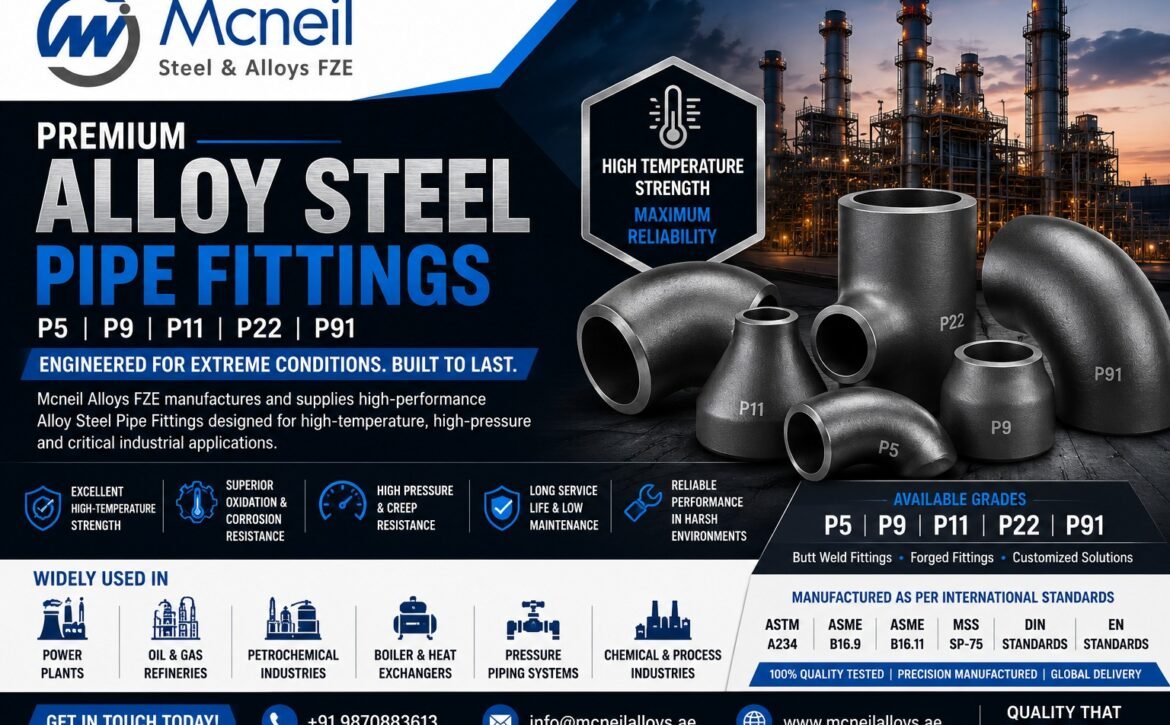
Why Alloy Steel P5, P9, P11, P22 & P91 Pipe Fittings Are Essential for High-Temperature Applications

Introduction

Industrial piping systems operating under extreme temperatures and high-pressure conditions demand materials that offer exceptional mechanical strength, oxidation resistance, and long-term reliability. Conventional carbon steel fittings often lose strength at elevated temperatures, making Alloy Steel Pipe Fittings the preferred choice for critical industrial applications.

Mcneil Alloys FZE is a leading manufacturer, supplier, and exporter of Alloy Steel P5, P9, P11, P22, and P91 Pipe Fittings, engineered for demanding applications in power generation, petrochemical plants, refineries, oil & gas facilities, and heavy engineering industries. Manufactured using premium alloy steel and tested to international standards, our fittings deliver outstanding performance under the toughest operating conditions.

Why Choose Mcneil Alloys FZE for Alloy Steel Pipe Fittings?

Choosing the right supplier ensures maximum safety, reliability, and operational efficiency.

Why Customers Trust Us

✔ Premium alloy steel raw materials

✔ Precision-manufactured butt weld and forged fittings

✔ Excellent high-temperature performance

✔ Superior pressure handling capability

✔ Competitive pricing

✔ Ready stock for quick delivery

✔ Custom sizes and schedules available

✔ Worldwide export capability

✔ Dedicated technical support

Our commitment to quality ensures dependable performance in high-pressure industrial environments.

Our Alloy Steel Pipe Fitting Grades

1. Alloy Steel P5 Pipe Fittings

Alloy Steel P5 contains chromium and molybdenum, providing excellent oxidation resistance and mechanical strength for elevated-temperature service.

Key Features

  • Excellent heat resistance
  • Good corrosion resistance
  • High tensile strength
  • Superior creep resistance
  • Long service life
  • Excellent weldability

Typical Applications

  • Refineries
  • Petrochemical plants
  • Boilers
  • Heat exchangers
  • Pressure piping
  • Power plants

2. Alloy Steel P9 Pipe Fittings

P9 alloy steel offers higher chromium content, making it suitable for aggressive high-temperature environments.

Advantages

  • Excellent oxidation resistance
  • Superior thermal stability
  • High pressure capability
  • Good creep strength
  • Long operational life

Applications

  • Steam pipelines
  • Thermal power stations
  • Furnace systems
  • Petrochemical plants
  • High-temperature piping

3. Alloy Steel P11 Pipe Fittings

P11 is widely used in industries requiring high-temperature strength and excellent resistance to pressure.

Benefits

  • Excellent creep resistance
  • High strength
  • Outstanding weldability
  • Good oxidation resistance
  • Long-lasting durability

Applications

  • Power generation
  • Boiler systems
  • Steam piping
  • Pressure vessels
  • Industrial piping

4. Alloy Steel P22 Pipe Fittings

P22 provides enhanced resistance to oxidation and high-temperature corrosion, making it one of the most widely used alloy steel grades.

Features

  • Superior heat resistance
  • Excellent pressure handling
  • High mechanical strength
  • Long service life
  • Excellent corrosion resistance

Applications

  • Refineries
  • Petrochemical industries
  • Heat exchangers
  • Boilers
  • Steam lines

5. Alloy Steel P91 Pipe Fittings

P91 is a high-performance chromium-molybdenum alloy designed for ultra-high-temperature and high-pressure applications.

Advantages

  • Exceptional creep strength
  • Outstanding thermal stability
  • Excellent oxidation resistance
  • High fatigue resistance
  • Extended service life

Applications

  • Supercritical power plants
  • High-pressure steam systems
  • Refineries
  • Petrochemical plants
  • Heavy industrial piping

Why Alloy Steel Pipe Fittings Are the Preferred Choice

High-temperature industrial operations require piping components capable of maintaining structural integrity under severe operating conditions.

Key Benefits

✔ Excellent high-temperature strength

✔ Outstanding pressure resistance

✔ Superior creep resistance

✔ Excellent oxidation resistance

✔ Long operational lifespan

✔ Reduced maintenance costs

✔ Reliable performance under thermal cycling

✔ Improved plant safety

Types of Alloy Steel Pipe Fittings We Manufacture

Mcneil Alloys FZE offers a comprehensive range of alloy steel piping components.

Product Range

  • 90° Elbows
  • 45° Elbows
  • Equal Tees
  • Reducing Tees
  • Concentric Reducers
  • Eccentric Reducers
  • Stub Ends
  • Pipe Caps
  • Crosses
  • Couplings
  • Unions
  • Socket Weld Fittings
  • Threaded Fittings
  • Butt Weld Pipe Fittings
  • Forged Pipe Fittings
  • Custom Fabricated Fittings

Available in multiple schedules, pressure classes, wall thicknesses, and custom dimensions.

Alloy Steel P5 vs P9 vs P11 vs P22 vs P91

Feature P5 P9 P11 P22 P91
Heat Resistance Excellent Excellent Excellent Superior Outstanding
Pressure Capability High High High Very High Extremely High
Oxidation Resistance Excellent Superior Excellent Superior Outstanding
Creep Strength Good Very Good Excellent Excellent Exceptional
Mechanical Strength High High High Very High Outstanding
High Temperature Service Excellent Excellent Excellent Excellent Best

Each grade is selected based on operating temperature, pressure, and mechanical requirements.

Industries Using Alloy Steel Pipe Fittings

Our alloy steel fittings are trusted worldwide in critical industrial sectors.

Major Industries

  • Power Generation
  • Thermal Power Plants
  • Nuclear Power Plants
  • Oil & Gas
  • Petrochemical Industry
  • Refineries
  • Chemical Processing
  • Fertilizer Plants
  • Boiler Manufacturing
  • Heat Exchanger Manufacturing
  • Pressure Vessel Fabrication
  • Steel Plants
  • Cement Industry
  • Heavy Engineering

Why Alloy Steel Performs Better in High-Temperature Systems

Compared to ordinary carbon steel, alloy steel offers superior performance by resisting:

  • High-temperature oxidation
  • Thermal fatigue
  • Creep deformation
  • Pressure fluctuations
  • Scaling
  • Mechanical wear
  • Thermal expansion stress

These properties significantly improve equipment life and plant reliability.

International Standards

Our Alloy Steel Pipe Fittings are manufactured according to globally recognized specifications.

Available Standards

  • ASTM A234 WP5
  • ASTM A234 WP9
  • ASTM A234 WP11
  • ASTM A234 WP22
  • ASTM A234 WP91
  • ASME B16.9
  • ASME B16.11
  • MSS SP-75
  • DIN Standards
  • EN Standards

Available in multiple schedules, pressure ratings, and customized specifications.

Why Industries Prefer Alloy Steel Pipe Fittings

Business Advantages

⚙ Excellent high-temperature performance

🔥 Superior pressure handling

🛡 Enhanced operational safety

📈 Increased plant efficiency

💰 Lower maintenance costs

🚀 Longer equipment lifespan

Quality Assurance at Mcneil Alloys FZE

Every fitting undergoes comprehensive quality inspection before dispatch.

Our Inspection Process

  • Raw Material Testing
  • PMI Testing
  • Chemical Analysis
  • Mechanical Testing
  • Hydrostatic Testing
  • Radiography (on request)
  • Dimensional Inspection
  • Hardness Testing
  • Surface Finish Inspection
  • Visual Examination

Why Businesses Worldwide Choose Mcneil Alloys FZE

Our Strengths

✔ Premium alloy steel materials

✔ Modern manufacturing facility

✔ Experienced engineering team

✔ Large inventory

✔ Fast worldwide delivery

✔ Competitive pricing

✔ Customized production

✔ Reliable technical support

Benefits of Choosing Our Alloy Steel Pipe Fittings

📊 Reliable high-temperature performance

🌍 Global supply network

⚙ Precision engineering

🛠 Long service life

📈 Improved operational efficiency

💼 Trusted industrial expertise

📞 Get Premium Alloy Steel Pipe Fittings Today

Looking for high-quality Alloy Steel P5, P9, P11, P22, or P91 Pipe Fittings for your industrial applications?

Mcneil Alloys FZE

📞 +91 9870883613

📧 info@mcneilalloys.ae

Our experts are ready to assist you with product selection, technical specifications, pricing, and customized manufacturing solutions.

Frequently Asked Questions (FAQs)

  1. What are Alloy Steel Pipe Fittings used for?
    They are used in high-temperature and high-pressure piping systems in power plants, refineries, petrochemical plants, boilers, and oil & gas industries.
  2. Which alloy steel grade is suitable for high-temperature applications?
    P11, P22, and P91 are commonly selected for elevated-temperature and high-pressure service, with P91 offering the highest strength.
  3. What types of alloy steel pipe fittings do you manufacture?
    We manufacture elbows, tees, reducers, caps, stub ends, couplings, forged fittings, socket weld fittings, threaded fittings, butt weld fittings, and custom fittings.
  4. Do your alloy steel fittings comply with international standards?
    Yes. Our products conform to ASTM A234 WP5, WP9, WP11, WP22, WP91, ASME B16.9, ASME B16.11, and other international standards.
  5. Why are alloy steel pipe fittings preferred over carbon steel?
    They provide higher mechanical strength, superior creep resistance, excellent oxidation resistance, and longer service life under high-temperature operating conditions.
  6. Why choose Mcneil Alloys FZE?
    Mcneil Alloys FZE supplies premium-quality alloy steel pipe fittings with stringent quality control, custom manufacturing, competitive pricing, and reliable global exports.


Read More
admin July 28, 2026 0 Comments

Hastelloy B2 & Hastelloy B3 Pipe Fittings Manufacturer & Supplier – Mcneil Alloys FZE

Introduction

When industrial piping systems are exposed to highly corrosive chemicals, strong acids, and extreme process conditions, choosing the right pipe fittings becomes essential for long-term reliability. Hastelloy B2 and Hastelloy B3 Pipe Fittings are engineered to withstand some of the harshest reducing environments while delivering outstanding mechanical strength and corrosion resistance.

Mcneil Alloys FZE is a trusted manufacturer and global supplier of Hastelloy B2 Pipe Fittings and Hastelloy B3 Pipe Fittings, offering precision-manufactured products that meet international quality standards. Our fittings are widely used in chemical processing, pharmaceutical plants, petrochemical industries, fertilizer units, and offshore applications where performance and durability are critical.

With premium raw materials, advanced manufacturing techniques, and strict quality control, we provide pipe fittings that ensure safe and efficient industrial operations.

Why Choose Mcneil Alloys FZE for Hastelloy B2 & B3 Pipe Fittings?

Selecting the right supplier plays a crucial role in the performance of your piping systems. Mcneil Alloys FZE combines engineering expertise with international manufacturing standards to deliver reliable Hastelloy solutions.

Why Customers Trust Us

✔ Premium quality nickel alloy materials

✔ Precision-engineered pipe fittings

✔ Superior corrosion resistance

✔ Competitive pricing

✔ Ready stock for quick delivery

✔ Custom sizes and specifications available

✔ Worldwide export capability

✔ Experienced technical support

Our goal is to provide products that maximize operational efficiency while reducing maintenance costs.

Our Hastelloy B2 & B3 Pipe Fittings Range

1. Hastelloy B2 Pipe Fittings

Hastelloy B2 is a nickel-molybdenum alloy specifically developed for excellent resistance to reducing chemicals, particularly hydrochloric acid across a wide range of temperatures and concentrations.

Key Features

  • Exceptional resistance to hydrochloric acid
  • Excellent resistance to reducing environments
  • Superior corrosion protection
  • High mechanical strength
  • Good thermal stability
  • Long service life

Typical Applications

  • Chemical processing plants
  • Acid production facilities
  • Pharmaceutical industries
  • Fertilizer manufacturing
  • Pollution control equipment
  • Petrochemical plants

2. Hastelloy B3 Pipe Fittings

Hastelloy B3 is an advanced version of the B2 alloy, offering improved thermal stability, enhanced fabrication characteristics, and greater resistance to stress-related failures.

Advantages

  • Improved thermal stability
  • Better ductility than B2
  • Enhanced weldability
  • Excellent corrosion resistance
  • Superior fabrication properties
  • Longer equipment life

Common Applications

  • Chemical reactors
  • Heat exchangers
  • Pressure vessels
  • Acid handling systems
  • Offshore process plants
  • Industrial piping networks

Types of Hastelloy B2 & B3 Pipe Fittings We Manufacture

Mcneil Alloys FZE offers a complete range of butt weld and forged pipe fittings, including:

  • 45° Elbows
  • 90° Elbows
  • 180° Return Bends
  • Equal Tees
  • Reducing Tees
  • Concentric Reducers
  • Eccentric Reducers
  • Pipe Caps
  • Stub Ends
  • Crosses
  • Couplings
  • Unions
  • Hex Nipples
  • Socket Weld Fittings
  • Threaded Pipe Fittings

Every fitting is manufactured with precise dimensional accuracy to ensure leak-proof and reliable installations.

Key Benefits of Hastelloy B2 & B3 Pipe Fittings

Our Hastelloy pipe fittings are designed to perform in highly demanding industrial environments.

Product Highlights

✔ Excellent corrosion resistance

✔ Outstanding hydrochloric acid resistance

✔ High mechanical strength

✔ Easy fabrication and welding

✔ Excellent dimensional accuracy

✔ High temperature performance

✔ Reduced maintenance requirements

✔ Long operational life

Industries We Serve

Our Hastelloy B2 and B3 Pipe Fittings are trusted across multiple industries where corrosion resistance is essential.

Major Industries

  • Chemical Processing
  • Petrochemical Plants
  • Oil & Gas Industry
  • Pharmaceutical Manufacturing
  • Fertilizer Plants
  • Marine & Offshore
  • Desalination Plants
  • Power Generation
  • Heat Exchanger Manufacturing
  • Industrial Equipment Manufacturing
  • Food Processing
  • Waste Treatment Plants

International Standards

Our products are manufactured according to globally recognized standards.

Available Standards

  • ASTM B366
  • ASME B16.9
  • ASME B16.11
  • MSS SP-43
  • ANSI Standards
  • DIN Standards
  • EN Standards

Available in multiple schedules, sizes, and custom dimensions based on project requirements.

Difference Between Hastelloy B2 & Hastelloy B3 Pipe Fittings

Feature Hastelloy B2 Hastelloy B3
Corrosion Resistance Excellent Excellent
Hydrochloric Acid Resistance Outstanding Outstanding
Thermal Stability Good Improved
Weldability Good Better
Ductility Standard Higher
Fabrication Good Enhanced
Service Life Long Longer

Both grades are excellent choices depending on the application’s temperature, fabrication requirements, and operating conditions.

Why Industries Prefer Hastelloy B2 & B3 Pipe Fittings

Compared to conventional stainless steel fittings, Hastelloy B2 and B3 provide exceptional reliability in highly aggressive reducing environments.

Business Advantages

🌐 Longer equipment lifespan

⚙ Lower maintenance costs

📈 Improved plant efficiency

🛡 Superior corrosion protection

💰 Reduced downtime

🚀 Increased operational safety

Quality Assurance at Mcneil Alloys FZE

Quality is at the core of everything we manufacture.

Our Inspection Process

  • Raw Material Testing
  • PMI Testing
  • Chemical Analysis
  • Mechanical Testing
  • Hydrostatic Testing
  • Dimensional Inspection
  • Visual Inspection
  • Surface Finish Verification

Every product is thoroughly inspected before shipment to ensure complete customer satisfaction.

Why Businesses Worldwide Choose Mcneil Alloys FZE

Customers continue to choose us because of our commitment to quality, service, and timely delivery.

Our Strengths

✔ Premium alloy materials

✔ Experienced manufacturing team

✔ Large inventory

✔ Fast worldwide shipping

✔ Competitive pricing

✔ Technical assistance

✔ Customized production

✔ Reliable after-sales support

Benefits of Choosing Our Hastelloy Pipe Fittings

Partnering with Mcneil Alloys FZE provides numerous advantages.

📊 Reliable industrial performance

🌍 Global supply network

⚙ Precision manufacturing

🛠 Long-lasting durability

📈 Improved operational efficiency

💼 Trusted engineering expertise

📞 Get Premium Hastelloy B2 & B3 Pipe Fittings Today

Looking for reliable Hastelloy B2 Pipe Fittings or Hastelloy B3 Pipe Fittings for your next project?

Mcneil Alloys FZE

📞 +91 9870883613

📧 info@mcneilalloys.ae

Our experts are ready to help you with product selection, technical specifications, pricing, and customized manufacturing solutions.

Frequently Asked Questions (FAQs)

1. What are Hastelloy B2 Pipe Fittings used for?

Hastelloy B2 Pipe Fittings are widely used in chemical processing, hydrochloric acid handling, fertilizer plants, and pharmaceutical industries due to their excellent corrosion resistance.

2. What is the difference between Hastelloy B2 and Hastelloy B3?

Hastelloy B3 offers improved thermal stability, better weldability, enhanced ductility, and superior fabrication properties compared to Hastelloy B2.

3. Which industries commonly use Hastelloy B3 Pipe Fittings?

Hastelloy B3 Pipe Fittings are extensively used in petrochemical plants, offshore facilities, heat exchangers, pressure vessels, and chemical reactors.

4. What types of Hastelloy B2 & B3 fittings do you supply?

We manufacture elbows, tees, reducers, caps, stub ends, couplings, unions, socket weld fittings, threaded fittings, and custom pipe fittings.

5. Are your Hastelloy Pipe Fittings manufactured according to international standards?

Yes. Our products comply with ASTM B366, ASME B16.9, ASME B16.11, MSS SP-43, DIN, and EN standards.

6. Why choose Mcneil Alloys FZE?

Mcneil Alloys FZE offers premium-quality Hastelloy pipe fittings, competitive pricing, strict quality control, customized manufacturing, technical expertise, and reliable global delivery.

Read More
admin July 17, 2026 0 Comments

Built for Heat, Pressure, and Performance: Why Mcneil Alloys Molybdenum Steel Pipes Are Trusted Across the UAE’s Industrial Sector

Introduction

The UAE continues to be a global hub for oil & gas production, petrochemical processing, power generation, desalination projects, and industrial infrastructure development. As these industries expand, the demand for piping systems capable of withstanding extreme temperatures and high-pressure operating conditions continues to grow.

Standard piping materials often struggle in such environments, resulting in reduced efficiency, increased maintenance costs, and shorter service life.

This is where Mcneil Alloys Molybdenum Steel Pipes have become a preferred solution for critical industrial applications. Manufactured to meet ASTM A335 and ASME SA335 standards, these pipes are engineered to provide exceptional heat resistance, oxidation resistance, creep strength, and long-term reliability in demanding operating conditions.

The range includes:

  • P5 Molybdenum Steel Pipes
    • P9 Molybdenum Steel Pipes
    • P11 Molybdenum Steel Pipes
    • P22 Molybdenum Steel Pipes
    • P91 Molybdenum Steel Pipes

These grades are widely used across refineries, power plants, petrochemical facilities, and high-pressure steam systems throughout the UAE.


Why Molybdenum Steel Pipes Are Essential for Modern Industries

Industrial systems operating under elevated temperatures require materials that maintain their mechanical properties over long periods.

Molybdenum Steel Pipes provide:

  • Excellent creep resistance
    • Superior thermal stability
    • Outstanding oxidation resistance
    • High tensile strength
    • Excellent pressure handling capability
    • Long operational lifespan
    • Reduced maintenance requirements

The combination of chromium and molybdenum allows these pipes to perform efficiently in high-temperature and high-pressure environments where conventional carbon steel pipes may fail.


Mcneil Alloys: UAE Supplier of High-Performance Molybdenum Steel Pipes

Mcneil Alloys supplies a complete range of seamless alloy steel pipes manufactured for critical industrial applications.

The company’s product range includes:

  • ASTM A335 P5 Pipes
    • ASTM A335 P9 Pipes
    • ASTM A335 P11 Pipes
    • ASTM A335 P22 Pipes
    • ASTM A335 P91 Pipes
    • ASME SA335 Alloy Steel Pipes
    • Chrome Moly Pipes
    • Seamless Molybdenum Steel Pipes
    • High-Temperature Alloy Steel Pipes

These pipes are designed to comply with international quality standards and support demanding industrial projects across the UAE and global markets.


P5 Molybdenum Steel Pipes

Reliable Performance for Refinery and Process Applications

P5 Molybdenum Steel Pipes contain chromium and molybdenum that provide excellent resistance to oxidation and elevated temperatures.

Benefits

  • Superior oxidation resistance
    • Excellent thermal stability
    • Good corrosion resistance
    • Long service life

Applications

  • Refineries
    • Superheaters
    • Chemical Processing Plants
    • Heat Exchangers

P5 pipes are widely selected for moderate to high-temperature industrial environments.


P9 Molybdenum Steel Pipes

Enhanced Strength for High-Temperature Operations

P9 Molybdenum Steel Pipes offer increased chromium content, providing improved oxidation resistance and creep strength.

Advantages

  • Excellent heat resistance
    • Superior pressure capability
    • Enhanced creep resistance
    • Outstanding durability

Applications

  • Boilers
    • Petrochemical Plants
    • Thermal Power Stations
    • Steam Systems


P11 Molybdenum Steel Pipes

A Proven Solution for Power and Petrochemical Industries

Among the most widely used grades, P11 Pipes provide an ideal balance of strength, weldability, and temperature resistance.

Key Features

  • Good tensile strength
    • Excellent weldability
    • Reliable thermal performance
    • Superior mechanical properties

Applications

  • Power Plants
    • Industrial Pressure Vessels
    • Refineries
    • Process Piping Systems


P22 Molybdenum Steel Pipes

Engineered for Long-Term High-Pressure Service

P22 Molybdenum Steel Pipes are designed for environments where durability and thermal stability are critical.

Benefits

  • Excellent creep strength
    • Superior heat resistance
    • Outstanding pressure handling capability
    • Long operational life

Applications

  • Steam Pipelines
    • Power Generation Facilities
    • Heat Exchangers
    • Refinery Processing Units


P91 Molybdenum Steel Pipes

Advanced Alloy Steel Pipes for Extreme Conditions

P91 Molybdenum Steel Pipes represent one of the most advanced alloy steel grades available for high-temperature service.

Advantages

  • Exceptional high-temperature strength
    • Outstanding oxidation resistance
    • Superior creep rupture properties
    • Excellent fatigue resistance

Applications

  • Supercritical Power Plants
    • High-Pressure Steam Systems
    • Energy Infrastructure Projects
    • Petrochemical Facilities

P91 pipes are commonly used in applications requiring temperatures up to approximately 700°C and exceptional long-term reliability.


Why Seamless Molybdenum Steel Pipes Offer Superior Reliability

Mcneil Alloys supplies seamless alloy steel pipes designed for critical applications.

Benefits of Seamless Construction

  • Uniform wall thickness
    • Higher pressure capability
    • Better structural integrity
    • Improved safety performance
    • Reduced risk of leakage

Seamless pipes remain the preferred option for high-pressure and high-temperature systems throughout the energy and petrochemical sectors.


Industries Driving Demand in the UAE

Oil & Gas Industry

Used in:

  • Refineries
    • Gas Processing Facilities
    • Offshore Projects
    • Pipeline Systems


Petrochemical Industry

Supports:

  • Process Heaters
    • Chemical Processing Units
    • Reactor Systems
    • High-Temperature Applications


Power Generation Industry

Used in:

  • Boilers
    • Superheaters
    • Steam Pipelines
    • Turbine Systems


Desalination Plants

Provides reliable performance in high-temperature water treatment operations.


Energy Infrastructure Projects

Supports major industrial developments across the UAE.


Technical Specifications

Parameter Specification
Product Molybdenum Steel Pipes
Standards ASTM A335 / ASME SA335
Grades P5, P9, P11, P22, P91
Type Seamless Alloy Steel Pipes
Service High Temperature & High Pressure
Applications Power, Petrochemical, Oil & Gas


Quality Assurance at Mcneil Alloys

Every Molybdenum Steel Pipe undergoes rigorous inspection procedures including:

  • Hydrostatic Testing
    • Ultrasonic Testing
    • PMI Testing
    • Mechanical Testing
    • Hardness Testing
    • Dimensional Inspection
    • Material Traceability Verification

These testing procedures help ensure compliance with international quality standards and dependable field performance.


Conclusion

As the UAE continues investing in energy infrastructure, petrochemical expansion, refinery modernization, and power generation projects, the need for reliable high-temperature piping solutions continues to grow.

Whether it is P5 Molybdenum Steel Pipes, P9 Molybdenum Steel Pipes, P11 Molybdenum Steel Pipes, P22 Molybdenum Steel Pipes, or P91 Molybdenum Steel Pipes, Mcneil Alloys delivers advanced alloy steel piping solutions engineered to perform in the world’s most demanding industrial environments.

From steam systems and power plants to petrochemical facilities and refinery operations, Mcneil Alloys Molybdenum Steel Pipes continue to support critical infrastructure with exceptional strength, durability, and long-term reliability.

Read More
admin June 24, 2026 0 Comments

The Power Behind High-Temperature Industries: Why Mcneil Alloys P5, P9, P11, P22 & P91 Pipes Are Trusted Across Critical Applications

Introduction

Industrial sectors such as oil & gas, petrochemicals, refineries, power generation, LNG processing, and heavy engineering demand piping systems capable of operating under extreme temperatures and high-pressure conditions. Standard carbon steel pipes often struggle in these environments, making advanced alloy steel solutions essential for long-term reliability and operational safety.

This is where Mcneil Alloys Alloy Steel Pipes have become a preferred choice for industries requiring exceptional strength, heat resistance, and durability.

Manufactured to ASTM A335 and ASME SA335 standards, P5 Pipes, P9 Pipes, P11 Pipes, P22 Pipes, and P91 Pipes are engineered for critical applications involving high-temperature steam, aggressive process media, and demanding operating environments. These grades are widely used across power plants, refineries, petrochemical facilities, boiler systems, and energy infrastructure projects.


Why Alloy Steel Pipes Continue to Dominate High-Temperature Applications

Modern industrial facilities require piping materials capable of maintaining structural integrity under severe operating conditions.

Alloy Steel Pipes offer:

  • Excellent high-temperature strength
    • Superior creep resistance
    • Outstanding oxidation resistance
    • Exceptional pressure handling capability
    • Long service life
    • Reduced maintenance costs
    • Enhanced operational reliability

These advantages make Chrome Moly and Molybdenum Alloy Pipes the preferred solution for critical process industries.


Mcneil Alloys: Delivering High-Performance Alloy Steel Pipe Solutions

Mcneil Alloys supplies a complete range of:

  • ASTM A335 P5 Pipes
    • ASTM A335 P9 Pipes
    • ASTM A335 P11 Pipes
    • ASTM A335 P22 Pipes
    • ASTM A335 P91 Pipes
    • ASME SA335 Alloy Steel Pipes
    • Chrome Moly Pipes
    • Molybdenum Alloy Pipes
    • Seamless Alloy Steel Pipes
    • High-Pressure Alloy Steel Pipes

These products are designed to meet the requirements of industries operating under elevated temperature and pressure conditions.


ASTM A335 P5 Pipes

Reliable Performance in Elevated Temperature Systems

ASTM A335 P5 Pipes contain chromium and molybdenum, providing excellent resistance against oxidation and high-temperature corrosion.

Key Benefits

  • Excellent heat resistance
    • Good oxidation protection
    • Strong mechanical properties
    • Long operational lifespan

Applications

  • Refineries
    • Heat Exchangers
    • Process Piping Systems
    • Industrial Furnaces

P5 pipes are widely selected for applications requiring dependable performance under moderate to high-temperature service conditions.


ASTM A335 P9 Pipes

Enhanced Strength for Severe Service Conditions

ASTM A335 P9 Pipes offer increased chromium and molybdenum content for improved mechanical strength and creep resistance.

Advantages

  • Superior thermal stability
    • Enhanced oxidation resistance
    • Excellent pressure capability
    • Outstanding durability

Applications

  • Thermal Power Plants
    • Petrochemical Facilities
    • Steam Pipelines
    • Boiler Systems

P9 pipes are commonly used where higher temperatures and pressures demand superior material performance.


ASTM A335 P11 Pipes

The Most Widely Used Alloy Steel Pipe Grade

ASTM A335 P11 Pipes are among the most popular alloy steel grades due to their excellent balance of strength, weldability, and heat resistance.

Features

  • Excellent weldability
    • Reliable high-temperature performance
    • Good creep resistance
    • Strong mechanical properties

Applications

  • Power Plants
    • Refineries
    • Petrochemical Units
    • Process Industries

P11 pipes remain a preferred solution for high-pressure and elevated-temperature applications worldwide.


ASTM A335 P22 Pipes

Designed for High-Pressure Steam and Process Systems

ASTM A335 P22 Pipes are engineered to perform under severe operating conditions where long-term strength is critical.

Benefits

  • Excellent creep strength
    • Superior pressure resistance
    • Outstanding thermal stability
    • Long service life

Applications

  • Boilers
    • Steam Lines
    • Power Generation Facilities
    • Refinery Processing Units

P22 pipes continue to be extensively used in high-temperature industrial systems.


ASTM A335 P91 Pipes

Advanced Alloy Steel Solution for Extreme Environments

ASTM A335 P91 Pipes represent one of the highest-performing alloy steel grades available.

Advantages

  • Exceptional high-temperature strength
    • Superior creep resistance
    • Excellent oxidation protection
    • Outstanding pressure capability

Applications

  • Supercritical Power Plants
    • High-Pressure Steam Systems
    • Energy Infrastructure Projects
    • Petrochemical Facilities

P91 pipes are designed for applications where maximum performance and reliability are essential.


Seamless Alloy Steel Pipes for Critical Applications

Mcneil Alloys supplies Seamless Alloy Steel Pipes manufactured for demanding environments where reliability cannot be compromised.

Key advantages include:

  • Uniform wall thickness
    • Superior pressure containment
    • Improved mechanical strength
    • Enhanced operational safety
    • Reduced risk of failure

ASTM A335 specifications primarily cover seamless ferritic alloy steel pipes intended for high-temperature service.


Industries Driving Demand for P5, P9, P11, P22 & P91 Pipes

Power Generation Industry

Used in:

  • Boilers
    • Superheaters
    • Steam Pipelines
    • Turbine Systems


Oil & Gas Industry

Supports:

  • Refineries
    • Processing Facilities
    • High-Pressure Pipeline Systems


Petrochemical Industry

Provides reliable performance in:

  • Process Heaters
    • Catalytic Reactors
    • High-Temperature Processing Units


Energy Sector

Used extensively in:

  • Thermal Power Plants
    • Steam Generation Systems
    • Energy Infrastructure Projects

These grades are specifically designed for industries operating under elevated temperatures and pressures.


Technical Specifications

Parameter Specification
Product Alloy Steel Pipes
Standards ASTM A335 / ASME SA335
Grades P5, P9, P11, P22, P91
Type Seamless Alloy Steel Pipes
Applications Power, Petrochemical, Refinery
Service High Temperature & High Pressure


Why Industries Choose Mcneil Alloys

Mcneil Alloys continues to support industrial projects through:

  • Premium Alloy Steel Pipe Manufacturing
    • ASTM & ASME Standard Compliance
    • Extensive Grade Availability
    • Global Supply Capabilities
    • Strict Quality Control Procedures
    • Project-Specific Solutions

Every pipe is designed to deliver reliable performance in demanding industrial environments.


Conclusion

As industries continue operating at higher temperatures and pressures, the need for dependable piping solutions continues to grow.

Whether it is ASTM A335 P5 Pipes, ASTM A335 P9 Pipes, ASTM A335 P11 Pipes, ASTM A335 P22 Pipes, or ASTM A335 P91 Pipes, Mcneil Alloys provides high-performance alloy steel piping solutions engineered for long-term reliability, safety, and efficiency.

From power plants and refineries to petrochemical facilities and energy infrastructure projects, Mcneil Alloys Alloy Steel Pipes continue to play a critical role in supporting modern industrial growth.

Read More
admin June 19, 2026 0 Comments

Engineered for Extreme Conditions: Why Mcneil Alloys Inconel Pipes Are Powering Critical Industrial Infrastructure Worldwide

Introduction

As industries continue to push the limits of performance, efficiency, and reliability, the demand for advanced piping materials has grown significantly. Modern facilities operating in petrochemical plants, oil & gas refineries, LNG terminals, offshore platforms, power generation stations, aerospace facilities, and chemical processing units require piping systems capable of performing under the most demanding operating conditions.

Exposure to extreme temperatures, high-pressure environments, corrosive chemicals, and aggressive process media can quickly compromise conventional piping materials.

This is where Mcneil Alloys Inconel Pipes have established themselves as a trusted solution for mission-critical industrial applications.

Manufactured from premium nickel-chromium alloys, Inconel Pipes offer exceptional resistance to oxidation, corrosion, heat, and mechanical stress. Their ability to maintain strength and structural integrity in extreme environments makes them one of the most preferred piping solutions across global industries.

Today, Inconel 600 Pipes, Inconel 625 Pipes, Inconel 718 Pipes, Inconel 725 Pipes, Inconel 800 Pipes, and Inconel 800H Pipes supplied by Mcneil Alloys support some of the world’s most demanding industrial projects.


Why Industries Choose Inconel Pipes

Industrial environments often expose piping systems to:

  • High operating temperatures
    • Corrosive chemicals
    • High-pressure systems
    • Oxidizing environments
    • Offshore conditions
    • Continuous production cycles

Under such circumstances, ordinary materials may experience rapid degradation.

Inconel Pipes provide:

  • Exceptional corrosion resistance
    • Superior oxidation resistance
    • Outstanding heat resistance
    • Excellent tensile strength
    • High creep resistance
    • Long operational lifespan
    • Reduced maintenance costs

These advantages make Inconel one of the most reliable materials for critical industrial infrastructure.


Mcneil Alloys: A Trusted Name in Inconel Pipe Manufacturing

Mcneil Alloys is a leading manufacturer, supplier, exporter, stockist, and distributor of high-performance Inconel Pipes serving customers across the Middle East, Europe, Asia, Africa, and global industrial markets.

The company offers:

  • Inconel 600 Pipes
    • Inconel 625 Pipes
    • Inconel 718 Pipes
    • Inconel 725 Pipes
    • Inconel 800 Pipes
    • Inconel 800H Pipes
    • Seamless Inconel Pipes
    • Welded Inconel Pipes
    • ERW Inconel Pipes
    • Custom Fabricated Inconel Pipes

Each product is manufactured according to international quality standards to ensure superior performance and reliability.


Inconel 600 Pipes

Reliable Performance in Corrosive and High-Temperature Environments

Inconel 600 Pipes are known for their excellent resistance to oxidation and corrosion.

Key Features

  • Superior thermal stability
    • Excellent corrosion resistance
    • High mechanical strength
    • Long service life

Applications

  • Chemical Processing Plants
    • Industrial Furnaces
    • Heat Treatment Facilities
    • Nuclear Engineering Systems


Inconel 625 Pipes

Exceptional Strength for Marine and Offshore Applications

Inconel 625 Pipes are among the most widely used nickel alloy pipes worldwide.

Benefits

  • Outstanding seawater resistance
    • Excellent fatigue strength
    • Superior corrosion protection
    • Exceptional weldability

Applications

  • Offshore Platforms
    • Marine Engineering Projects
    • LNG Facilities
    • Petrochemical Plants


Inconel 718 Pipes

High Strength for Extreme Operating Conditions

Inconel 718 Pipes provide exceptional performance under elevated temperatures and pressure.

Advantages

  • High tensile strength
    • Excellent creep resistance
    • Superior fatigue performance
    • Long-term durability

Applications

  • Aerospace Industry
    • Gas Turbine Systems
    • Power Plants
    • High-Pressure Process Systems


Inconel 725 Pipes

Advanced Corrosion Resistance for Oil & Gas Operations

Features

  • Exceptional sour gas resistance
    • High-pressure capability
    • Outstanding corrosion protection

Applications

  • Offshore Drilling Systems
    • Oil Production Facilities
    • Petrochemical Installations


Inconel 800 Pipes

Dependable Performance in Thermal Processing Systems

Benefits

  • Excellent oxidation resistance
    • Reliable thermal stability
    • Long operational lifespan

Applications

  • Steam Systems
    • Heat Exchangers
    • Industrial Processing Facilities


Inconel 800H Pipes

Enhanced High-Temperature Strength

Advantages

  • Superior creep resistance
    • Excellent structural integrity
    • Outstanding thermal performance

Applications

  • Reformers
    • Power Generation Plants
    • Petrochemical Facilities
    • High-Temperature Processing Units


Types of Inconel Pipes Available

Mcneil Alloys supplies a complete range of Inconel Pipe solutions.

Seamless Inconel Pipes

Ideal for critical pressure applications where maximum strength is required.

Welded Inconel Pipes

Cost-effective solutions for industrial process systems.

ERW Inconel Pipes

Provide dimensional accuracy and excellent performance.

Large Diameter Inconel Pipes

Designed for major industrial infrastructure projects.

Custom Fabricated Inconel Pipes

Manufactured according to project-specific requirements.


Why Inconel Pipes Outperform Conventional Materials

Property Inconel Pipes Stainless Steel Pipes
Corrosion Resistance Exceptional Excellent
Heat Resistance Superior High
Oxidation Resistance Outstanding Good
Mechanical Strength Very High High
Service Life Very Long Long

These performance advantages make Inconel Pipes a preferred choice for demanding industrial environments.


Industries Driving Demand for Inconel Pipes

Oil & Gas Industry

Used in:

  • Refineries
    • Offshore Platforms
    • Processing Facilities
    • Pipeline Systems


LNG Industry

Supports:

  • LNG Processing Plants
    • Cryogenic Systems
    • Storage Facilities


Petrochemical Industry

Provides reliable performance in highly corrosive processing environments.


Power Generation Industry

Used in:

  • Boilers
    • Steam Systems
    • Turbine Installations
    • Heat Recovery Units


Aerospace Industry

Supports advanced engineering applications requiring superior strength and thermal stability.


Marine Industry

Provides exceptional protection against seawater corrosion.


Technical Specifications

Parameter Specification
Product Inconel Pipes
Grades 600, 625, 718, 725, 800, 800H
Type Seamless, Welded, ERW
Standards ASTM B167, ASTM B444, ASTM B704, ASTM B705
Size Range ½” NB to 48″ NB
Applications Oil & Gas, LNG, Power, Marine


Quality Assurance at Mcneil Alloys

Every Inconel Pipe undergoes extensive inspection and testing procedures.

Quality checks include:

  • Hydrostatic Testing
    • PMI Testing
    • Ultrasonic Testing
    • Mechanical Testing
    • Hardness Testing
    • Dimensional Inspection
    • Material Traceability Verification

These procedures ensure consistent quality and compliance with international standards.


Global Demand for Inconel Pipes Continues to Grow

The expansion of:

  • LNG Infrastructure Projects
    • Offshore Oil & Gas Developments
    • Petrochemical Facilities
    • Renewable Energy Projects
    • Aerospace Manufacturing
    • Industrial Processing Plants

continues driving demand for premium Inconel Pipe solutions.

Mcneil Alloys remains committed to supplying high-quality Inconel Pipes that meet the evolving requirements of modern industries.


Conclusion

When industrial applications demand superior heat resistance, corrosion protection, and long-term reliability, Inconel Pipes remain one of the most effective solutions available.

Whether it is Inconel 600 Pipes, Inconel 625 Pipes, Inconel 718 Pipes, Inconel 725 Pipes, Inconel 800 Pipes, or Inconel 800H Pipes, Mcneil Alloys delivers world-class piping solutions designed for the toughest operating environments.

From offshore platforms and LNG facilities to petrochemical plants and power generation projects, Mcneil Alloys Inconel Pipes continue to support critical industrial infrastructure with unmatched performance and durability.

Read More
admin June 18, 2026 0 Comments