Manufacturer & Exporters of:
Instrumentation Pipe Fittings & Valves

Category: Flanges

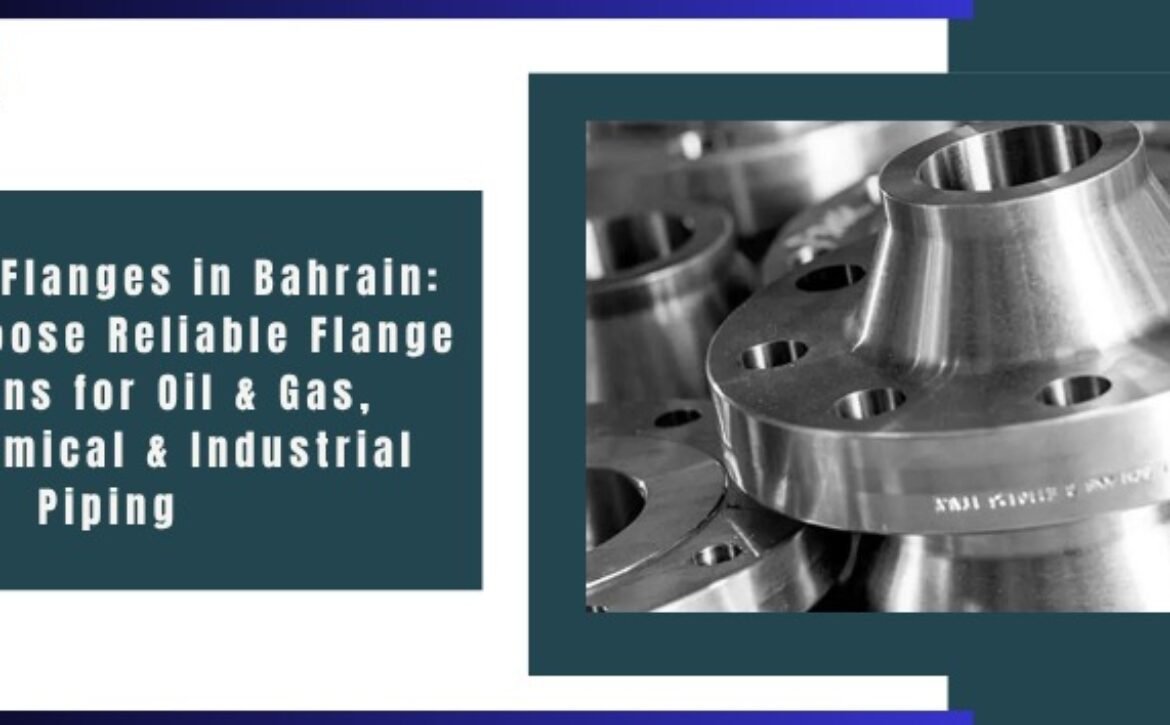
Approved Flanges in Bahrain: How to Choose Reliable Flange Solutions for Oil & Gas, Petrochemical & Industrial Piping

In Bahrain’s oil & gas, petrochemical, power generation, desalination, marine and industrial sectors, piping systems are expected to operate reliably under pressure, temperature, corrosion and continuous service conditions. A flange may appear to be a relatively simple piping component, but its dimensional accuracy, material grade, pressure rating, facing and connection design can directly affect the integrity of an entire piping system.
This is why approved flanges in Bahrain are an important consideration for EPC contractors, engineering companies, plant operators, maintenance teams and industrial procurement departments.
Mcneil Alloys supplies and exports industrial flanges for Bahrain applications, including Slip-On Flanges, Weld Neck Flanges, Blind Flanges, Threaded Flanges, Socket Weld Flanges, Orifice Flanges, Reducing Flanges, Long Weld Neck Flanges, Plate Flanges and customized flange designs. Its Bahrain-focused product information identifies applications across oil & gas, petrochemical, water and power plants, desalination and offshore industries.
The key question for a project, however, is not simply where to buy a flange. It is how to select an approved flange that matches the piping system, material, pressure, temperature and applicable engineering standards.

What Are Approved Flanges?

Approved flanges are piping components manufactured or supplied according to specified technical, dimensional, material and quality requirements applicable to a particular project, industry or end user.
They provide a bolted connection between:
Pipes
Valves
Pumps
Pressure vessels
Equipment nozzles
Process piping
Pipeline components
Instrumentation assemblies
A properly selected flange creates a secure connection while allowing piping systems and equipment to be assembled, inspected, maintained and, where necessary, dismantled.
For industrial projects in Bahrain, flange selection can involve requirements related to ASME, ASTM, API, DIN, ISO and project-specific specifications. Mcneil Alloys states that its Bahrain flange range is supplied according to international standards including ASME, ASTM, API, DIN and ISO.

Why Flange Selection Matters in Bahrain

Bahrain has a strong industrial base involving energy, refining, petrochemicals, water treatment, desalination, power generation and marine-related operations.
These environments can expose piping systems to combinations of:
High pressure
Elevated temperatures
Corrosive fluids
Salt-laden environments
Humidity
Chemical exposure
Thermal cycling
Mechanical loads
Continuous operation
The flange therefore needs to be selected as part of the complete piping system rather than as an isolated component.
Material grade, pressure class, flange facing, dimensions, bolt-hole configuration and connection type all need to correspond with the engineering requirement.
Mcneil Alloys specifically positions its Bahrain flange supply for energy pipelines, petrochemical facilities, water and power plants, desalination units and offshore applications.

Types of Approved Flanges Available for Bahrain Projects

Different piping configurations require different flange designs. Choosing the right type depends on the application, pipe size, pressure, temperature, installation method and maintenance requirements.
1. Weld Neck Flanges
Weld Neck Flanges are designed for applications where strong, reliable connections are required.
Their tapered hub helps transfer stresses from the flange into the pipe, making them suitable for demanding piping systems.
They can be considered for:
Oil & gas pipelines
Refineries
Petrochemical plants
High-pressure piping
High-temperature systems
Power plants
Process facilities

2. Slip-On Flanges
Slip-On Flanges are installed over the pipe and welded into position.
They are commonly selected when ease of installation and practical fabrication are important.
Typical applications include:
General industrial piping
Water systems
Process piping
Utility lines
Low- to moderate-pressure services

3. Blind Flanges
Blind Flanges are used to close the end of a pipe, nozzle or piping section.
They are particularly useful when a system requires:
Isolation
Pressure containment
Maintenance access
Future expansion
Pipeline termination
Blind flanges can also be used with valves, pressure vessels and equipment connections.

4. Socket Weld Flanges
Socket Weld Flanges are commonly used for smaller-diameter piping where a compact and strong connection is required.
They can be suitable for:
Instrumentation piping
Hydraulic systems
Chemical lines
Small-bore process piping
High-pressure services

5. Threaded Flanges
Threaded Flanges provide a connection without requiring welding.
They can be considered for applications where welding is undesirable or impractical, subject to the pressure, temperature and service requirements of the project.

6. Orifice Flanges
Orifice Flanges are associated with flow-measurement systems where an orifice plate is installed between flanges.
They can be used in:
Process plants
Oil & gas facilities
Petrochemical installations
Flow-measurement systems
Industrial process lines
Mcneil Alloys identifies orifice flanges within its Bahrain flange range and lists ASME/ANSI B16.36 for orifice flange manufacturing.

7. Reducing Flanges
Reducing Flanges are designed to connect piping components with different nominal diameters.
They can simplify certain piping configurations while maintaining a flanged connection.

8. Long Weld Neck Flanges
Long Weld Neck Flanges are designed for applications requiring additional hub length and robust connection characteristics.
They are particularly relevant to demanding industrial and high-temperature services.

Flange Facing: Why It Matters

The flange face is an important part of the sealing system.
Mcneil Alloys lists several flange styles, including:
Flat Face
Raised Face
Tongue & Groove
Ring Type Joint
Resilient facing configurations
The correct facing should be selected based on the mating component, gasket arrangement, pressure rating and project specification.
Raised Face Flanges
Raised Face, commonly abbreviated as RF, provides a defined gasket seating area and is widely used in industrial piping.
Flat Face Flanges
Flat Face configurations can be appropriate for certain equipment and piping arrangements where the mating surfaces require a flat connection.
Ring Type Joint Flanges
RTJ flanges are designed for demanding pressure applications where a metallic ring gasket provides the sealing mechanism.
The appropriate flange face should always match the connected equipment and engineering specification.

Flange Pressure Classes for Bahrain Industrial Applications

Pressure rating is one of the most important factors when selecting a flange.
Mcneil Alloys’ Bahrain flange information includes Class 150, 300, 600, 900, 1500 and 2500, along with PN 6, PN 10, PN 16, PN 25 and PN 40 configurations.
Common ASME Pressure Classes
Class 150
Class 300
Class 600
Class 900
Class 1500
Class 2500
The required pressure class should not be selected simply because a higher class appears safer. It must correspond to the design pressure, design temperature, material and applicable code.

Materials Used for Approved Flanges in Bahrain

Bahrain’s industrial environment requires different materials depending on process conditions.
Mcneil Alloys lists a broad range of flange materials, including stainless steel, carbon steel, alloy steel, Duplex, Super Duplex and nickel alloys.

Stainless Steel Flanges

Common stainless steel grades listed by Mcneil Alloys include:
ASTM A182 F304
F304L
F304H
F316
F316L
F317
F317L
F321
F310
F347
F904L
Stainless steel can be considered where corrosion resistance and long-term durability are important.

Carbon Steel Flanges

Mcneil Alloys lists carbon steel grades including:
ASTM A105
ASTM A694 F42
A694 F46
A694 F52
A694 F56
A694 F60
A694 F65
A694 F70
A350 LF2
A350 LF3
Carbon steel flanges can be suitable for a wide range of industrial piping applications when the material is compatible with the service conditions.

Alloy Steel Flanges

For elevated-temperature and demanding industrial services, Mcneil Alloys lists alloy steel grades such as:
ASTM A182 F1
F5
F9
F11
F22
F91
These grades can be considered for suitable high-temperature and pressure applications.

Duplex and Super Duplex Flanges

Duplex and Super Duplex stainless steels can be considered for applications where high strength and corrosion resistance are important.
They are particularly relevant to selected:
Offshore systems
Marine applications
Desalination
Water treatment
Oil & gas
Chemical processing

Nickel Alloy Flanges
Specialized nickel alloys can be considered for more aggressive chemical and high-temperature environments.
Mcneil Alloys identifies Monel, Inconel and Hastelloy among its available specialized flange materials.

Approved Flanges for Bahrain Oil & Gas Applications

The oil & gas sector places significant demands on piping components.
Flanges may be required in:
Crude oil pipelines
Gas pipelines
Refinery units
Process piping
Storage facilities
Offshore systems
Wellhead-related piping
Gas processing systems
Pumping systems
High-pressure pipelines
For these applications, engineers typically evaluate pressure class, material compatibility, flange dimensions, facing, gasket selection and applicable standards.
Mcneil Alloys identifies oil & gas and offshore operations among the principal Bahrain applications for its flange range.

Approved Flanges for Bahrain Petrochemical Plants

Petrochemical plants can involve aggressive chemicals, elevated temperatures and continuous process operation.
Flanges used in these facilities may connect:
Reactors
Heat exchangers
Process vessels
Pumps
Valves
Process pipelines
Storage systems
Utility systems
Material selection becomes particularly important because the flange must be compatible with the process medium and operating conditions.
For Bahrain petrochemical projects, the appropriate stainless steel, alloy steel, carbon steel or nickel alloy should be determined according to the engineering specification.

Flanges for Bahrain Desalination and Water Treatment

Desalination is another important application area for industrial flanges.
Water treatment and desalination systems can involve:
Seawater
Brine
Freshwater
High-pressure water
Chemical dosing systems
Filtration systems
Reverse-osmosis equipment
The combination of water, chlorides and marine exposure makes corrosion resistance an important consideration in appropriate applications.
Duplex, Super Duplex, stainless steel and other corrosion-resistant materials may be considered depending on the specific service.
Mcneil Alloys identifies desalination and water plants among the applications supported by its Bahrain flange supply.

Flanges for Bahrain Power Plants

Power-generation facilities use flanges throughout:
Steam piping
Cooling-water systems
Boiler systems
Condensate systems
Feedwater systems
Utility pipelines
Fuel systems
High-temperature piping
The flange must be selected according to pressure, temperature, material and piping-system requirements.
For high-temperature services, alloy steel flange grades may be considered where specified by the engineering design.

How to Select the Right Approved Flange in Bahrain

Choosing the correct flange requires a systematic approach.
1. Identify the Pipe Size
Confirm the nominal pipe size and outside diameter.
Incorrect dimensions can lead to installation problems and system incompatibility.
2. Determine the Pressure Class
Confirm the system’s design pressure and temperature before selecting the flange pressure class.
3. Select the Material
The flange material must be compatible with:
Process fluid
Temperature
Pressure
Corrosion conditions
Mechanical loads
Connected piping material
4. Choose the Flange Type
Determine whether the application requires:
Weld Neck
Slip-On
Blind
Socket Weld
Threaded
Orifice
Reducing
Long Weld Neck
Custom flange
5. Confirm the Facing
Select the appropriate:
RF
FF
RTJ
Tongue & Groove
Other specified facing
6. Verify the Applicable Standard
Depending on the project, the flange may need to conform to standards such as:
ASME B16.5
ASME B16.36
ASME B16.48
MSS SP-44
API 6A
ASTM
DIN
ISO
Mcneil Alloys lists these standards across its flange offering, with specific standards applying to different flange types and applications.
7. Check Documentation and Inspection Requirements
Industrial projects may require:
Material Test Certificates
Dimensional inspection
Hydrostatic testing
Third-party inspection
Traceability
PMI
Quality documentation
Mcneil Alloys states that its Bahrain flange supply includes dimensional verification, hydro testing and material certification.

Mcneil Alloys: Approved Flange Supplier for Bahrain

Mcneil Alloys supplies industrial flanges for Bahrain from its UAE-based operations, supporting industrial and project requirements across the GCC.
Its published Bahrain flange range covers multiple flange designs, pressure classes and materials, with applications in oil & gas, petrochemical, power, desalination, water treatment and offshore industries.
The company also identifies Bahrain among its export markets and states that it supports supply across major Bahrain locations including Manama, Muharraq, Riffa, Isa Town and Sitra.
For EPC contractors, distributors, plant operators and maintenance teams, the supply requirement can be specified around:
Flange type
Material grade
Nominal size
Pressure class
Facing
Standard
Quantity
Inspection requirements
Certification
Project-specific specifications

Why Choose Mcneil Alloys for Flanges in Bahrain?

Wide Product Range
Mcneil Alloys offers standard and specialized flange designs, including Weld Neck, Slip-On, Blind, Socket Weld, Threaded, Orifice, Reducing and Long Weld Neck flanges.
Multiple Material Options
The range includes stainless steel, carbon steel, alloy steel, Duplex, Super Duplex and nickel alloys for different industrial conditions.
International Standards
Flanges are supplied according to applicable international standards including ASME, ASTM, API, DIN and ISO.
Project-Based Supply
The company supports standard as well as customized flange requirements, including special sizes and project-specific configurations.
Bahrain Supply Capability
Mcneil Alloys specifically markets its flange products for Bahrain’s industrial and offshore sectors and supports supply across major industrial areas of the country.

Conclusion

Selecting the right approved flanges in Bahrain requires more than choosing a flange based on size alone. Pressure class, material grade, facing, flange type, temperature, process medium, applicable standards and inspection requirements all influence the suitability of a flange for an industrial piping system.
For Bahrain’s oil & gas, petrochemical, power, desalination, water treatment and offshore industries, Mcneil Alloys provides a broad range of stainless steel, carbon steel, alloy steel, Duplex, Super Duplex and nickel alloy flanges in multiple configurations and pressure classes.
From standard Weld Neck and Slip-On Flanges to Blind, Orifice, Reducing, RTJ and customized solutions, the focus should always remain on matching the flange specification to the actual requirements of the project.

Frequently Asked Questions About Approved Flanges in Bahrain

What are approved flanges used for in Bahrain?
Approved flanges are used to create secure, maintainable connections between pipes, valves, equipment and other piping components. They are widely applicable to oil & gas, petrochemical, power, desalination, water treatment and offshore systems.
What types of flanges does Mcneil Alloys supply in Bahrain?
Mcneil Alloys lists Weld Neck, Slip-On, Blind, Threaded, Socket Weld, Orifice, Reducing, Long Weld Neck, Plate and customized flange options for Bahrain projects.
Which flange materials are available?
The published Bahrain range includes stainless steel, carbon steel, alloy steel, Duplex, Super Duplex and specialized nickel alloys such as Monel, Inconel and Hastelloy.
Which pressure classes are available?
Mcneil Alloys lists ASME pressure classes from 150 through 2500, as well as PN 6, PN 10, PN 16, PN 25 and PN 40 configurations.
Are Mcneil Alloys flanges suitable for oil & gas applications in Bahrain?
Mcneil Alloys specifically identifies oil & gas, petrochemical and offshore applications among the industries served by its Bahrain flange range.
Can Mcneil Alloys supply customized flanges for Bahrain projects?
Yes. The company’s Bahrain page states that customized flange solutions can be provided for project-specific requirements, including special sizes and configurations.
Which standards are associated with Mcneil Alloys flanges?
The Bahrain product information references standards including ASME, ASTM, API, DIN and ISO, with specific flange products manufactured to applicable standards such as ASME B16.5, ASME B16.36, ASME B16.48, MSS SP-44 and API 6A.
Does Mcneil Alloys supply flanges across Bahrain?
Yes. Mcneil Alloys states that it supplies across Bahrain, including Manama, Muharraq, Riffa, Isa Town and Sitra.

Read More
admin September 2, 2026 0 Comments

Pressure Rating Explained: What Class 150, 300, 600 Really Means?


In industrial piping systems, terms like Class 150, Class 300, and Class 600 frequently appear in specifications,
purchase orders, and technical discussions. While these numbers are widely used, they are often misunderstood.

At Mcneil Alloys, we work closely with clients across the UAE and GCC to ensure the correct
selection of pressure-rated components for critical applications.

What is Pressure Rating?

Pressure rating refers to the maximum pressure a flange or fitting can safely withstand at a given temperature.

  • As temperature increases, pressure tolerance decreases
  • Ratings are defined by standards such as ASME B16.5
  • Pressure classes represent ranges, not exact PSI values

This means that a Class 300 flange does not mean it can handle exactly 300 PSI.

Understanding Class 150, 300, and 600

Class 150 – Low to Moderate Pressure Applications

  • Approx. up to 285 PSI at ambient temperature
  • Lightweight and cost-effective
  • Used in water systems, HVAC, and low-pressure oil lines

Class 300 – Medium Pressure Applications

  • Approx. up to 740 PSI at ambient temperature
  • Stronger and more durable
  • Used in chemical plants, petrochemical industries, and steam systems

Class 600 – Ideal for critical high-pressure operations

  • Approx. up to 1480 PSI at ambient temperature
  • Heavy-duty construction
  • Used in oil & gas, steam lines, and power plants

Why Temperature Matters

Temperature plays a major role in pressure capacity.

  • A Class 300 flange at 38°C may handle around 740 PSI
  • At 400°C, its pressure capacity drops significantly

This happens because materials lose strength at higher temperatures.

Material Selection is Equally Important

Pressure rating is influenced not only by class but also by the material used.

  • Carbon Steel – Standard industrial applications
  • Stainless Steel – Corrosion resistance
  • Alloy / Duplex Steel – High strength and harsh environments

Common Mistakes to Avoid

  • Assuming Class 300 equals 300 PSI
  • Ignoring temperature effects
  • Choosing lower class only to reduce cost
  • Not matching ratings across components

How to Choose the Right Pressure Class

  • Operating pressure
  • Maximum temperature
  • Type of fluid
  • Industry standards
  • Application criticality

How Mcneil Alloys Supports Your Projects

  • Expert guidance based on ASME standards
  • Wide range from Class 150 to 2500
  • Materials: Carbon Steel, Stainless Steel, Duplex, Alloy
  • Fast delivery across UAE & GCC

Final Thoughts

Understanding pressure ratings is essential for safety, performance, and long-term reliability.

  • Efficient system operation
  • Reduced maintenance
  • Improved safety

If you’re unsure which pressure class is right for your application, expert guidance can make all the difference.


Read More
admin March 23, 2026 0 Comments

What is the Difference Between Forged and Plate Flanges?

If you’ve worked with piping systems long enough, you know one thing — not all flanges are created equal.

On paper, forged and plate flanges might look similar. Same shape, same function, same connection purpose. But in real industrial conditions — high pressure, temperature variation, corrosive environments — the difference between the two becomes very clear.

Choosing the wrong type doesn’t just affect performance; it can lead to leakage, maintenance issues, or even system failure. That’s why understanding how these flanges are made and where they should be used is more than just technical knowledge — it’s a practical decision that impacts long-term reliability.

Let’s break it down in a straightforward way.

What are Forged Flanges?

Forged flanges are made by shaping metal under high pressure, usually at elevated temperatures. Instead of cutting from a sheet, the material is compressed and formed into shape.

This process changes the internal structure of the metal. It aligns the grain flow, making the flange stronger and more resistant to stress. In simple terms — the material becomes tougher from the inside, not just the surface.

From a practical point of view, forged flanges are built for demanding conditions. They’re commonly used in oil & gas lines, refineries, and high-pressure systems where failure is not an option.

You’ll notice that forged flanges tend to feel more “solid” in machining and handling — that’s because of their dense structure.

What are Plate Flanges?

Plate flanges are much simpler in terms of manufacturing. They are cut directly from flat steel plates and then machined to the required dimensions.

There’s no forging involved, which means the internal grain structure of the metal remains as it was in the original plate. While this is perfectly fine for many applications, it doesn’t offer the same strength as forged material.

From a buyer’s perspective, plate flanges are attractive because they are more economical and easier to produce, especially in larger sizes. That’s why you’ll often see them used in water lines, low-pressure systems, or non-critical applications.


The Real Differences That Matter

Instead of just listing technical points, here’s what actually matters when you’re selecting between the two:

Strength and Reliability: Forged flanges clearly outperform plate flanges here. If your system deals with pressure fluctuations or heavy loads, forged is the safer option.

Plate flanges can handle normal conditions, but they’re not designed for extreme stress.


Manufacturing Approach: Forged flanges are shaped under pressure — plate flanges are cut from sheets.

This one difference is the reason everything else changes — strength, durability, and performance.


Cost vs Performance: Plate flanges are cheaper, no doubt. But the real question is — what’s the cost of failure?

In low-risk systems, saving cost makes sense. In critical systems, it usually doesn’t.


Application Suitability: From experience, the decision usually comes down to application:

  • Forged flanges → High pressure, high temperature, critical lines
  • Plate flanges → Utility lines, water systems, low-pressure applications


Size Consideration: If you’re dealing with very large diameters, plate flanges are often more practical and readily available.

Forged flanges are typically used within standard size ranges due to manufacturing limitations.


When Should You Choose Forged Flanges?: If your project involves anything critical — oil pipelines, chemical processing, steam lines — forged flanges are the safer bet. They handle stress better, last longer, and reduce the chances of unexpected issues. In industries where downtime is expensive, this matters a lot.


When Do Plate Flanges Make Sense? : Plate flanges work well when the system is straightforward and not under heavy stress.

For example, water pipelines or general industrial services where conditions are stable. In such cases, they offer a good balance between cost and functionality.


Conclusion

At the end of the day, the difference between forged and plate flanges comes down to how much reliability your system needs.

Forged flanges give you strength, durability, and confidence in critical operations. Plate flanges give you flexibility and cost savings for less demanding applications.

There’s no “one-size-fits-all” answer — the right choice depends on where and how the flange will be used. But one thing is clear: understanding this difference upfront can save a lot of trouble later.


Read More
admin March 18, 2026 0 Comments

Domestic vs Imported Flanges in Industrial Projects: Understanding Cost, Quality, Risk and Long-Term Reliability Before You Decide

In piping systems, flanges rarely look complicated. They are round, standardized components with defined dimensions and pressure ratings. Yet, during installation or plant operation, they often become the difference between smooth commissioning and unexpected shutdown.

When procurement begins, buyers typically face one recurring comparison  domestic flanges vs imported flanges. At first glance the decision appears financial because imported material usually offers a lower purchase price. However, in real projects, the outcome depends less on the invoice and more on reliability, availability, and accountability.

This article explains the decision from a practical industry viewpoint: what actually happens during inspection, fit-up, operation, and maintenance.


Why the Origin of a Flange Changes Project Experience

Domestic flanges are produced within the same country as the installation site. This allows direct communication with the manufacturer, quicker clarification of drawings, and immediate response if deviations appear.

Imported flanges may meet the same ASTM or ASME standards on paper, but the supply chain becomes longer — involving shipping schedules, customs clearance, documentation exchange, and coordination across time zones. The material itself may be acceptable, yet the distance introduces uncertainty.

So the real comparison is not simply quality versus price. It is control versus dependency.

When a pipeline is ready for welding and one flange does not align, the team does not compare standards — they compare response time.


Situations Where Domestic Flanges Provide Operational Confidence

Domestic sourcing becomes valuable when project timelines or safety requirements leave little margin for delay. The advantage lies in responsiveness rather than just manufacturing.

  • Inspection agencies can visit the facility easily
  • Dimensional corrections can be handled quickly
  • Traceability verification is straightforward
  • Replacement during shutdown is faster
  • Installation alignment tends to be more consistent
  • Logistics risks remain minimal

For high-pressure or hazardous service pipelines, these practical benefits often outweigh minor price differences because downtime cost exceeds material savings.


Situations Where Imported Flanges Can Be Economical and Practical

Imported flanges are not inherently unsuitable. They work effectively when the application allows flexibility and procurement planning includes buffer time.

  • Suitable for water distribution and utility lines
  • Useful in large-volume low-risk piping networks
  • Economical for projects with strict budget targets
  • Acceptable when spare stock is maintained
  • Practical for temporary or non-critical installations

With proper inspection and reliable sourcing channels, they can serve well where operational risk remains limited.


Installation Stage: Where Differences Become Visible

Most flange comparisons happen during quotation review, but the real evaluation occurs on the shop floor. During fit-up, minor variations in machining tolerances affect bolt alignment and welding preparation. Each additional adjustment consumes time.

Domestic manufacturers often produce repeatedly for similar regional projects, so machining practices align closely with contractor expectations. This consistency reduces rework during assembly.

Imported materials sometimes vary between shipments when multiple traders or mills are involved. The grade marking remains identical, yet fit-up effort changes. Over hundreds of joints, even small adjustments extend installation schedules significantly.


Documentation and Technical Clarification Time

Modern industrial projects rely heavily on documentation — mill test certificates, PMI reports, and inspection approvals. When a consultant raises a query, response speed matters as much as document accuracy.

Domestic suppliers can usually respond the same day, revise certificates, or coordinate with inspectors quickly. Imported shipments may also have correct paperwork, but verification takes longer due to communication gaps and logistics coordination.

For EPC contractors working with fixed deadlines, waiting for document clarification can delay hydrotesting and commissioning.


Understanding the True Cost Beyond the Purchase Price

Imported flanges often appear economical during tender comparison because the unit rate is lower. However, project cost includes indirect factors:

inspection coordination, clearance time, storage delays, and possible replacement schedules. A single rejected component can delay multiple teams  welders, inspectors, and testing crews  multiplying costs.

Domestic flanges may carry a slightly higher purchase value but reduce uncertainty. Many project managers consider them financially safer when schedule adherence matters more than minimal savings.


Long-Term Maintenance and Availability Considerations

Plants operate for decades. During maintenance shutdowns, teams require identical replacements quickly. Domestic manufacturers typically maintain repeat production standards, simplifying spare procurement years later.

Imported sourcing may shift manufacturing origins over time, creating dimensional variation during future maintenance. Even small mismatches extend downtime during planned shutdowns.

Reliability over years often outweighs short-term procurement advantage.


Making a Balanced Procurement Decision

Rather than choosing one category universally, experienced engineers match the sourcing strategy to application risk. Critical systems benefit from accountable local manufacturing, while utility systems can safely optimize cost through imports.

A thoughtful combination often delivers the most efficient result — reliability where necessary and economy where acceptable.


Conclusion

A flange is a simple component, but it connects complex operations. The decision between domestic and imported is ultimately about predictability.

If your project demands certainty, immediate support, and long-term consistency, domestic sourcing offers operational assurance. If the system allows tolerance and planning buffer, imported sourcing can control budget effectively.

The right choice is the one that keeps the plant operating smoothly — not only on commissioning day, but throughout its service life.


Read More
admin February 23, 2026 0 Comments

Premium Stainless Steel Flanges in Oman – Why Mcneil Alloys Leads the Industry

The industrial landscape of Oman continues to expand rapidly, driven by major developments in oil and gas, petrochemicals, power generation, desalination, and large-scale infrastructure projects. With pipeline systems forming the backbone of these operations, industries require components that deliver consistency, safety, and long-term reliability. Among these essential components, flanges play an important role in ensuring secure, leak-free connections across a variety of industrial applications.

As a leading flanges manufacturer, supplier, and exporter in Oman, Mcneil Alloys has built a strong reputation for delivering precision-engineered stainless steel flanges known for their strength, corrosion resistance, and dependable performance. With advanced manufacturing capabilities and a commitment to quality, Mcneil Alloys continues to support Oman’s industrial growth with solutions designed to meet global standards.


Engineered for Strength, Durability, and Industrial Reliability

At Mcneil Alloys, every flange is crafted with a focus on tensile strength, dimensional accuracy, and superior operational performance. The flanges are manufactured using high-quality stainless steel grades that provide excellent resistance to oxidation, heat, and corrosion—critical factors in Oman’s industrial environments, where pipelines often carry high-temperature fluids, chemicals, and hydrocarbons.

Whether used in refineries, petrochemical plants, offshore platforms, water treatment systems, or gas processing units, our flanges are engineered to perform under pressure. Each flange is designed to maintain structural stability even when subjected to extreme temperature variations or heavy mechanical loads.

This strength and long-lasting reliability make Mcneil Alloys a preferred partner for industries seeking dependable flange solutions.


Precision Manufacturing for Leak-Free Performance

Pipeline safety is a top priority in Oman’s industrial sectors. A poorly aligned or low-quality flange can result in leaks, pressure loss, downtime, or operational hazards. To eliminate these risks, Mcneil Alloys follows strict manufacturing protocols that ensure every flange maintains perfect geometry, flatness, and sealing integrity.

Our production process includes:

  • Strict material selection based on international metallurgical standards
  • CNC machining for precision dimensions
  • Surface finishing for smooth contact and improved sealing
  • Pressure testing and quality verification
  • Inspection through certified testing procedures

This meticulous approach ensures that each flange meets its intended performance requirements before being dispatched to clients.


Flange Styles to Match Every Industrial Requirement

Not all industries require the same type of flanges. To support diverse operating conditions and system configurations, Mcneil Alloys manufactures a wide variety of flange styles, each designed for specific pressure classes, fluid types, and installation needs.

Our Key Flange Types Include:

  1. Flat Face Flanges
    Ideal for low-pressure and non-critical applications. Commonly used in water lines and cast iron systems.
  2. Raised Face Flanges
    Designed to enhance gasket performance and sealing reliability, these are widely used across oil and gas, petrochemical, and process industries.
  3. Ring Joint Flanges (RTJ)
    Perfect for high-pressure and high-temperature operations, providing leak-proof sealing even under extreme conditions.
  4. Tongue & Groove Flanges
    Used where precise alignment is essential. These flanges offer strong sealing capabilities and are ideal for systems that need accurate joint compression.
  5. Resilient and Custom Flanges
    Manufactured for specialized applications that require specific dimensions or unique material combinations.

Each flange is produced to comply with major international standards, such as:

  • ASME
  • ASTM
  • MSS
  • API

This ensures compatibility with global pipeline systems and guarantees reliable performance in all industrial environments.


Serving Oman’s Key Industrial Sectors

Mcneil Alloys has become a trusted supplier for vital industries across Oman due to our commitment to quality, timely delivery, and technical support. Our flanges are widely used in:

  • Oil & Gas Processing
  • Petrochemical Plants
  • Refineries
  • Desalination Facilities
  • Water and Sewage Networks
  • Power Generation Stations
  • Construction and Marine Projects

Oman’s industries recognize the importance of using components that can withstand demanding environments, and Mcneil Alloys continues to provide products that help improve operational efficiency and safety.


Supporting Local and GCC Markets with Reliability

Although we serve clients across Oman—including Muscat, Sohar, Duqm, Salalah, and Nizwa—Mcneil Alloys also maintains strong supply networks throughout the GCC. With growing interconnectivity across the region, our flanges are exported to:

  • UAE
  • Saudi Arabia
  • Qatar
  • Bahrain
  • Kuwait

This regional presence ensures that clients receive consistent quality and timely delivery regardless of their location.


Why Industries in Oman Prefer Mcneil Alloys

Over the years, Mcneil Alloys has earned the trust of engineers, procurement teams, and project managers across Oman due to our unwavering focus on quality and service. Here’s what sets us apart:

Premium Raw Materials : All stainless steel used in our flanges is sourced from verified and reliable suppliers to ensure consistent performance.

Advanced Manufacturing Technology : We use CNC machining, precision cutting, and automated processes to deliver highly accurate and reliable flange solutions.

Compliance with International Standards : Our flanges meet global benchmarks, making them suitable for local as well as export projects.

Wide Product Range : From standard flanges to customized designs, we provide tailored solutions for all industrial requirements.

Dedicated Technical Support : Our team ensures smooth coordination, guidance, and assistance throughout the procurement process.

Competitive Pricing : Mcneil Alloys offers high-quality products at fair and transparent pricing to support cost-effective project execution.

Conclusion

As Oman continues to expand its industrial footprint, the demand for durable and dependable stainless steel flanges grows stronger. Mcneil Alloys proudly supports this progress by offering premium-quality flanges that promise long-lasting strength, operational efficiency, and complete reliability.

Looking for Reliable Flanges in Oman? Connect with Mcneil Alloys Today

Mcneil Alloys is committed to supporting Oman’s industries with durable, precision-engineered stainless steel flanges built for long-term performance. Whether you need flanges for a refinery upgrade, a petrochemical project, a power plant, or a new industrial installation, we deliver solutions you can depend on.

Get in touch with Mcneil Alloys today for high-quality flanges manufactured to international standards—your trusted partner for reliable pipeline connections in Oman.


Read More
admin December 1, 2025 0 Comments

Flanges Manufacturer & Supplier in Bahrain – High-Quality Industrial Flanges for Reliable Performance

Bahrain’s industrial sector is growing rapidly, driven by oil and gas, petrochemical operations, power plants, desalination units, and major infrastructure projects. In each of these environments, one essential component supports safe and efficient operations: the flange.

As a leading flanges manufacturer and supplier in Bahrain, Mcneil Alloys consistently provides high-quality products built for strength, durability, and long-term reliability. Our flanges are designed to maintain a secure, leak-proof connection across pipelines and industrial systems, ensuring smooth operation even under intense pressure and extreme temperature variations.

With a strong presence across the GCC, we supply flanges not only in Bahrain but also in regions like the UAE, Saudi Arabia, and Qatar, supporting projects that demand high-performance pipeline components. Whether it’s for refinery units, offshore platforms, or water treatment facilities, our flanges are trusted for their consistent quality and technical precision.


The Role of Flanges in Bahrain’s Industrial Systems

Flanges serve as the connection points that allow pipelines to be assembled, maintained, and inspected without dismantling entire systems. The industries in Bahrain rely heavily on them because they provide:

  • Safe, leak-proof sealing
  • Easy access for repairs and modifications
  • Strong resistance against corrosion and pressure
  • Stability in high-temperature environments
  • Compatibility with complex process systems

Given Bahrain’s exposure to high-salinity environments and chemical-rich industrial settings, flanges must be built with materials that can withstand corrosion, thermal expansion, and mechanical strain. At Mcneil Alloys, we manufacture stainless steel, carbon steel, and alloy steel flanges that are designed to perform exceptionally in such challenging conditions.


Types of Flanges We Manufacture and Supply in Bahrain

We offer a wide range of flanges suitable for diverse applications:

Weld Neck Flanges

Preferred in high-pressure, high-temperature applications for their strong welded connection and stress-reducing design.

Slip-On Flanges

Easy to install and ideal for low-pressure systems such as water pipelines and general utilities.

Blind Flanges

Used to close pipeline ends securely, especially during maintenance or shutdowns.

Socket Weld Flanges

Designed for small-diameter pipelines that require durable, leak-tight connections.

Threaded Flanges

Used in areas where welding is not possible or not safe, especially in explosive environments.

Lap Joint & Orifice Flanges

Suitable for pipelines requiring frequent dismantling or flow measurement.

All products are manufactured with accurate machining, strict tolerance control, and high-grade materials to ensure long service life.


Industries in Bahrain That Rely on Mcneil Alloys Flanges

Our flanges are widely used across Bahrain in sectors such as:

Oil and Gas

Bahrain’s refinery and petrochemical facilities require flanges that can handle corrosive fluids, heat, and pressure. Our alloy and stainless steel flanges provide dependable performance for these critical operations.

Petrochemical Processing

Chemical-intensive environments demand flanges with strong corrosion resistance. Our products offer long-term durability even in harsh chemical applications.

Power and Energy

Boiler lines, steam systems, and turbine pipelines depend on high-strength flanges that deliver consistent performance.

Desalination and Water Treatment

Given Bahrain’s heavy reliance on desalination, corrosion-resistant stainless-steel flanges play an essential role in plant efficiency.

Marine and Offshore Structures

Our flanges are built to withstand high humidity and salt exposure in marine environments.

With years of serving Bahrain’s industrial sector, we understand project-specific needs and tailor our solutions accordingly.


Our GCC-Wide Supply Network

Mcneil Alloys has a strong presence across the Gulf region, supporting industries with consistent supply, technical expertise, and on-time delivery. We are already recognized as a trusted flanges manufacturer and supplier in the UAE, catering to oil and gas hubs like Dubai and Abu Dhabi. Similarly, we supply high-performance flanges across key industrial regions of Saudi Arabia, including Jubail, Yanbu, and Dammam. In Qatar, our flanges are used extensively in LNG plants, power stations, and infrastructure projects. This interconnected GCC network ensures faster delivery, better technical support, and a reliable supply chain for Bahrain-based clients who operate regionally.


Quality That Matches Global Standards

Quality is central to everything we manufacture. Every flange undergoes:

  • Raw material testing
  • Dimensional inspection
  • Pressure and leak testing
  • Ultrasonic and radiographic examination
  • Surface finish and coating checks

We follow globally recognized standards such as ASME, ASTM, DIN, ISO, and ANSI, ensuring compatibility for local and international projects.


Why Choose Mcneil Alloys?

Choosing the right flange supplier is crucial for long-term performance and safety. Here’s why industries across Bahrain and the Gulf trust Mcneil Alloys:

Reliable Manufacturing Expertise

Our years of experience in flange manufacturing help us deliver products engineered for strength, accuracy, and durability.

Wide Range of Materials

From stainless steel to carbon steel and alloy steel, we offer flanges suitable for every industrial condition.

Custom Solutions for Specialized Projects

If your project requires non-standard dimensions or specific material grades, we offer tailor-made flange solutions.

GCC-Wide Distribution Strength

With active supply networks in Bahrain, UAE, Saudi Arabia, and Qatar, we ensure fast delivery and seamless project support.

Strict Quality Standards

Each flange is tested thoroughly to meet global norms, ensuring safe and reliable performance in demanding environments.

Dedicated Support Team

Our team assists with technical selection, documentation, and project requirements from start to finish.


Your Trusted Flanges Partner in Bahrain – Get in Touch

At Mcneil Alloys, we don’t just manufacture products—we help industries build safer and more efficient systems. Whether you need standard flanges or customized engineering solutions, our team is ready to support your requirements with experience, precision, and reliability.

If you are looking for a dependable flanges manufacturer and supplier in Bahrain, Mcneil Alloys is prepared to deliver quality, expertise, and exceptional service.

Connect with us today to discuss your project needs or request a quote. We are here to support your operations with reliable flange solutions built for performance and longevity.


Read More
admin November 29, 2025 0 Comments

Industrial Flanges in UAE – Why Mcneil Alloys is a Trusted Name in the GCC

In the world of industrial piping systems, the smallest components often carry the biggest responsibilities. Flanges are one of those components. They hold pipelines together, keep systems sealed, and ensure fluids and gases move safely through complex industrial networks. When they fail, entire operations can come to a halt. This is why industries in the UAE rely heavily on flanges that are strong, precise, and built to last.

Mcneil Alloys has earned a reputation as one of the dependable flange manufacturers, suppliers, and exporters in UAE. Our approach is simple: provide flanges that stand up to the demanding conditions of the region and maintain consistent performance year after year.

Meeting the Demands of a Fast-Growing Industrial Region

The UAE and GCC region are home to some of the world’s most advanced infrastructure projects and energy industries. Oil refineries, chemical plants, desalination units, and offshore rigs operate under conditions that place intense pressure on piping systems. Every joint must be secure, every connection must be reliable, and every material must withstand heat, corrosion, and frequent operational cycles.

This is where the quality of our flanges makes a difference. We manufacture flanges that deliver stability and safety in environments where equipment failure is simply not acceptable.

Our products are used across Dubai, Abu Dhabi, Sharjah, Ras-Al-Khaimah, Qatar, Oman, Kuwait, Bahrain, and Saudi Arabia, supporting countless pipeline and process systems.

Engineering That Focuses on Real-World Performance

Producing a flange is not just about shaping metal. It involves careful selection of materials, precision machining, and thorough testing. At Mcneil Alloys, each flange is manufactured with accuracy to ensure it fits perfectly into the system and holds pressure without leaking.

From stainless steel and carbon steel to alloy steel and duplex grades, our material choices are tailored to applications that involve high temperatures, harsh chemicals, or constant exposure to saltwater environments. The final product is a flange that performs reliably even in the toughest operating conditions.

Types of Flanges We Manufacture

At Mcneil Alloys, we provide a complete range of industrial flanges to meet varied project needs:

  • Weld Neck Flanges – Ideal for high-pressure pipelines
  • Slip-On Flanges – Easy installation and alignment
  • Blind Flanges – Used for sealing pipeline ends
  • Socket Weld Flanges – Reliable for smaller pipes
  • Threaded Flanges – Perfect for non-welded connections
  • Lap Joint Flanges – Suitable for frequent dismantling
  • Orifice Flanges – Used for flow measurement
  • Long Weld Neck Flanges – For high-temperature services
  • Reducing Flanges – For connecting different pipe sizes

Whether customers need standard sizes or fully customized flange solutions, our team ensures precision manufacturing and prompt delivery.

Built to Withstand UAE and GCC Environmental Conditions

The Gulf region presents unique challenges for industrial components. High humidity, fluctuating temperatures, and saline coastal air can cause corrosion and fatigue in low-quality flanges. The flanges we manufacture are designed with these challenges in mind. Their corrosion resistance, mechanical strength, and dimensional stability make them ideal for pipelines and systems that must operate continuously in such environments.

This durability is one of the reasons why industries in the UAE and GCC choose us repeatedly for long-term projects.

A Reliable Flange Partner for UAE’s Fast-Growing Industrial Sector

The UAE and GCC region have become global hubs for heavy industries—oil & gas, petrochemicals, shipbuilding, desalination, and infrastructure. With this growth comes the need for components that perform flawlessly in tough environments.

Mcneil Alloys manufactures flanges designed specifically for these high-stress conditions. From high-pressure pipelines in Abu Dhabi, large petrochemical units in Qatar, to desalination plants in Saudi Arabia, our flanges support industries where failure is simply not an option.

Where Our Flanges Are Used

  • Oil & Gas Refineries
  • Petrochemical Processing Units
  • Marine & Offshore Pipelines
  • Water Treatment & Desalination Plants
  • Construction & Infrastructure
  • Power Generation Facilities
  • Mechanical and Process Industries

Each flange we supply is crafted to offer stability, strength, and corrosion resistance—essential for UAE’s high-temperature, saline, and sand-heavy environment.


Why Mcneil Alloys is a Preferred Flange Partner in the GCC

Industries working on critical operations look for reliability above all else. They prefer Mcneil Alloys because we focus not only on manufacturing but also on understanding what each application requires.

Engineers trust us for the consistency of our products. Purchasing teams rely on us for timely supply. Project managers appreciate our ability to provide both standard and custom options. And businesses value the balance we offer between quality and affordability.

Our commitment to global standards, transparent quality checks, strong technical knowledge, and dependable deliveries across the UAE and GCC make us a long-term partner rather than just a supplier.

Conclusion

Flanges may appear to be simple components, but they are essential for the safe and efficient functioning of industrial systems. At Mcneil Alloys, we combine advanced production techniques with strong quality control to deliver flanges that industries can trust for long-term performance.

Whether you are planning a new project or upgrading an existing system, Mcneil Alloys is prepared to supply high-quality flanges that match your application, standards, and expectations.

Read More
admin November 19, 2025 0 Comments

Flange Manufacturer & Supplier in UAE

Leading Flange Manufacturer & Supplier in UAE – Mcneil Alloys

Industrial piping systems depend on many components — but few are as crucial as flanges. They are the connection point that keeps pipelines secure, maintains pressure, and prevents leaks in critical systems. At Mcneil Alloys, we take this responsibility seriously. As a trusted flange manufacturer, stockist, and supplier in the UAE, we provide industries with products engineered for strength, safety, and long-term durability.

Our flanges are widely used in the UAE’s core industrial sectors — from offshore energy facilities and petrochemical plants to water treatment projects and power stations. When industries need a reliable flange partner who understands performance and timelines, they choose Mcneil Alloys.


Why Flanges Matter in Critical Industries

Flanges may look like simple components, but they serve a powerful role. They allow pipes and equipment to be joined securely, dismantled for maintenance, and aligned for proper flow. In industries like oil & gas, power, marine, chemical processing, and desalination, a flange failure can cause downtime, leaks, and costly safety issues.

That’s why we manufacture flanges that meet strict quality standards and can perform under high pressure, corrosive fluids, and extreme temperatures. Our goal is to help industries work safely, efficiently, and without interruption.


Supporting UAE’s Industrial Growth & Infrastructure

The UAE continues to invest heavily in industrial innovation — expanding refineries, building offshore facilities, upgrading desalination plants, and enhancing energy infrastructure. As these sectors grow, the need for dependable, high-quality flanges also increases.

At Mcneil Alloys, we align with this vision. We support developing and ongoing projects across Dubai, Abu Dhabi, Sharjah, and the GCC by providing flanges that match global performance standards and meet strict delivery schedules. Our supply chain and technical team understand the urgency and precision required in industrial work.


Wide Selection of Flanges We Supply

Every application demands the right type of flange — and we provide a complete range:

  • Weld Neck Flanges
  • Slip-On Flanges
  • Blind Flanges
  • Socket Weld Flanges
  • Threaded / Screwed Flanges
  • Lap Joint Flanges
  • Orifice Flanges
  • Long Weld Neck & Custom Flanges (on request)

Available Materials

  • Stainless Steel (304/316 series)
  • Carbon Steel (A105, A350 LF2)
  • Alloy Steel (F11, F22)
  • Duplex / Super Duplex / Nickel Alloys (as needed)

Every flange is manufactured, inspected, and tested according to ASME, ANSI, ASTM, DIN, EN, and API standards.


 Quality That Stands Up to Harsh Conditions

We know where our flanges are installed — offshore rigs, chemical reactors, high-pressure steam lines, and more. That’s why we focus on:

  • Accurate dimensions and smooth finish
  • Uniform hardness and strength
  • High corrosion resistance
  • Pressure and leakage testing
  • Material traceability and certifications

Our quality control team ensures each flange performs with confidence, even in saltwater environments, extreme heat, or aggressive chemicals.


Custom Solutions for Technical Requirements

Every industry, and often every project, has different needs. Some require high-thickness flanges for pressure pipelines, others need exotic alloys for corrosive media, and some demand specific dimensions for equipment fitment.

We work closely with engineers and procurement teams to provide custom-built flanges, ensuring precise sizing, material compatibility, and pressure class standards. Whether it’s a unique offshore requirement or a large EPC project, we deliver what the application demands.


Quick Delivery Across UAE & GCC

Industrial projects run on deadlines — and we respect that. With ready stock options and an efficient logistics network, we supply flanges across:

UAE – Dubai, Abu Dhabi, Sharjah, Fujairah
Saudi Arabia | Qatar | Oman | Bahrain | Kuwait

From single urgent orders to large-scale supply requirements, we ensure speed, reliability, and smooth coordination.


Get Reliable Flanges for Your Next Project

If you’re looking for high-quality flanges in UAE that combine durability, precision, and fair pricing, Mcneil Alloys is here to support you. Speak to our team for specifications, material grades, sizes, and delivery schedules.

📧 Email: info@mcneilalloys.com
🌐 Website: www.mcneilalloys.com

Read More
admin November 10, 2025 0 Comments

OMV Approved Flanges


McNeil Steel & Alloys FZE, based in the United Arab Emirates, specializes in manufacturing and exporting instrumentation pipe fittings and valves. Their product range includes tubes, pipes, pipe fittings, flanges, instrumentation tube fittings, instrumentation valves, and hardware. They are approved suppliers for major companies such as Total Energies, Shell, ONGC, GASCO, Exxon Mobil, EIL, Chevron Corp, Baker Hughes, and Bahrain Petroleum.

The company is committed to delivering high-quality products and services that meet or exceed customer expectations. Their quality policy emphasizes continuous improvement, adherence to international standards, and maintaining a skilled workforce to ensure product reliability and customer satisfaction.

McNeil Steel & Alloys FZE serves a diverse range of industries, including oil and gas, petrochemicals, power generation, and more. Their extensive product line and industry approvals enable them to meet the specific requirements of these sectors, providing reliable solutions for various applications.


OMV Approved Flanges: Delivering Excellence in Industrial Applications

Flanges play a crucial role in the seamless and safe operation of pipelines and industrial systems, particularly in sectors like oil and gas, petrochemicals, and energy. OMV, a global leader in oil, gas, and chemicals, demands the highest standards of reliability and performance for its equipment and components. OMV approved flanges are designed to meet these stringent requirements, ensuring superior quality and functionality.

As a leader in the manufacturing and supply of high-quality flanges, Mcneil Steel & Alloys FZE has earned recognition as one of the top Stainless Steel Flanges Manufacturers in the industry. Their commitment to delivering exceptional products makes them a trusted partner for industries requiring OMV approved flanges.


The Significance of OMV Approved Flanges

OMV approved flanges are a testament to quality, durability, and precision. These flanges are specifically designed to meet the operational demands of OMV’s global projects, which often involve extreme temperatures, high pressures, and corrosive environments. Certification by OMV ensures these flanges meet or exceed the company’s strict engineering and safety standards.

The use of OMV approved flanges guarantees a secure and leak-proof connection in critical applications, minimizing operational risks and downtime. Industries rely on these components to maintain the integrity of their systems and achieve optimal performance.


Characteristics of OMV Approved Flanges

OMV approved flanges are characterized by several features that make them indispensable in industrial operations:

  • High-Quality Materials: Made from premium stainless steel, these flanges are resistant to corrosion, wear, and high-pressure conditions.
  • Precision Engineering: Designed with exacting dimensional accuracy to ensure a perfect fit and secure connection.
  • Temperature Resistance: Capable of withstanding extreme temperatures, ensuring reliable performance in diverse environments.
  • Global Standards Compliance: Certified to meet international standards such as ASME, ASTM, and API, making them suitable for a wide range of applications.

Mcneil Steel & Alloys FZE’s expertise as a Stainless Steel Flanges Supplier ensures the delivery of flanges with these essential attributes, tailored to the specific needs of OMV-approved projects.


Applications of OMV Approved Flanges

The versatility of OMV approved flanges makes them suitable for use in a variety of industries, including:

  • Oil and Gas: Essential for pipelines, refineries, and drilling operations, ensuring leak-proof transport of crude oil and natural gas.
  • Petrochemical Industry: Used in processing plants to handle chemicals and other volatile substances securely.
  • Energy Sector: Integral to piping systems in power plants, including thermal, nuclear, and renewable energy facilities.
  • Offshore Operations: Designed to withstand the harsh conditions of offshore platforms, including corrosive seawater and high pressures.
  • Industrial Manufacturing: Employed in systems that handle aggressive chemicals and high-temperature fluids.

Sourcing from reputable Stainless Steel Flanges Exporters like Mcneil Steel & Alloys FZE ensures access to OMV approved flanges that deliver consistent performance across these critical applications.


Get In Touch

Name Mcneil Steel & Alloys FZE
Address SAIF-Zone, P.O. Box. 120345, Sharjah, UAE
Phone +91 987 088 3613
Email info@mcneilalloys.ae
Website https://mcneilalloys.ae


OMV approved flanges represent the pinnacle of quality and reliability, meeting the demanding requirements of industries operating in extreme conditions. Their precision engineering, high-quality materials, and compliance with global standards make them indispensable for critical applications.

Mcneil Steel & Alloys FZE stands as a leading provider of these flanges, offering unparalleled expertise, innovative solutions, and unwavering commitment to quality. As a trusted Stainless Steel Flanges Supplier and exporter, Mcneil ensures that industries worldwide have access to products that deliver exceptional performance and value.

Investing in OMV approved flanges is a commitment to operational excellence, safety, and sustainability. With Mcneil Steel & Alloys FZE as your partner, you can be confident in the reliability and durability of your industrial systems, no matter how challenging the application.

OMV approved flanges, OMV flanges manufacturer,  stainless steel flanges, stainless steel flanges manufacturers, stainless steel flanges exporters, flanges supplier, industrial flanges, pipe flanges


Types of Flanges

Weld Neck Flange Blind Flange Threaded Flange Slip On Flange
Socket Weld Flange Lap Joint Flange Orifice Flanges Reducing Flange
Expanding Flange Specialty Flanges Swivel Flange Flange Assembly
Nipo Flange Square Flange Flange Face Flange Hub
Forged Flanges Groove and Tongue Flanges Loose Flange Spectacle Flanges
Flat Flanges Anchor Flange Threaded Cast Flange

Specifications Of SS 304 Flanges

Specification Details
Specification Stainless Steel 304 Flanges
Supporting Flange Material Flange Bolts, Ring Joint, Gasket
Design For Size JIS Flanges, ANSI Flanges, BS Flanges, EN Flanges, ASA Flanges, ASME Flanges, DIN Flanges, PN Flanges
Common Types of SS Flange Flanges 150 LB WNRF, 600# BLRF, Class 300 RTJ, Class 900 SORF
Size Chart 1/2″ (15 NB) To 48″ (1200 NB)
Production Process Forged, Heat Treated, and Machined
Coating Flange Faces Zinc Plated, Yellow Transparent, Oil Black Paint, Anti-rust Paint, Cold and Hot Dip Galvanized
Application Chemical Industry, Water Pipeline Industry, Nuclear Power Plant, Fabrication Industry,
Natural Gas Industry, Oil And Gas Industry
Standards JIS Flanges, ISO Flanges, GOST Flanges, UNI Flanges, AWWA Flanges, MSS SP44 Flanges,
ASME B16.5 Flanges, ASME B16.38 Flanges, EN-1092 Flanges, BS10 Flanges, DIN Flanges,
PN Flanges, ASME B16.47 (Series A, Series B) Flanges
Pressure Rating Table Class 150 LBS, Class 300 LBS, Class 600 LBS, Class 900 LBS, Class 1500 LBS, Class 2500 LBS
Connect Type RF, FF, RTJ, LMF, SMF, LJF
Flange Machining Equipment Sand-blasting machine, Press machine, Bending machine, Pushing Machine, Electric bevelling machine


SA 182 Gr F304 Chemical Composition and AISI 304 Flanges Mechanical Properties

SA 182 Gr F304 Chemical Composition
Gr. C Mn Si P S Cr Mo Ni N
ASTM A182 F304 Minimum 18.0 8.0
Maximum 0.08 2.0 0.75 0.045 0.030 20.0 10.5 0.10
AISI 304 Flanges Mechanical Properties
Gr. Tensile Strength (MPa) Minimum Yield Strength 0.2% Proof (MPa) Minimum Elongation (% in 50mm) Minimum Hardness Rockwell B (HR B) Max Brinell (HB) Max
Stainless Steel 304 Flanges 515 205 40 92 201


Chemical Properties of 316L Stainless Steel Flanges

Property Grade SS 310 Grade SS 310S
C 0.035 max 0.08 max
Mn 2 max 2 max
Si 1.0 max 1.0 max
P 0.045 max 0.045 max
S 0.030 max 0.030 max
Cr 16.00 – 18.00 16.00 – 18.00
Mo 2.00 – 3.00 2.00 – 3.00
Ni 10.00 – 14.00 11 – 14
Fe 68.89 min 67.845 min

Stainless Steel 316 / 316L Flanges Mechanical & Physical Properties

Property Value (SS 316) Value (SS 316L)
Density 8.0 g/cm³ 8.0 g/cm³
Melting Point 1400 °C (2550 °F) 1399 °C (2550 °F)
Tensile Strength Psi – 75000, MPa – 515 Psi – 75000, MPa – 515
Yield Strength (0.2% Offset) Psi – 30000, MPa – 205 Psi – 30000, MPa – 205
Elongation 35% 35%

Stainless Steel 316/316L Flange Equivalent Grades

Standard SS 316 SS 316L
UNS S31600 S31603
WERKSTOFF NR. 1.4401 / 1.4436 1.4404 / 1.4435
AFNOR Z7CND17‐11‐02 Z3CND17‐11‐02 / Z3CND18‐14‐03
JIS SUS 316 SUS 316L
GOST 03Ch17N14M3 / 03Ch17N14M2
BS 316S31 / 316S33 316S11 / 316S13
EN X5CrNiMo17-12-2 / X3CrNiMo17-13-3 X2CrNiMo17-12-2 / X2CrNiMo18-14-3

Chemical Composition of Nickel-Alloy Flanges

Superalloy Grade UNS Equivalent C Mn S Si Cr Ni Mo Cu Ti Fe
Nickel 200 N02200 0.08 0.18 0.005 0.18 99.5(a) 0.13 0.2
Nickel 201 N02201 0.01 0.18 0.005 0.18 99.6(a) 0.13 0.2
Monel 400 N04400 0.15 1 0.012 0.25 66.5(a) 31.5 1.25
Monel K-500 N05500 0.13 0.75 0.005 0.25 66.5(a) 29.5 0.6 1
Hastelloy B N10665 0.05 max 1 1 1 61 28 5
Hastelloy D 0.12 0.9 9.25 1 82 3 2
Inconel 600 N06600 0.08 0.5 0.008 0.25 15.5 76.0(a) 0.25 8
Inconel 800 N08800 0.05 0.75 0.008 0.5 21 32.5 0.38 0.38 46
Hastelloy C-276 N10276 0.01 0.5 0.02 0.03 15.5 57 16 5.5
Inconel 625 N06025 0.05 0.25 0.008 0.25 21.5 61.0(a) 9 0.2 2.5
Incoloy 825 N08825 0.03 0.5 0.015 0.25 21.5 42 3 2.25 0.9 30
Hastelloy G N06030 0.03 1.5 0.02 0.5 22.25 44 6.5 2 19.5
20Cb-3 N08020 0.04 1 0.02 0.5 20 34 2.5 3.5


Mechanical Properties of Nickel-Alloy Flanges

Superalloy Grade UNS Equivalent Yield Strength (in ksi) Tensile Strength (in ksi) Elongation % Rockwell Brinell
Nickel 200 N02200 15 55 35 90-120
Nickel 201 N02201 12 50 35 90-120
Monel 400 N04400 25 70 35 110-149
Monel K-500 N05500 100 140 17 265-346
Hastelloy B-2 N10665 51 110 40 C22
Hastelloy D-205 49 114 57 C30-39
Inconel 600 N06600 30 80 35 120-170
Inconel 800 N08800 30 75 30 120-184
Hastelloy C-276 N10276 60 115 50 184
Inconel 625 N06025 39 98 30 180
Incoloy 825 N08825 35 85 30 120-180
Hastelloy G-30 N06030 51 100 56
20Cb-3 N08020 35 80 30 B84-90 160

Inspection & Testing offered by us

Inspection & Testing Details
Mechanical Testing & Chemical Analysis Includes testing and analysis of mechanical properties and chemical composition.
Fully equipped laboratory for corrosion testing Includes chlorite contamination, bath analysis, penetration, and residual stress measurement.
Micro Structure Examination / Analysis Analysis of microstructures of materials.
Laboratory Spectrometer & Portable Spectrometer Used for spectral analysis in laboratory and on-site environments.
Positive Material Identification [PMI] Tester Tool for verifying material composition.
Hydro Testing of CS Pipes and SS Straight and U-Tubes Testing for leaks and strength of pipes and tubes.
Air Under Water Testing – Straight Length up to 30 Meters Testing pipes underwater for integrity.
Ferrite Content & Surface Finish Testing for ferrite content and analyzing surface finish.
Fibroscope – Checking the inside of tubes (OD ≥ 4.7 MM) Inspection of internal conditions of tubes.
Surface Roughness Testing Measurement of surface roughness of materials.
Non Destructive Testing Various methods to test without damaging the material.
Eddy Current Testing Testing for cracks and defects using electromagnetic induction.
Ultrasonic Testing with full body thickness measurement Using sound waves to detect thickness and flaws in materials.
Real Time Digital Radiography Testing Real-time inspection through digital X-ray imaging.
Conventional Film Radiography Traditional X-ray film testing for material integrity.


Popular Searches

Flange Manufacturer in India Flange Manufacturer in Oman Flange Manufacturer in Iran Flange Manufacturer in Kuwait
Flange Manufacturer in Qatar Flange Manufacturer in China Flange Manufacturer in UAE Flange Manufacturer in Africa
Flange Manufacturer in Turkey Flange Manufacturer in Mexico Flange Manufacturer in Canada Flange Manufacturer in Malaysia
Flange Manufacturer in Saudi Arabia Flange Manufacturer in Brazil Flange Manufacturer in USA Flange Manufacturer in Sri Lanka
Flange Manufacturer in Australia Flange Manufacturer in Nigeria


Manufacturer Exporter of Flanges in the following countries:

Australia Canada Denmark Finland
France Germany Ireland Italy
Spain United Kingdom United States of America Argentina
Brazil Colombia Indonesia Kazakhstan
Malaysia Mexico Oman Philippines
Poland Portugal Qatar Saudi Arabia
Singapore South Africa Turkey United Arab Emirates
Bahrain Bangladesh Iraq Jamaica
Jordan Kenya Kuwait Laos
Lebanon Nigeria Sri Lanka Vietnam

Read More
admin January 27, 2025 0 Comments

NOV Approved Flanges


McNeil Steel & Alloys FZE, based in the United Arab Emirates, specializes in manufacturing and exporting instrumentation pipe fittings and valves. Their product range includes tubes, pipes, pipe fittings, flanges, instrumentation tube fittings, instrumentation valves, and hardware. They are approved suppliers for major companies such as Total Energies, Shell, ONGC, GASCO, Exxon Mobil, EIL, Chevron Corp, Baker Hughes, and Bahrain Petroleum.

The company is committed to delivering high-quality products and services that meet or exceed customer expectations. Their quality policy emphasizes continuous improvement, adherence to international standards, and maintaining a skilled workforce to ensure product reliability and customer satisfaction.

McNeil Steel & Alloys FZE serves a diverse range of industries, including oil and gas, petrochemicals, power generation, and more. Their extensive product line and industry approvals enable them to meet the specific requirements of these sectors, providing reliable solutions for various applications.


NOV Approved Flanges: Ensuring Durability and Precision in Industrial Applications

Flanges are vital components in industries that rely on the seamless transfer of fluids, gases, and other substances. They serve as connectors for pipelines, valves, and equipment, playing a pivotal role in maintaining system integrity under extreme conditions. When it comes to high-quality flanges, the demand for products that meet strict global standards is ever-increasing. NOV (National Oilwell Varco) approved flanges are renowned for their exceptional quality and reliability.

As a trusted supplier, Mcneil Steel & Alloys FZE stands out in the industry as a leader in Stainless Steel Flanges Manufacturers. Their commitment to quality and innovation ensures that industries have access to flanges that meet the stringent requirements set by NOV.


Features of NOV Approved Flanges

The standout features of NOV approved flanges make them indispensable in critical industrial operations.

  • Superior Material Quality: Manufactured from premium-grade stainless steel, these flanges resist corrosion, even in the harshest environments.
  • High-Pressure Tolerance: Designed to handle high-pressure conditions without compromising structural integrity.
  • Temperature Resilience: Suitable for applications involving extreme temperatures, ensuring durability and consistent performance.
  • Compliance with Standards: These flanges meet or exceed global standards such as ASME, ASTM, and API, making them universally applicable.

Mcneil Steel & Alloys FZE takes pride in producing flanges that embody these features, cementing their position as a leading Stainless Steel Flanges Supplier for various industrial sectors.


Applications of NOV Approved Flanges

NOV approved flanges are integral to numerous industrial operations, particularly in sectors requiring uncompromised reliability.

  • Oil and Gas Sector: Used in pipelines, drilling rigs, and refineries to ensure the secure transfer of crude oil, natural gas, and refined products.
  • Petrochemical Industry: Facilitate the transport of chemicals and other substances in large processing plants.
  • Offshore Operations: Withstand the corrosive effects of seawater and high-pressure conditions on offshore platforms.
  • Power Generation: Essential for piping systems in thermal, nuclear, and renewable energy facilities.
  • Industrial Processing: Provide reliable connections in systems handling aggressive chemicals and high-temperature fluids.

These diverse applications highlight the importance of sourcing flanges from reputed Stainless Steel Flanges Exporters to ensure operational excellence.


Manufacturing Process of NOV Approved Flanges

The production of NOV approved flanges involves precision engineering and advanced technology to meet the highest quality standards.

  1. Material Selection: High-grade stainless steel is chosen for its strength, corrosion resistance, and durability.
  2. Forging and Machining: The steel is forged and machined to achieve the desired shape and dimensions, ensuring a perfect fit within systems.
  3. Heat Treatment: Flanges are heat-treated to enhance their mechanical properties, including tensile strength and hardness.
  4. Quality Testing: Rigorous inspections, including pressure and ultrasonic tests, ensure the flanges meet NOV’s exacting standards.
  5. Surface Finishing: The final product undergoes surface treatments to improve aesthetics and resistance to external factors.

Mcneil Steel & Alloys FZE employs state-of-the-art facilities and stringent quality control measures to produce flanges that excel in every aspect, reinforcing their reputation as a reliable Stainless Steel Flanges Manufacturer.


Get In Touch

Name Mcneil Steel & Alloys FZE
Address SAIF-Zone, P.O. Box. 120345, Sharjah, UAE
Phone +91 987 088 3613
Email info@mcneilalloys.ae
Website https://mcneilalloys.ae


NOV approved flanges exemplify the pinnacle of quality and reliability in industrial applications. These components are essential for ensuring the safety and efficiency of systems operating under extreme conditions.

Mcneil Steel & Alloys FZE has established itself as a trusted partner in providing flanges that meet the stringent requirements of NOV and other global standards. Their expertise as a Stainless Steel Flanges Manufacturer and exporter ensures industries have access to top-tier products tailored to their needs.

Investing in NOV approved flanges is a testament to a commitment to quality, safety, and operational excellence. With trusted suppliers like Mcneil Steel & Alloys FZE, industries can achieve their goals with confidence, relying on components that deliver consistent performance and unparalleled durability.

NOV approved flanges, flanges manufacturer, stainless steel flanges, industrial flanges, McNeil Steel & Alloys FZE, flanges supply, quality flanges, steel flanges, pipe flanges, valve flanges


Types of Flanges

Weld Neck Flange Blind Flange Threaded Flange Slip On Flange
Socket Weld Flange Lap Joint Flange Orifice Flanges Reducing Flange
Expanding Flange Specialty Flanges Swivel Flange Flange Assembly
Nipo Flange Square Flange Flange Face Flange Hub
Forged Flanges Groove and Tongue Flanges Loose Flange Spectacle Flanges
Flat Flanges Anchor Flange Threaded Cast Flange

Specifications Of SS 304 Flanges

Specification Details
Specification Stainless Steel 304 Flanges
Supporting Flange Material Flange Bolts, Ring Joint, Gasket
Design For Size JIS Flanges, ANSI Flanges, BS Flanges, EN Flanges, ASA Flanges, ASME Flanges, DIN Flanges, PN Flanges
Common Types of SS Flange Flanges 150 LB WNRF, 600# BLRF, Class 300 RTJ, Class 900 SORF
Size Chart 1/2″ (15 NB) To 48″ (1200 NB)
Production Process Forged, Heat Treated, and Machined
Coating Flange Faces Zinc Plated, Yellow Transparent, Oil Black Paint, Anti-rust Paint, Cold and Hot Dip Galvanized
Application Chemical Industry, Water Pipeline Industry, Nuclear Power Plant, Fabrication Industry,
Natural Gas Industry, Oil And Gas Industry
Standards JIS Flanges, ISO Flanges, GOST Flanges, UNI Flanges, AWWA Flanges, MSS SP44 Flanges,
ASME B16.5 Flanges, ASME B16.38 Flanges, EN-1092 Flanges, BS10 Flanges, DIN Flanges,
PN Flanges, ASME B16.47 (Series A, Series B) Flanges
Pressure Rating Table Class 150 LBS, Class 300 LBS, Class 600 LBS, Class 900 LBS, Class 1500 LBS, Class 2500 LBS
Connect Type RF, FF, RTJ, LMF, SMF, LJF
Flange Machining Equipment Sand-blasting machine, Press machine, Bending machine, Pushing Machine, Electric bevelling machine


SA 182 Gr F304 Chemical Composition and AISI 304 Flanges Mechanical Properties

SA 182 Gr F304 Chemical Composition
Gr. C Mn Si P S Cr Mo Ni N
ASTM A182 F304 Minimum 18.0 8.0
Maximum 0.08 2.0 0.75 0.045 0.030 20.0 10.5 0.10
AISI 304 Flanges Mechanical Properties
Gr. Tensile Strength (MPa) Minimum Yield Strength 0.2% Proof (MPa) Minimum Elongation (% in 50mm) Minimum Hardness Rockwell B (HR B) Max Brinell (HB) Max
Stainless Steel 304 Flanges 515 205 40 92 201


Chemical Properties of 316L Stainless Steel Flanges

Property Grade SS 310 Grade SS 310S
C 0.035 max 0.08 max
Mn 2 max 2 max
Si 1.0 max 1.0 max
P 0.045 max 0.045 max
S 0.030 max 0.030 max
Cr 16.00 – 18.00 16.00 – 18.00
Mo 2.00 – 3.00 2.00 – 3.00
Ni 10.00 – 14.00 11 – 14
Fe 68.89 min 67.845 min

Stainless Steel 316 / 316L Flanges Mechanical & Physical Properties

Property Value (SS 316) Value (SS 316L)
Density 8.0 g/cm³ 8.0 g/cm³
Melting Point 1400 °C (2550 °F) 1399 °C (2550 °F)
Tensile Strength Psi – 75000, MPa – 515 Psi – 75000, MPa – 515
Yield Strength (0.2% Offset) Psi – 30000, MPa – 205 Psi – 30000, MPa – 205
Elongation 35% 35%

Stainless Steel 316/316L Flange Equivalent Grades

Standard SS 316 SS 316L
UNS S31600 S31603
WERKSTOFF NR. 1.4401 / 1.4436 1.4404 / 1.4435
AFNOR Z7CND17‐11‐02 Z3CND17‐11‐02 / Z3CND18‐14‐03
JIS SUS 316 SUS 316L
GOST 03Ch17N14M3 / 03Ch17N14M2
BS 316S31 / 316S33 316S11 / 316S13
EN X5CrNiMo17-12-2 / X3CrNiMo17-13-3 X2CrNiMo17-12-2 / X2CrNiMo18-14-3

Chemical Composition of Nickel-Alloy Flanges

Superalloy Grade UNS Equivalent C Mn S Si Cr Ni Mo Cu Ti Fe
Nickel 200 N02200 0.08 0.18 0.005 0.18 99.5(a) 0.13 0.2
Nickel 201 N02201 0.01 0.18 0.005 0.18 99.6(a) 0.13 0.2
Monel 400 N04400 0.15 1 0.012 0.25 66.5(a) 31.5 1.25
Monel K-500 N05500 0.13 0.75 0.005 0.25 66.5(a) 29.5 0.6 1
Hastelloy B N10665 0.05 max 1 1 1 61 28 5
Hastelloy D 0.12 0.9 9.25 1 82 3 2
Inconel 600 N06600 0.08 0.5 0.008 0.25 15.5 76.0(a) 0.25 8
Inconel 800 N08800 0.05 0.75 0.008 0.5 21 32.5 0.38 0.38 46
Hastelloy C-276 N10276 0.01 0.5 0.02 0.03 15.5 57 16 5.5
Inconel 625 N06025 0.05 0.25 0.008 0.25 21.5 61.0(a) 9 0.2 2.5
Incoloy 825 N08825 0.03 0.5 0.015 0.25 21.5 42 3 2.25 0.9 30
Hastelloy G N06030 0.03 1.5 0.02 0.5 22.25 44 6.5 2 19.5
20Cb-3 N08020 0.04 1 0.02 0.5 20 34 2.5 3.5


Mechanical Properties of Nickel-Alloy Flanges

Superalloy Grade UNS Equivalent Yield Strength (in ksi) Tensile Strength (in ksi) Elongation % Rockwell Brinell
Nickel 200 N02200 15 55 35 90-120
Nickel 201 N02201 12 50 35 90-120
Monel 400 N04400 25 70 35 110-149
Monel K-500 N05500 100 140 17 265-346
Hastelloy B-2 N10665 51 110 40 C22
Hastelloy D-205 49 114 57 C30-39
Inconel 600 N06600 30 80 35 120-170
Inconel 800 N08800 30 75 30 120-184
Hastelloy C-276 N10276 60 115 50 184
Inconel 625 N06025 39 98 30 180
Incoloy 825 N08825 35 85 30 120-180
Hastelloy G-30 N06030 51 100 56
20Cb-3 N08020 35 80 30 B84-90 160

Inspection & Testing offered by us

Inspection & Testing Details
Mechanical Testing & Chemical Analysis Includes testing and analysis of mechanical properties and chemical composition.
Fully equipped laboratory for corrosion testing Includes chlorite contamination, bath analysis, penetration, and residual stress measurement.
Micro Structure Examination / Analysis Analysis of microstructures of materials.
Laboratory Spectrometer & Portable Spectrometer Used for spectral analysis in laboratory and on-site environments.
Positive Material Identification [PMI] Tester Tool for verifying material composition.
Hydro Testing of CS Pipes and SS Straight and U-Tubes Testing for leaks and strength of pipes and tubes.
Air Under Water Testing – Straight Length up to 30 Meters Testing pipes underwater for integrity.
Ferrite Content & Surface Finish Testing for ferrite content and analyzing surface finish.
Fibroscope – Checking the inside of tubes (OD ≥ 4.7 MM) Inspection of internal conditions of tubes.
Surface Roughness Testing Measurement of surface roughness of materials.
Non Destructive Testing Various methods to test without damaging the material.
Eddy Current Testing Testing for cracks and defects using electromagnetic induction.
Ultrasonic Testing with full body thickness measurement Using sound waves to detect thickness and flaws in materials.
Real Time Digital Radiography Testing Real-time inspection through digital X-ray imaging.
Conventional Film Radiography Traditional X-ray film testing for material integrity.


Popular Searches

Flange Manufacturer in India Flange Manufacturer in Oman Flange Manufacturer in Iran Flange Manufacturer in Kuwait
Flange Manufacturer in Qatar Flange Manufacturer in China Flange Manufacturer in UAE Flange Manufacturer in Africa
Flange Manufacturer in Turkey Flange Manufacturer in Mexico Flange Manufacturer in Canada Flange Manufacturer in Malaysia
Flange Manufacturer in Saudi Arabia Flange Manufacturer in Brazil Flange Manufacturer in USA Flange Manufacturer in Sri Lanka
Flange Manufacturer in Australia Flange Manufacturer in Nigeria


Manufacturer Exporter of Flanges in the following countries:

Australia Canada Denmark Finland
France Germany Ireland Italy
Spain United Kingdom United States of America Argentina
Brazil Colombia Indonesia Kazakhstan
Malaysia Mexico Oman Philippines
Poland Portugal Qatar Saudi Arabia
Singapore South Africa Turkey United Arab Emirates
Bahrain Bangladesh Iraq Jamaica
Jordan Kenya Kuwait Laos
Lebanon Nigeria Sri Lanka Vietnam

Read More
admin January 27, 2025 0 Comments