
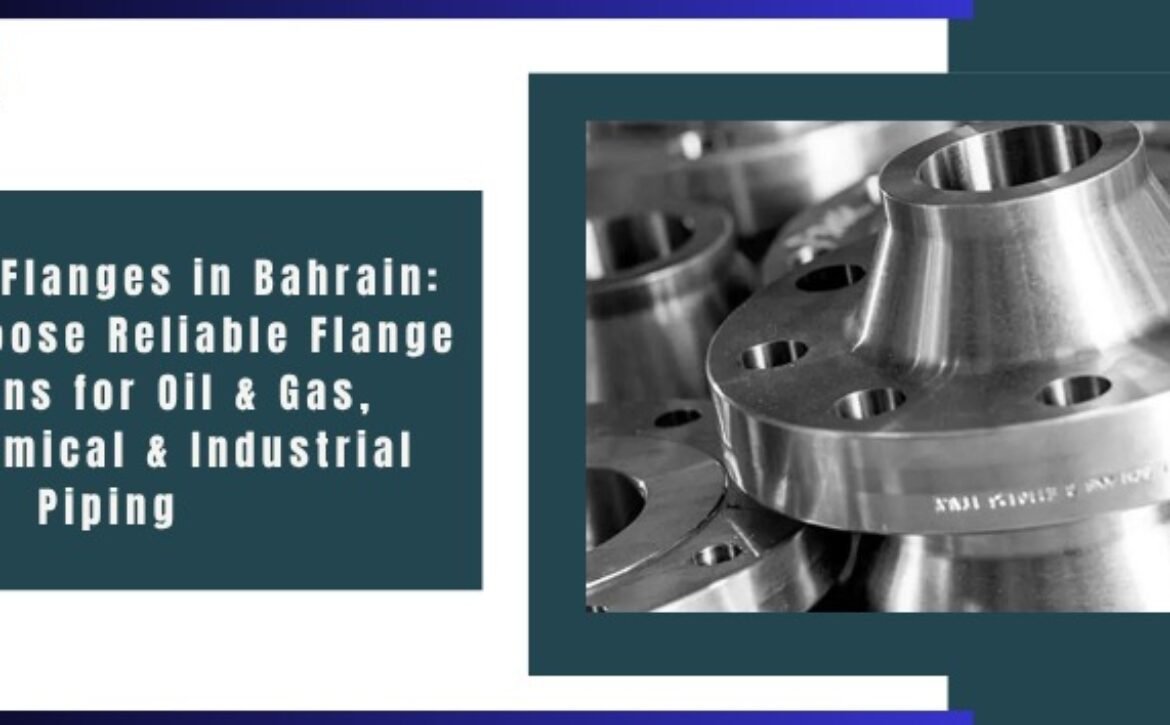
Approved Flanges in Bahrain: How to Choose Reliable Flange Solutions for Oil & Gas, Petrochemical & Industrial Piping
In Bahrain’s oil & gas, petrochemical, power generation, desalination, marine and industrial sectors, piping systems are expected to operate reliably under pressure, temperature, corrosion and continuous service conditions. A flange may appear to be a relatively simple piping component, but its dimensional accuracy, material grade, pressure rating, facing and connection design can directly affect the integrity of an entire piping system.
This is why approved flanges in Bahrain are an important consideration for EPC contractors, engineering companies, plant operators, maintenance teams and industrial procurement departments.
Mcneil Alloys supplies and exports industrial flanges for Bahrain applications, including Slip-On Flanges, Weld Neck Flanges, Blind Flanges, Threaded Flanges, Socket Weld Flanges, Orifice Flanges, Reducing Flanges, Long Weld Neck Flanges, Plate Flanges and customized flange designs. Its Bahrain-focused product information identifies applications across oil & gas, petrochemical, water and power plants, desalination and offshore industries.
The key question for a project, however, is not simply where to buy a flange. It is how to select an approved flange that matches the piping system, material, pressure, temperature and applicable engineering standards.
What Are Approved Flanges?
Approved flanges are piping components manufactured or supplied according to specified technical, dimensional, material and quality requirements applicable to a particular project, industry or end user.
They provide a bolted connection between:
Pipes
Valves
Pumps
Pressure vessels
Equipment nozzles
Process piping
Pipeline components
Instrumentation assemblies
A properly selected flange creates a secure connection while allowing piping systems and equipment to be assembled, inspected, maintained and, where necessary, dismantled.
For industrial projects in Bahrain, flange selection can involve requirements related to ASME, ASTM, API, DIN, ISO and project-specific specifications. Mcneil Alloys states that its Bahrain flange range is supplied according to international standards including ASME, ASTM, API, DIN and ISO.
Why Flange Selection Matters in Bahrain
Bahrain has a strong industrial base involving energy, refining, petrochemicals, water treatment, desalination, power generation and marine-related operations.
These environments can expose piping systems to combinations of:
High pressure
Elevated temperatures
Corrosive fluids
Salt-laden environments
Humidity
Chemical exposure
Thermal cycling
Mechanical loads
Continuous operation
The flange therefore needs to be selected as part of the complete piping system rather than as an isolated component.
Material grade, pressure class, flange facing, dimensions, bolt-hole configuration and connection type all need to correspond with the engineering requirement.
Mcneil Alloys specifically positions its Bahrain flange supply for energy pipelines, petrochemical facilities, water and power plants, desalination units and offshore applications.
Types of Approved Flanges Available for Bahrain Projects
Different piping configurations require different flange designs. Choosing the right type depends on the application, pipe size, pressure, temperature, installation method and maintenance requirements.
1. Weld Neck Flanges
Weld Neck Flanges are designed for applications where strong, reliable connections are required.
Their tapered hub helps transfer stresses from the flange into the pipe, making them suitable for demanding piping systems.
They can be considered for:
Oil & gas pipelines
Refineries
Petrochemical plants
High-pressure piping
High-temperature systems
Power plants
Process facilities
2. Slip-On Flanges
Slip-On Flanges are installed over the pipe and welded into position.
They are commonly selected when ease of installation and practical fabrication are important.
Typical applications include:
General industrial piping
Water systems
Process piping
Utility lines
Low- to moderate-pressure services
3. Blind Flanges
Blind Flanges are used to close the end of a pipe, nozzle or piping section.
They are particularly useful when a system requires:
Isolation
Pressure containment
Maintenance access
Future expansion
Pipeline termination
Blind flanges can also be used with valves, pressure vessels and equipment connections.
4. Socket Weld Flanges
Socket Weld Flanges are commonly used for smaller-diameter piping where a compact and strong connection is required.
They can be suitable for:
Instrumentation piping
Hydraulic systems
Chemical lines
Small-bore process piping
High-pressure services
5. Threaded Flanges
Threaded Flanges provide a connection without requiring welding.
They can be considered for applications where welding is undesirable or impractical, subject to the pressure, temperature and service requirements of the project.
6. Orifice Flanges
Orifice Flanges are associated with flow-measurement systems where an orifice plate is installed between flanges.
They can be used in:
Process plants
Oil & gas facilities
Petrochemical installations
Flow-measurement systems
Industrial process lines
Mcneil Alloys identifies orifice flanges within its Bahrain flange range and lists ASME/ANSI B16.36 for orifice flange manufacturing.
7. Reducing Flanges
Reducing Flanges are designed to connect piping components with different nominal diameters.
They can simplify certain piping configurations while maintaining a flanged connection.
8. Long Weld Neck Flanges
Long Weld Neck Flanges are designed for applications requiring additional hub length and robust connection characteristics.
They are particularly relevant to demanding industrial and high-temperature services.
Flange Facing: Why It Matters
The flange face is an important part of the sealing system.
Mcneil Alloys lists several flange styles, including:
Flat Face
Raised Face
Tongue & Groove
Ring Type Joint
Resilient facing configurations
The correct facing should be selected based on the mating component, gasket arrangement, pressure rating and project specification.
Raised Face Flanges
Raised Face, commonly abbreviated as RF, provides a defined gasket seating area and is widely used in industrial piping.
Flat Face Flanges
Flat Face configurations can be appropriate for certain equipment and piping arrangements where the mating surfaces require a flat connection.
Ring Type Joint Flanges
RTJ flanges are designed for demanding pressure applications where a metallic ring gasket provides the sealing mechanism.
The appropriate flange face should always match the connected equipment and engineering specification.
Flange Pressure Classes for Bahrain Industrial Applications
Pressure rating is one of the most important factors when selecting a flange.
Mcneil Alloys’ Bahrain flange information includes Class 150, 300, 600, 900, 1500 and 2500, along with PN 6, PN 10, PN 16, PN 25 and PN 40 configurations.
Common ASME Pressure Classes
Class 150
Class 300
Class 600
Class 900
Class 1500
Class 2500
The required pressure class should not be selected simply because a higher class appears safer. It must correspond to the design pressure, design temperature, material and applicable code.
Materials Used for Approved Flanges in Bahrain
Bahrain’s industrial environment requires different materials depending on process conditions.
Mcneil Alloys lists a broad range of flange materials, including stainless steel, carbon steel, alloy steel, Duplex, Super Duplex and nickel alloys.
Stainless Steel Flanges
Common stainless steel grades listed by Mcneil Alloys include:
ASTM A182 F304
F304L
F304H
F316
F316L
F317
F317L
F321
F310
F347
F904L
Stainless steel can be considered where corrosion resistance and long-term durability are important.
Carbon Steel Flanges
Mcneil Alloys lists carbon steel grades including:
ASTM A105
ASTM A694 F42
A694 F46
A694 F52
A694 F56
A694 F60
A694 F65
A694 F70
A350 LF2
A350 LF3
Carbon steel flanges can be suitable for a wide range of industrial piping applications when the material is compatible with the service conditions.
Alloy Steel Flanges
For elevated-temperature and demanding industrial services, Mcneil Alloys lists alloy steel grades such as:
ASTM A182 F1
F5
F9
F11
F22
F91
These grades can be considered for suitable high-temperature and pressure applications.
Duplex and Super Duplex Flanges
Duplex and Super Duplex stainless steels can be considered for applications where high strength and corrosion resistance are important.
They are particularly relevant to selected:
Offshore systems
Marine applications
Desalination
Water treatment
Oil & gas
Chemical processing
Nickel Alloy Flanges
Specialized nickel alloys can be considered for more aggressive chemical and high-temperature environments.
Mcneil Alloys identifies Monel, Inconel and Hastelloy among its available specialized flange materials.
Approved Flanges for Bahrain Oil & Gas Applications
The oil & gas sector places significant demands on piping components.
Flanges may be required in:
Crude oil pipelines
Gas pipelines
Refinery units
Process piping
Storage facilities
Offshore systems
Wellhead-related piping
Gas processing systems
Pumping systems
High-pressure pipelines
For these applications, engineers typically evaluate pressure class, material compatibility, flange dimensions, facing, gasket selection and applicable standards.
Mcneil Alloys identifies oil & gas and offshore operations among the principal Bahrain applications for its flange range.
Approved Flanges for Bahrain Petrochemical Plants
Petrochemical plants can involve aggressive chemicals, elevated temperatures and continuous process operation.
Flanges used in these facilities may connect:
Reactors
Heat exchangers
Process vessels
Pumps
Valves
Process pipelines
Storage systems
Utility systems
Material selection becomes particularly important because the flange must be compatible with the process medium and operating conditions.
For Bahrain petrochemical projects, the appropriate stainless steel, alloy steel, carbon steel or nickel alloy should be determined according to the engineering specification.
Flanges for Bahrain Desalination and Water Treatment
Desalination is another important application area for industrial flanges.
Water treatment and desalination systems can involve:
Seawater
Brine
Freshwater
High-pressure water
Chemical dosing systems
Filtration systems
Reverse-osmosis equipment
The combination of water, chlorides and marine exposure makes corrosion resistance an important consideration in appropriate applications.
Duplex, Super Duplex, stainless steel and other corrosion-resistant materials may be considered depending on the specific service.
Mcneil Alloys identifies desalination and water plants among the applications supported by its Bahrain flange supply.
Flanges for Bahrain Power Plants
Power-generation facilities use flanges throughout:
Steam piping
Cooling-water systems
Boiler systems
Condensate systems
Feedwater systems
Utility pipelines
Fuel systems
High-temperature piping
The flange must be selected according to pressure, temperature, material and piping-system requirements.
For high-temperature services, alloy steel flange grades may be considered where specified by the engineering design.
How to Select the Right Approved Flange in Bahrain
Choosing the correct flange requires a systematic approach.
1. Identify the Pipe Size
Confirm the nominal pipe size and outside diameter.
Incorrect dimensions can lead to installation problems and system incompatibility.
2. Determine the Pressure Class
Confirm the system’s design pressure and temperature before selecting the flange pressure class.
3. Select the Material
The flange material must be compatible with:
Process fluid
Temperature
Pressure
Corrosion conditions
Mechanical loads
Connected piping material
4. Choose the Flange Type
Determine whether the application requires:
Weld Neck
Slip-On
Blind
Socket Weld
Threaded
Orifice
Reducing
Long Weld Neck
Custom flange
5. Confirm the Facing
Select the appropriate:
RF
FF
RTJ
Tongue & Groove
Other specified facing
6. Verify the Applicable Standard
Depending on the project, the flange may need to conform to standards such as:
ASME B16.5
ASME B16.36
ASME B16.48
MSS SP-44
API 6A
ASTM
DIN
ISO
Mcneil Alloys lists these standards across its flange offering, with specific standards applying to different flange types and applications.
7. Check Documentation and Inspection Requirements
Industrial projects may require:
Material Test Certificates
Dimensional inspection
Hydrostatic testing
Third-party inspection
Traceability
PMI
Quality documentation
Mcneil Alloys states that its Bahrain flange supply includes dimensional verification, hydro testing and material certification.
Mcneil Alloys: Approved Flange Supplier for Bahrain
Mcneil Alloys supplies industrial flanges for Bahrain from its UAE-based operations, supporting industrial and project requirements across the GCC.
Its published Bahrain flange range covers multiple flange designs, pressure classes and materials, with applications in oil & gas, petrochemical, power, desalination, water treatment and offshore industries.
The company also identifies Bahrain among its export markets and states that it supports supply across major Bahrain locations including Manama, Muharraq, Riffa, Isa Town and Sitra.
For EPC contractors, distributors, plant operators and maintenance teams, the supply requirement can be specified around:
Flange type
Material grade
Nominal size
Pressure class
Facing
Standard
Quantity
Inspection requirements
Certification
Project-specific specifications
Why Choose Mcneil Alloys for Flanges in Bahrain?
Wide Product Range
Mcneil Alloys offers standard and specialized flange designs, including Weld Neck, Slip-On, Blind, Socket Weld, Threaded, Orifice, Reducing and Long Weld Neck flanges.
Multiple Material Options
The range includes stainless steel, carbon steel, alloy steel, Duplex, Super Duplex and nickel alloys for different industrial conditions.
International Standards
Flanges are supplied according to applicable international standards including ASME, ASTM, API, DIN and ISO.
Project-Based Supply
The company supports standard as well as customized flange requirements, including special sizes and project-specific configurations.
Bahrain Supply Capability
Mcneil Alloys specifically markets its flange products for Bahrain’s industrial and offshore sectors and supports supply across major industrial areas of the country.
Conclusion
Selecting the right approved flanges in Bahrain requires more than choosing a flange based on size alone. Pressure class, material grade, facing, flange type, temperature, process medium, applicable standards and inspection requirements all influence the suitability of a flange for an industrial piping system.
For Bahrain’s oil & gas, petrochemical, power, desalination, water treatment and offshore industries, Mcneil Alloys provides a broad range of stainless steel, carbon steel, alloy steel, Duplex, Super Duplex and nickel alloy flanges in multiple configurations and pressure classes.
From standard Weld Neck and Slip-On Flanges to Blind, Orifice, Reducing, RTJ and customized solutions, the focus should always remain on matching the flange specification to the actual requirements of the project.
Frequently Asked Questions About Approved Flanges in Bahrain
What are approved flanges used for in Bahrain?
Approved flanges are used to create secure, maintainable connections between pipes, valves, equipment and other piping components. They are widely applicable to oil & gas, petrochemical, power, desalination, water treatment and offshore systems.
What types of flanges does Mcneil Alloys supply in Bahrain?
Mcneil Alloys lists Weld Neck, Slip-On, Blind, Threaded, Socket Weld, Orifice, Reducing, Long Weld Neck, Plate and customized flange options for Bahrain projects.
Which flange materials are available?
The published Bahrain range includes stainless steel, carbon steel, alloy steel, Duplex, Super Duplex and specialized nickel alloys such as Monel, Inconel and Hastelloy.
Which pressure classes are available?
Mcneil Alloys lists ASME pressure classes from 150 through 2500, as well as PN 6, PN 10, PN 16, PN 25 and PN 40 configurations.
Are Mcneil Alloys flanges suitable for oil & gas applications in Bahrain?
Mcneil Alloys specifically identifies oil & gas, petrochemical and offshore applications among the industries served by its Bahrain flange range.
Can Mcneil Alloys supply customized flanges for Bahrain projects?
Yes. The company’s Bahrain page states that customized flange solutions can be provided for project-specific requirements, including special sizes and configurations.
Which standards are associated with Mcneil Alloys flanges?
The Bahrain product information references standards including ASME, ASTM, API, DIN and ISO, with specific flange products manufactured to applicable standards such as ASME B16.5, ASME B16.36, ASME B16.48, MSS SP-44 and API 6A.
Does Mcneil Alloys supply flanges across Bahrain?
Yes. Mcneil Alloys states that it supplies across Bahrain, including Manama, Muharraq, Riffa, Isa Town and Sitra.
