Manufacturer & Exporters of:
Instrumentation Pipe Fittings & Valves

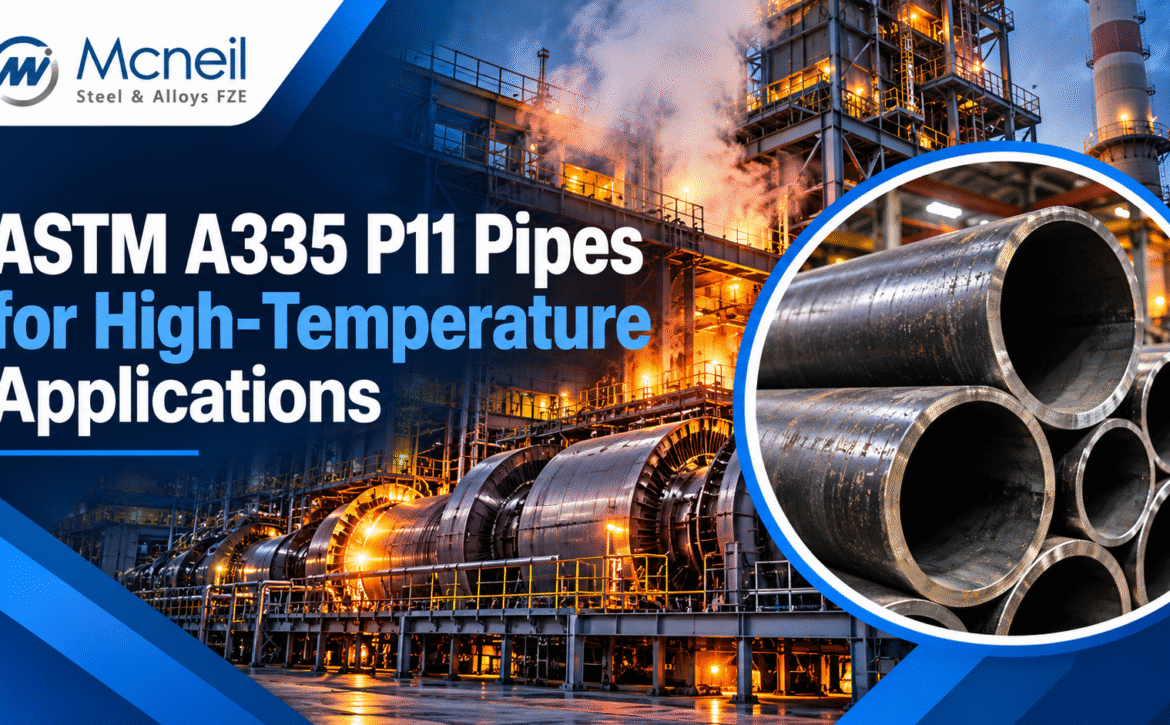
ASTM A335 P11 Pipes for High-Temperature Applications: A Buyer & Engineering Guide

In severe industrial environments where extreme heat, elevated pressure, and thermal stress are daily challenges, selecting the right piping material is essential for plant safety, operational uptime, and long-term asset integrity.

Among alloy steel specifications, ASTM A335 P11 seamless pipe remains an industry workhorse. Formulated with a balanced Chromium-Molybdenum (“chrome-moly”) alloy composition, Grade P11 provides exceptional elevated-temperature strength, thermal stability, and resistance to oxidation.

At Mcneil Alloys, we supply mill-certified, fully traceable alloy steel piping tailored to the precise engineering demands of power plants, refineries, petrochemical facilities, and heavy industrial steam systems.

What Are ASTM A335 P11 Pipes?

ASTM A335 Grade P11 (frequently dual-certified as ASME SA335 Grade P11) is a seamless ferritic alloy steel pipe specifically designed for high-temperature service.

Belonging to the low-alloy steel family, Grade P11 maintains its structural integrity and mechanical properties under prolonged thermal exposure. It is widely specified across critical high-heat installations, including superheaters, main steam headers, boiler tubing, and process unit lines where standard carbon steel falls short.

Engineering Tip: Grade P11 selection must always align with project design codes (e.g., ASME B31.1 or B31.3), maximum operating temperatures, allowable stress limits, and fluid characteristics.

Key Properties & Engineering Advantages

Grade P11 is selected for high-temperature service due to several key metallurgical properties:

1. Chromium-Molybdenum Alloy Balance
Chromium (1.00% – 1.50%): Enhances oxidation resistance, surface scaling protection, and high-temperature corrosion resistance.
Molybdenum (0.44% – 0.65%): Increases high-temperature yield strength and provides resistance against mechanical deformation under sustained loads.
2. Creep & Deformation Resistance
Creep is the gradual, permanent deformation of a metal subjected to long-term mechanical stress at high temperatures. The chrome-moly composition of P11 resists thermal creep-rupture, extending the operational life of high-pressure steam circuits.
3. Elevated-Temperature Strength
Unlike standard carbon steel, which suffers significant tensile strength loss above $425^\circ\text{C}$ ($800^\circ\text{F}$), Grade P11 retains higher allowable design stresses at elevated temperatures.
4. Fabricability & Weldability
P11 can be fabricated and welded using standard industrial methods. To maintain joint integrity and prevent microstructural cracking, proper preheating, approved filler metals, post-weld heat treatment (PWHT), and mandatory non-destructive examination (NDE) should be applied as specified by design codes.

Core Industrial Applications

Due to its balance of thermal resistance, structural durability, and cost-effectiveness, P11 seamless pipe is widely utilized across multiple sectors:

Power Generation: Main steam headers, hot reheat lines, boiler feed lines, and superheater tubes.
Oil Refineries: High-temperature hydrocarbon transfer, catalytic cracking units, and hydrotreaters.
Petrochemical Plants: Process piping and heat exchanger circuits operating under combined thermal and pressure stresses.
Industrial Steam & Boilers: Utility boilers, heat recovery steam generators (HRSGs), and high-pressure steam lines.

ASTM A335 P11 vs. Grade P22: Key Comparison

Both P11 and P22 are popular chrome-moly grades, but understanding their differences helps prevent over-specifying or under-specifying materials:

Feature / Metric ASTM A335 Grade P11 ASTM A335 Grade P22
Chromium Content $1.00\% – 1.50\%$ $1.90\% – 2.60\%$
Molybdenum Content $0.44\% – 0.65\%$ $0.87\% – 1.13\%$
High-Temp Capability Excellent up to moderate-high heat Superior strength at higher heat regimes
Creep Resistance High Very High
Primary Advantage Cost-effective for medium-high temp applications Higher allowable stress at severe temperatures

Essential Checklist Before Sourcing P11 Pipes

To prevent procurement delays and ensure strict site compliance, confirm these technical factors before placing your order:

Material Standard: Specify ASTM A335 / A335M or ASME SA335 Grade P11.
Dimensional Specs: Nominal Pipe Size (NPS), Outside Diameter (OD), Wall Thickness, and Schedule (e.g., Sch 40, Sch 80, Sch 160, XXS).
Traceability & Certification: Require Mill Test Certificates (EN 10204 3.1) with explicit heat number stenciling.
Testing Requirements: Hydrostatic testing or non-destructive examination (Ultrasonic / Eddy Current) per specification.
Fabrication Notes: Beveled vs. plain ends, surface coatings, and custom cut-to-length requirements.

Why Source ASTM A335 P11 Pipes from Mcneil Alloys?

Sourcing high-temperature piping requires a partner who understands material integrity and strict compliance standards. Mcneil Alloys provides comprehensive supply solutions tailored to major project requirements:

Extensive Stock & Sizing: Access to standard schedules, heavy wall thickness, and custom dimensions.
Full Documentation: Complete MTCs, heat-lot traceability, and support for third-party inspection (TPI).
Reliable Logistics: Timely delivery and specialized export packaging to keep your project on schedule.

Need ASTM A335 P11 Pipes for Your Next Project?

Whether you are building a new process line, upgrading boiler infrastructure, or performing plant maintenance, Mcneil Alloys delivers high-performance piping solutions built to your exact specifications.

👉 Contact Mcneil Alloys today: Reach out to our technical sales team with your required pipe sizes, schedules, quantities, and documentation needs to receive a quote.

Frequently Asked Questions (FAQs)

1. What are ASTM A335 P11 pipes?
ASTM A335 P11 pipes are seamless ferritic alloy steel pipes infused with chromium and molybdenum, designed for high-temperature and high-pressure service.
2. What is the chemical composition of ASTM A335 P11 pipes?
P11 contains 1.00–1.50% Chromium and 0.44–0.65% Molybdenum, along with controlled levels of Carbon, Manganese, Silicon, Phosphorus, and Sulfur to optimize mechanical properties.
3. What is the main difference between P11 and P22 pipes?
P22 contains higher levels of chromium (~2.25%) and molybdenum (~1.00%) compared to P11. This gives P22 higher creep resistance and allowable stress limits under extreme temperature regimes.
4. Are ASTM A335 P11 pipes suitable for high-pressure applications?
Yes, P11 seamless pipes are routinely used in high-pressure steam and process lines, provided the wall thickness and schedule meet design code calculations for the operating temperature.
5. Do ASTM A335 P11 pipes require Post-Weld Heat Treatment (PWHT)?
Yes, under standard piping codes like ASME B31.3, welding Grade P11 generally requires preheating and Post-Weld Heat Treatment (PWHT) to relieve residual stresses and maintain heat-affected zone (HAZ) toughness.
6. Can P11 pipes be used in power plant steam lines?
Yes, P11 is extensively used in power generation for superheater tubes, steam headers, and auxiliary high-temperature piping circuits.
7. What documentation should I request when buying P11 pipes?
Always request EN 10204 3.1 Mill Test Certificates (MTCs), chemical analysis, mechanical test reports, hydrostatic test records, and heat-number traceability matching physical pipe stencils.
8. How do I request a quote from Mcneil Alloys?
Submit your project details—including pipe size, schedule/wall thickness, total length/quantity, and delivery destination—directly to the Mcneil Alloys team to receive a detailed quotation.

Read More
admin October 17, 2026 0 Comments

High-Performance Alloy Steel Pipes for Power Plants, Refineries & High-Temperature Industrial Applications – Mcneil Steel & Alloys FZE

Introduction

Industries operating under extreme heat, continuous pressure cycles, and aggressive processing environments require piping materials capable of delivering exceptional durability, thermal stability, and long-term operational reliability. This is where Alloy Steel Pipes play a critical role in supporting modern industrial infrastructure.

Designed for high-temperature and high-pressure industrial applications, alloy steel pipes are widely utilized across power generation plants, refineries, petrochemical industries, thermal processing facilities, and oil & gas sectors where mechanical strength and heat resistance are essential.

From boiler systems and steam pipelines to heavy engineering projects and process industries, industrial operations depend on high-grade alloy steel piping solutions to maintain safe and uninterrupted performance under demanding operating conditions.

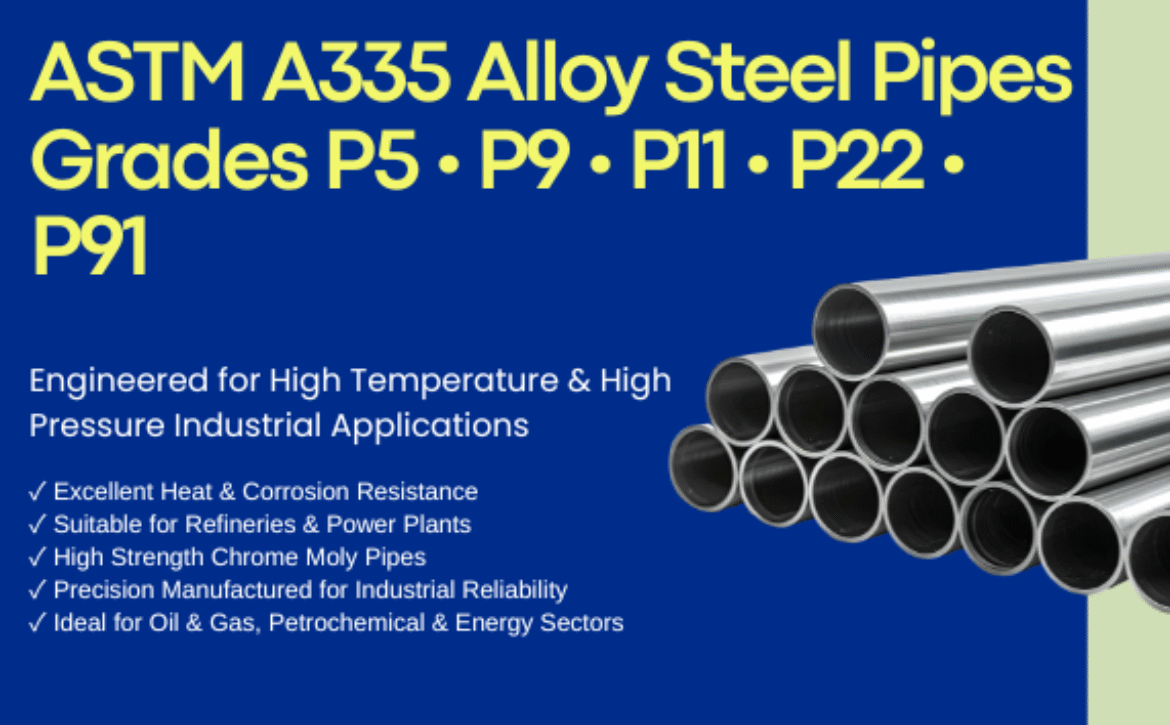
Mcneil Steel & Alloys FZE is one of the trusted suppliers of Alloy Steel Pipes in UAE, offering a comprehensive range of ASTM A335 P5 Pipes, P9 Alloy Steel Pipes, P11 Pipes, P22 Pipes, and P91 Alloy Steel Pipes engineered for superior corrosion resistance, pressure handling capability, and elevated temperature performance.

Unlike conventional carbon steel piping systems that may weaken under prolonged thermal exposure, alloy steel pipes are specifically developed to withstand oxidation, pressure fluctuations, creep damage, and extreme industrial environments for extended operational service life.

Understanding Alloy Steel Pipes and Their Industrial Importance

Alloy Steel Pipes are chromium-molybdenum-based industrial pipes designed for applications involving elevated temperatures, pressure-intensive operations, and high mechanical stress. These pipes are manufactured to provide improved thermal stability, oxidation resistance, and structural durability compared to standard steel piping materials.

Industries commonly using alloy steel pipes include:

  • Thermal power plants
  • Oil & gas processing industries
  • Petrochemical facilities
  • Refineries & process plants
  • Boiler manufacturing industries
  • Heat exchanger systems
  • Heavy engineering projects

Mcneil Steel & Alloys FZE supplies precision-manufactured Alloy Steel Pipes that help industries improve pipeline reliability while reducing maintenance-related downtime and operational failures.

These pipes are manufactured with strict dimensional tolerances, smooth internal finish, and excellent metallurgical properties to ensure dependable industrial performance.

Why Industries Prefer Alloy Steel Pipes

Industrial systems operating under elevated pressure and thermal stress require piping materials capable of maintaining long-term performance without structural degradation.

Excellent Heat Resistance

One of the major advantages of Alloy Steel Pipes is their ability to withstand high temperatures while maintaining mechanical stability. This makes them suitable for boilers, steam pipelines, and thermal processing systems.

Superior Pressure Handling Capability

Industries operating high-pressure systems require piping solutions capable of performing reliably under continuous pressure fluctuations. Alloy steel pipes offer enhanced tensile strength and creep resistance for demanding industrial applications.

Strong Corrosion & Oxidation Resistance

Alloy steel grades containing chromium and molybdenum provide improved protection against oxidation, scaling, and industrial corrosion under severe operating conditions.

Long Operational Service Life

Frequent pipeline failures can disrupt industrial operations and increase maintenance expenses. High-quality alloy steel pipes help industries improve operational efficiency and long-term reliability.

ASTM A335 P5 Alloy Steel Pipes for Thermal & Boiler Applications

ASTM A335 P5 Alloy Steel Pipes are widely used in industries requiring moderate temperature resistance and dependable mechanical strength.

These pipes are commonly utilized in:

  • Boiler systems
  • Heat exchangers
  • Thermal processing units
  • Refinery piping systems
  • Steam applications

Mcneil Steel & Alloys FZE supplies P5 Alloy Steel Pipes manufactured for reliable industrial performance and improved heat resistance.

Their chromium-molybdenum composition enhances durability under elevated temperature conditions.

P9 Alloy Steel Pipes for High-Temperature Industrial Systems

P9 Alloy Steel Pipes are engineered for industrial applications requiring superior oxidation resistance and elevated temperature stability.

Industries commonly using these pipes include:

  • Power generation plants
  • Petrochemical industries
  • Furnace systems
  • Steam processing units
  • High-temperature pressure systems

Mcneil Steel & Alloys FZE supplies ASTM A335 P9 Pipes designed for long-term industrial reliability and efficient thermal performance.

P11 Alloy Steel Pipes for Industrial Steam Pipelines

P11 Alloy Steel Pipes are extensively utilized in high-pressure steam systems and industrial processing environments.

Applications include:

  • Steam transmission pipelines
  • Thermal plants
  • Industrial pressure systems
  • Refinery operations
  • Boiler circulation systems

These pipes offer improved mechanical strength and reliable thermal stability under continuous industrial operation.

Mcneil Steel & Alloys FZE manufactures P11 Alloy Steel Pipes with precision engineering for dependable industrial applications.

P22 Alloy Steel Pipes for Refinery & Petrochemical Industries

P22 Alloy Steel Pipes are widely preferred for industrial systems operating under elevated pressure and corrosive thermal conditions.

Industries commonly using these pipes include:

  • Petrochemical processing plants
  • Refineries
  • Chemical industries
  • Power stations
  • Industrial process plants

Their enhanced chromium-molybdenum composition improves oxidation resistance and long-term structural durability.

Mcneil Steel & Alloys FZE supplies P22 Alloy Steel Pipes suitable for demanding industrial applications requiring thermal resistance and operational reliability.

P91 Alloy Steel Pipes for Critical High-Pressure Applications

P91 Alloy Steel Pipes are specially engineered for industries requiring exceptional creep strength and superior performance under extreme temperatures.

These pipes are extensively used in:

  • Supercritical power plants
  • High-pressure steam systems
  • Energy infrastructure projects
  • Advanced thermal processing industries
  • Heavy industrial applications

The enhanced alloy composition of P91 Pipes improves high-temperature strength and pressure resistance for critical industrial operations.

Mcneil Steel & Alloys FZE supplies premium-quality P91 Alloy Steel Pipes manufactured according to international industrial standards.

Real Industrial Applications of Alloy Steel Pipes

Industrial sectors choose Alloy Steel Pipes not only for heat resistance but also for operational efficiency in demanding processing environments.

Power Generation Facilities

Power plants require alloy steel piping systems capable of handling continuous steam pressure and elevated operating temperatures.

Oil & Gas Industries

Pipeline systems in oil & gas industries require durable piping materials resistant to pressure fluctuations and harsh industrial conditions.

Petrochemical & Refinery Plants

Refineries utilize alloy steel pipes for transporting high-temperature fluids and maintaining process efficiency.

Boiler & Thermal Systems

Industrial boilers and thermal units require piping systems capable of delivering reliable heat resistance and operational stability.

Heavy Engineering Industries

Engineering projects operating under thermal stress require alloy steel piping solutions with strong mechanical properties and long service life.

Why Professionals Prefer Mcneil Steel & Alloys FZE

Industrial project engineers and procurement professionals prefer Mcneil Steel & Alloys FZE because of its commitment to quality manufacturing, industrial-grade materials, and dependable piping solutions.

What Makes Mcneil Steel & Alloys FZE Stand Out

✔ Wide range of Alloy Steel Pipe grades
✔ ASTM A335 P5, P9, P11, P22 & P91 Pipes
✔ Precision-engineered industrial piping solutions
✔ Excellent corrosion & heat resistance
✔ Reliable dimensional accuracy
✔ Suitable for high-pressure industrial applications

The company supplies alloy steel piping products designed for consistent performance across critical industrial sectors worldwide.

Operational Advantages of Using Alloy Steel Pipes

Choosing the right piping material directly impacts industrial productivity, safety, and maintenance efficiency.

Benefits include:

  • Enhanced thermal stability
  • Improved pressure resistance
  • Better corrosion protection
  • Reduced maintenance costs
  • Long operational service life
  • Reliable high-temperature performance
  • Improved industrial efficiency

For industries operating under severe processing conditions, these advantages contribute to uninterrupted production and safer industrial operations.

Conclusion

Industrial piping systems operating under elevated temperatures, pressure-intensive environments, and aggressive processing conditions require materials engineered for durability and long-term reliability. Alloy Steel Pipes provide the thermal resistance, mechanical strength, and corrosion protection necessary for modern industrial infrastructure.

Whether it is ASTM A335 P5 Pipes for boiler systems, P11 Alloy Steel Pipes for steam pipelines, P22 Pipes for refinery operations, or P91 Pipes for critical high-temperature applications, selecting the right alloy steel grade directly affects operational efficiency and industrial safety.

Mcneil Steel & Alloys FZE Alloy Steel Pipes Supplier in UAE continues to supply industries with premium-quality alloy steel piping solutions designed for demanding applications across power generation, petrochemical, refinery, thermal processing, and oil & gas sectors.

FAQ Section

1. What are Alloy Steel Pipes used for?

Alloy Steel Pipes are used in high-temperature and high-pressure industrial applications including power plants, boilers, refineries, and petrochemical industries.

2. What is the difference between P11 and P22 Alloy Steel Pipes?

P11 Pipes provide good thermal stability and pressure resistance, while P22 Pipes offer improved corrosion resistance and enhanced high-temperature performance.

3. Are P91 Alloy Steel Pipes suitable for critical industrial systems?

Yes, P91 Pipes are widely used in supercritical power plants and high-pressure steam systems requiring superior creep strength and thermal resistance.

4. Which industries commonly use ASTM A335 Alloy Steel Pipes?

Industries including oil & gas, power generation, petrochemical processing, thermal plants, and heavy engineering commonly use alloy steel pipes.

5. Why choose Mcneil Steel & Alloys FZE for Alloy Steel Pipes?

Mcneil Steel & Alloys FZE supplies precision-manufactured alloy steel piping solutions designed for high-temperature durability, corrosion resistance, and reliable industrial performance.

Read More
admin May 17, 2026 0 Comments