Manufacturer & Exporters of:
Instrumentation Pipe Fittings & Valves

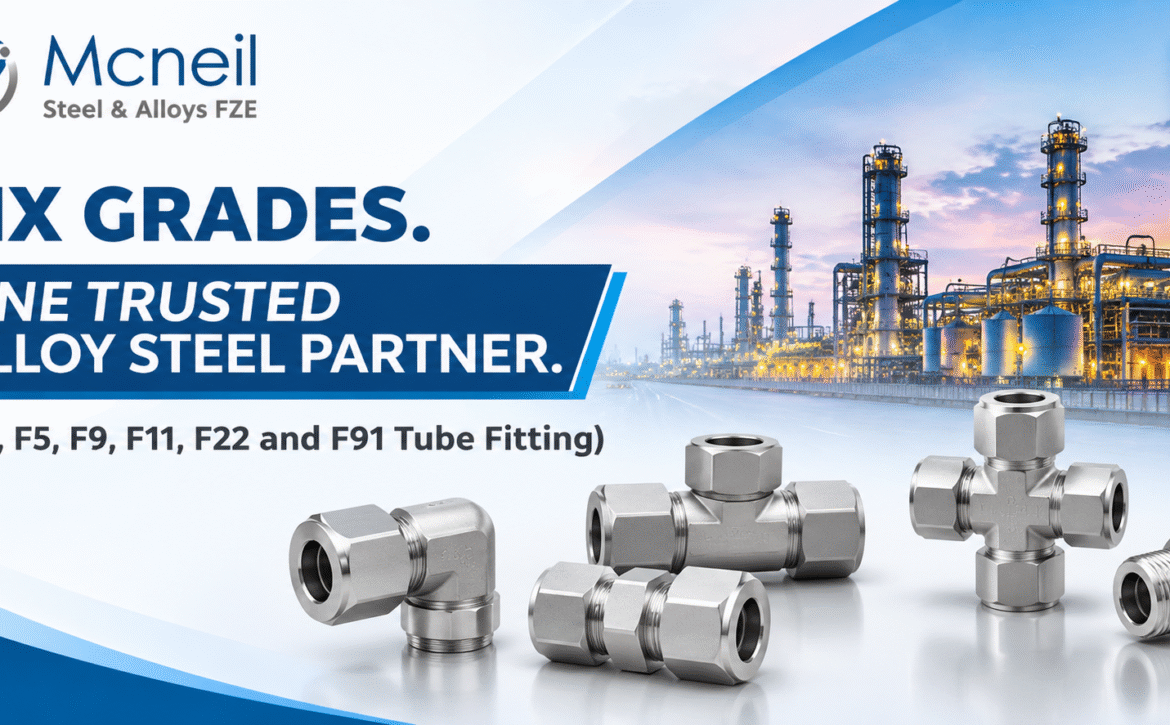
SIX GRADES. ONE TRUSTED ALLOY STEEL PARTNER.

F1, F5, F9 , F11, F22 and F91 Tube Fittings – Mcneil Alloys

Introduction

In industries where high pressure, elevated temperatures, and demanding operating conditions are part of everyday operations, selecting the right alloy steel tube fittings is essential. From power generation and oil & gas to petrochemical plants and refineries, industrial piping systems require fittings that deliver strength, durability, and reliable performance.

Different applications require different material grades depending on operating temperatures, pressure conditions, corrosion exposure, and mechanical requirements. This is why alloy steel grades such as F1, F5, F9, F11, F22, and F91 are widely specified for industrial piping applications.

At Mcneil Alloys, we bring together six important alloy steel grades under one trusted product range. Our focus is on providing quality-oriented alloy steel tube fittings designed to meet diverse industrial requirements.

Understanding Alloy Steel Tube Fittings

Alloy steel tube fittings are essential components used to connect, redirect, branch, or control fluid flow within industrial piping systems. They are manufactured using alloy steel materials containing elements such as chromium, molybdenum, and other alloying additions to improve mechanical strength and high-temperature performance.

These fittings are commonly used in applications involving high pressure, elevated temperatures, steam transportation, and demanding industrial processes.

Common types include:
Alloy Steel Elbows
Alloy Steel Tees
Alloy Steel Reducers
Alloy Steel Couplings
Alloy Steel Caps
Alloy Steel Cross Fittings
The selection of the correct grade helps ensure compatibility with the operating conditions and design requirements of the piping system.

Six Important Alloy Steel Grades for Industrial Applications

Each alloy steel grade offers specific chemical and mechanical characteristics. Understanding their differences helps industries select suitable materials for their projects.

F1 Alloy Steel Tube Fittings
F1 is a chromium-molybdenum alloy steel grade used in selected elevated-temperature industrial applications. It offers useful strength and thermal performance for piping systems designed around its material properties.
Applications: Industrial piping, power generation equipment, and selected high-temperature services.

F5 Alloy Steel Tube Fittings
F5 is a 5% chromium-molybdenum alloy steel grade known for its elevated-temperature strength and oxidation resistance. It is commonly considered for demanding refinery and petrochemical applications.
Applications: Refineries, petrochemical plants, heat exchangers, and industrial processing systems.

F9 Alloy Steel Tube Fittings
F9 is a 9% chromium-molybdenum alloy steel grade designed for applications requiring enhanced high-temperature performance and oxidation resistance.
Applications: High-temperature piping, refinery equipment, and power generation systems.

F11 Alloy Steel Tube Fittings
F11 is a chromium-molybdenum alloy steel grade widely used in industrial applications requiring good strength and resistance to elevated-temperature conditions.
Applications: Oil & gas facilities, petrochemical plants, boilers, and pressure piping systems.
F22 Alloy Steel Tube Fittings
F22 is a 2.25% chromium-1% molybdenum alloy steel grade. It is valued for its strength, creep resistance, and performance in high-temperature applications.
Applications: Thermal power plants, refineries, pressure vessels, and high-temperature piping systems.

F91 Alloy Steel Tube Fittings
F91 is an advanced 9% chromium-molybdenum-vanadium-niobium alloy steel grade. It offers excellent creep strength and is suitable for demanding high-temperature and high-pressure applications.
Applications: Supercritical power plants, ultra-supercritical power plants, steam pipelines, and advanced boiler systems.

Why Are These Six Alloy Steel Grades Important?

The availability of multiple alloy steel grades allows industries to select materials according to specific operating conditions.

High-Temperature Performance: Chromium and molybdenum additions help improve material performance in elevated-temperature environments.
Mechanical Strength: These alloy steel grades provide mechanical properties suitable for demanding industrial piping systems.
Creep Resistance: Grades such as F22 and F91 offer important creep-resistant properties for prolonged high-temperature service.
Oxidation Resistance: Chromium improves resistance to oxidation and scaling under suitable operating conditions.
Application Flexibility: Different grades support a wide range of requirements across power generation, oil & gas, and petrochemical industries.

Major Industries Using Alloy Steel Tube Fittings

Alloy steel tube fittings are essential across several industrial sectors where reliable piping connections are required.

Power Generation: Used in boilers, steam pipelines, reheaters, and other high-temperature piping systems.
Oil & Gas: Suitable for selected high-pressure piping applications, processing facilities, and industrial installations.
Petrochemical Industry: Used in process piping, heat exchangers, and refinery equipment.
Refineries: Support fluid transportation and high-temperature processing operations.
Chemical Processing: Used in industrial piping systems where material selection depends on temperature, pressure, and process conditions.

Importance of Quality Standards and Material Selection

Selecting the correct alloy steel tube fittings involves more than choosing a material grade. Buyers must consider applicable manufacturing standards, chemical composition, mechanical properties, dimensions, heat treatment, and inspection requirements.

Important quality checks include:
Chemical composition analysis
Tensile and mechanical testing
Hardness testing
Heat treatment verification
Dimensional inspection
Non-destructive testing, where specified
Material Test Certificate (MTC)
Traceability and product identification
For ASTM A234 alloy steel butt-welding fittings, grades such as WP5, WP9, WP11, WP22, and WP91 are commonly specified. It is important to distinguish these fitting designations from the corresponding ASTM A182 forging grades F5, F9, F11, F22, and F91.

Selecting the correct specification ensures that the fittings meet the technical and engineering requirements of the intended application.

Why Choose Mcneil Alloys?

Finding a reliable alloy steel partner is important for industries managing critical piping projects. Consistent material quality, accurate specifications, proper documentation, and product availability all contribute to successful procurement.

At Mcneil Alloys, we focus on supporting industrial requirements with a range of alloy steel products covering different grades and applications.

Our six-grade product range includes:
F1 Alloy Steel Tube Fittings
F5 Alloy Steel Tube Fittings
F9 Alloy Steel Tube Fittings
F11 Alloy Steel Tube Fittings
F22 Alloy Steel Tube Fittings
F91 Alloy Steel Tube Fittings
With a focus on industrial quality requirements and customer specifications, Mcneil Alloys aims to be a dependable sourcing partner for alloy steel piping components.

Conclusion

Every industrial piping system has different material requirements. While F1, F5, F9, F11, F22, and F91 offer different mechanical and chemical properties, each grade serves an important purpose in suitable industrial applications.

From refinery piping to advanced power generation systems, choosing the correct alloy steel grade is essential for performance, safety, and operational reliability.

Six Grades. One Trusted Alloy Steel Partner. Choose Mcneil Alloys for alloy steel solutions that support demanding industrial applications.

Looking for Reliable Alloy Steel Tube Fittings?

From F1, F5, F9, and F11 to F22 and F91, Mcneil Alloys offers alloy steel solutions for demanding industrial piping applications.
Partner with us for quality-oriented products and dependable industrial sourcing.
Contact Mcneil Alloys Today!
Website: www.mcneilalloys.ae
Email: info@mcneilalloys.ae
Contact: +91 98708 83613

Frequently Asked Questions (FAQs)

1. What are alloy steel tube fittings?
Alloy steel tube fittings are piping components manufactured using alloy steel materials to connect, redirect, or branch piping systems operating under demanding temperature and pressure conditions.
2. What are the six alloy steel grades offered in this range?
The six grades are F1, F5, F9, F11, F22, and F91, each offering different chemical compositions and mechanical properties for industrial applications.
3. What is the difference between F5 and F9 alloy steel fittings?
F5 contains approximately 5% chromium, while F9 contains approximately 9% chromium. Both are chromium-molybdenum alloy steel grades, but their properties and suitable applications differ.
4. Why are F11 alloy steel fittings used in industrial applications?
F11 fittings offer suitable strength and high-temperature performance, making them useful in selected oil & gas, refinery, petrochemical, and power generation applications.
5. What makes F22 alloy steel fittings suitable for high-temperature applications?
F22 contains approximately 2.25% chromium and 1% molybdenum, providing good high-temperature strength and creep resistance.
6. Where are F91 alloy steel fittings used?
F91 fittings are used in demanding applications such as advanced power plants, high-temperature steam pipelines, and selected supercritical and ultra-supercritical power generation systems.
7. Which industries use alloy steel tube fittings?
Major industries include power generation, oil & gas, petrochemicals, refineries, chemical processing, and heavy engineering.
8. How do I select the right alloy steel tube fitting grade?
Grade selection depends on operating temperature, pressure, chemical exposure, design specifications, and applicable industry standards.
9. What quality tests are important for alloy steel tube fittings?
Chemical analysis, tensile testing, hardness testing, heat treatment verification, dimensional inspection, and applicable non-destructive testing are important quality checks.
10. What should buyers check before purchasing alloy steel tube fittings?
Buyers should verify material grade, applicable ASTM/ASME specifications, dimensions, manufacturing quality, inspection reports, and Material Test Certificates.

Read More
admin November 10, 2026 0 Comments

Why F22 and F91 Alloy Steel Tube Fittings Matter in Modern Power Plants

Introduction

Modern power plants operate under demanding conditions, including high temperatures, high pressures, and continuous operational stress. The materials used in piping systems must withstand these conditions while maintaining safety, reliability, and efficiency. This is where F22 and F91 alloy steel tube fittings play an important role.

F22 and F91 alloy steel tube fittings are used in critical piping applications where strength, heat resistance, and long-term performance are essential. These fittings help connect tubes and piping components in systems that transport steam, water, and other process fluids. Selecting the appropriate alloy steel grade can help improve system reliability, reduce maintenance requirements, and support the efficient operation of power generation facilities.

Mcneil Alloys supplies industrial alloy steel products for demanding applications, helping customers identify suitable material solutions for their project requirements.

What Are F22 and F91 Alloy Steel Tube Fittings?

F22 and F91 are alloy steel grades commonly associated with high-temperature industrial piping applications. Although both are used in demanding environments, their chemical compositions, mechanical properties, and typical applications differ.

F22 Alloy Steel Tube Fittings

F22 is a chromium-molybdenum alloy steel grade known for its strength and resistance to high-temperature service conditions. It is commonly associated with pressure-containing components used in power plants, refineries, petrochemical facilities, and other industrial installations.

F22 fittings are suitable for selected applications involving elevated temperatures and pressure when the material specification, heat treatment, and operating conditions are properly matched.

F91 Alloy Steel Tube Fittings

F91 is a modified 9% chromium-molybdenum-vanadium alloy steel designed for demanding high-temperature applications. Its composition provides enhanced high-temperature strength and creep resistance compared with many conventional low-alloy steels.

F91 is widely used in critical steam piping and other high-temperature components in modern power plants. Its performance depends on appropriate manufacturing, heat treatment, welding procedures, and compliance with applicable material specifications.

Why F22 and F91 Alloy Steel Tube Fittings Matter in Modern Power Plants

1. Reliable Performance Under High Temperatures
Power plants operate with steam and other process fluids at elevated temperatures. Piping components must retain suitable mechanical properties under these conditions.

F22 and F91 alloy steel fittings are used in applications where conventional carbon steel may not provide the required high-temperature performance. The appropriate grade depends on the operating temperature, pressure, design requirements, and applicable engineering standards.

2. Strength for High-Pressure Applications
High-pressure piping systems require fittings capable of maintaining structural integrity throughout their service life. F22 and F91 offer mechanical properties that make them suitable for selected pressure-containing applications.

Using the correct material specification and properly manufactured fittings helps support the reliability of steam lines, process piping, and other critical power plant systems.

3. Improved Resistance to Creep
Creep is the gradual deformation of a material exposed to sustained stress at elevated temperatures over an extended period.

F91 is particularly valued for its high-temperature creep strength, making it suitable for specific high-temperature steam applications. F22 is also used in elevated-temperature service, although its capabilities differ from those of F91.

Understanding these differences helps engineers select materials that meet the expected operating conditions and service-life requirements.

4. Support for Efficient Power Generation
Reliable piping connections help power plants maintain stable operations and minimize unexpected equipment interruptions.

Choosing suitable alloy steel tube fittings can help reduce the risk of material-related failures when combined with correct design, installation, inspection, and maintenance practices. This supports equipment availability and operational efficiency.

5. Suitability for Critical Steam Piping Systems
Steam piping is one of the most important parts of a thermal power plant. It transports steam between boilers, turbines, and associated equipment.

F22 and F91 alloy steel components are used in selected high-temperature piping systems, depending on the design and operating conditions. F91 is especially important in certain modern high-temperature steam applications because of its elevated-temperature strength and creep resistance.

The selected fitting must meet the applicable material, dimensional, pressure, and manufacturing requirements of the installation.

6. Long-Term Reliability and Maintenance Planning
Power plants require materials that can perform consistently throughout extended operating cycles. Material selection influences inspection schedules, maintenance planning, and the potential for unplanned shutdowns.

Using specification-compliant alloy steel fittings, supported by appropriate installation and inspection practices, can contribute to long-term piping system reliability.

Actual service life depends on operating conditions, fabrication quality, corrosion mechanisms, thermal cycling, and maintenance practices.

F22 vs F91 Alloy Steel Tube Fittings: Key Differences

F22 and F91 are both used in demanding industrial environments, but they are not interchangeable in every application.

F22 Alloy Steel Tube Fittings: F22 is a chromium-molybdenum alloy steel commonly selected for suitable high-temperature pressure applications. Its performance depends on the applicable product specification, heat treatment, and operating conditions.

F91 Alloy Steel Tube Fittings: F91 contains approximately 9% chromium, molybdenum, and vanadium, providing high-temperature strength and creep resistance for demanding service conditions. It is commonly associated with critical steam piping in modern power plants.

Main Difference: F91 is generally preferred for certain more demanding high-temperature applications where its enhanced creep strength is required. F22 remains suitable for applications designed around its specific material properties.

Engineers should evaluate design temperature, operating pressure, stress levels, welding requirements, material standards, and the expected service life before selecting either grade.

Applications of F22 and F91 Alloy Steel Tube Fittings

F22 and F91 alloy steel tube fittings can be used in various industrial applications, subject to the applicable product specification and engineering design.

Common application areas include:

Thermal Power Plants: Selected steam piping and pressure-containing systems.
Boiler Systems: Piping connections operating under specified elevated-temperature conditions.
Steam Lines: Connections in high-temperature steam transportation systems.
Petrochemical Plants: Process piping exposed to demanding temperature and pressure conditions.
Refineries: Selected high-temperature process piping applications.
Industrial Energy Facilities: Piping systems requiring suitable alloy steel materials.

The exact suitability of each grade must be confirmed against the relevant engineering specifications and operating requirements.

How to Choose the Right F22 or F91 Alloy Steel Tube Fittings

Selecting the right alloy steel tube fittings requires careful evaluation of several factors.

1. Operating Temperature and Pressure: Determine the maximum operating temperature, design pressure, and expected thermal cycling.

2. Material Specifications: Verify the applicable ASTM, ASME, or other project-specific standards. Confirm that the grade and product form match the design requirements.

3. Dimensions and Connections: Check the required outside diameter, wall thickness, fitting configuration, and connection type.

4. Heat Treatment and Manufacturing: Ensure that the fittings meet applicable requirements for manufacturing, heat treatment, and mechanical properties.

5. Welding Compatibility: Review the approved welding procedures, filler materials, preheating requirements, and post-weld heat treatment requirements where applicable.

6. Quality Documentation: Review material test certificates, chemical composition, mechanical test results, traceability, and inspection documentation as required by the project.

7. Supplier Reliability: Work with a supplier that understands industrial material specifications and can support your documentation and sourcing requirements.

These checks help ensure that the selected fittings are appropriate for the intended service conditions.

Why Choose Mcneil Alloys for Alloy Steel Products?

Mcneil Alloys supports industrial material sourcing requirements for customers working across demanding engineering and manufacturing sectors.

When sourcing F22 and F91 alloy steel tube fittings, customers should look for accurate grade identification, specification compliance, suitable dimensions, traceable documentation, and dependable supply coordination.

Mcneil Alloys can assist customers with their alloy steel product requirements and help them identify suitable options based on project specifications and application needs.

Before placing an order, share your required material grade, dimensions, quantity, applicable standard, and documentation requirements to help establish the correct product specification.

Conclusion

F22 and F91 alloy steel tube fittings play an important role in selected high-temperature and high-pressure piping applications in modern power plants. Their mechanical properties, temperature capabilities, and application requirements make them valuable materials for demanding industrial environments.

F22 is used in suitable chromium-molybdenum alloy steel applications, while F91 offers enhanced creep strength for specific high-temperature service conditions. Selecting the correct grade requires a thorough understanding of operating conditions, engineering standards, fabrication requirements, and quality documentation.

For businesses sourcing alloy steel products for power generation and other industrial applications, Mcneil Alloys can be a sourcing partner for discussing material requirements and identifying suitable product options.

Looking for F22 and F91 Alloy Steel Products for Your Power Plant Project?

Choose the appropriate alloy steel materials for your industrial piping requirements with support from Mcneil Alloys. Contact our team to discuss your required grade, dimensions, specifications, and documentation requirements.

Website: https://mcneilalloys.ae/
Contact: +91 9870883613
Email: info@mcneilalloys.ae
Get in touch with Mcneil Alloys to discuss suitable alloy steel product options for your next industrial project.

Frequently Asked Questions (FAQs)

1. What are F22 alloy steel tube fittings?
F22 alloy steel tube fittings are components made from chromium-molybdenum alloy steel and used in selected high-temperature and pressure-containing industrial piping applications.
2. What are F91 alloy steel tube fittings used for?
F91 alloy steel tube fittings are intended for demanding high-temperature applications where suitable strength and creep resistance are required. They are particularly relevant to certain steam piping systems in modern power plants.
3. What is the main difference between F22 and F91 alloy steel?
F22 is a chromium-molybdenum alloy steel, whereas F91 is a modified 9% chromium-molybdenum-vanadium alloy steel. F91 generally offers enhanced creep strength for specific high-temperature applications.
4. Why are alloy steel fittings important in power plants?
Alloy steel fittings help connect piping components in systems exposed to elevated temperatures and pressures. Selecting the appropriate grade supports piping integrity and reliable operation.
5. Are F22 and F91 alloy steel fittings interchangeable?
No. Although both grades are used in demanding industrial applications, they have different material properties and qualification requirements. Substitution should only be made after engineering review and confirmation of applicable codes and specifications.
6. Which industries use F22 and F91 alloy steel tube fittings?
These fittings may be used in thermal power generation, refineries, petrochemical facilities, boiler systems, and other industrial applications where the relevant grade is suitable for the operating conditions.
7. What standards should be checked when purchasing F22 and F91 fittings?
The applicable product standard depends on the fitting type, material grade, and project design. ASTM A234 is commonly associated with wrought carbon and alloy steel piping fittings for moderate and elevated temperatures, while other component specifications may apply to particular tube-fitting designs. Buyers should confirm the exact governing standard with the engineering team.
8. What documents should accompany alloy steel fittings?
Depending on the project, required documentation may include material test certificates, chemical composition reports, mechanical test results, heat-treatment records, inspection reports, and material traceability documentation.
9. How do I select the right alloy steel tube fittings for a power plant?
Evaluate the operating temperature, pressure, dimensions, material specification, welding requirements, applicable codes, and documentation requirements. Consult the responsible design or materials engineer before finalizing the grade.
10. Where can I source alloy steel products for industrial applications?
You can contact Mcneil Alloys to discuss your alloy steel product requirements, including the grade, dimensions, quantity, applicable standards, and project documentation needs.

Read More
admin October 26, 2026 0 Comments

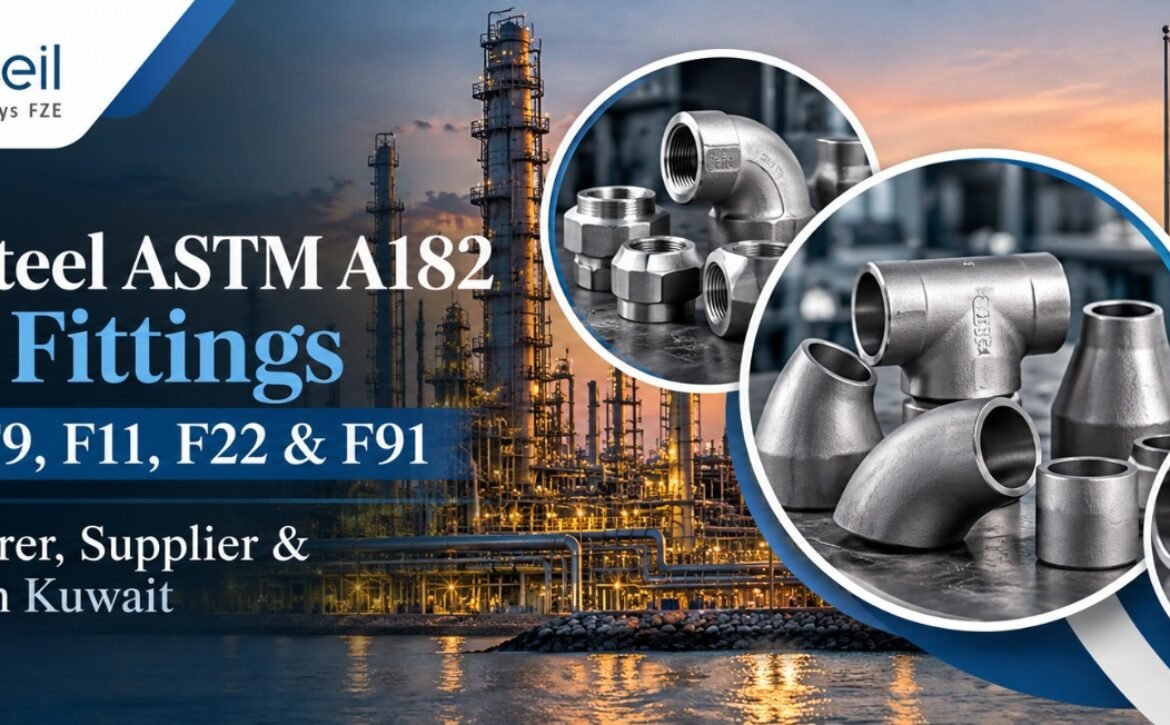
Alloy Steel ASTM A182 Tube Fittings F1, F5, F9, F11, F22 & F91 Manufacturer, Supplier & Exporter in Kuwait

Alloy Steel Tube Fittings are important components in high-pressure and high-temperature piping systems used across oil and gas, power generation, petrochemical processing, refineries, and heavy industrial facilities. Manufactured from chromium-molybdenum alloy steels, these fittings are designed to provide the mechanical strength and thermal performance required for demanding operating conditions.

Mcneil Alloys supplies Alloy Steel ASTM A182 fittings in grades F1, F5, F9, F11, F22 and F91 for industrial projects in Kuwait and other Gulf Cooperation Council (GCC) markets. These fittings are used in piping assemblies where material strength, temperature resistance, dimensional accuracy, and dependable welded connections are essential.

For engineering companies, EPC contractors, plant operators, and procurement teams in Kuwait, selecting the correct alloy steel fitting requires careful evaluation of the grade, pressure and temperature conditions, connection type, applicable standards, and project documentation.

What Are Alloy Steel ASTM A182 Tube Fittings?

ASTM A182 is a specification covering forged or rolled alloy and stainless steel pipe flanges, forged fittings, and valves and parts intended for high-temperature service. The F-series grades covered in this article are alloy steel grades used in appropriate pressure piping applications.

These components are manufactured with controlled alloy compositions to achieve the properties required by their intended service conditions. Chromium and molybdenum contribute to high-temperature performance, while specific grades may include other alloying elements to meet additional mechanical requirements.

Alloy steel fittings are available in configurations such as elbows, tees, reducers, and caps. Depending on the product and engineering specification, they may be supplied as butt-weld fittings or other specified fitting types.

Key Characteristics of ASTM A182 Alloy Steel Fittings

High-temperature performance: Suitable grades can retain required mechanical properties under specified elevated-temperature conditions.
Pressure-bearing capability: Designed for use in pressure piping systems when properly selected and installed.
Chromium-molybdenum composition: Provides specific strength and thermal properties.
Welded connection options: Butt-weld configurations can create permanent joints when fabricated according to approved procedures.
Multiple grade choices: F1, F5, F9, F11, F22 and F91 offer different material characteristics for different applications.
Industrial versatility: Used in suitable power, refinery, petrochemical, and energy-sector installations.
The final material selection must follow the applicable design code, approved material specification, and operating conditions.

ASTM A182 Alloy Steel Fitting Grades Available

Mcneil Alloys lists ASTM A182 alloy steel fitting grades F1, F5, F9, F11, F22 and F91. Each grade has a distinct composition and intended service profile.

1. ASTM A182 F1 Alloy Steel Fittings
F1 is a low-alloy chromium-molybdenum steel grade used in suitable industrial pressure systems. Its material characteristics make it relevant to selected applications where elevated-temperature strength and dimensional stability are required.
Typical applications:
Industrial process piping
Selected refinery systems
Pressure piping assemblies
Heat-transfer equipment
Industrial utility systems
F1 should be specified only where its chemical composition and mechanical properties meet the project’s approved material requirements.

2. ASTM A182 F5 Alloy Steel Fittings
F5 is a chromium-molybdenum alloy steel grade commonly associated with high-temperature industrial services. Its chromium content contributes to oxidation resistance under appropriate operating conditions.
Typical applications:
Refinery piping systems
Industrial heating equipment
High-temperature process lines
Petrochemical facilities
Selected heat-transfer systems
F5 is appropriate when its specified properties satisfy the required operating temperature, pressure, and material compatibility requirements.

3. ASTM A182 F9 Alloy Steel Fittings
F9 is a higher-chromium alloy steel grade used in selected demanding thermal applications. Its composition is relevant to systems where high-temperature performance and oxidation resistance are important.
Typical applications:
Refinery process equipment
High-temperature piping assemblies
Industrial heating systems
Petrochemical installations
Selected power and energy applications
The suitability of F9 depends on the service environment, design conditions, and the applicable piping specification.

4. ASTM A182 F11 Alloy Steel Fittings
F11 is a chromium-molybdenum alloy steel grade used in industrial pressure systems exposed to elevated temperatures and mechanical stress.
Typical applications:
Boiler-related piping
Steam systems
Power generation equipment
Refinery installations
High-temperature process piping
F11 can be considered when its mechanical properties, heat treatment, and fabrication requirements align with the project’s engineering specification.

5. ASTM A182 F22 Alloy Steel Fittings
F22 is a chromium-molybdenum alloy steel grade commonly used in demanding high-temperature applications. It is associated with systems requiring appropriate strength, thermal performance, and resistance to creep under specified service conditions.
Typical applications:
Power plants
Boiler systems
High-temperature steam piping
Heat exchangers
Refinery and petrochemical facilities
The final selection should account for design pressure, operating temperature, fabrication procedures, and applicable code requirements.

6. ASTM A182 F91 Alloy Steel Fittings
F91 is a high-strength chromium-molybdenum-vanadium alloy steel grade developed for demanding elevated-temperature service. Its alloy system supports high-temperature strength and creep resistance when the material is correctly manufactured, heat-treated, and installed.
Typical applications:
Power generation facilities
Critical steam piping
High-temperature pressure systems
Boiler and reheater-related assemblies
Advanced energy installations
F91 requires particular attention to material verification, welding procedures, heat treatment, and inspection. These controls should be defined in the approved project documentation.

Comparison of ASTM A182 F1, F5, F9, F11, F22 and F91

Grade General material characteristics Typical applications
F1 Low-alloy chromium-molybdenum steel Selected pressure and process systems
F5 Chromium-molybdenum alloy steel with higher chromium content Refineries and high-temperature process piping
F9 Higher-chromium alloy steel Selected thermal and refinery applications
F11 Chromium-molybdenum alloy steel Steam systems, boilers and power plants
F22 Chromium-molybdenum alloy steel for demanding thermal service Boilers, heat exchangers and power systems
F91 High-strength chromium-molybdenum-vanadium alloy steel Critical high-temperature power and steam applications
These grades are not interchangeable. Material selection should be based on the complete chemical composition, mechanical properties, heat-treatment requirements, design conditions, and applicable engineering standards.

Technical Specifications of ASTM A182 Alloy Steel Fittings

The following table summarizes key procurement considerations for the product range.

Parameter Specification
Product Alloy Steel ASTM A182 Fittings
Grades F1, F5, F9, F11, F22 and F91
Standard ASTM A182 / ASME SA182
Material type Forged alloy steel, as applicable to the specified fitting
Fitting configurations Elbows, tees, reducers, caps and other specified configurations
Connection type Butt-weld or other specified connection type
Heat treatment As required by the applicable grade and standard
Testing According to the governing specification and purchase order
Documentation Material Test Certificates and inspection records, as required
Important: ASTM A182 is primarily a forged fitting and component specification. The exact product form must be confirmed with the supplier, especially if the requirement is for tube fittings rather than conventional pipe fittings. Dimensions, pressure limits, testing, and availability should be verified for the specific product.

Applications of Alloy Steel Fittings in Kuwait

Kuwait’s industrial sectors include oil production, refining, petrochemical processing, power generation, and energy infrastructure. These facilities may require alloy steel fittings for piping systems operating under demanding thermal and pressure conditions.

Oil and Gas Industry
Alloy steel fittings are used in suitable pressure piping assemblies throughout oil and gas facilities. Material selection depends on operating temperature, pressure, process fluids, and project-specific requirements.

Oil Refineries
Refineries use high-temperature piping systems in selected process units, heating systems, and related equipment. Appropriate alloy steel grades may be specified where elevated-temperature performance is required.

Petrochemical Facilities
Petrochemical processing can involve demanding operating conditions and specialized piping materials. ASTM A182 fittings may be used in suitable installations when the selected grade matches the process requirements.

Power Generation Plants
Boiler, steam, and other high-temperature systems may require alloy steel fittings with specific mechanical and thermal properties. F11, F22 and F91 may be considered for different applications, subject to the engineering design.

Industrial Heating and Heat-Transfer Systems
Alloy steel fittings can form part of piping assemblies used in selected heating and heat-transfer equipment. The grade must be compatible with the temperature, pressure, and process environment.

EPC and Heavy Engineering Projects
Engineering, procurement, and construction contractors require fittings that match approved drawings, piping material classes, and inspection requirements. Confirming material identification and traceability helps support project compliance.

Benefits of Alloy Steel ASTM A182 Fittings

Strength Under Demanding Conditions
Suitable alloy steel grades offer mechanical properties required for specified high-pressure and high-temperature applications.
Thermal Performance
Chromium-molybdenum alloy compositions support performance in selected elevated-temperature services. The actual allowable conditions depend on the grade and applicable design code.
Permanent Welded Connections
Butt-weld fittings can provide permanent piping joints when their dimensions, material, and welding procedures are compatible with the piping system.
Grade Selection Flexibility
The availability of multiple grades allows engineers to select materials according to the intended service conditions and project requirements.
Suitability for Critical Industrial Systems
When correctly specified and installed, alloy steel fittings can support demanding process and energy applications.
Traceability and Quality Documentation
Material certification and inspection records help procurement teams verify compliance with the specified requirements.

How to Select the Right Alloy Steel Fittings in Kuwait

Before placing an order, buyers should evaluate the following factors.
1. Confirm the material specification. Verify that ASTM A182 / ASME SA182 applies to the required product form and identify the exact grade.
2. Define operating temperature and pressure. Check that the selected material and fitting design meet the applicable design conditions.
3. Specify the fitting type. Identify elbows, tees, reducers, caps, or another required configuration.
4. Confirm dimensions. Provide nominal size, schedule, wall thickness, end preparation, and dimensional standard where applicable.
5. Review the welding requirements. Confirm material compatibility and approved welding and heat-treatment procedures.
6. Consider the service environment. Evaluate the process medium and relevant corrosion, oxidation, and thermal conditions.
7. Define inspection and certification. Specify chemical analysis, mechanical testing, material certification, non-destructive examination, and third-party inspection where required.
8. Confirm availability and delivery. Verify the required grade, size, quantity, lead time, and delivery location in Kuwait.

Quality Testing and Inspection

Quality assurance helps verify that alloy steel fittings conform to the material and dimensional requirements specified for a project.
Depending on the grade and purchase order, inspection may include:
Chemical analysis: Verifies material composition against the specified grade.
Mechanical testing: Confirms the required mechanical properties.
Hardness testing: Checks compliance with the applicable acceptance criteria.
Dimensional inspection: Verifies dimensions, tolerances, and fitting geometry.
Heat-treatment verification: Confirms the required heat-treatment condition.
Non-destructive examination: Performed when required by the governing specification or project.
Material Test Certificates: Provide relevant chemical and mechanical test information.
Material traceability: Links the product to its material identification and inspection records.
Testing requirements vary by grade and product type. The inspection scope and acceptance criteria should be agreed upon before procurement.

Why Choose Mcneil Alloys for Alloy Steel Fittings in Kuwait?

Mcneil Alloys lists ASTM A182 alloy steel fitting grades F1, F5, F9, F11, F22 and F91 and identifies Kuwait among its export markets. Its product information highlights applications in high-pressure and high-temperature industrial piping systems.

For industrial buyers in Kuwait, providing complete technical details helps establish whether the available product matches the project specification.
When requesting a quotation, share:
Required grade and material standard
Fitting type and connection arrangement
Nominal size and schedule
Design pressure and operating temperature
Required heat treatment
Inspection and testing requirements
Material certification requirements
Quantity and delivery location

Mcneil Alloys supports enquiries for alloy steel fittings intended for industrial projects across Kuwait and the wider GCC region. Confirm product form, technical compliance, availability, and delivery arrangements for each order.

Frequently Asked Questions

What are ASTM A182 alloy steel fittings?
ASTM A182 covers forged or rolled alloy and stainless steel pipe flanges, forged fittings, valves, and parts intended for high-temperature service. The exact product form and grade should be confirmed against the purchase specification.
Which grades are included in this product range?
The listed alloy steel grades are F1, F5, F9, F11, F22 and F91. Each grade has different chemical and mechanical properties.
Are ASTM A182 fittings suitable for high-temperature applications?
Suitable grades can be used in high-temperature pressure systems when selected according to the design conditions and applicable standards.
What is the difference between F22 and F91?
F22 is a chromium-molybdenum alloy steel grade, while F91 is a higher-strength chromium-molybdenum-vanadium alloy steel. They have different material properties and fabrication requirements, so the approved engineering specification must determine the correct choice.
Does Mcneil Alloys supply alloy steel fittings in Kuwait?
Mcneil Alloys identifies Kuwait as an export destination for its alloy steel fitting range. Buyers should confirm the required grade, product form, size, availability, and delivery schedule directly with the supplier.
What documents should accompany an alloy steel fitting order?
Depending on the project, documents may include Material Test Certificates, chemical and mechanical test results, heat-treatment records, dimensional inspection reports, and traceability documentation.
What information is required for a quotation?
Provide the material grade, standard, fitting type, size, schedule, quantity, operating conditions, testing requirements, documentation, and delivery location in Kuwait.

Conclusion

Alloy Steel ASTM A182 fittings in grades F1, F5, F9, F11, F22 and F91 support selected industrial piping applications where material strength and high-temperature performance are important. Each grade offers different properties, making careful specification and engineering-based selection essential for refineries, power plants, petrochemical facilities, and other demanding industrial systems.

Mcneil Alloys supplies alloy steel fitting solutions for regional and international industrial markets, including Kuwait. Before purchasing, verify the exact product form, grade, dimensions, design requirements, inspection scope, and material documentation to ensure the supplied fittings align with the project’s approved specifications.

For companies searching for an Alloy Steel ASTM A182 Fittings Supplier in Kuwait, Mcneil Alloys offers a listed range of F1, F5, F9, F11, F22 and F91 grades for suitable industrial requirements.

Read More
admin October 12, 2026 0 Comments