Manufacturer & Exporters of:
Instrumentation Pipe Fittings & Valves

Category: Tube Fittings

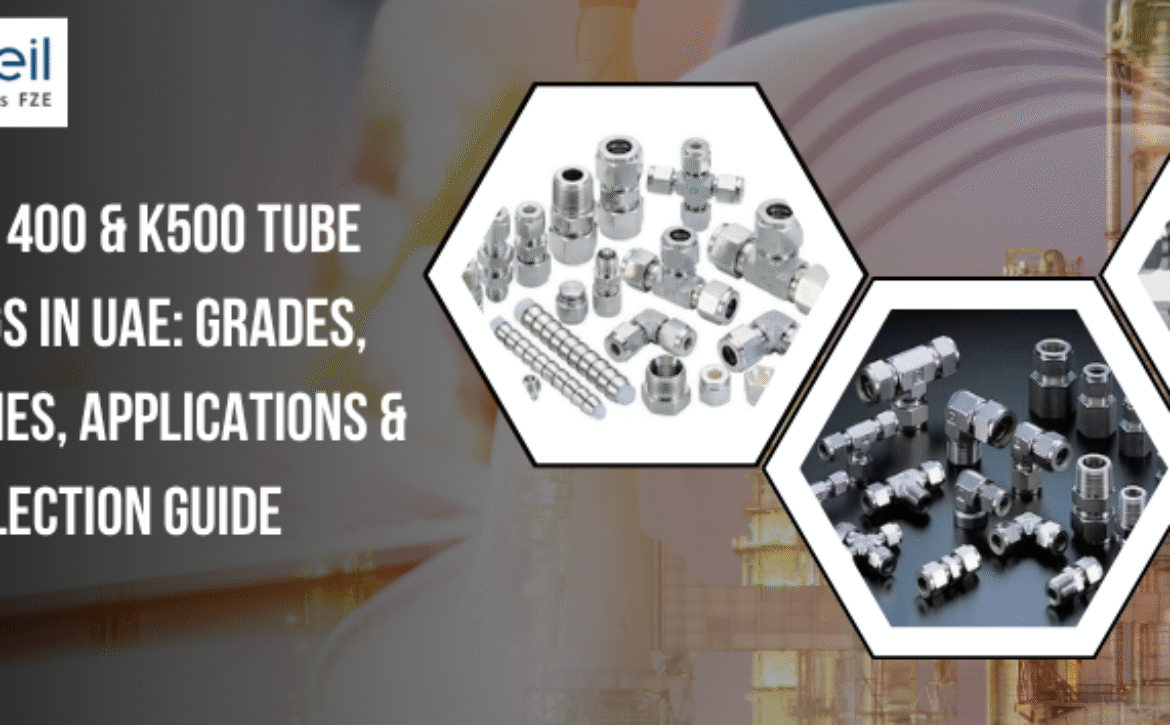
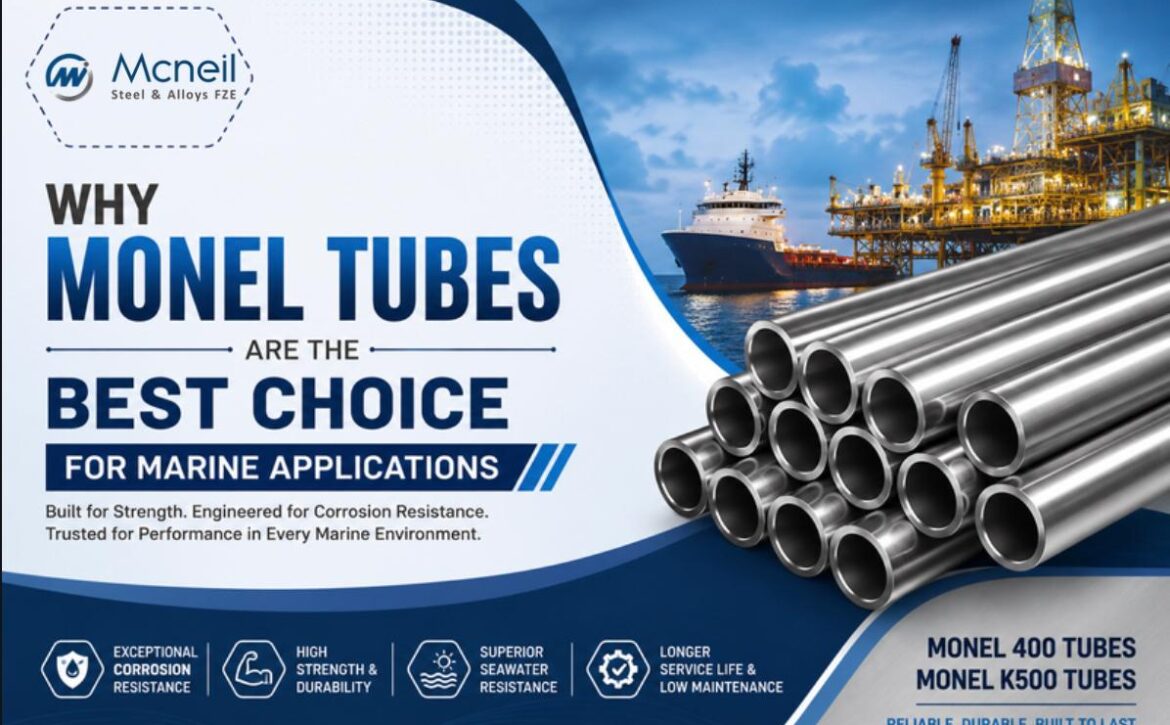
Monel 400 & K500 Tube Fittings in UAE: Grades, Properties, Applications & Selection Guide

Monel tube fittings are high-performance nickel-copper alloy components designed for piping and instrumentation systems exposed to seawater, chemicals, acids, pressure, and demanding environmental conditions. Their combination of corrosion resistance, mechanical strength, durability, and reliable connection performance makes them suitable for critical industrial applications.

In the UAE, industries such as oil and gas, offshore engineering, petrochemical processing, marine engineering, desalination, power generation, chemical processing, and instrumentation require materials capable of performing reliably in aggressive environments.

Mcneil Alloys manufactures, supplies, and exports Monel 400 and Monel K500 Tube Fittings in the UAE, providing corrosion-resistant and high-strength solutions for demanding industrial systems. The company supplies across Dubai, Abu Dhabi, Sharjah, Ajman, Fujairah, Ras Al-Khaimah, and Umm Al-Quwain.

What Are Monel Tube Fittings?

Monel Tube Fittings are fittings manufactured from nickel-copper alloys and used to connect, route, control, and terminate tubing in industrial and instrumentation systems.

The two grades highlighted by Mcneil Alloys are:

  • Monel 400 – UNS N04400
  • Monel K500 – UNS N05500

Both alloys offer excellent corrosion resistance, but they serve somewhat different performance requirements. Monel 400 emphasizes corrosion resistance and general mechanical performance, while Monel K500 provides significantly higher strength, hardness, and fatigue resistance through precipitation hardening.

Why Monel Tube Fittings Are Important in the UAE

The UAE has major industrial sectors operating in coastal, marine, offshore, and high-temperature environments. Piping and instrumentation systems may be exposed to seawater, brackish water, chemicals, acidic media, pressure, vibration, and temperature variations.

Monel Tube Fittings can be selected for applications where corrosion resistance and long-term mechanical reliability are critical.

Key advantages include:

  • Excellent resistance to seawater
  • Strong corrosion resistance
  • Resistance to stress-corrosion cracking
  • Good resistance to pitting
  • High mechanical strength
  • Good thermal stability
  • Leak-resistant connections
  • Long service life
  • Low maintenance requirements
  • Suitability for offshore and marine environments

Mcneil Alloys specifically identifies oil and gas, petrochemical, power generation, marine engineering, offshore platforms, shipbuilding, chemical processing, and instrumentation among the applications for its Monel Tube Fittings.

Monel 400 Tube Fittings in UAE

Monel 400, identified as UNS N04400, is a nickel-copper alloy known for its corrosion resistance and mechanical strength.

According to Mcneil Alloys, Monel 400 Tube Fittings are particularly suitable for environments involving seawater, brackish water, chemicals, acids, high pressure, and demanding marine conditions.

Technical Specifications of Monel 400 Tube Fittings

Parameter Monel 400
Alloy Monel 400
UNS N04400
Nickel ≥ 63%
Copper ≤ 28%
Iron ≤ 2.5%
Manganese ≤ 2%
Carbon ≤ 0.3%
Tensile Strength 550–750 MPa
Yield Strength ≥ 240 MPa
Elongation ≥ 30%
Hardness Approx. 200 HB
Standards ASTM B163 / ASME SB163, B171
Operating Temperature −200°C to +315°C

These specifications are based on the technical information published by Mcneil Alloys for its Monel 400 Tube Fittings.

Key Properties of Monel 400

Monel 400 Tube Fittings offer:

  • High corrosion resistance in seawater
  • Resistance to brackish water
  • Resistance to alkaline environments
  • Resistance to acidic environments
  • Good mechanical strength
  • Resistance to stress-corrosion cracking
  • Resistance to pitting
  • Good weldability and formability
  • Thermal stability
  • Reliable performance across a broad temperature range

These characteristics make Monel 400 a practical choice for marine, offshore, chemical, refinery, and instrumentation applications.

Monel K500 Tube Fittings in UAE

Monel K500, or UNS N05500, is a precipitation-hardened nickel-copper alloy containing aluminum and titanium.

Compared with Monel 400, K500 offers substantially higher tensile strength, yield strength, hardness, and fatigue resistance while maintaining strong corrosion resistance.

Mcneil Alloys positions Monel K500 Tube Fittings for high-pressure, high-stress, offshore, marine, chemical, and mechanical applications.

Technical Specifications of Monel K500 Tube Fittings

Parameter Monel K500
Alloy Monel K500
UNS N05500
Nickel ~63%
Copper ~28%
Aluminium 2.15–3.15%
Titanium 0.35–0.85%
Iron ≤ 2%
Tensile Strength ≥ 965 MPa
Yield Strength ≥ 585 MPa
Elongation ≥ 20%
Hardness ≤ 328 HB
Standards ASTM B164 / ASME SB164
Operating Temperature −196°C to +315°C

The above specifications are published by Mcneil Alloys for its Monel K500 Tube Fittings.

Key Properties of Monel K500

Monel K500 Tube Fittings provide:

  • Higher tensile strength than Monel 400
  • Higher yield strength
  • Increased hardness
  • Superior fatigue resistance
  • Excellent seawater corrosion resistance
  • Resistance to sour-gas environments
  • Resistance to chemical and alkaline environments
  • High-pressure performance
  • High-temperature capability
  • Vibration-resistant connections
  • Long service life

The combination of high strength and corrosion resistance makes K500 suitable for demanding offshore and mechanical applications.

Monel 400 vs Monel K500 Tube Fittings

Feature Monel 400 Monel K500
UNS N04400 N05500
Base Alloy Nickel-Copper Nickel-Copper
Main Advantage Corrosion resistance High strength + corrosion resistance
Tensile Strength 550–750 MPa ≥ 965 MPa
Yield Strength ≥ 240 MPa ≥ 585 MPa
Elongation ≥ 30% ≥ 20%
Hardness ~200 HB ≤ 328 HB
Corrosion Resistance Excellent Excellent
Fatigue Resistance Good Superior
Typical Service Marine, chemical, offshore High-stress offshore and mechanical systems
Standard Listed ASTM B163 / ASME SB163, B171 ASTM B164 / ASME SB164

The choice between the two grades should be based on pressure, mechanical loading, corrosion exposure, temperature, and the project’s material specification.

Applications of Monel Tube Fittings in the UAE

1. Oil and Gas Industry

The UAE’s oil and gas sector uses instrumentation and tubing systems in production facilities, processing plants, offshore platforms, and supporting infrastructure.

Monel Tube Fittings can be considered for:

  • Offshore instrumentation
  • Process tubing
  • Oil and gas equipment
  • High-pressure systems
  • Sour-service environments
  • Offshore production systems
  • Gas processing facilities

Monel K500 is particularly useful where high mechanical strength is required in addition to corrosion resistance.

2. Offshore Platforms

Offshore equipment is continuously exposed to seawater, salt-laden environments, humidity, pressure, and mechanical vibration.

Monel 400 and K500 Tube Fittings can provide corrosion-resistant connection solutions for selected offshore systems.

Applications may include:

  • Instrumentation tubing
  • Hydraulic systems
  • Process tubing
  • Valve systems
  • Offshore equipment
  • High-pressure connections

3. Marine Engineering

Marine systems require materials capable of handling prolonged exposure to seawater and chloride-rich environments.

Monel 400 is particularly suited to corrosion-resistant marine applications, while Monel K500 can be selected where higher strength and fatigue resistance are required.

Applications include:

  • Shipbuilding
  • Marine instrumentation
  • Seawater systems
  • Marine equipment
  • Pumps
  • Valves
  • Offshore support systems

4. Desalination Plants

Desalination facilities handle seawater and concentrated saline streams, making corrosion resistance an important consideration when selecting metallic components.

Monel Tube Fittings can be used in suitable instrumentation and process applications where their corrosion-resistant characteristics meet the system requirements.

5. Petrochemical Plants

Petrochemical facilities contain process lines and instrumentation exposed to chemicals, hydrocarbons, pressure, and temperature variations.

Monel fittings can be used in selected:

  • Process instrumentation
  • Chemical lines
  • Pressure-control systems
  • Refinery equipment
  • Petrochemical units
  • Sampling systems

6. Chemical Processing

Chemical processing systems may involve acidic, alkaline, and corrosive process media.

Monel 400 provides strong corrosion resistance, while Monel K500 adds higher mechanical strength for applications involving greater mechanical loads.

7. Power Generation

Power-generation facilities use instrumentation and auxiliary systems that may require corrosion-resistant tubing connections.

Monel Tube Fittings can be considered for suitable:

  • Instrumentation systems
  • Hydraulic connections
  • Process monitoring
  • Valve systems
  • Auxiliary equipment

Monel Tube Fitting Applications in UAE’s Major Industrial Locations

Mcneil Alloys states that it supplies Monel Tube Fittings across major UAE locations including:

  • Dubai
  • Abu Dhabi
  • Sharjah
  • Ajman
  • Fujairah
  • Ras Al-Khaimah
  • Umm Al-Quwain

This geographic coverage supports applications across the UAE’s oil and gas, marine, petrochemical, chemical, power, offshore, and industrial sectors.

How to Select Monel 400 or K500 Tube Fittings

Selecting the appropriate Monel Tube Fitting requires consideration of the complete operating environment.

1. Corrosion Environment

Identify whether the fitting will be exposed to:

  • Seawater
  • Brackish water
  • Chlorides
  • Acids
  • Alkalis
  • Sour gas
  • Chemical process media

2. Pressure

Determine the operating and design pressure of the tubing system.

Higher mechanical loading may make Monel K500 more appropriate where its higher strength is required.

3. Temperature

Confirm the minimum, normal, and maximum operating temperatures.

Mcneil Alloys lists an operating range of −200°C to +315°C for Monel 400 and −196°C to +315°C for Monel K500 on the product page.

4. Mechanical Loads

Consider vibration, fatigue, tensile loading, pressure cycling, and other mechanical stresses.

Monel K500 can be advantageous where higher strength and fatigue resistance are required.

5. Connection Requirements

The tube fitting must match the tubing dimensions and connection arrangement specified by the project.

6. Material Certification

For critical industrial applications, confirm the required material certificates, inspection documentation, testing requirements, and applicable ASTM/ASME specifications before procurement.

Why Choose Mcneil Alloys for Monel Tube Fittings in UAE?

Mcneil Alloys positions itself as a Monel 400 and Monel K500 Tube Fittings manufacturer, supplier, and exporter in the UAE.

The company highlights:

  • Precision manufacturing
  • Accurate dimensions
  • Tight tolerances
  • Leak-resistant connections
  • International quality compliance
  • ASTM/ASME standards
  • Certified raw materials
  • Strict quality control
  • Third-party inspection support
  • Test certificates for project requirements

Mcneil Alloys supplies the fittings across the UAE and exports to several Gulf markets. Its stated UAE locations include Dubai, Abu Dhabi, Sharjah, Ajman, Ras Al-Khaimah, Fujairah, and Umm Al-Quwain.

Benefits of Monel 400 & K500 Tube Fittings

The major benefits include:

Excellent Corrosion Resistance

Monel alloys provide strong resistance to seawater, brackish water, acidic and alkaline environments.

High Mechanical Strength

Monel K500 offers particularly high tensile and yield strength compared with Monel 400.

Marine Compatibility

Both grades are suitable for selected marine and offshore applications where corrosion resistance is essential.

Long Service Life

Resistance to corrosion, stress cracking, and mechanical degradation can support extended operating life.

Leak-Resistant Connections

Properly manufactured and installed tube fittings provide reliable connections for instrumentation and process tubing.

Reduced Maintenance

Durable alloy construction can reduce replacement and maintenance requirements in suitable applications.

Quality Considerations for Monel Tube Fittings

For critical UAE industrial projects, procurement teams should verify:

  • Material grade
  • UNS designation
  • Applicable ASTM/ASME specification
  • Chemical composition
  • Mechanical properties
  • Dimensional tolerances
  • Tubing compatibility
  • Pressure requirements
  • Temperature requirements
  • Material Test Certificates
  • Third-party inspection requirements
  • Project-specific documentation

Mcneil Alloys states that third-party inspection and test certificates can be provided to support project and compliance requirements.

Frequently Asked Questions

What are Monel 400 Tube Fittings?

Monel 400 Tube Fittings are nickel-copper alloy fittings made from UNS N04400 and designed for corrosion-resistant tubing connections, particularly in marine, chemical, offshore, and instrumentation applications.

What are Monel K500 Tube Fittings?

Monel K500 Tube Fittings are precipitation-hardened nickel-copper alloy fittings made from UNS N05500. They provide higher strength, hardness, and fatigue resistance than Monel 400 while retaining excellent corrosion resistance.

What is the difference between Monel 400 and Monel K500?

Monel 400 is primarily known for its excellent corrosion resistance and good mechanical strength. Monel K500 offers significantly higher tensile strength, yield strength, hardness, and fatigue resistance, making it suitable for higher-stress applications.

Where are Monel Tube Fittings used in the UAE?

They are used in suitable applications across oil and gas, offshore platforms, marine engineering, petrochemical plants, chemical processing, power generation, desalination, shipbuilding, and instrumentation systems.

Which Monel grade is stronger, 400 or K500?

Monel K500 has higher tensile and yield strength than Monel 400 according to Mcneil Alloys’ published specifications. K500 is therefore preferred where higher mechanical strength and fatigue resistance are required.

Does Mcneil Alloys supply Monel Tube Fittings in Dubai and Abu Dhabi?

Yes. Mcneil Alloys states that it supplies Monel 400 and K500 Tube Fittings across Dubai, Abu Dhabi, Sharjah, Ajman, Fujairah, Ras Al-Khaimah, and Umm Al-Quwain.

Which standards are listed for Monel Tube Fittings?

Mcneil Alloys lists ASTM B163 / ASME SB163 and B171 for Monel 400 and ASTM B164 / ASME SB164 for Monel K500 on the product page. Project-specific standards should be confirmed before ordering.

Conclusion

Monel 400 and Monel K500 Tube Fittings provide high-performance solutions for tubing and instrumentation systems exposed to seawater, chemicals, acids, pressure, temperature, and demanding mechanical conditions.

Monel 400 is a strong choice for applications where corrosion resistance and dependable mechanical performance are the primary requirements. Monel K500 provides the additional advantage of significantly higher strength, hardness, and fatigue resistance for high-stress applications.

For UAE industries including oil and gas, offshore engineering, marine, petrochemical, chemical processing, power generation, and desalination, selecting the correct Monel grade is essential for achieving reliable long-term performance.

With its UAE-based manufacturing and supply operations, broad geographic coverage, ASTM/ASME-oriented quality approach, and range of Monel 400 and Monel K500 Tube Fittings, Mcneil Alloys provides solutions for demanding industrial tubing and instrumentation applications.

Read More
admin September 11, 2026 0 Comments

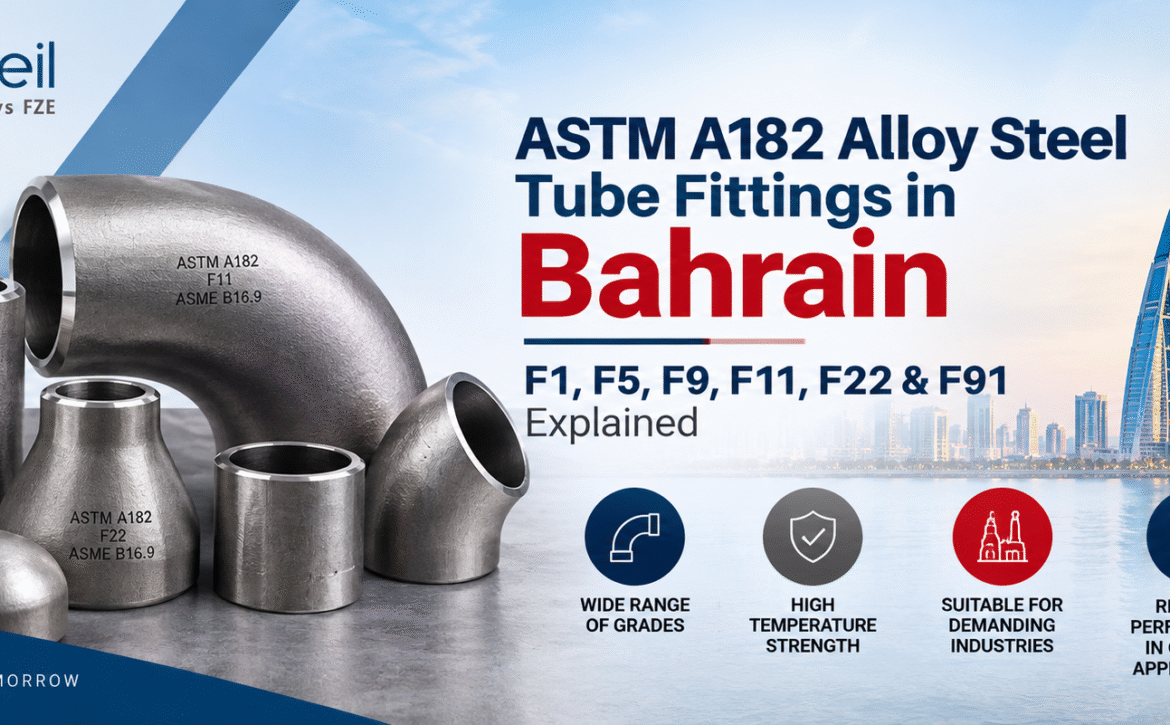
ASTM A182 Alloy Steel Tube Fittings in Bahrain: F1, F5, F9, F11, F22 & F91 Explained

Industrial piping and tubing systems used in Bahrain’s energy and process industries often operate under elevated temperatures, pressure fluctuations, and demanding service conditions. In such environments, selecting the right material for tube and pipe fittings is essential for maintaining mechanical integrity, reliable connections, and long-term operating performance.

ASTM A182 alloy steel fittings are engineered for demanding pressure and temperature applications where conventional carbon steel may not provide the required combination of strength and thermal stability. The ASTM A182 F-series includes grades such as F1, F5, F9, F11, F22, and F91, each offering different alloy compositions and performance characteristics.

Mcneil Alloys supplies and exports ASTM A182 alloy steel fittings in these grades for high-pressure and high-temperature piping applications. The company’s published export markets include Bahrain, along with other GCC and international destinations.

What Are ASTM A182 Alloy Steel Tube Fittings?

ASTM A182 covers forged or rolled alloy and stainless steel components for pressure applications. Alloy steel grades within the specification are selected when piping systems require enhanced strength, thermal stability, creep resistance, or oxidation resistance.

The F-series grades supplied by Mcneil Alloys include:

  • ASTM A182 F1
  • ASTM A182 F5
  • ASTM A182 F9
  • ASTM A182 F11
  • ASTM A182 F22
  • ASTM A182 F91

These grades contain varying amounts of chromium, molybdenum, and, in the case of F91, additional alloying elements. This allows engineers to select a fitting according to the actual temperature, pressure, and service requirements of a piping system.

Why ASTM A182 Alloy Steel Fittings Matter in Bahrain

Bahrain’s industrial environment includes oil and gas operations, refinery facilities, petrochemical processing, energy infrastructure, and other process industries where high-performance piping components may be required.

Fittings in these systems need to withstand mechanical loading while maintaining their integrity during exposure to elevated temperatures and pressure.

ASTM A182 alloy steel fittings can provide important advantages such as:

  • High-temperature strength
  • Improved thermal stability
  • Resistance to oxidation and scaling
  • Creep resistance
  • Pressure-handling capability
  • Dimensional stability
  • Long-term service performance
  • Compatibility with permanent welded piping systems

Mcneil Alloys specifically describes its A182 F-series fittings as solutions for high-pressure and high-temperature piping systems where mechanical strength, creep resistance, and long-term structural stability are important.

ASTM A182 F1 Tube Fittings

ASTM A182 F1 is a low-alloy chromium-molybdenum steel grade intended for elevated-temperature piping applications.

According to Mcneil Alloys’ published specifications, F1 contains approximately 0.5% chromium and 0.5% molybdenum, with a listed temperature range of −29°C to +480°C.

Key F1 Properties

Property ASTM A182 F1
Chromium Approx. 0.5%
Molybdenum Approx. 0.5%
Tensile Strength ≥ 415 MPa
Yield Strength ≥ 205 MPa
Hardness ≤ 85 HRB
Standard ASTM A182 / ASME SA182
Published Temperature Range −29°C to +480°C

F1 fittings can be considered for industrial piping where moderate elevated-temperature service and mechanical stability are required.

ASTM A182 F5 Tube Fittings

ASTM A182 F5 contains a higher chromium content than F1 and is intended for more demanding thermal environments.

Mcneil Alloys lists approximately 5% chromium and 0.5% molybdenum for F5, with a published temperature range of −29°C to +600°C.

The increased chromium content contributes to improved resistance to oxidation and scaling at elevated temperatures.

Typical F5 Applications

F5 fittings can be considered for:

  • Refinery piping
  • High-temperature process systems
  • Power-generation equipment
  • Heat-intensive industrial piping
  • Pressure piping systems

The source lists a minimum tensile strength of 485 MPa and minimum yield strength of 275 MPa for its F5 specification.

ASTM A182 F9 Tube Fittings

ASTM A182 F9 provides a higher chromium content than lower-alloy F-series grades.

Mcneil Alloys specifies approximately 9% chromium and 1% molybdenum for F9 and lists a temperature range of −29°C to +675°C.

Why F9 Is Used

The alloy composition provides:

  • Enhanced oxidation resistance
  • High-temperature stability
  • Improved strength retention
  • Creep resistance
  • Suitability for pressure-critical systems

F9 fittings are particularly relevant where the piping system is exposed to sustained elevated temperatures.

ASTM A182 F11 Tube Fittings

ASTM A182 F11 is a widely used chromium-molybdenum alloy steel grade for high-temperature pressure systems.

Mcneil Alloys lists approximately 1.25% chromium and 0.5% molybdenum for F11, with a published temperature range of −29°C to +600°C.

Typical F11 Applications

F11 fittings can be considered for:

  • Steam piping
  • Boilers
  • Power plants
  • Refinery systems
  • Heat-transfer systems
  • High-temperature pressure piping

The grade combines elevated-temperature strength with thermal stability and is suitable for applications where long-term service performance is important.

ASTM A182 F22 Tube Fittings

ASTM A182 F22 is a chromium-molybdenum alloy steel grade commonly selected for demanding high-temperature pressure applications.

Mcneil Alloys lists approximately 2.25% chromium and 1% molybdenum, with a published temperature range of −29°C to +670°C.

Advantages of F22

F22 offers:

  • High-temperature strength
  • Improved creep resistance
  • Oxidation resistance
  • Thermal stability
  • Resistance to pressure fluctuations
  • Long-term structural integrity

It can be considered for high-temperature steam systems, boilers, power-generation facilities, heat exchangers, and process piping.

ASTM A182 F91 Tube Fittings

ASTM A182 F91 is one of the higher-performance grades in this product range.

Unlike the simpler Cr-Mo grades, F91 incorporates chromium, molybdenum, vanadium, and other alloying additions that support high-temperature strength and creep resistance.

Mcneil Alloys lists approximately 9% chromium, 1% molybdenum, and 0.2% vanadium, with a published temperature range of −29°C to +705°C.

Typical F91 Applications

F91 fittings may be selected for demanding systems such as:

  • High-pressure steam lines
  • Advanced power-generation systems
  • Boilers
  • Superheaters
  • Reheaters
  • Critical high-temperature piping

The published F91 specification lists minimum tensile strength of 620 MPa and minimum yield strength of 415 MPa.

ASTM A182 F1 vs F5 vs F9 vs F11 vs F22 vs F91

Grade Approx. Alloy Composition* Published Temperature Range General Service Position
F1 Cr 0.5%, Mo 0.5% −29°C to +480°C Moderate high-temperature service
F5 Cr 5%, Mo 0.5% −29°C to +600°C High-temperature/oxidation-resistant service
F9 Cr 9%, Mo 1% −29°C to +675°C High-temperature pressure systems
F11 Cr 1.25%, Mo 0.5% −29°C to +600°C Steam, boiler and pressure systems
F22 Cr 2.25%, Mo 1% −29°C to +670°C Demanding thermal and pressure service
F91 Cr 9%, Mo 1%, V 0.2% −29°C to +705°C Critical high-temperature service

*Values shown are from Mcneil Alloys’ published product information and are intended as a product-reference comparison. Final material selection should follow the applicable specification and engineering requirements.

Applications of ASTM A182 Alloy Steel Fittings in Bahrain

Oil & Gas Industry

Oil and gas facilities can contain high-pressure process lines, utility systems, steam services, and equipment connections.

A182 alloy steel fittings can be considered where elevated temperature and pressure demand greater performance than standard carbon steel components.

Refineries

Refinery units frequently operate at elevated temperatures and require reliable connections between process piping and equipment.

F5, F9, F11, F22, and F91 may be considered for different refinery services depending on operating conditions and engineering specifications.

Petrochemical Plants

Petrochemical processes can combine high temperature, pressure, thermal cycling, and aggressive process environments.

Correctly selected alloy steel fittings help provide the required mechanical and thermal performance in appropriate services.

Power Generation

Power plants use extensive steam, boiler, reheater, superheater, and high-temperature piping systems.

F11, F22, and F91 can be relevant to different high-temperature applications depending on the system’s design parameters.

Boiler and Steam Systems

Boiler and steam piping require materials capable of retaining mechanical integrity during prolonged thermal exposure.

The selection between different A182 grades should be based on temperature, pressure, creep requirements, design code, and fabrication procedures.

Heat-Transfer Systems

Heat exchangers and related high-temperature process systems can require alloy steel fittings capable of maintaining dimensional and mechanical stability under thermal cycling.

Butt-Weld Alloy Steel Fittings for Bahrain Projects

Mcneil Alloys supplies A182 alloy steel fittings in configurations suitable for butt-welding and permanent piping connections.

Common fitting configurations include:

  • Elbows
  • Tees
  • Reducers
  • Caps
  • Custom-forged fittings

Butt-weld connections can provide a continuous, permanent connection when properly designed, welded, inspected, and tested.

For high-temperature alloy steel systems, welding procedures and post-weld heat treatment requirements should be established according to the applicable material specification and engineering code.

How to Choose the Right ASTM A182 Grade

Choosing an A182 fitting should be based on the complete operating environment.

1. Determine Operating Temperature

Establish normal, maximum, and design temperatures.

2. Determine Design Pressure

The fitting must be compatible with the required pressure rating and piping design.

3. Evaluate the Process Fluid

Consider whether the system carries:

  • Steam
  • Hydrocarbons
  • Gas
  • Water
  • Chemical solutions
  • Process fluids

4. Evaluate Creep Requirements

For prolonged high-temperature service, creep resistance becomes an important consideration.

5. Select the Appropriate Grade

Compare F1, F5, F9, F11, F22, and F91 against the actual service requirements rather than automatically selecting the highest alloy grade.

6. Consider Welding Requirements

Alloy steel fittings require appropriate welding procedures and, where applicable, preheating and post-weld heat treatment.

7. Confirm Documentation

For critical Bahrain projects, procurement specifications may require material certificates, inspection reports, testing records, and traceability.

Quality and Inspection of A182 Alloy Steel Fittings

Quality assurance is particularly important when fittings are used in pressure-containing and high-temperature systems.

Mcneil Alloys states that its A182 fittings are manufactured with attention to chemical composition, heat treatment, dimensional accuracy, and international standards. The company also identifies Material Test Certificates (MTCs), third-party inspection reports, and project documentation as available upon request.

Depending on project requirements, buyers may specify:

  • Chemical analysis
  • Tensile testing
  • Yield-strength verification
  • Hardness testing
  • Dimensional inspection
  • Hydrostatic testing
  • Non-destructive examination
  • Heat-treatment records
  • Material traceability
  • Third-party inspection

The required inspection plan should be established before procurement.

Mcneil Alloys: Supplying ASTM A182 Fittings to Bahrain

Mcneil Alloys is a UAE-based manufacturer, supplier, distributor, and exporter of alloy and stainless steel piping products. Its published product range includes ASTM A182 F1, F5, F9, F11, F22, and F91 alloy steel fittings.

The company’s broader product portfolio includes pipes, tubes, pipe fittings, instrumentation tube fittings, flanges, valves, and other industrial components. Its website specifically states that it exports to Bahrain, along with Saudi Arabia, Oman, Qatar, Kuwait, Iraq, and other markets.

For Bahrain projects, this export capability can support procurement requirements for oil & gas, refinery, petrochemical, power, and other industrial applications.

Key supply advantages include:

  • Multiple A182 alloy steel grades
  • F1, F5, F9, F11, F22 and F91 availability
  • Butt-welding fitting configurations
  • High-temperature and high-pressure applications
  • Project-specific dimensions
  • Material documentation
  • Quality inspection
  • Export supply to Bahrain
  • Support for standard and custom requirements

Frequently Asked Questions

What is ASTM A182 used for?

ASTM A182 is used for forged or rolled alloy and stainless steel components intended for pressure applications. Mcneil Alloys supplies alloy steel A182 grades F1, F5, F9, F11, F22, and F91 for high-temperature and high-pressure piping systems.

Which ASTM A182 grades does Mcneil Alloys supply?

The listed alloy steel grades are F1, F5, F9, F11, F22, and F91.

Which A182 grade is suitable for high-temperature applications?

The appropriate grade depends on the operating conditions. F5, F9, F11, F22, and F91 are all used for elevated-temperature applications, but their alloy composition and performance characteristics differ.

What is ASTM A182 F91 used for?

F91 is used for demanding high-temperature and high-pressure applications where enhanced creep strength and thermal stability are required. Potential applications include critical steam piping, boilers, superheaters, reheaters, and power-generation systems.

Are ASTM A182 fittings suitable for refinery applications?

Yes. The Mcneil Alloys product information identifies refinery units among the applications for its A182 alloy steel fittings.

Does Mcneil Alloys export A182 fittings to Bahrain?

Yes. Bahrain is listed among the international export destinations on the Mcneil Alloys website.

Can Mcneil Alloys provide custom alloy steel fittings?

Yes. The company states that it can provide custom dimensions, special wall thicknesses, and project-specific configurations according to engineering requirements.

Conclusion

ASTM A182 alloy steel fittings provide an important solution for pressure-containing piping systems exposed to elevated temperatures and demanding mechanical conditions. For Bahrain’s oil & gas, refinery, petrochemical, power-generation, boiler, and process industries, selecting the correct alloy grade is essential for achieving reliable long-term performance.

Mcneil Alloys supplies ASTM A182 F1, F5, F9, F11, F22, and F91 alloy steel fittings, providing different levels of thermal stability, oxidation resistance, mechanical strength, and creep resistance for industrial applications.

The right grade should be selected based on operating temperature, design pressure, process medium, creep requirements, welding procedure, applicable standards, and inspection requirements. Rather than choosing a fitting solely by grade or price, engineers and procurement teams should evaluate the complete operating environment.

With its UAE-based supply network and established export capability to Bahrain and other GCC markets, Mcneil Alloys can support industrial requirements for alloy steel piping components and project-specific fitting configurations.

Read More
admin September 5, 2026 0 Comments

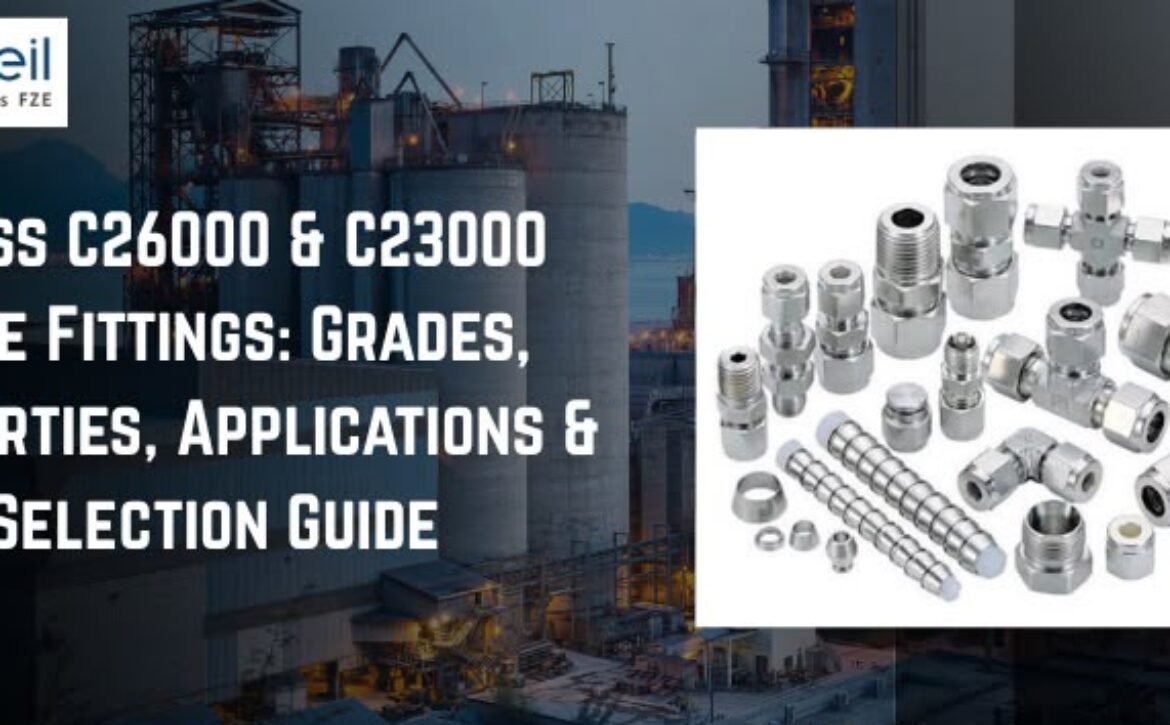
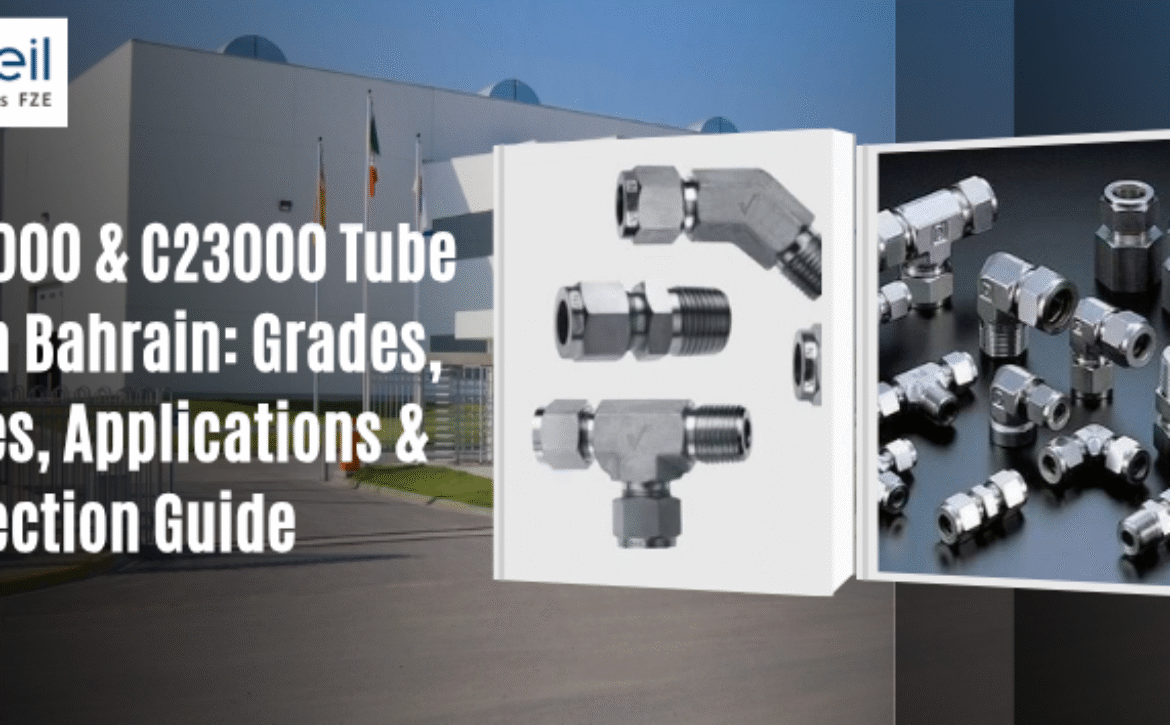
Brass C26000 & C23000 Tube Fittings in Bahrain: Grades, Properties, Applications & Selection Guide

Reliable tube connections are essential in fluid, gas, instrumentation, plumbing, marine, HVAC, and industrial systems. Brass C26000 and C23000 Tube Fittings are widely selected where a combination of corrosion resistance, strength, formability, machinability, and dependable sealing is required.

Mcneil Alloys manufactures and supplies Brass C26000 and C23000 Tube Fittings for Bahrain, supporting industrial and project-based requirements across applications such as instrumentation tubing, plumbing, marine systems, HVAC, refrigeration, hydraulic lines, and fuel systems. The company’s published product information also identifies Bahrain among its export destinations.

What Are Brass C26000 & C23000 Tube Fittings?

Brass tube fittings are copper-zinc alloy components used to connect and control tubing systems. C26000, commonly known as Cartridge Brass, is valued for its excellent ductility, cold-forming characteristics, and general corrosion resistance.

C23000, commonly known as Red Brass, has a higher copper content and is particularly suited to applications requiring good corrosion resistance, formability, thermal conductivity, and durability.

Both grades can be used for tubing assemblies where accurate dimensions, smooth internal surfaces, and reliable connections are important.

Brass C26000 Tube Fittings in Bahrain

Brass C26000 Tube Fittings are commonly selected for precision tubing applications where excellent formability and reliable mechanical performance are required.

C26000 is a copper-zinc alloy commonly referred to as 70/30 brass. Its ductility makes it suitable for forming and fabrication, including tubing layouts requiring bends and accurately shaped connections.

Applications of C26000 Tube Fittings

C26000 fittings can be used in:

  • Instrumentation tubing
  • Plumbing systems
  • HVAC systems
  • Refrigeration systems
  • Marine fittings
  • Hydraulic lines
  • Fuel lines
  • General industrial tubing

Benefits of C26000 Brass Fittings

  • Excellent ductility
  • Good cold-forming characteristics
  • Good atmospheric corrosion resistance
  • Easy machining
  • Good joining characteristics
  • Smooth surface finish
  • Reliable performance in low to moderate pressure tubing systems

Mcneil Alloys lists C26000 fittings for precision tubing applications and identifies their suitability for plumbing, instrumentation, marine, HVAC, refrigeration, hydraulic, and fuel-line applications.

Brass C23000 Tube Fittings in Bahrain

Brass C23000 Tube Fittings, also known as Red Brass fittings, contain a higher proportion of copper than C26000.

The higher copper content provides good corrosion resistance while maintaining useful strength, ductility, and thermal conductivity.

Applications of C23000 Tube Fittings

C23000 fittings are suitable for:

  • Marine systems
  • Plumbing
  • Hydraulic lines
  • Chemical processing
  • Industrial tubing
  • Thermal systems
  • Moisture-prone environments

Advantages of C23000

  • High copper content
  • Good corrosion resistance
  • Good resistance to dezincification
  • Excellent ductility
  • Good thermal conductivity
  • Good machinability
  • Suitable for brazing and joining
  • Long service life

These properties make C23000 an option for tubing systems exposed to moisture and environments where corrosion resistance is an important consideration.

C26000 vs C23000 Brass Tube Fittings

Property C26000 Brass C23000 Brass
Common Name Cartridge Brass Red Brass
Copper Content Approx. 68.5–71.5% Approx. 84–86%
Zinc Content Approx. 28.5–31.5% Approx. 14–16%
Main Advantage Excellent formability Higher copper content
Corrosion Resistance Good Very good
Ductility Excellent Excellent
Thermal Conductivity Good High
Typical Applications Instrumentation, HVAC, plumbing Marine, plumbing, hydraulic, chemical
Suitable Environment General industrial and mild environments Moisture-prone and selected marine environments

The exact properties depend on material condition, temper, manufacturing method, and applicable specification.

Why Choose Brass Tube Fittings for Bahrain Projects?

Bahrain’s industrial environment includes oil & gas, petrochemical, marine, water, construction, HVAC, and industrial processing applications. Reliable tubing connections are important in these systems, particularly where temperature variation, moisture, and continuous operation are involved.

Brass fittings can offer:

  • Good corrosion resistance
  • Reliable mechanical performance
  • Excellent machinability
  • Easy installation
  • Good formability
  • Smooth internal surfaces
  • Reliable sealing
  • Long service life

For Bahrain projects, the fitting grade should be selected according to the fluid, pressure, temperature, environmental exposure, and applicable project specification.

Brass Tube Fittings for Oil & Gas Applications in Bahrain

Oil & gas facilities require reliable tubing components for instrumentation, control, fuel, hydraulic, and utility systems.

C26000 and C23000 brass fittings may be considered for suitable applications involving:

  • Instrumentation tubing
  • Hydraulic lines
  • Fuel systems
  • Utility lines
  • Control systems
  • General plant tubing

The material must be verified against the specific process medium and project requirements before selection.

Brass Tube Fittings for Marine Applications in Bahrain

Bahrain’s location in the Arabian Gulf makes marine and coastal applications an important consideration.

C23000 Red Brass can be considered for selected applications where corrosion resistance and resistance to dezincification are important.

Typical applications include:

  • Marine tubing
  • Plumbing systems
  • Hydraulic systems
  • Water-related equipment
  • Marine equipment connections

For severe seawater or highly aggressive environments, however, material selection should be based on the actual water chemistry and engineering specification rather than assuming brass is suitable for every application.

Brass Tube Fittings for HVAC & Refrigeration

Brass C26000 fittings are suitable for many HVAC and refrigeration tubing applications because of their formability, machinability, and ability to provide reliable tube connections.

Applications can include:

  • Refrigeration tubing
  • HVAC systems
  • Cooling systems
  • Instrumentation
  • Fluid connections
  • Service lines

Proper fitting selection should consider the refrigerant or fluid, operating pressure, temperature, connection method, and applicable system requirements.

Brass Tube Fittings for Plumbing Systems

Brass fittings are widely used in plumbing because of their combination of strength, machinability, corrosion resistance, and ease of installation.

C26000 and C23000 fittings can be used for suitable:

  • Water connections
  • Plumbing assemblies
  • Tube connections
  • Valves and equipment interfaces
  • General fluid-handling systems

The correct grade should be selected according to water chemistry, temperature, pressure, and applicable plumbing standards.

Technical Specifications of Brass C26000 Tube Fittings

Mcneil Alloys’ published information identifies the following typical C26000 characteristics:

Property C26000
Alloy Cartridge Brass
UNS C26000
Copper 68.5–71.5%
Zinc 28.5–31.5%
Tensile Strength, Annealed Approx. 300–400 MPa
Yield Strength Approx. 100–150 MPa
Elongation Approx. 50–70%
Hardness Typically Rockwell B 50–70
Temper Annealed / cold-worked options
Finish Bright, smooth and burr-free
Key Properties Ductility, formability, corrosion resistance and machinability

The actual mechanical properties can vary with temper and manufacturing condition.

Technical Specifications of Brass C23000 Tube Fittings

Mcneil Alloys’ published information gives the following typical C23000 characteristics:

Property C23000
Alloy Red Brass
UNS C23000
Copper 84–86%
Zinc 14–16%
Tensile Strength, Annealed Approx. 275–400 MPa
Yield Strength Approx. 90–150 MPa
Elongation Approx. 45–65%
Hardness Typically Rockwell B 45–65
Density Approx. 8.75 g/cm³
Thermal Conductivity Approx. 230 W/m·K
Melting Range Approx. 900–940°C
Key Properties Corrosion resistance, ductility, machinability and thermal conductivity

Values are typical ranges and should be confirmed against the applicable material specification and product condition.

Types of Brass Tube Fittings

Depending on the tubing system, brass fittings can be supplied in different configurations, including:

  • Brass elbows
  • Brass tees
  • Brass connectors
  • Brass couplings
  • Brass unions
  • Brass adapters
  • Brass reducers
  • Brass nipples
  • Brass tube-to-thread fittings
  • Instrumentation tube fittings

The required configuration should be specified according to the tubing diameter, connection type, pressure, temperature, and installation requirements.

How to Select Brass C26000 or C23000 Tube Fittings

Choosing the correct brass fitting requires consideration of several factors.

1. Identify the Fluid

Determine whether the fitting will handle:

  • Water
  • Air
  • Gas
  • Fuel
  • Hydraulic fluid
  • Refrigerant
  • Process fluid

2. Check Operating Pressure

Confirm the system’s working and design pressure before selecting the fitting.

3. Check Operating Temperature

Temperature affects the mechanical performance and suitability of the material.

4. Evaluate Corrosion Exposure

Consider moisture, atmospheric exposure, marine conditions, and the possibility of dezincification.

5. Select the Brass Grade

C26000 is particularly attractive where formability and ductility are priorities.

C23000 can be considered where higher copper content and improved resistance to dezincification are desirable.

6. Confirm Connection Type

Check whether the project requires:

  • Threaded connections
  • Compression connections
  • Brazed connections
  • Soldered connections
  • Tube-to-tube connections
  • Other specified joining methods

7. Confirm Standards and Documentation

For industrial projects, verify the applicable ASTM, ASME, project, EPC, and end-user specifications.

Quality Inspection of Brass Tube Fittings

Quality control is important for fittings used in industrial tubing systems.

Depending on project requirements, inspection may include:

  • Chemical composition verification
  • Dimensional inspection
  • Visual inspection
  • Mechanical testing
  • Surface inspection
  • Thread inspection
  • Material traceability
  • Certification
  • Third-party inspection

Mcneil Alloys states that its products are manufactured and supplied with a focus on material consistency, dimensional accuracy, and quality assurance.

Why Choose Mcneil Alloys for Brass Tube Fittings in Bahrain?

Mcneil Alloys supplies Brass C26000 and C23000 Tube Fittings and identifies Bahrain among its export destinations. The company operates from the UAE and maintains a Gulf-region supply network covering Bahrain along with Saudi Arabia, Qatar, Oman, and Kuwait.

Its published product information highlights:

  • Brass C26000 tube fittings
  • Brass C23000 tube fittings
  • Precision-machined components
  • Dimensional accuracy
  • Bulk supply capability
  • Project-based supply
  • Export logistics
  • Material-focused quality assurance

For Bahrain projects, customers can provide the required grade, fitting type, tube size, quantity, applicable standard, and delivery requirements to obtain a project-specific quotation.

Brass C26000 & C23000 Tube Fittings for Bahrain: Applications

Brass tube fittings can be used across a wide range of industries, including:

Oil & Gas

Instrumentation, hydraulic and fuel tubing systems.

Petrochemical

Suitable tubing connections for selected utility and instrumentation applications.

Marine

C23000 fittings for suitable marine and moisture-exposed systems.

HVAC & Refrigeration

Tube connections for cooling, refrigeration, and air-conditioning systems.

Plumbing

Water and general fluid-handling connections.

Instrumentation

Precision tubing assemblies requiring accurate and reliable connections.

Chemical Processing

Selected applications where brass is compatible with the process medium.

Mcneil Alloys’ published product page identifies instrumentation, plumbing, marine, HVAC, refrigeration, hydraulic, fuel, and chemical processing applications for its C26000 and C23000 tube fittings.

Conclusion

Brass C26000 and C23000 Tube Fittings provide practical solutions for tubing systems requiring a combination of corrosion resistance, strength, ductility, machinability, and reliable connections.

C26000 Cartridge Brass is particularly well suited to applications requiring excellent formability and precision fabrication, while C23000 Red Brass offers higher copper content and strong resistance to dezincification in appropriate environments.

For industrial projects in Bahrain, Mcneil Alloys supplies C26000 and C23000 brass tube fittings for applications across instrumentation, plumbing, HVAC, refrigeration, marine, hydraulic, fuel, and selected industrial systems.

The correct material should always be selected based on the fluid, pressure, temperature, corrosion environment, connection method, applicable standards, and project requirements.

Frequently Asked Questions

What are Brass C26000 Tube Fittings?

C26000 tube fittings are made from Cartridge Brass and are known for excellent ductility, cold-forming characteristics, machinability, and good corrosion resistance.

What are Brass C23000 Tube Fittings?

C23000 tube fittings are made from Red Brass, a higher-copper brass alloy offering good corrosion resistance, ductility, thermal conductivity, and resistance to dezincification.

What is the difference between C26000 and C23000 Brass?

C26000 contains approximately 68.5–71.5% copper, while C23000 contains approximately 84–86% copper. C26000 is particularly valued for formability, while C23000 offers higher copper content and improved resistance to dezincification.

Are Brass C26000 fittings suitable for instrumentation?

Yes. Mcneil Alloys lists C26000 tube fittings for instrumentation tubing applications.

Where are C23000 brass fittings used?

C23000 fittings can be used in marine systems, plumbing, hydraulic lines, chemical processing, and other suitable fluid-handling applications.

Does Mcneil Alloys supply brass tube fittings to Bahrain?

Yes. Mcneil Alloys identifies Bahrain among its export destinations for Brass C26000 and C23000 tube fittings.

What information is required when ordering brass tube fittings?

Customers should provide the grade, fitting type, tube size, quantity, connection type, applicable standard, and delivery location. For project orders, additional inspection and certification requirements should also be specified.

Read More
admin August 28, 2026 0 Comments

The Hidden Supply Chain Impact of Gulf Infrastructure Damage on Monel Tube Fitting Procurement

Introduction

When industrial infrastructure is damaged, the immediate focus is usually on repairing equipment, restoring production, and bringing affected facilities back into operation. But there is another challenge that can take longer to become visible: the impact on industrial procurement and supply chains.

Across the Gulf region, oil & gas facilities, refineries, petrochemical plants, power stations, marine infrastructure, and processing facilities depend on thousands of specialized components. A damaged pipeline or process system may require far more than replacement pipe. It can also require instrumentation tubing, valves, adapters, connectors, and Monel Tube Fittings that match the existing system and its operating conditions.

The scale of recent infrastructure and energy-sector disruption demonstrates why industrial procurement resilience matters. Rystad Energy has estimated that damage to Middle Eastern energy infrastructure has created a major repair and restoration requirement, with spending extending beyond construction into equipment and materials.

For procurement teams, this creates a less obvious problem:

A facility may be ready to repair, but the required specialty fitting may not be immediately available.

This is where dependable sourcing of Monel Tube Fittings becomes important.

Why Infrastructure Damage Creates a Procurement Chain Reaction

An industrial facility does not operate as a collection of independent components. Piping, instrumentation, valves, pressure systems, process equipment, and control systems are interconnected.

When one part of the system is damaged, several supporting components may need to be inspected or replaced.

A typical repair sequence can look like:

Infrastructure Damage → Inspection → Engineering Assessment → Material Identification → Component Specification → Procurement → Manufacturing → Testing → Delivery → Installation → Commissioning

The procurement stage can become a bottleneck when the required component is made from a specialized alloy.

Unlike standard carbon steel or commonly stocked stainless steel fittings, specialty nickel-alloy components may require specific grades, dimensions, connection types, pressure ratings, testing, and documentation.

Why Monel Tube Fittings Matter in Industrial Systems

Monel is a family of nickel-copper alloys known for strong corrosion resistance and mechanical performance in demanding environments.

Monel 400, for example, is a nickel-copper alloy recognized for resistance to seawater, steam, salt, and caustic solutions. It is used in marine, chemical, oil, and hydrocarbon-processing applications, including valves, pumps, fittings, and related equipment.

This makes Monel an important material option for tubing systems exposed to challenging operating environments.

Depending on the application, Monel Tube Fittings may be used for:

  • Instrumentation tubing
  • Process control systems
  • Hydraulic systems
  • Marine systems
  • Chemical processing
  • Oil & gas equipment
  • Seawater-related applications
  • Pressure measurement systems
  • Process fluid connections

The material must always be selected according to the actual process conditions and engineering specification.

How Gulf Infrastructure Damage Can Affect Monel Fitting Procurement

The supply-chain impact is not necessarily limited to physical damage at a plant.

Several indirect effects can occur.

1. Increased Demand for Replacement Components

When multiple industrial facilities require repair simultaneously, demand for specialized components can increase.

This can affect:

  • Manufacturing capacity
  • Supplier inventories
  • Production schedules
  • Inspection availability
  • Freight capacity

A component that normally has a predictable lead time may therefore become more difficult to source during periods of elevated industrial demand.

2. Longer Procurement Cycles

Specialty fittings can involve several steps before reaching a project site.

For example:

Material sourcing → Forging or machining → Heat treatment → Finishing → Inspection → Certification → Packing → Shipping

If the fitting is not already available, the buyer may have to wait for several of these stages.

For an emergency maintenance project, even a relatively small delay can affect installation and commissioning schedules.

3. Transportation Disruptions

The Gulf’s position within global energy and maritime trade networks makes logistics an important part of industrial procurement.

Recent disruptions around the Strait of Hormuz have demonstrated how geopolitical conditions can affect shipping and energy operations. Reuters reported that ADNOC Gas experienced significant effects from the closure of the Strait of Hormuz, while regional energy operations were affected by infrastructure attacks and shipping restrictions.

S&P Global has also noted that damage and continuing risks to shipping and infrastructure assets around the Gulf have broadened supply-chain risks beyond crude oil and LNG into other industrial inputs.

For procurement teams, this means delivery schedules for specialized components should not always be treated as fixed.

4. Higher Pressure on Critical Maintenance Inventory

A facility that normally operates with minimal spare inventory may face a different situation after unexpected infrastructure damage.

Maintenance teams may suddenly need:

  • Replacement tube fittings
  • Instrumentation components
  • Valves
  • Flanges
  • Adapters
  • Connectors
  • Replacement tubing
  • Specialty alloy components

If these materials are not available locally or through an established supplier, procurement teams may need to begin sourcing from international markets during an already disrupted logistics environment.

5. Documentation Can Become a Hidden Bottleneck

Having a Monel Tube Fitting physically available does not necessarily mean it can immediately be installed.

Industrial projects may require documentation such as:

  • Material Test Certificates
  • Heat number traceability
  • Chemical composition
  • Mechanical test results
  • PMI reports
  • Dimensional inspection reports
  • Pressure testing records
  • Third-party inspection documentation
  • Certificate of conformity

Mcneil Instrument highlights material testing, PMI traceability, dimensional inspection, hydrostatic testing, and third-party certification within its broader approved-fittings quality process.

This is why procurement planning needs to consider documentation availability alongside physical stock.

Choosing the Right Monel Tube Fitting

When replacing a damaged fitting, selecting a component based only on its nominal size is not enough.

Procurement and engineering teams should verify several parameters.

Material Grade

Determine whether the system requires:

  • Monel 400
  • Monel K500
  • Another specified nickel alloy

Mcneil Instrument’s product portfolio includes Monel 400 and Monel K500 among its nickel-alloy products.

The replacement grade should match the original engineering requirement or an approved alternative.

Tube Size

The fitting must match the actual tubing dimensions.

Even a small dimensional mismatch can prevent proper installation or compromise the connection.

Connection Type

Depending on the system, requirements may include:

  • Compression connections
  • Threaded connections
  • Tube unions
  • Male connectors
  • Female connectors
  • Elbows
  • Tees
  • Bulkhead fittings
  • Adapters

The correct configuration should be confirmed against the piping or instrumentation drawing.

Pressure Rating

The fitting must be capable of safely handling the system’s operating and design pressure.

This is particularly important in high-pressure instrumentation and process systems.

Temperature

Operating temperature affects both material performance and sealing arrangements.

The selected fitting must be appropriate for the actual process temperature.

Fluid Compatibility

The chemical composition of the process medium should be reviewed before selecting the alloy.

Monel is valued for corrosion resistance in several aggressive environments, but material suitability should always be evaluated for the specific medium and operating conditions.

Monel 400 vs Monel K500 Tube Fittings

Two commonly encountered Monel grades are Monel 400 and Monel K500.

Monel 400

Monel 400 provides excellent corrosion resistance and good mechanical properties across a broad range of environments.

It is particularly associated with:

  • Marine applications
  • Chemical processing
  • Hydrocarbon processing
  • Seawater systems
  • Valves
  • Pumps
  • Fittings

Parker’s instrumentation materials guide describes Alloy 400 as a nickel-copper alloy with resistance to seawater, steam, salt, caustic solutions, and a range of corrosive media.

Monel K500

Monel K500 is a precipitation-hardenable nickel-copper alloy designed to provide higher strength than Monel 400 while retaining useful corrosion resistance.

It can be considered for applications where both corrosion resistance and increased mechanical strength are required.

The correct grade should always be determined from the project specification and operating conditions.

Types of Monel Tube Fittings

Depending on the instrumentation system, common fitting configurations can include:

Monel Tube Unions

Used to connect two sections of tubing.

Monel Union Elbows

Used where tubing needs to change direction.

Monel Tube Tees

Used to create a branch connection.

Monel Reducing Unions

Used when connecting tubing of different sizes.

Monel Bulkhead Unions

Used for tubing connections through panels or barriers.

Monel Male Connectors

Used to connect tubing to threaded components.

Monel Female Connectors

Used for compatible threaded connections.

Monel Adapters

Used to connect different connection standards or component types.

The correct configuration depends on the system design and instrumentation requirements.

Why Ready Stock Can Be Valuable

Ready stock can become particularly useful when infrastructure damage creates an unexpected requirement.

Consider two procurement scenarios.

Without Ready Stock

Damage → Engineering Review → RFQ → Material Procurement → Manufacturing → Testing → Shipping → Delivery → Installation

With Strategic Stock

Damage → Engineering Review → Stock Verification → Inspection/Documentation → Dispatch → Installation

Ready stock does not eliminate every procurement requirement, but it can remove several lead-time variables.

For critical maintenance components, this can make a significant difference.

Strategic Inventory for Gulf Industrial Projects

Industrial operators do not necessarily need to maintain large quantities of every Monel fitting.

A more practical approach is strategic inventory planning.

Identify Critical Components

Determine which fittings could stop a repair or commissioning activity if unavailable.

Identify Long-Lead Components

Specialty alloys and unusual configurations may require longer procurement periods.

Maintain Minimum Stock

Keep selected high-priority components available based on historical consumption and operational risk.

Track Material Documentation

Make sure inventory records include heat numbers, certificates, and other required documentation.

Review Inventory Periodically

Project requirements change. Stock should therefore be reviewed and updated rather than left untouched indefinitely.

Why Supplier Reliability Matters

During normal operations, procurement teams often compare suppliers primarily on price, lead time, and commercial terms.

During infrastructure recovery, other factors become equally important.

A dependable Monel Tube Fitting Supplier should be able to support:

  • Material identification
  • Grade selection
  • Dimensional requirements
  • Custom configurations
  • Testing
  • Documentation
  • Packaging
  • Export logistics
  • Technical communication

Mcneil Instrument describes itself as a manufacturer, supplier, and exporter of industrial fittings and materials, with international export coverage that includes Gulf markets such as UAE, Bahrain, Kuwait, Qatar, Saudi Arabia, Oman, and other destinations.

Mcneil Instrument and Monel Tube Fittings

Mcneil Instrument supplies nickel-alloy products including Monel 400 and Monel K500, alongside Inconel, Hastelloy, Incoloy, stainless steel, duplex, super duplex, chrome-moly, and other industrial materials.

Its broader fitting capabilities include forged, butt-weld, threaded, and other industrial fitting configurations, supported by quality inspection and documentation processes.

For Gulf industrial projects, this broader material and fitting capability can be useful when procurement teams need to source specialty components for maintenance, replacement, expansion, or infrastructure restoration.

Building a More Resilient Monel Fitting Procurement Strategy

Infrastructure damage cannot always be predicted. Procurement exposure can, however, be reduced.

Industrial operators can strengthen their supply strategy by:

  1. Maintaining an approved supplier network
  2. Identifying critical Monel fitting requirements in advance
  3. Maintaining strategic inventory for long-lead items
  4. Verifying material certificates before an emergency occurs
  5. Establishing alternative logistics routes
  6. Keeping accurate equipment and piping records
  7. Reviewing supplier manufacturing capabilities
  8. Pre-qualifying suppliers for critical projects
  9. Including inspection requirements in purchase specifications
  10. Avoiding dependence on a single supply route

The objective is simple:

Make the replacement component easier to procure before it becomes an emergency requirement.

The Hidden Cost of Waiting

The cost of a Monel Tube Fitting is only one part of the equation.

If a fitting is unavailable, the actual cost can include:

  • Additional equipment downtime
  • Extended maintenance periods
  • Delayed commissioning
  • Emergency freight
  • Additional engineering hours
  • Contractor standby costs
  • Production losses
  • Expedited manufacturing charges

This is why procurement teams should evaluate specialty fittings based on their total operational impact, rather than purchase price alone.

Conclusion

Infrastructure damage creates more than a physical repair requirement. It can trigger a wider chain of procurement, manufacturing, inspection, logistics, and commissioning challenges.

For Gulf industries, the impact can be particularly significant when the damaged system depends on specialized components such as Monel Tube Fittings.

Monel 400 and Monel K500 provide material options for demanding industrial environments where corrosion resistance and mechanical performance are important. Mcneil Instrument includes these grades within its nickel-alloy product portfolio and supports industrial customers with manufacturing, supply, testing, documentation, and export capabilities.

The most effective response is not simply to react faster after damage occurs. It is to build procurement resilience beforehand through strategic inventory, qualified suppliers, material traceability, accurate specifications, and dependable logistics.

For refineries, petrochemical facilities, oil & gas operators, power plants, marine facilities, and other critical industrial infrastructure, reliable access to the right Monel Tube Fitting can help turn an unexpected component shortage into a manageable maintenance requirement.

Frequently Asked Questions

Why are Monel Tube Fittings used in industrial applications?

Monel alloys are valued for their corrosion resistance and mechanical properties. Monel 400, for example, performs well in environments involving seawater, steam, salt, caustic solutions, and various chemical and hydrocarbon-processing conditions.

How can infrastructure damage affect Monel Tube Fitting procurement?

Damage can increase demand for replacement components while simultaneously creating logistics, manufacturing, inspection, and transportation challenges. This can make specialty fittings more difficult to source within normal lead times.

What should be checked before ordering replacement Monel Tube Fittings?

The material grade, tube size, connection configuration, pressure rating, temperature, process medium, applicable specification, and documentation requirements should all be verified.

Is Monel 400 the same as Monel K500?

No. Both are nickel-copper alloys, but Monel K500 is precipitation-hardenable and provides higher mechanical strength than Monel 400. The appropriate grade depends on the application.

Why is material traceability important?

Traceability helps verify that the supplied fitting matches the specified material and provides documentation needed for quality control, inspection, and project acceptance.

Read More
admin August 12, 2026 0 Comments

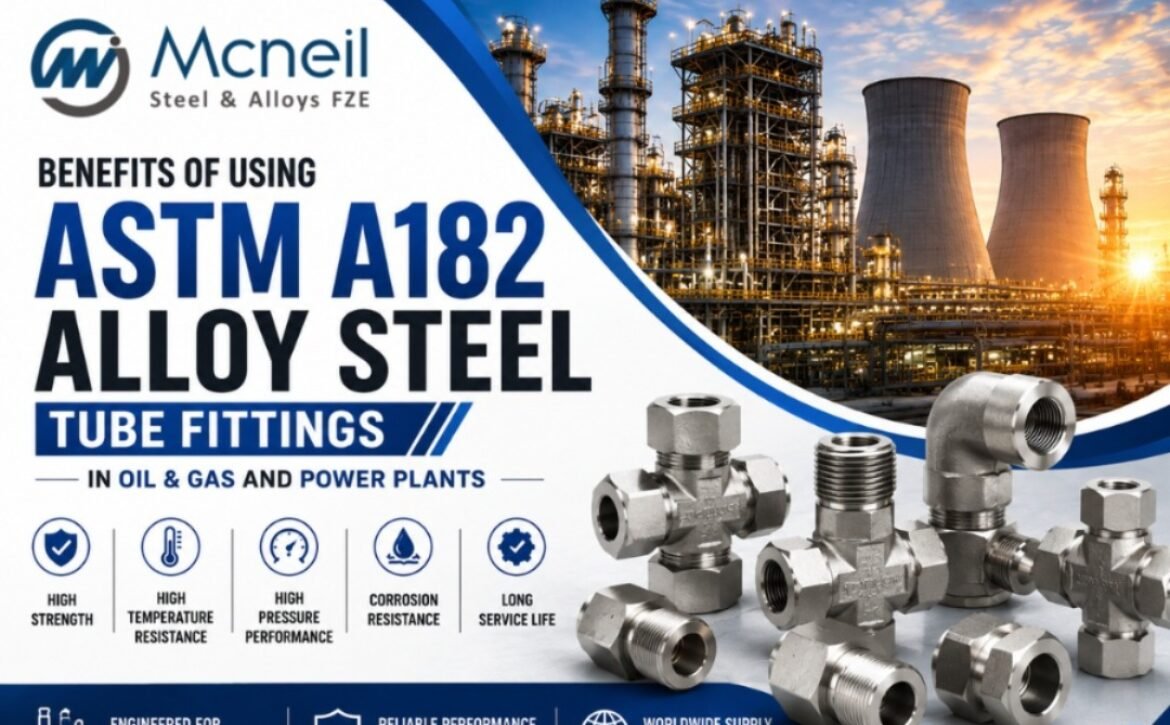
Benefits of Using ASTM A182 Alloy Steel Tube Fittings in Oil & Gas and Power Plants

Introduction

The oil & gas and power generation industries operate under some of the most demanding conditions, where piping systems are exposed to extreme temperatures, high pressure, corrosive media, and continuous operation. Choosing reliable piping components is essential to ensure operational safety, efficiency, and long-term performance. This is where ASTM A182 Alloy Steel Tube Fittings play a vital role.

ASTM A182 alloy steel tube fittings are particularly valuable in high-temperature and high-pressure piping systems because their material properties help maintain mechanical integrity under demanding operating conditions. Proper grade selection is essential because temperature, pressure, service medium, welding requirements, and applicable design codes can vary from one installation to another.

Mcneil Alloys FZE is a trusted manufacturer, supplier, and exporter of premium ASTM A182 F1, F5, F9, F11, F22, and F91 Tube Fittings, engineered to deliver exceptional strength, corrosion resistance, and durability. Manufactured according to international standards, our alloy steel tube fittings are widely used in refineries, petrochemical plants, thermal and nuclear power stations, offshore platforms, and industrial processing facilities worldwide.

Our range is designed for applications where dependable connections, material traceability, dimensional accuracy, and resistance to demanding service conditions are important considerations.

Why Choose Mcneil Alloys FZE for ASTM A182 Alloy Steel Tube Fittings?

Selecting a reliable manufacturer is crucial for ensuring the safety and efficiency of industrial piping systems.

Why Customers Trust Us

✔ Premium-grade alloy steel materials
✔ Precision-manufactured forged tube fittings
✔ Excellent resistance to high temperatures and pressure
✔ Strict quality control and testing
✔ Competitive pricing
✔ Ready stock for immediate delivery
✔ Custom sizes and configurations available
✔ Worldwide export capability
✔ Experienced engineering and technical support
Material traceability and inspection documentation
Solutions for demanding industrial piping applications

Our commitment to quality and innovation ensures every tube fitting delivers consistent performance in critical industrial applications.

We focus on maintaining consistency from raw material procurement through forging, machining, inspection, documentation, and final dispatch.

Our ASTM A182 Alloy Steel Tube Fitting Grades

Mcneil Alloys FZE manufactures a comprehensive range of ASTM A182 alloy steel tube fittings for diverse industrial requirements.

Different ASTM A182 grades offer different combinations of chromium, molybdenum, and other alloying elements. Selecting the appropriate grade should therefore be based on the application’s design temperature, pressure, mechanical requirements, and applicable specifications.

1. ASTM A182 F1 Tube Fittings

ASTM A182 F1 is a chromium-molybdenum alloy steel known for its excellent heat resistance and mechanical strength.

Key Features

  • Good oxidation resistance
  • High-temperature strength
  • Excellent weldability
  • Reliable durability
  • Long service life
  • Suitable mechanical properties for elevated-temperature service

Typical Applications

  • Boiler systems
  • Steam pipelines
  • Pressure vessels
  • Power plants
  • Refinery piping
  • Industrial heating and process systems

2. ASTM A182 F5 Tube Fittings

F5 alloy steel offers enhanced corrosion resistance and excellent performance under elevated temperatures.

Advantages

  • Superior oxidation resistance
  • Excellent creep strength
  • Reliable thermal stability
  • Good corrosion resistance
  • High mechanical performance
  • Suitable for demanding elevated-temperature piping environments

Applications

  • Heat exchangers
  • Petrochemical plants
  • Furnace systems
  • Chemical processing
  • Refinery units
  • High-temperature process piping

3. ASTM A182 F9 Tube Fittings

F9 is designed for demanding environments where high temperature and pressure resistance are essential.

Benefits

  • Excellent pressure handling
  • High-temperature durability
  • Superior creep resistance
  • Long operational life
  • Reliable structural integrity
  • Good resistance to prolonged exposure to elevated operating temperatures

Common Uses

  • Industrial boilers
  • Steam distribution systems
  • High-pressure piping
  • Thermal power plants
  • Process industries
  • High-temperature refinery and energy systems

4. ASTM A182 F11 Tube Fittings

F11 is among the most widely used chromium-molybdenum alloy steel grades in industrial piping.

Features

  • Excellent mechanical strength
  • High corrosion resistance
  • Good weldability
  • Excellent pressure resistance
  • Long service life
  • Reliable performance across elevated-temperature applications

Applications

  • Oil refineries
  • Petrochemical industries
  • Offshore platforms
  • Chemical plants
  • Industrial pipelines
  • Steam and process piping systems

5. ASTM A182 F22 Tube Fittings

F22 provides outstanding resistance to thermal fatigue and elevated operating temperatures.

Advantages

  • Excellent creep resistance
  • Superior oxidation resistance
  • High tensile strength
  • Reliable high-pressure performance
  • Extended equipment life
  • Strong performance in high-temperature pressure service

Applications

  • Power generation
  • Petrochemical processing
  • Refinery piping
  • Industrial boilers
  • Heat exchangers
  • High-temperature steam and process systems

6. ASTM A182 F91 Tube Fittings

F91 is an advanced alloy steel grade specifically developed for ultra-high temperature and high-pressure applications.

Key Benefits

  • Exceptional mechanical strength
  • Outstanding creep resistance
  • Excellent fatigue performance
  • Superior oxidation resistance
  • Longer operational lifespan
  • Designed for demanding high-temperature power-generation applications

Common Applications

  • Supercritical power plants
  • Nuclear power stations
  • High-pressure steam systems
  • Energy sector
  • Heavy engineering industries
  • High-temperature boiler and steam piping

F91 is generally selected for applications where elevated-temperature strength and creep resistance are critical. Its use also requires appropriate welding, heat-treatment, fabrication, and inspection practices in accordance with the applicable project requirements.

Why ASTM A182 Tube Fittings Are Ideal for Oil & Gas Industries

The oil & gas industry requires piping components capable of handling aggressive chemicals, fluctuating temperatures, and extremely high pressures.

Key Benefits

✔ Exceptional pressure resistance
✔ Superior corrosion resistance
✔ Reliable performance in sour gas environments
✔ High-temperature stability
✔ Excellent mechanical strength
✔ Leak-proof pipe connections
✔ Reduced maintenance requirements
✔ Long operational service life
Resistance to demanding thermal and mechanical conditions
Reliable performance in critical process piping systems

These properties make ASTM A182 alloy steel tube fittings an excellent choice for upstream, midstream, and downstream operations.

In refineries and petrochemical facilities, these fittings can be used in process, steam, hydrocarbon, and high-temperature piping systems where the selected material grade is compatible with the service conditions.

Benefits of ASTM A182 Tube Fittings in Power Plants

Power generation facilities require durable piping components capable of continuous operation under severe thermal conditions.

Major Advantages

⚡ Excellent thermal stability
⚡ Outstanding creep resistance
⚡ High-pressure capability
⚡ Reliable steam handling
⚡ Improved plant efficiency
⚡ Reduced operational downtime
⚡ Lower maintenance costs
⚡ Enhanced equipment lifespan
Reliable performance during continuous high-temperature operation
Improved piping-system reliability in demanding steam service

For conventional, supercritical, or other high-temperature power applications, selecting the correct ASTM A182 grade is critical to achieving the required combination of strength, creep resistance, weldability, and long-term service performance.

Types of ASTM A182 Alloy Steel Tube Fittings We Manufacture

Mcneil Alloys FZE offers a complete range of forged alloy steel tube fittings.

Product Range

  • Compression Tube Fittings
  • Male Connectors
  • Female Connectors
  • Union Elbows
  • Union Tees
  • Bulkhead Unions
  • Reducing Unions
  • Tube Adapters
  • Pipe Adapters
  • Ferrule Fittings
  • Tube Plugs
  • Tube Caps
  • Cross Fittings
  • Branch Tees
  • Equal Tees
  • Custom-Manufactured Tube Fittings
  • Special configurations manufactured according to project requirements

Available in multiple sizes, pressure classes, and custom specifications.

Product dimensions, pressure ratings, end connections, material grades, and manufacturing requirements can be customized according to applicable drawings, specifications, and project standards.

Why Alloy Steel Performs Better Than Conventional Materials

Compared with standard carbon steel, ASTM A182 alloy steel offers superior performance in demanding industrial conditions.

Performance Advantages

✔ Higher mechanical strength
✔ Better corrosion resistance
✔ Improved oxidation resistance
✔ Superior creep resistance
✔ Better thermal fatigue resistance
✔ Longer service life
✔ Excellent structural stability
✔ Lower replacement frequency
Better suitability for elevated-temperature service
Improved resistance to mechanical degradation under demanding operating conditions

Chromium and molybdenum alloying are important contributors to the elevated-temperature and oxidation performance of many ASTM A182 alloy steel grades. However, actual performance depends on the specific grade, fabrication condition, operating environment, and applicable design requirements.

ASTM A182 Grade Comparison

Feature F1 F5 F9 F11 F22 F91
Heat Resistance Good Excellent Excellent Excellent Superior Outstanding
Pressure Resistance Good High High Very High Very High Exceptional
Corrosion Resistance Good Very Good Very Good Excellent Excellent Excellent
Mechanical Strength Good High High Very High Very High Outstanding
Creep Resistance Moderate High High High Superior Exceptional
Service Life Long Longer Longer Long Extended Maximum

The table provides a general application-oriented comparison rather than a substitute for grade-specific material data. Actual allowable pressure, temperature, strength, and service life must be determined using the applicable material specification, design code, operating conditions, and engineering calculations.

Each grade is engineered to meet specific pressure, temperature, and corrosion requirements.

Industrial Applications

Our ASTM A182 alloy steel tube fittings are trusted across multiple industries.

Major Industries

  • Oil & Gas Exploration
  • Refineries
  • Petrochemical Plants
  • Thermal Power Plants
  • Nuclear Power Stations
  • Chemical Processing
  • Fertilizer Plants
  • Steel Manufacturing
  • Offshore Platforms
  • Marine Engineering
  • Industrial Utilities
  • Process Industries
  • Heavy Engineering
  • Energy Infrastructure
  • High-temperature steam and process piping systems

Their combination of strength, dimensional precision, and elevated-temperature performance makes them suitable for a wide range of critical industrial piping environments when the appropriate grade and specification are selected.

International Standards

Our alloy steel tube fittings are manufactured according to globally accepted industry specifications.

Available Standards

  • ASTM A182
  • ASME SA182
  • MSS SP-83
  • MSS SP-95
  • MSS SP-97
  • DIN Standards
  • EN Standards
  • ISO Specifications

Available in standard as well as customized dimensions to suit project requirements.

Applicable standards depend on the product type, connection design, dimensions, pressure requirements, and project specification. Customers should confirm the required standard and edition before ordering.

Quality Assurance at Mcneil Alloys FZE

Quality is integrated into every stage of our manufacturing process.

Our Inspection Process

  • Raw Material Verification
  • Positive Material Identification (PMI)
  • Chemical Composition Testing
  • Mechanical Property Testing
  • Hydrostatic Testing
  • Hardness Testing
  • Dimensional Inspection
  • Surface Finish Examination
  • Pressure Testing
  • Final Visual Inspection
  • Material Test Certificate (MTC) verification
  • Heat number and material traceability checks

Every alloy steel tube fitting is thoroughly inspected before shipment to ensure reliability and compliance with international standards.

Inspection and testing requirements can be tailored to the applicable specification and customer project requirements, helping provide greater confidence in material quality and product conformity.

Why Businesses Worldwide Choose Mcneil Alloys FZE

Customers across the globe trust Mcneil Alloys FZE for delivering premium industrial piping solutions.

Our Strengths

✔ Premium-quality raw materials
✔ Advanced forging and machining facilities
✔ Skilled engineering professionals
✔ Large inventory for quick delivery
✔ Customized manufacturing solutions
✔ Competitive pricing
✔ Fast global logistics
✔ Complete material traceability
✔ Reliable after-sales support
Project-oriented technical assistance

Our focus on manufacturing consistency, documentation, inspection, and international supply enables us to support demanding industrial procurement requirements.

Benefits of Choosing Our ASTM A182 Alloy Steel Tube Fittings

Partnering with Mcneil Alloys FZE offers measurable advantages.

Key Benefits

🏭 Precision-engineered products
⚙ High-pressure reliability
🔥 Superior high-temperature performance
🛡 Enhanced corrosion protection
📈 Increased operational efficiency
💰 Reduced maintenance costs
🌍 Global supply network
🔩 Long-lasting industrial performance
📋 Complete material documentation and traceability
🛠 Customized solutions for project-specific requirements

Why ASTM A182 Tube Fittings Are a Smart Investment

Investing in high-quality ASTM A182 alloy steel tube fittings reduces maintenance costs, improves plant reliability, minimizes downtime, and extends the lifespan of industrial piping systems. Their exceptional strength and corrosion resistance make them the preferred solution for oil & gas facilities, power plants, and heavy industrial operations where performance and safety are critical.

The right fitting grade can also help maintain piping-system integrity under demanding temperature and pressure conditions, reducing the risk of premature component failure. However, long-term performance depends on correct material selection, fabrication, installation, inspection, and operating conditions.

📞 Get Premium ASTM A182 Alloy Steel Tube Fittings Today

Looking for high-quality ASTM A182 F1, F5, F9, F11, F22, or F91 Tube Fittings for your oil & gas or power generation projects?

Mcneil Alloys FZE
📞 +91 9870883613
📧 info@mcneilalloys.ae

Our experts are ready to help you choose the right alloy steel tube fittings, provide technical guidance, competitive pricing, and customized manufacturing solutions tailored to your project needs.

Contact our team with your required ASTM grade, fitting type, size, pressure class, quantity, applicable standard, and project specifications for a more accurate quotation and technical recommendation.

Frequently Asked Questions (FAQs)

1. Why are ASTM A182 alloy steel tube fittings widely used in oil & gas industries?

They offer excellent resistance to high pressure, elevated temperatures, corrosion, and mechanical stress, making them ideal for demanding oil & gas operations. Specific performance depends on the ASTM A182 grade selected and the actual operating environment.

2. Which ASTM A182 grade is suitable for power plants?

F11, F22, and F91 are commonly used in thermal and nuclear power plants due to their superior creep resistance, heat resistance, and mechanical strength. The appropriate grade should always be selected according to the plant’s design temperature, pressure, material specification, welding requirements, and applicable engineering code.

3. What types of alloy steel tube fittings do you manufacture?

We manufacture compression fittings, unions, elbows, tees, adapters, ferrule fittings, plugs, caps, crosses, and customized tube fittings. Configurations can be produced in different sizes, grades, pressure classes, and dimensions according to applicable requirements.

4. Which industries use ASTM A182 tube fittings?

They are extensively used in oil & gas, petrochemical plants, refineries, power generation, chemical processing, offshore platforms, marine engineering, and heavy industrial applications. They are particularly valuable in piping systems exposed to elevated temperatures, pressure, and demanding process conditions.

5. Do your ASTM A182 tube fittings meet international standards?

Yes. Our products comply with ASTM A182, ASME SA182, MSS, DIN, EN, and other applicable international specifications. The exact applicable specification depends on the product configuration and project requirements, and should be confirmed at the time of inquiry.

6. Why choose Mcneil Alloys FZE?

Mcneil Alloys FZE offers premium-quality alloy steel tube fittings, advanced manufacturing capabilities, stringent quality control, competitive pricing, customized production, technical expertise, and reliable worldwide delivery.

7. What is ASTM A182 used for in industrial piping?

ASTM A182 covers forged or rolled alloy and stainless steel pipe flanges, forged fittings, and valves and parts for high-temperature, high-pressure service. The applicable grade is selected according to the required material and operating conditions.

8. What is the difference between ASTM A182 F11, F22, and F91?

F11, F22, and F91 are different alloy steel grades with different chemical compositions and mechanical properties. F91 is generally associated with advanced high-temperature power-generation applications requiring strong creep and elevated-temperature performance, while F11 and F22 are widely used in high-temperature refinery, petrochemical, boiler, and steam-service applications. Final grade selection should be based on the project’s engineering requirements and applicable material specifications.

9. How do I select the right ASTM A182 alloy steel tube fitting grade?

Consider the operating temperature, pressure, service medium, corrosion environment, required mechanical properties, welding and fabrication requirements, applicable design code, and project specification. Providing these details to the manufacturer can help ensure that the selected fitting grade is appropriate for the intended service.

Read More
admin August 3, 2026 0 Comments

Why Duplex 2205, Super Duplex 2507, 17-4 PH & 15-5 PH Tube Fittings Are Ideal for High-Performance Industrial Applications

Introduction

Industrial piping and instrumentation systems operate under extreme pressure, corrosive environments, fluctuating temperatures, and continuous service conditions. Selecting the right tube fittings is essential for maintaining leak-proof connections, ensuring operational safety, and minimizing maintenance costs.

Duplex 2205 Tube Fittings, Super Duplex 2507 Tube Fittings, 17-4 PH Tube Fittings, and 15-5 PH Tube Fittings are among the most reliable solutions for industries requiring exceptional corrosion resistance, high mechanical strength, and superior durability. These advanced alloy tube fittings are widely used in oil & gas, offshore platforms, chemical processing, power generation, marine engineering, desalination, and instrumentation systems.

Mcneil Alloys FZE is a trusted manufacturer, supplier, and exporter of premium-quality Duplex, Super Duplex, and Precipitation Hardening Stainless Steel Tube Fittings, manufactured according to international standards for critical industrial applications worldwide.

Why Choose Mcneil Alloys FZE for Tube Fittings?

Selecting the right manufacturer ensures reliable performance, superior quality, and long service life.

Why Customers Trust Us

✔ Premium-grade raw materials

✔ Precision-manufactured tube fittings

✔ Excellent corrosion resistance

✔ High-pressure capability

✔ Leak-proof connections

✔ Competitive pricing

✔ Ready stock for quick delivery

✔ Custom sizes and configurations

✔ Worldwide exports

✔ Dedicated technical support

Our commitment to quality ensures dependable performance even in the most demanding industrial environments.

Our Tube Fitting Grades

1. Duplex 2205 Tube Fittings

Duplex 2205 is a nitrogen-enhanced duplex stainless steel offering an excellent combination of strength and corrosion resistance, making it one of the most widely used materials for industrial process piping.

Key Features

  • Excellent chloride corrosion resistance
  • High mechanical strength
  • Superior stress corrosion cracking resistance
  • Excellent weldability
  • Long operational life
  • Cost-effective performance

Typical Applications

  • Offshore platforms
  • Chemical processing
  • Oil & Gas pipelines
  • Heat exchangers
  • Marine systems
  • Pressure vessels
  • Water treatment plants

2. Super Duplex 2507 Tube Fittings

Super Duplex 2507 offers higher chromium, molybdenum, and nitrogen content, providing outstanding resistance to aggressive chemical environments and seawater corrosion.

Advantages

  • Exceptional pitting resistance
  • Outstanding crevice corrosion resistance
  • Superior chloride resistance
  • Excellent mechanical strength
  • High pressure capability
  • Extended service life

Common Applications

  • Offshore drilling
  • Desalination plants
  • Petrochemical plants
  • Marine engineering
  • Chemical processing
  • Seawater cooling systems
  • LNG facilities

3. 17-4 PH Tube Fittings

17-4 PH Stainless Steel is a precipitation-hardening alloy that combines high strength with excellent corrosion resistance.

Key Features

  • High tensile strength
  • Excellent hardness
  • Good corrosion resistance
  • Outstanding wear resistance
  • High fatigue strength
  • Excellent dimensional stability

Applications

  • Aerospace components
  • Oil & Gas equipment
  • Pump shafts
  • Valves
  • Instrumentation
  • Defense equipment

4. 15-5 PH Tube Fittings

15-5 PH Stainless Steel provides improved toughness and transverse strength while maintaining excellent corrosion resistance.

Advantages

  • High strength
  • Excellent toughness
  • Good corrosion resistance
  • Superior fatigue resistance
  • Excellent machinability
  • Reliable long-term performance

Applications

  • Aerospace
  • Nuclear industry
  • Marine engineering
  • Petrochemical plants
  • Process equipment
  • High-pressure instrumentation

Why Duplex & PH Stainless Steel Tube Fittings Are the Best Choice

Modern industrial plants demand tube fittings capable of performing reliably under extreme operating conditions.

Key Benefits

✔ Exceptional corrosion resistance

✔ High mechanical strength

✔ Excellent pressure handling

✔ Leak-proof performance

✔ Outstanding fatigue resistance

✔ Long operational lifespan

✔ Reduced maintenance costs

✔ Excellent temperature resistance

✔ Reliable performance in harsh environments

Types of Tube Fittings We Manufacture

Mcneil Alloys FZE offers a comprehensive range of precision-engineered tube fittings.

Product Range

  • Tube Elbows
  • Tube Tees
  • Tube Unions
  • Male Connectors
  • Female Connectors
  • Bulkhead Connectors
  • Tube Reducers
  • Tube Adapters
  • Tube Caps
  • Tube Plugs
  • Ferrule Fittings
  • Compression Tube Fittings
  • Instrumentation Tube Fittings
  • Hydraulic Tube Fittings
  • Custom Tube Fittings

Available in multiple sizes, pressure ratings, and customized configurations.

Duplex 2205 vs Super Duplex 2507 vs 17-4 PH vs 15-5 PH Tube Fittings

Feature Duplex 2205 Super Duplex 2507 17-4 PH 15-5 PH
Corrosion Resistance Excellent Outstanding Very Good Very Good
Chloride Resistance Excellent Superior Moderate Moderate
Mechanical Strength High Very High Very High High
Wear Resistance Good Excellent Excellent Excellent
Pressure Capability High Very High High High
Typical Applications Offshore & Chemical Marine & Desalination Aerospace & Valves Aerospace & Process Equipment

Each alloy provides unique advantages depending on the operating environment and application requirements.

Applications of Tube Fittings

Our Duplex and PH Stainless Steel Tube Fittings are widely used across numerous industrial sectors.

Major Industries

  • Oil & Gas
  • Offshore Platforms
  • Petrochemical Plants
  • Chemical Processing
  • Marine Engineering
  • Shipbuilding
  • Power Generation
  • Aerospace Industry
  • Pharmaceutical Plants
  • Water Treatment
  • Desalination Plants
  • LNG Plants
  • Fertilizer Industry
  • Industrial Automation
  • Instrumentation Systems

Why Duplex & PH Tube Fittings Perform Better

Compared to conventional stainless steel fittings, these advanced alloys offer superior performance by resisting:

  • Chloride attack
  • Pitting corrosion
  • Crevice corrosion
  • Stress corrosion cracking
  • High-pressure fatigue
  • Mechanical wear
  • Corrosive chemicals

This makes them ideal for long-term industrial service.

International Standards

Our Tube Fittings are manufactured according to internationally recognized specifications.

Available Standards

  • ASTM
  • ASME
  • ANSI
  • ISO
  • DIN
  • EN
  • MSS
  • NACE

Available in multiple sizes, pressure ratings, end connections, and custom specifications.

Why Industries Prefer Our Tube Fittings

Compared with conventional materials, our Duplex and PH Tube Fittings deliver exceptional reliability.

Business Advantages

🌍 Superior corrosion resistance

⚙ High-pressure performance

🛡 Leak-proof connections

📈 Longer equipment lifespan

💰 Reduced maintenance costs

🚀 Lower downtime

📊 Improved operational safety

Quality Assurance at Mcneil Alloys FZE

Every Tube Fitting undergoes rigorous inspection before shipment.

Our Inspection Process

  • Raw Material Testing
  • PMI Testing
  • Chemical Analysis
  • Mechanical Testing
  • Hydrostatic Testing
  • Pressure Testing
  • Dimensional Inspection
  • Surface Finish Verification
  • Visual Inspection
  • Material Traceability

Material Test Certificates (MTC) and inspection reports are available upon request.

Why Businesses Worldwide Choose Mcneil Alloys FZE

Industrial customers continue to rely on us because of our engineering excellence and commitment to quality.

Our Strengths

✔ Premium raw materials

✔ Advanced manufacturing facility

✔ Experienced engineering team

✔ Large inventory

✔ Fast global delivery

✔ Competitive pricing

✔ Customized production

✔ Reliable after-sales support

Benefits of Choosing Our Tube Fittings

Partnering with Mcneil Alloys FZE provides long-term industrial advantages.

📊 Reliable industrial performance

🌍 Worldwide supply capability

⚙ Precision-engineered fittings

🛠 Long-lasting durability

📈 Improved operational efficiency

💼 Trusted manufacturing expertise

📞 Get Premium Duplex & PH Tube Fittings Today

Looking for high-quality Duplex 2205 Tube Fittings, Super Duplex 2507 Tube Fittings, 17-4 PH Tube Fittings, or 15-5 PH Tube Fittings for your industrial applications?

Mcneil Alloys FZE

📞 +91 9870883613

📧 info@mcneilalloys.ae

Our experts are ready to assist you with product selection, technical specifications, pricing, and customized manufacturing solutions.

Frequently Asked Questions (FAQs)

1. Why are Duplex 2205 Tube Fittings widely used?

Duplex 2205 Tube Fittings provide an excellent combination of corrosion resistance, high strength, and resistance to chloride stress corrosion cracking, making them ideal for offshore and chemical industries.

2. What is the difference between Duplex 2205 and Super Duplex 2507 Tube Fittings?

Super Duplex 2507 offers higher chromium, molybdenum, and nitrogen content, resulting in better corrosion resistance and higher mechanical strength than Duplex 2205.

3. Where are 17-4 PH and 15-5 PH Tube Fittings commonly used?

These precipitation-hardening stainless steel tube fittings are widely used in aerospace, defense, instrumentation, oil & gas, valves, pumps, and high-pressure industrial systems.

4. What types of Tube Fittings do you manufacture?

We manufacture elbows, tees, unions, adapters, ferrule fittings, compression tube fittings, hydraulic fittings, instrumentation tube fittings, plugs, caps, reducers, and customized tube fittings.

5. Do your Tube Fittings comply with international standards?

Yes. Our products are manufactured according to ASTM, ASME, ANSI, ISO, DIN, EN, MSS, and NACE standards.

6. Why choose Mcneil Alloys FZE?

Mcneil Alloys FZE offers premium-quality tube fittings, advanced manufacturing, strict quality control, competitive pricing, customized solutions, technical expertise, and reliable worldwide delivery.

Read More
admin July 22, 2026 0 Comments

Why Monel Tubes Are the Best Choice for Marine Applications

Introduction

Marine environments present some of the harshest operating conditions for industrial materials. Constant exposure to seawater, salt spray, high humidity, and corrosive chemicals can quickly deteriorate ordinary metals, resulting in costly maintenance and frequent replacements. This is why industries involved in shipbuilding, offshore oil & gas, desalination, and marine engineering rely on Monel Tubes for unmatched durability and long-term performance.

Mcneil Alloys FZE is a trusted manufacturer, supplier, and exporter of premium Monel 400 Tubes and Monel K500 Tubes, engineered to deliver outstanding corrosion resistance, superior mechanical strength, and exceptional reliability in demanding marine environments. Our Monel tubes are manufactured according to international standards and are supplied worldwide for critical industrial applications.

Why Choose Mcneil Alloys FZE for Monel Tubes?

Choosing the right supplier ensures reliable performance, superior quality, and long-lasting service life.

Why Customers Trust Us

✔ Premium quality Monel alloys
✔ Precision-manufactured seamless and welded tubes
✔ Excellent seawater corrosion resistance
✔ Competitive pricing
✔ Ready stock for fast delivery
✔ Custom sizes and lengths available
✔ Worldwide export capability
✔ Experienced technical support

Our commitment to quality ensures dependable performance even in the most aggressive marine environments.

Our Monel Tube Grades

1. Monel 400 Tubes

Monel 400 is a nickel-copper alloy renowned for its outstanding resistance to seawater corrosion, acidic environments, and alkaline solutions. It maintains excellent mechanical properties over a wide temperature range, making it one of the most reliable alloys for marine applications.

Key Features

  • Exceptional seawater corrosion resistance
  • Excellent resistance to saltwater
  • High mechanical strength
  • Superior resistance to pitting and crevice corrosion
  • Excellent weldability
  • Long service life

Typical Applications

  • Marine piping systems
  • Shipbuilding
  • Offshore oil platforms
  • Heat exchangers
  • Condensers
  • Desalination plants
  • Seawater cooling systems
  • Chemical processing equipment

2. Monel K500 Tubes

Monel K500 is an age-hardened version of Monel 400 with significantly higher strength while maintaining outstanding corrosion resistance. It is ideal for heavy-duty marine applications where high mechanical loads are involved.

Advantages

  • Higher tensile strength
  • Excellent seawater corrosion resistance
  • Superior wear resistance
  • Outstanding fatigue strength
  • Excellent resistance to marine biofouling
  • Long operational life

Common Applications

  • Marine shafts
  • Pump components
  • Offshore platforms
  • Valve stems
  • Fasteners
  • Marine propeller shafts
  • Oil & gas equipment
  • Heavy-duty seawater systems

Why Monel Tubes Are the Best Choice for Marine Applications

Marine environments expose equipment to constant corrosion, making material selection extremely important. Monel tubes outperform conventional stainless steel and copper alloys due to their unique combination of corrosion resistance and mechanical strength.

Key Benefits

✔ Exceptional resistance to seawater corrosion

✔ Resistant to salt spray and marine atmosphere

✔ Excellent resistance to pitting corrosion

✔ Outstanding mechanical strength

✔ Long operational lifespan

✔ Reduced maintenance costs

✔ High resistance to stress corrosion cracking

✔ Excellent thermal conductivity

✔ Reliable performance in extreme marine conditions

Types of Monel Tubes We Manufacture

Mcneil Alloys FZE offers a comprehensive range of Monel tubing solutions.

Product Range

  • Seamless Monel Tubes
  • Welded Monel Tubes
  • Heat Exchanger Tubes
  • Condenser Tubes
  • Hydraulic Tubes
  • Instrumentation Tubes
  • Boiler Tubes
  • U Tubes
  • Round Tubes
  • Custom Fabricated Tubes

Available in various diameters, wall thicknesses, and custom lengths.

Monel 400 vs Monel K500 Tubes

Feature Monel 400 Monel K500
Corrosion Resistance Excellent Excellent
Seawater Resistance Outstanding Outstanding
Mechanical Strength High Very High
Wear Resistance Good Superior
Fatigue Strength Good Excellent
Hardness Standard Higher
Service Life Long Longer

Both grades provide excellent corrosion resistance, while Monel K500 is preferred for applications requiring higher mechanical strength.

Applications of Monel Tubes

Our Monel tubes are widely used across marine and industrial sectors.

Major Industries

  • Marine Engineering
  • Shipbuilding Industry
  • Offshore Oil & Gas
  • Desalination Plants
  • Naval Defense
  • Heat Exchanger Manufacturing
  • Chemical Processing
  • Power Generation
  • Petrochemical Industry
  • Marine Cooling Systems
  • Water Treatment Plants
  • Industrial Process Equipment

Why Monel Performs Better in Seawater

Unlike ordinary stainless steel, Monel alloys resist:

  • Chloride attack
  • Saltwater corrosion
  • Marine biofouling
  • Pitting corrosion
  • Crevice corrosion
  • Stress corrosion cracking

This makes Monel one of the most reliable materials for long-term marine service.

International Standards

Our Monel tubes are manufactured according to internationally recognized specifications.

Available Standards

  • ASTM B165
  • ASTM B163
  • ASTM B725
  • ASTM B730
  • ASME SB165
  • ASME SB163
  • DIN Standards
  • EN Standards

Available in multiple schedules, dimensions, and custom specifications.

Why Industries Prefer Monel Tubes

Compared to conventional materials, Monel provides unmatched reliability in marine environments.

Business Advantages

🌊 Superior seawater corrosion resistance

⚙ Longer equipment lifespan

🛡 Enhanced operational safety

📈 Improved system efficiency

💰 Lower maintenance costs

🚀 Reduced downtime

Quality Assurance at Mcneil Alloys FZE

Quality remains the foundation of every product we manufacture.

Our Inspection Process

  • Raw Material Testing
  • PMI Testing
  • Chemical Analysis
  • Mechanical Testing
  • Hydrostatic Testing
  • Eddy Current Testing
  • Dimensional Inspection
  • Surface Finish Verification
  • Visual Inspection

Every Monel tube undergoes rigorous testing before shipment.

Why Businesses Worldwide Choose Mcneil Alloys FZE

Customers continue to rely on us because of our commitment to quality and customer satisfaction.

Our Strengths

✔ Premium raw materials

✔ Advanced manufacturing facility

✔ Experienced engineering team

✔ Large inventory

✔ Fast global delivery

✔ Competitive pricing

✔ Customized production

✔ Reliable after-sales support

Benefits of Choosing Our Monel Tubes

Partnering with Mcneil Alloys FZE provides numerous advantages.

📊 Reliable marine performance

🌍 Worldwide supply network

⚙ Precision engineering

🛠 Long-lasting durability

📈 Improved operational efficiency

💼 Trusted industrial expertise

📞 Get Premium Monel 400 & Monel K500 Tubes Today

Looking for high-quality Monel 400 Tubes or Monel K500 Tubes for your marine or industrial applications?

Mcneil Alloys FZE

📞 +91 9870883613

📧 info@mcneilalloys.ae

Our experts are ready to assist you with product selection, technical specifications, pricing, and customized manufacturing solutions.

Frequently Asked Questions (FAQs)

1. Why are Monel tubes preferred for marine applications?

Monel tubes offer exceptional resistance to seawater corrosion, saltwater exposure, pitting, and marine biofouling, making them ideal for long-term marine service.

2. What is the difference between Monel 400 and Monel K500?

Monel K500 provides significantly higher strength, hardness, and wear resistance while maintaining the excellent corrosion resistance of Monel 400.

3. Where are Monel tubes commonly used?

They are widely used in shipbuilding, offshore platforms, marine cooling systems, desalination plants, heat exchangers, condensers, and chemical processing industries.

4. What types of Monel tubes do you manufacture?

We manufacture seamless tubes, welded tubes, condenser tubes, heat exchanger tubes, instrumentation tubes, hydraulic tubes, U tubes, and custom-engineered tubing.

5. Do your Monel tubes comply with international standards?

Yes. Our Monel tubes are manufactured according to ASTM B165, ASTM B163, ASTM B725, ASTM B730, ASME SB165, ASME SB163, DIN, and EN standards.

6. Why choose Mcneil Alloys FZE?

Mcneil Alloys FZE offers premium-quality Monel tubes, strict quality control, competitive pricing, technical expertise, customized manufacturing, and reliable worldwide delivery.

Read More
admin July 20, 2026 0 Comments

Supporting Oman’s Industrial Excellence with Premium Incoloy Tube Fittings from Mcneil Alloys (2026 Guide)

Introduction

Oman has emerged as one of the Middle East’s fastest-growing industrial economies, driven by continuous investments in oil & gas exploration, petrochemical complexes, LNG production, desalination plants, power generation, mining, and heavy engineering projects. These industries operate in harsh environments involving high temperatures, aggressive chemicals, seawater exposure, and high-pressure process systems.
To ensure safe and reliable operations, industries require instrumentation components capable of delivering leak-free performance under the most demanding conditions.
This is where Mcneil Alloys Incoloy Tube Fittings have become the preferred choice.
Manufactured from premium nickel-iron-chromium alloys, Incoloy 800, Incoloy 800H, Incoloy 825, and Incoloy 925 Tube Fittings offer exceptional resistance to oxidation, carburization, corrosion, chloride attack, and elevated temperatures. These fittings are widely used in instrumentation systems, hydraulic lines, process piping, offshore platforms, and chemical processing plants where reliability is critical. Mcneil Alloys supplies precision-engineered Incoloy Tube Fittings in multiple grades for high-performance industrial applications.
For EPC contractors and plant engineers sourcing across the GCC, choosing between Incoloy 825 tube fittings and Incoloy 925 often comes down to one question: is the primary threat seawater and acid, or sour oilfield stress? We break that down below.

Why Oman’s Industries Choose Incoloy Tube Fittings

Industrial facilities across Oman require tube fittings capable of operating under:
High operating temperatures
High-pressure instrumentation systems
Corrosive process chemicals
Offshore and marine environments
LNG processing
Continuous production operations
Mcneil Alloys Incoloy Tube Fittings provide:
Outstanding corrosion resistance
Excellent oxidation resistance
Superior mechanical strength
High-temperature stability
Leak-proof sealing
Excellent pressure capability
Long operational service life
These advantages help improve plant safety while reducing maintenance costs and operational downtime.

Mcneil Alloys – Trusted Manufacturer, Supplier & Exporter of Incoloy Tube Fittings in Oman

Mcneil Alloys manufactures and supplies a comprehensive range of Incoloy Tube Fittings for industries across Oman and international markets.
The product range includes:
Incoloy 800 Tube Fittings
Incoloy 800H Tube Fittings
Incoloy 825 Tube Fittings
Incoloy 925 Tube Fittings
Double Ferrule Tube Fittings
Single Ferrule Tube Fittings
Male Connector Tube Fittings
Female Connector Tube Fittings
Union Tube Fittings
Bulkhead Tube Fittings
Elbow Tube Fittings
Tee Tube Fittings
Reducer Tube Fittings
Every fitting is manufactured with precision engineering to ensure leak-free performance in demanding industrial environments.

Incoloy 800 Tube Fittings

Reliable Performance in High-Temperature Applications
Incoloy 800 Tube Fittings are engineered for applications requiring outstanding resistance to oxidation and carburization.
Key Benefits
Excellent heat resistance
Superior oxidation resistance
High mechanical strength
Outstanding structural stability
Applications
Heat Exchangers
Petrochemical Plants
Industrial Furnaces
Power Generation Facilities

Incoloy 800H Tube Fittings

Enhanced Creep Strength for Elevated Temperatures
Incoloy 800H Tube Fittings feature controlled carbon content, making them suitable for prolonged exposure to high temperatures.
Advantages
Excellent creep resistance
Superior rupture strength
Outstanding thermal stability
Long operational life
Applications
Steam Systems
Refinery Equipment
Heat Recovery Units
Chemical Processing Plants

Incoloy 825 Tube Fittings

Exceptional Corrosion Protection for Chemical Processing
Incoloy 825 Tube Fittings are designed for environments containing sulfuric acid, phosphoric acid, seawater, and chloride-bearing media.
Benefits
Excellent chemical resistance
Superior pitting resistance
Outstanding chloride resistance
Excellent durability
Applications
Offshore Platforms
Desalination Plants
Chemical Industries
Marine Engineering

Incoloy 925 Tube Fittings

High Strength for Oil & Gas Applications
Incoloy 925 Tube Fittings combine excellent corrosion resistance with enhanced mechanical strength, making them ideal for demanding oilfield applications.
Features
Excellent sulfide stress corrosion resistance
Superior fatigue strength
Outstanding pressure capability
Long-term reliability
Applications
Oil & Gas Production
Offshore Installations
High-Pressure Instrumentation
Petrochemical Facilities

Which Incoloy Grade Should You Specify?

General high-temperature service (furnaces, heat exchangers)? -> Incoloy 800.
Prolonged exposure to elevated temperatures with creep/rupture concerns? -> Incoloy 800H.
Seawater, acids, or chloride-bearing chemical service? -> Incoloy 825.
Sour oilfield gas with sulfide stress cracking risk? -> Incoloy 925.

Types of Incoloy Tube Fittings Available

Mcneil Alloys manufactures a complete range of instrumentation tube fittings including:
Double Ferrule Tube Fittings
Provide vibration-resistant, leak-proof connections for instrumentation systems.
Union Tube Fittings
Designed to securely connect two tubing sections.
Male & Female Connector Tube Fittings
Ensure reliable connections between tubing and threaded equipment.
Elbow Tube Fittings
Available in:
45° Elbows
90° Elbows
Male Elbows
Female Elbows
Tee Tube Fittings
Ideal for branch connections within process piping systems.
Bulkhead Tube Fittings
Provide secure panel-mounted tube connections.
Reducer Tube Fittings
Enable smooth transitions between different tubing sizes.

Incoloy vs Stainless Steel Tube Fittings: Side-by-Side Comparison

Property Incoloy Tube Fittings Stainless Steel Tube Fittings
Corrosion Resistance Excellent Good
High Temperature Strength Outstanding Moderate
Oxidation Resistance Excellent Good
Chloride Resistance Superior Moderate
Pressure Capability Excellent Good
Service Life Very Long Long
Ideal Grade / Environment 825 for seawater & acids, 925 for sour oilfield service General low-corrosion instrumentation lines

These properties make Incoloy Tube Fittings ideal for demanding industrial environments where reliability is essential.

Industries Served Across Oman

Oil & Gas Industry
Used in:
Refineries
Upstream Production
Pipeline Systems
Offshore Platforms
LNG Industry
Supports:
Liquefaction Plants
Gas Processing Units
Storage Facilities
Petrochemical Industry
Provides leak-free connections for:
Chemical Processing
Instrumentation Systems
High-Temperature Process Lines
Power Generation
Used in:
Boilers
Steam Pipelines
Heat Recovery Units
Turbine Systems
Desalination Plants
Offers excellent resistance to seawater and chloride-rich environments.
Marine Industry
Ensures long-term durability under harsh offshore conditions.
Oman’s growing energy, petrochemical, and infrastructure sectors continue to drive demand for premium corrosion-resistant instrumentation components.

Technical Specifications

Parameter Specification
Product Incoloy Tube Fittings
Grades Incoloy 800, 800H, 825, 925
Standards ASTM / ASME
Types Double Ferrule, Union, Elbow, Tee, Reducer, Bulkhead
Connection Type Compression Tube Fittings
Applications Oil & Gas, Petrochemical, LNG, Marine, Power

Quality Assurance at Mcneil Alloys

Every Incoloy Tube Fitting undergoes comprehensive testing including:
PMI Testing
Hydrostatic Testing
Pressure Testing
Mechanical Testing
Dimensional Inspection
Leak Testing
Material Traceability Verification
Visual Inspection
These quality procedures ensure every fitting complies with international standards before delivery.

Why Industries in Oman Trust Mcneil Alloys

Customers across Oman choose Mcneil Alloys because of:
Complete range of Incoloy grades
Precision engineering
International quality standards
Global export capability
Ready stock for urgent projects
Custom manufacturing solutions
Strict quality control
Technical engineering support
Mcneil Alloys supplies premium Incoloy Tube Fittings to industries requiring dependable performance in high-temperature and corrosive environments.

Conclusion

As Oman continues expanding its oil & gas, LNG, petrochemical, desalination, and power generation sectors, the demand for premium instrumentation components continues to grow.
Whether your project requires Incoloy 800 Tube Fittings, Incoloy 800H Tube Fittings, Incoloy 825 Tube Fittings, Incoloy 925 Tube Fittings, Double Ferrule Tube Fittings, Union Tube Fittings, Elbow Tube Fittings, Tee Tube Fittings, or Bulkhead Tube Fittings, Mcneil Alloys delivers precision-engineered products designed for exceptional performance in the world’s most demanding industrial environments.
From offshore energy projects and petrochemical complexes to desalination plants and power stations, Mcneil Alloys Incoloy Tube Fittings in Oman continue to provide outstanding corrosion resistance, leak-free reliability, and long-term operational performance.
Sourcing Incoloy tube fittings for a project in Oman or the wider GCC? Contact Mcneil Alloys for grade recommendations, datasheets, or a custom quotation.

Frequently Asked Questions

1. What is the difference between Incoloy 825 and 925 tube fittings?
Incoloy 825 is optimized for general acid, seawater, and chloride resistance in chemical and marine service, while Incoloy 925 adds higher mechanical strength and sulfide stress corrosion resistance, making it better suited to sour oil and gas production environments.
2. Does Mcneil Alloys supply Incoloy tube fittings directly in Oman?
Yes. Mcneil Alloys supports oil & gas, LNG, petrochemical, and desalination projects across Oman with ready stock, custom manufacturing, and technical engineering support for local delivery timelines.
3. What connection type do Incoloy tube fittings use?
Mcneil Alloys Incoloy tube fittings are supplied as compression tube fittings, including double and single ferrule designs, for vibration-resistant, leak-proof instrumentation connections.

Read More
admin July 3, 2026 0 Comments

Incoloy 800, 800H, 825 & 925 Tube Fittings Suppliers in UAE – Manufacturer, Supplier & Exporter

Introduction

The UAE’s rapidly expanding industrial landscape includes oil & gas production, petrochemical processing, offshore drilling, desalination facilities, power generation plants, and chemical manufacturing units. These industries require high-performance tube fittings capable of operating in corrosive environments, elevated temperatures, and high-pressure systems.

Incoloy Tube Fittings are widely recognized for their excellent corrosion resistance, mechanical strength, oxidation resistance, and long-term reliability. These nickel-iron-chromium alloys are specifically designed to perform in demanding industrial applications where conventional stainless steel materials may experience limitations.

Mcneil Alloys is a trusted manufacturer, supplier, stockist, and exporter of Incoloy 800 Tube Fittings, Incoloy 800H Tube Fittings, Incoloy 825 Tube Fittings, and Incoloy 925 Tube Fittings in the UAE. We supply premium-quality tube fittings to industrial projects across Dubai, Abu Dhabi, Sharjah, Fujairah, Ras Al Khaimah, Ajman, Al Ain, JAFZA, KIZAD, Ruwais, and other major industrial regions.

Why Incoloy Tube Fittings Are Preferred in UAE Industries

Industrial facilities throughout the UAE operate under challenging conditions involving:

✔ High-temperature processing

✔ Corrosive chemicals

✔ Offshore marine environments

✔ Sour gas applications

✔ High-pressure instrumentation systems

✔ Continuous production operations

Incoloy alloys provide exceptional resistance to oxidation, pitting, crevice corrosion, chloride attack, and stress corrosion cracking, ensuring dependable performance and extended service life.

Incoloy 800 Tube Fittings Suppliers in UAE

What is Incoloy 800?

Incoloy 800 Tube Fittings are nickel-iron-chromium alloy fittings designed to offer excellent resistance to oxidation, carburization, and high-temperature corrosion. The alloy maintains structural stability even during prolonged exposure to elevated temperatures.

Common Products

Key Benefits

✔ Excellent oxidation resistance

✔ Superior thermal stability

✔ Good mechanical strength

✔ Resistance to carburization

✔ Long service life

Industries Using Incoloy 800 Tube Fittings

  • Petrochemical Plants
  • Fertilizer Industries
  • Heat Exchanger Manufacturing
  • Power Generation Facilities
  • Industrial Furnaces

Incoloy 800H Tube Fittings Suppliers in UAE

What is Incoloy 800H?

Incoloy 800H Tube Fittings are modified versions of Incoloy 800 with controlled carbon content that improves creep rupture strength and high-temperature performance.

Product Range

  • Incoloy 800H Tube Elbows
  • Incoloy 800H Tube Tees
  • Incoloy 800H Tube Unions
  • Incoloy 800H Tube Reducers
  • Incoloy 800H Tube Adapters
  • Incoloy 800H Compression Fittings

Advantages

✔ Enhanced creep resistance

✔ Improved metallurgical stability

✔ Superior strength at elevated temperatures

✔ Excellent oxidation resistance

✔ Reliable long-term performance

Applications

  • Refinery Equipment
  • Ethylene Production Plants
  • Thermal Processing Systems
  • Power Plants
  • Chemical Processing Units

Incoloy 825 Tube Fittings Suppliers in UAE

What is Incoloy 825?

Incoloy 825 Tube Fittings are nickel-iron-chromium alloys with additions of molybdenum and copper, providing outstanding resistance to sulfuric acid, phosphoric acid, seawater, and other aggressive chemicals.

Benefits

✔ Exceptional corrosion resistance

✔ Excellent resistance to acidic environments

✔ Superior marine performance

✔ Resistance to stress corrosion cracking

✔ Long operational lifespan

Industries Served

  • Offshore Oil & Gas Platforms
  • Desalination Plants
  • Chemical Processing Facilities
  • Marine Engineering
  • Pollution Control Systems

Incoloy 925 Tube Fittings Suppliers in UAE

What is Incoloy 925?

Incoloy 925 Tube Fittings are precipitation-hardenable nickel alloys developed for oilfield and offshore applications requiring both high strength and excellent corrosion resistance.

Key Features

✔ High tensile strength

✔ Excellent resistance to sour gas environments

✔ Outstanding pitting resistance

✔ Superior fatigue performance

✔ Exceptional durability

Applications

  • Offshore Drilling Systems
  • Subsea Equipment
  • Oilfield Production Facilities
  • LNG Projects
  • High-Pressure Instrumentation Systems

Difference Between Incoloy 800, 800H, 825 & 925 Tube Fittings


Grade Primary Advantage Key Applications
Incoloy 800 Tube Fittings Oxidation & Heat Resistance Furnaces, Heat Exchangers
Incoloy 800H Tube Fittings Enhanced High-Temperature Strength Refineries, Ethylene Plants
Incoloy 825 Tube Fittings Corrosion & Acid Resistance Chemical Processing, Marine Systems
Incoloy 925 Tube Fittings High Strength & Sour Gas Resistance Oilfield & Offshore Projects

UAE Cities We Supply Incoloy Tube Fittings To

Abu Dhabi – Oil & Gas Industry Hub

Major Industrial Areas

  • Mussafah Industrial Area
  • KIZAD
  • Ruwais Industrial Complex

Industries

  • ADNOC Projects
  • LNG Facilities
  • Refineries
  • Petrochemical Plants
  • Offshore Oil Production

Dubai – Industrial & EPC Center

Major Areas

  • Jebel Ali Free Zone (JAFZA)
  • Dubai Industrial City
  • Dubai Maritime City
  • Al Quoz Industrial Area

Industries

  • EPC Contracting
  • Marine Engineering
  • Energy Infrastructure
  • Industrial Construction

Sharjah – Manufacturing & Engineering Hub

Major Areas

  • Sharjah Industrial Area
  • Hamriyah Free Zone

Industries

  • Fabrication
  • Manufacturing
  • Engineering
  • Industrial Equipment Production

Fujairah – Marine & Energy Infrastructure Hub

Industries

  • Shipping
  • Offshore Services
  • Marine Engineering
  • Oil Storage Facilities
  • Bunkering Operations

Ras Al Khaimah

Industries

  • Utilities
  • Heavy Engineering
  • Manufacturing Facilities
  • Industrial Projects

Ajman

Industries

  • Fabrication Workshops
  • Mechanical Engineering
  • Industrial Support Services

Al Ain

Industries

  • Water Infrastructure
  • Utilities
  • Agriculture Projects
  • Food Processing Facilities

Industries We Serve Across UAE

Oil & Gas Industry

Incoloy Tube Fittings are extensively used in upstream, midstream, and downstream operations where corrosion resistance and strength are essential.

Offshore & Marine Industry

Incoloy 825 Tube Fittings and Incoloy 925 Tube Fittings are widely utilized in offshore platforms, subsea systems, and marine equipment due to their outstanding seawater resistance.

Petrochemical Industry

Used in instrumentation systems, process lines, reactors, and chemical handling applications.

Chemical Processing Industry

Suitable for aggressive acids, corrosive chemicals, and demanding process environments.

Power Generation Industry

Incoloy 800 Tube Fittings and Incoloy 800H Tube Fittings are commonly used in high-temperature steam and thermal systems.

Desalination & Water Treatment Industry

Excellent resistance to chloride-rich environments makes Incoloy alloys ideal for water treatment infrastructure.

Why Choose Mcneil Alloys UAE

✔ Extensive stock of Incoloy Tube Fittings

✔ Premium nickel alloy grades

✔ International quality standards

✔ Fast delivery across UAE

✔ Competitive project pricing

✔ Complete technical documentation

✔ Custom manufacturing solutions

✔ Global export support

Benefits of Incoloy Tube Fittings

📈 Excellent corrosion resistance

📈 Superior heat resistance

📈 Outstanding mechanical strength

📈 Reduced maintenance costs

📈 Longer service life

📈 Improved plant reliability

📈 Enhanced operational safety

Export Markets We Serve

Mcneil Alloys exports Incoloy Tube Fittings to:

  • UAE
  • Saudi Arabia
  • Qatar
  • Oman
  • Kuwait
  • Bahrain
  • Iraq
  • Africa
  • Europe
  • Southeast Asia

Contact Mcneil Alloys UAE

Website:

https://mcneilalloys.ae/incoloy-800-800h-825-925-tube-fittings/

Contact Mcneil Alloys today for technical specifications, project requirements, bulk inquiries, and competitive pricing on Incoloy 800 Tube Fittings, Incoloy 800H Tube Fittings, Incoloy 825 Tube Fittings, and Incoloy 925 Tube Fittings.

Frequently Asked Questions

Which Incoloy grade is best for chemical processing applications?

Incoloy 825 Tube Fittings are widely preferred for chemical processing facilities due to their exceptional resistance to sulfuric acid, phosphoric acid, and various corrosive chemicals.

What is the difference between Incoloy 800 and Incoloy 800H Tube Fittings?

Incoloy 800H Tube Fittings provide improved creep rupture strength and enhanced performance at elevated temperatures compared to standard Incoloy 800 Tube Fittings.

Are Incoloy 925 Tube Fittings suitable for sour gas environments?

Yes, Incoloy 925 Tube Fittings are specifically designed for oilfield and offshore applications where resistance to sour gas and high-pressure conditions is required.

Which industries commonly use Incoloy 825 Tube Fittings?

Offshore oil & gas, marine engineering, chemical processing, desalination, and pollution control industries frequently use Incoloy 825 Tube Fittings.

Does Mcneil Alloys supply Incoloy Tube Fittings throughout the UAE?

Yes, Mcneil Alloys supplies Incoloy Tube Fittings across Dubai, Abu Dhabi, Sharjah, Fujairah, Ras Al Khaimah, Ajman, Al Ain, JAFZA, KIZAD, Ruwais, and all major industrial zones.

What types of Incoloy Tube Fittings are available from Mcneil Alloys?

Mcneil Alloys manufactures elbows, tees, unions, reducers, adapters, connectors, ferrule fittings, compression fittings, and custom-engineered Incoloy tube fitting solutions for industrial applications.


Read More
admin June 11, 2026 0 Comments

Hastelloy C276, C22, B2, B3 & X Tube Fittings Suppliers in UAE – Manufacturer, Supplier & Exporter

Introduction

The UAE is home to some of the world’s most advanced oil & gas facilities, petrochemical complexes, chemical processing plants, desalination projects, and power generation facilities. These industries often operate in highly corrosive environments where conventional stainless steel materials may not provide sufficient performance.

Hastelloy Tube Fittings are engineered to withstand aggressive chemicals, acidic media, chloride-rich environments, oxidizing agents, and elevated temperatures. Their outstanding corrosion resistance and mechanical strength make them one of the most reliable nickel-based alloy solutions for critical industrial applications.

Mcneil Alloys is a leading manufacturer, supplier, stockist, and exporter of Hastelloy C276 Tube Fittings, Hastelloy C22 Tube Fittings, Hastelloy B2 Tube Fittings, Hastelloy B3 Tube Fittings, and Hastelloy X Tube Fittings in the UAE. We supply premium-quality tube fittings to industrial projects across Dubai, Abu Dhabi, Sharjah, Fujairah, Ras Al Khaimah, Ajman, Al Ain, JAFZA, KIZAD, Ruwais, and other major industrial regions.

Why Hastelloy Tube Fittings Are Preferred in UAE Industries

Industrial operations across the UAE frequently involve:

✔ Aggressive acids and chemicals

✔ High-temperature processing

✔ Chloride-rich environments

✔ Corrosive process streams

✔ Petrochemical production

✔ Offshore industrial operations

Hastelloy alloys provide exceptional protection against pitting, crevice corrosion, stress corrosion cracking, oxidation, and reducing environments, ensuring maximum system reliability and extended service life.

Hastelloy C276 Tube Fittings Suppliers in UAE

What is Hastelloy C276?

Hastelloy C276 Tube Fittings are manufactured from a nickel-molybdenum-chromium alloy known for its exceptional resistance to a wide range of corrosive chemicals. This grade is widely regarded as one of the most versatile corrosion-resistant alloys available.

Common Products

Key Benefits

✔ Outstanding resistance to oxidizing environments

✔ Excellent resistance to reducing chemicals

✔ Superior pitting resistance

✔ High mechanical strength

✔ Excellent weldability

Industries Using Hastelloy C276 Tube Fittings

  • Chemical Processing Plants
  • Petrochemical Facilities
  • Waste Treatment Plants
  • Pollution Control Systems
  • Offshore Platforms

Hastelloy C22 Tube Fittings Suppliers in UAE

What is Hastelloy C22?

Hastelloy C22 Tube Fittings are advanced nickel-chromium-molybdenum alloys offering superior resistance to both oxidizing and reducing media. The alloy performs exceptionally well in environments containing chlorides and aggressive process chemicals.

Product Range

  • Hastelloy C22 Tube Elbows
  • Hastelloy C22 Tube Tees
  • Hastelloy C22 Tube Unions
  • Hastelloy C22 Tube Reducers
  • Hastelloy C22 Tube Adapters
  • Hastelloy C22 Compression Fittings

Advantages

✔ Exceptional versatility

✔ Superior crevice corrosion resistance

✔ Excellent resistance to wet chlorine

✔ Outstanding durability

✔ Reliable long-term performance

Applications

  • Chemical Manufacturing
  • Pharmaceutical Facilities
  • Specialty Chemical Plants
  • Pulp & Paper Industry
  • Industrial Processing Systems

Hastelloy B2 Tube Fittings Suppliers in UAE

What is Hastelloy B2?

Hastelloy B2 Tube Fittings are nickel-molybdenum alloys specifically designed to provide outstanding resistance to hydrochloric acid and other reducing chemicals.

Benefits

✔ Excellent hydrochloric acid resistance

✔ Superior resistance to reducing environments

✔ Good thermal stability

✔ Excellent fabrication characteristics

✔ Long operational lifespan

Industries Served

  • Chemical Processing
  • Acid Production Facilities
  • Fertilizer Plants
  • Pharmaceutical Manufacturing
  • Specialty Chemical Industries

Hastelloy B3 Tube Fittings Suppliers in UAE

What is Hastelloy B3?

Hastelloy B3 Tube Fittings are improved versions of B-series alloys that provide enhanced thermal stability and corrosion resistance compared to previous generations.

Key Features

✔ Improved structural stability

✔ Enhanced corrosion resistance

✔ Excellent durability

✔ Superior fabrication properties

✔ Reliable performance in harsh chemical environments

Applications

  • Chemical Reactors
  • Acid Handling Systems
  • Industrial Processing Plants
  • Petrochemical Facilities
  • Specialty Manufacturing Units

Hastelloy X Tube Fittings Suppliers in UAE

What is Hastelloy X?

Hastelloy X Tube Fittings are high-temperature nickel-chromium-iron-molybdenum alloys known for their exceptional oxidation resistance and mechanical strength at elevated temperatures.

Product Benefits

✔ Outstanding high-temperature strength

✔ Excellent oxidation resistance

✔ Superior thermal fatigue resistance

✔ Good fabrication characteristics

✔ Long-term reliability

Industries Using Hastelloy X Tube Fittings

  • Aerospace Industry
  • Gas Turbine Systems
  • Power Generation Plants
  • Industrial Furnaces
  • Thermal Processing Facilities

UAE Cities We Supply Hastelloy Tube Fittings To

Abu Dhabi – UAE’s Industrial Powerhouse

Major Industrial Areas

  • Mussafah Industrial Area
  • KIZAD
  • Ruwais Industrial Complex

Industries

  • ADNOC Projects
  • Petrochemical Facilities
  • LNG Plants
  • Refineries
  • Offshore Operations

Dubai – Engineering & Industrial Center

Major Areas

  • Jebel Ali Free Zone (JAFZA)
  • Dubai Industrial City
  • Dubai Maritime City
  • Al Quoz Industrial Area

Industries

  • EPC Contracting
  • Energy Projects
  • Marine Engineering
  • Industrial Construction

Sharjah – Manufacturing Hub

Major Areas

  • Sharjah Industrial Area
  • Hamriyah Free Zone

Industries

  • Engineering
  • Fabrication
  • Manufacturing
  • Industrial Equipment Production

Fujairah – Oil & Marine Infrastructure Hub

Industries

  • Shipping
  • Marine Engineering
  • Oil Storage Facilities
  • Offshore Services
  • Bunkering Operations

Ras Al Khaimah

Industries

  • Manufacturing
  • Utilities
  • Industrial Development
  • Engineering Projects

Ajman

Industries

  • Mechanical Fabrication
  • Industrial Workshops
  • Construction Support Services

Al Ain

Industries

  • Utilities
  • Water Infrastructure
  • Food Processing
  • Agricultural Projects

Industries We Serve Across UAE

Chemical Processing Industry

Hastelloy Tube Fittings are widely used for handling aggressive chemicals, acids, solvents, and corrosive process fluids.

Petrochemical Industry

Suitable for process lines, instrumentation systems, and critical applications exposed to harsh chemical environments.

Oil & Gas Industry

Used in upstream, midstream, and downstream operations where corrosion resistance and reliability are essential.

Pharmaceutical Industry

Hastelloy C22 Tube Fittings are preferred for high-purity applications requiring exceptional corrosion resistance.

Power Generation Industry

Hastelloy X Tube Fittings are extensively used in high-temperature power generation systems and turbine applications.

Environmental & Waste Treatment Industry

Hastelloy C276 Tube Fittings provide excellent performance in pollution control systems and waste treatment facilities.

Why Choose Mcneil Alloys UAE

✔ Extensive stock of Hastelloy Tube Fittings

✔ Premium-quality nickel alloy materials

✔ International quality standards compliance

✔ Competitive pricing for projects

✔ Fast delivery across UAE

✔ Complete technical documentation

✔ Custom manufacturing solutions

✔ Global export capabilities

Benefits of Hastelloy Tube Fittings

📈 Exceptional corrosion resistance

📈 Superior chemical compatibility

📈 Long service life

📈 Reduced downtime

📈 Enhanced operational safety

📈 Lower maintenance costs

📈 Excellent return on investment

Export Markets We Serve

Mcneil Alloys exports Hastelloy Tube Fittings to:

  • UAE
  • Saudi Arabia
  • Qatar
  • Oman
  • Kuwait
  • Bahrain
  • Iraq
  • Africa
  • Europe
  • Southeast Asia

Contact Mcneil Alloys UAE

Website:

https://mcneilalloys.ae/hastelloy-c276-c22-b2-b3-x-tube-fittings/

Contact Mcneil Alloys today for technical specifications, project requirements, bulk inquiries, and competitive pricing on Hastelloy C276 Tube Fittings, Hastelloy C22 Tube Fittings, Hastelloy B2 Tube Fittings, Hastelloy B3 Tube Fittings, and Hastelloy X Tube Fittings.

Frequently Asked Questions

Which Hastelloy grade offers the best overall corrosion resistance?

Hastelloy C276 Tube Fittings are widely recognized for their exceptional resistance to a broad range of corrosive chemicals, acids, and industrial environments.

What is the difference between Hastelloy C22 and Hastelloy C276 Tube Fittings?

Hastelloy C22 Tube Fittings generally provide enhanced resistance to oxidizing environments, while Hastelloy C276 Tube Fittings offer balanced resistance to both oxidizing and reducing conditions.

Are Hastelloy B2 Tube Fittings suitable for hydrochloric acid service?

Yes, Hastelloy B2 Tube Fittings are specifically engineered to perform exceptionally well in hydrochloric acid and reducing chemical environments.

Where are Hastelloy X Tube Fittings commonly used?

Hastelloy X Tube Fittings are extensively used in aerospace systems, gas turbines, industrial furnaces, and high-temperature processing applications.

Does Mcneil Alloys supply Hastelloy Tube Fittings throughout the UAE?

Yes, Mcneil Alloys supplies Hastelloy Tube Fittings across Dubai, Abu Dhabi, Sharjah, Fujairah, Ajman, Ras Al Khaimah, Al Ain, JAFZA, KIZAD, Ruwais, and all major industrial regions.

What types of Hastelloy Tube Fittings are available?

Mcneil Alloys manufactures elbows, tees, unions, connectors, adapters, ferrule fittings, reducers, compression fittings, and custom-engineered Hastelloy tube fitting solutions.


Read More
admin June 11, 2026 0 Comments