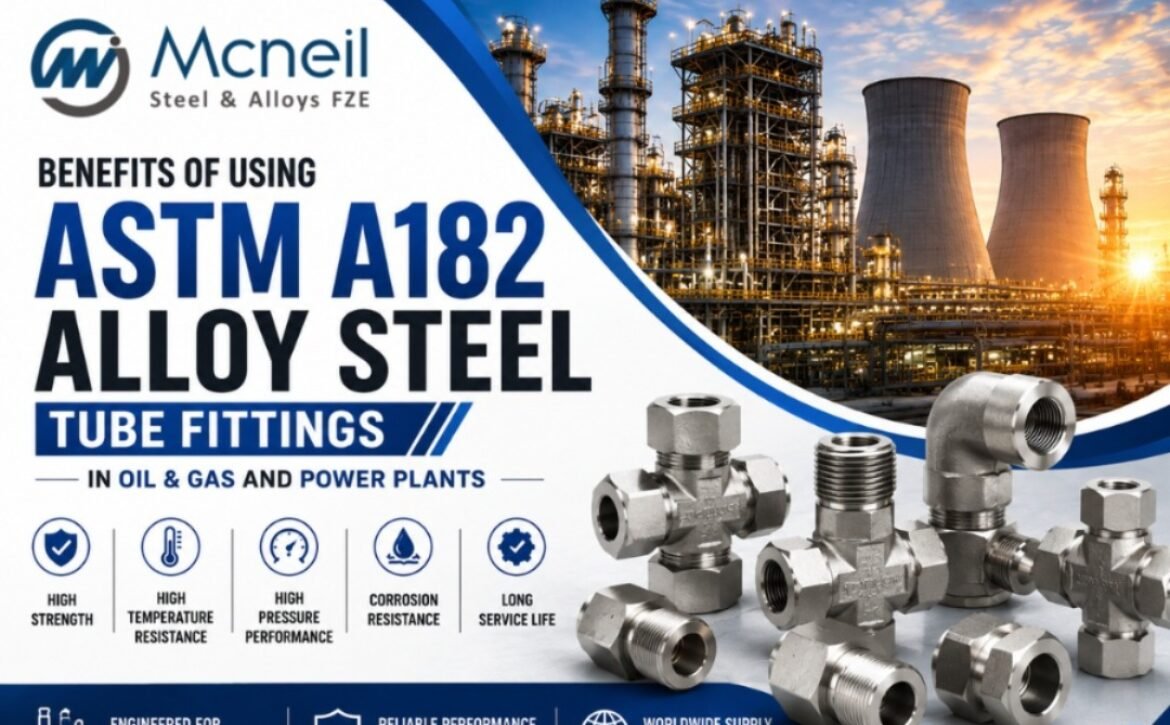
Benefits of Using ASTM A182 Alloy Steel Tube Fittings in Oil & Gas and Power Plants
Introduction
The oil & gas and power generation industries operate under some of the most demanding conditions, where piping systems are exposed to extreme temperatures, high pressure, corrosive media, and continuous operation. Choosing reliable piping components is essential to ensure operational safety, efficiency, and long-term performance. This is where ASTM A182 Alloy Steel Tube Fittings play a vital role.
ASTM A182 alloy steel tube fittings are particularly valuable in high-temperature and high-pressure piping systems because their material properties help maintain mechanical integrity under demanding operating conditions. Proper grade selection is essential because temperature, pressure, service medium, welding requirements, and applicable design codes can vary from one installation to another.
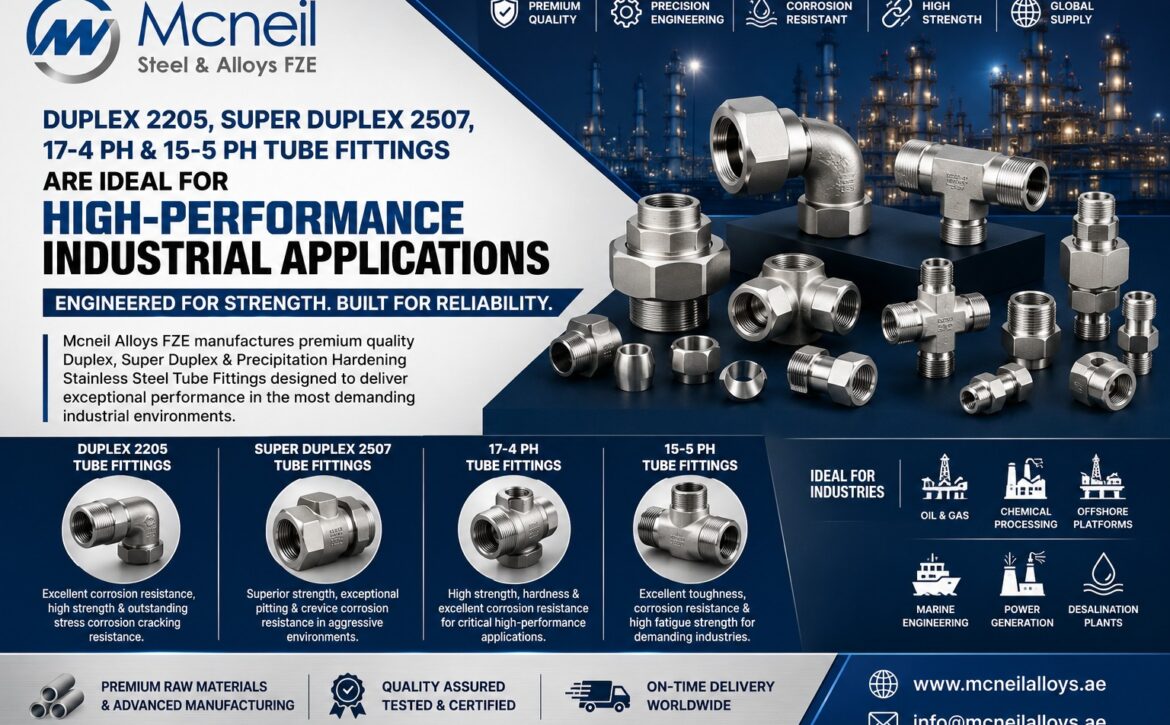
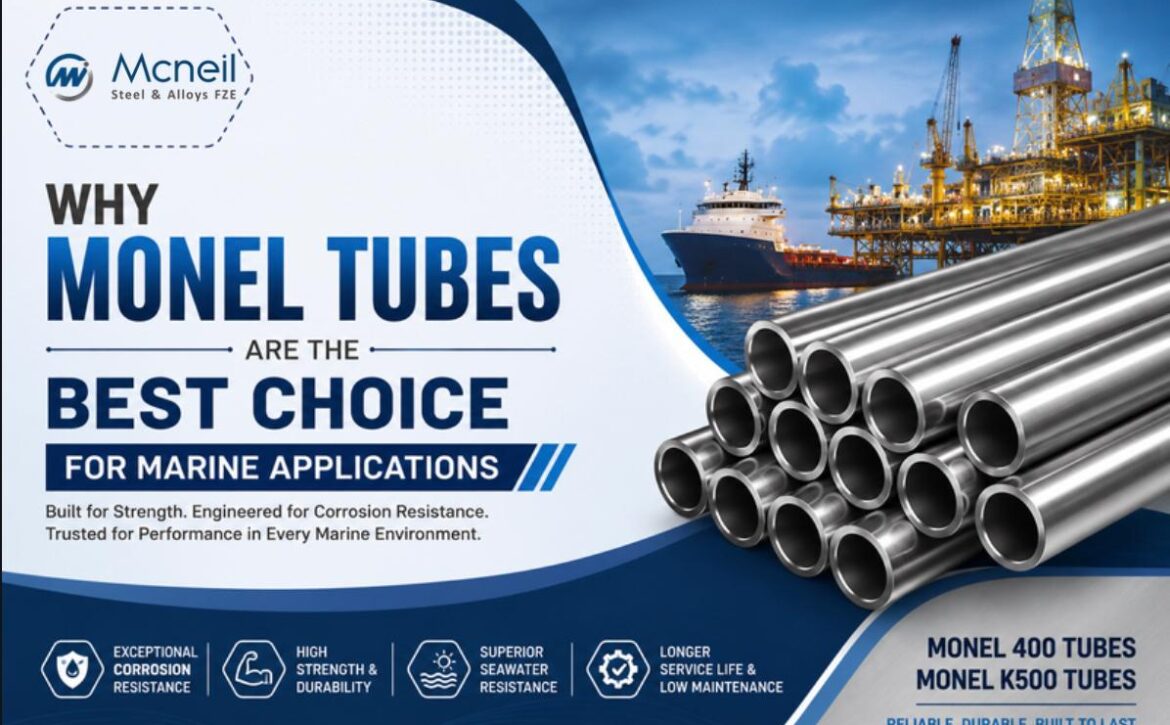
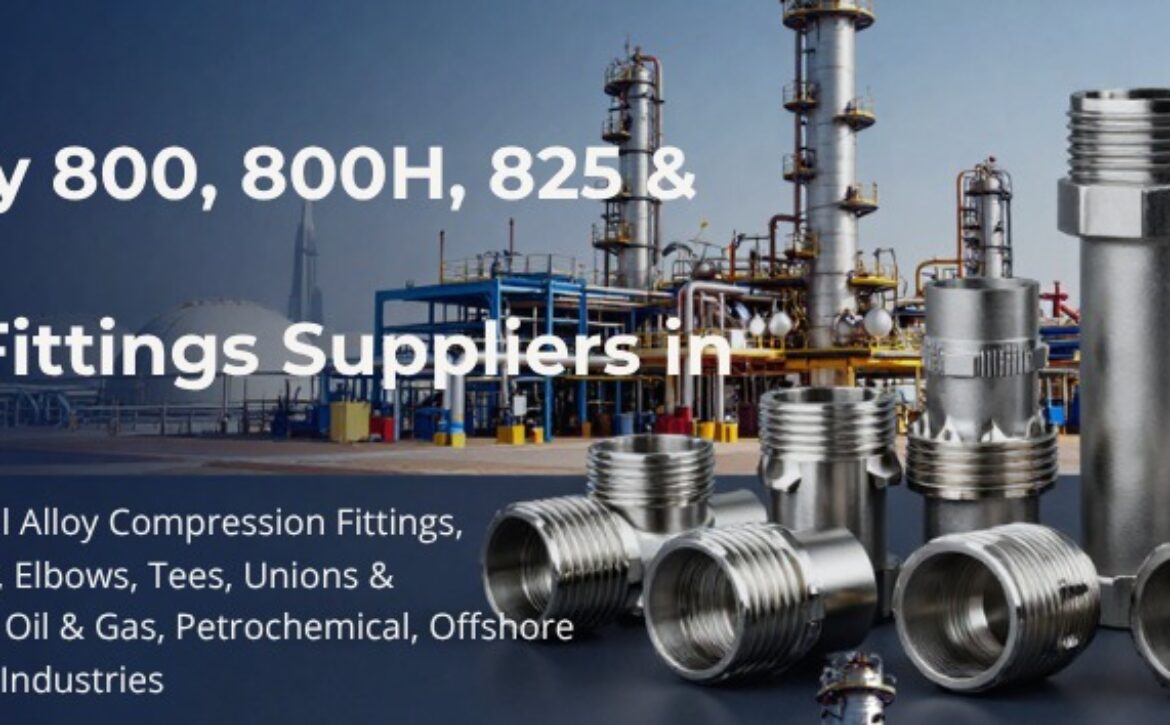
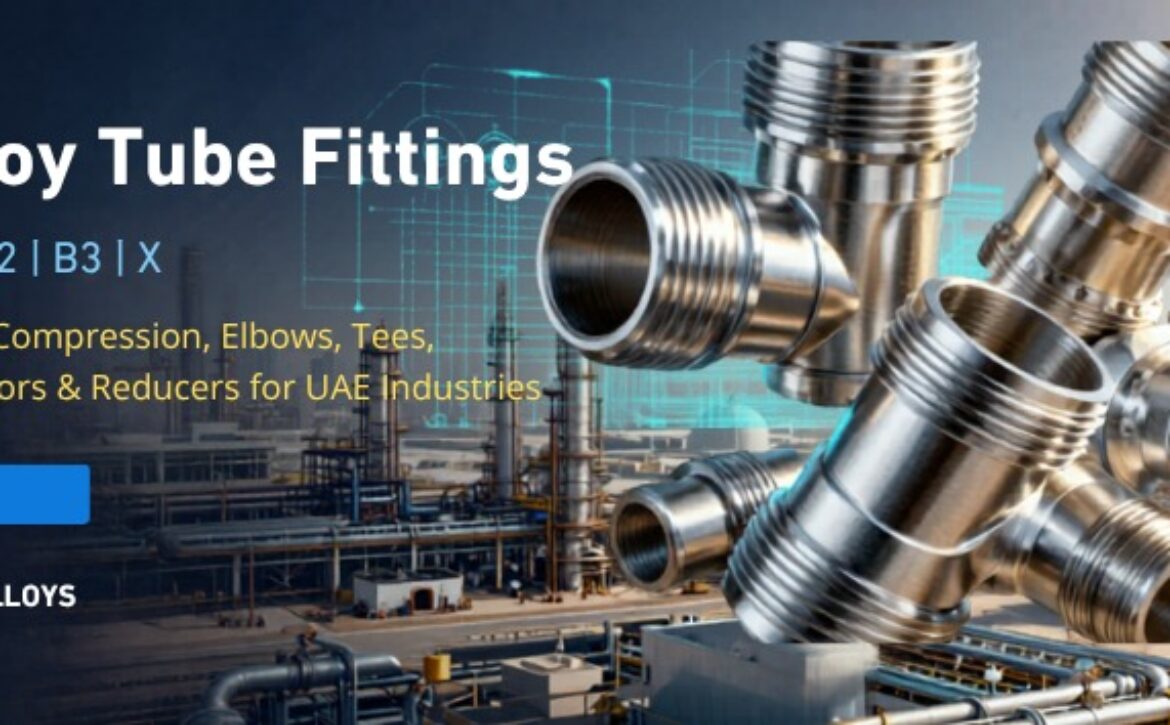
Mcneil Alloys FZE is a trusted manufacturer, supplier, and exporter of premium ASTM A182 F1, F5, F9, F11, F22, and F91 Tube Fittings, engineered to deliver exceptional strength, corrosion resistance, and durability. Manufactured according to international standards, our alloy steel tube fittings are widely used in refineries, petrochemical plants, thermal and nuclear power stations, offshore platforms, and industrial processing facilities worldwide.
Our range is designed for applications where dependable connections, material traceability, dimensional accuracy, and resistance to demanding service conditions are important considerations.
Why Choose Mcneil Alloys FZE for ASTM A182 Alloy Steel Tube Fittings?
Selecting a reliable manufacturer is crucial for ensuring the safety and efficiency of industrial piping systems.
Why Customers Trust Us
✔ Premium-grade alloy steel materials
✔ Precision-manufactured forged tube fittings
✔ Excellent resistance to high temperatures and pressure
✔ Strict quality control and testing
✔ Competitive pricing
✔ Ready stock for immediate delivery
✔ Custom sizes and configurations available
✔ Worldwide export capability
✔ Experienced engineering and technical support
✔ Material traceability and inspection documentation
✔ Solutions for demanding industrial piping applications
Our commitment to quality and innovation ensures every tube fitting delivers consistent performance in critical industrial applications.
We focus on maintaining consistency from raw material procurement through forging, machining, inspection, documentation, and final dispatch.
Our ASTM A182 Alloy Steel Tube Fitting Grades
Mcneil Alloys FZE manufactures a comprehensive range of ASTM A182 alloy steel tube fittings for diverse industrial requirements.
Different ASTM A182 grades offer different combinations of chromium, molybdenum, and other alloying elements. Selecting the appropriate grade should therefore be based on the application’s design temperature, pressure, mechanical requirements, and applicable specifications.
1. ASTM A182 F1 Tube Fittings
ASTM A182 F1 is a chromium-molybdenum alloy steel known for its excellent heat resistance and mechanical strength.
Key Features
- Good oxidation resistance
- High-temperature strength
- Excellent weldability
- Reliable durability
- Long service life
- Suitable mechanical properties for elevated-temperature service
Typical Applications
- Boiler systems
- Steam pipelines
- Pressure vessels
- Power plants
- Refinery piping
- Industrial heating and process systems
2. ASTM A182 F5 Tube Fittings
F5 alloy steel offers enhanced corrosion resistance and excellent performance under elevated temperatures.
Advantages
- Superior oxidation resistance
- Excellent creep strength
- Reliable thermal stability
- Good corrosion resistance
- High mechanical performance
- Suitable for demanding elevated-temperature piping environments
Applications
- Heat exchangers
- Petrochemical plants
- Furnace systems
- Chemical processing
- Refinery units
- High-temperature process piping
3. ASTM A182 F9 Tube Fittings
F9 is designed for demanding environments where high temperature and pressure resistance are essential.
Benefits
- Excellent pressure handling
- High-temperature durability
- Superior creep resistance
- Long operational life
- Reliable structural integrity
- Good resistance to prolonged exposure to elevated operating temperatures
Common Uses
- Industrial boilers
- Steam distribution systems
- High-pressure piping
- Thermal power plants
- Process industries
- High-temperature refinery and energy systems
4. ASTM A182 F11 Tube Fittings
F11 is among the most widely used chromium-molybdenum alloy steel grades in industrial piping.
Features
- Excellent mechanical strength
- High corrosion resistance
- Good weldability
- Excellent pressure resistance
- Long service life
- Reliable performance across elevated-temperature applications
Applications
- Oil refineries
- Petrochemical industries
- Offshore platforms
- Chemical plants
- Industrial pipelines
- Steam and process piping systems
5. ASTM A182 F22 Tube Fittings
F22 provides outstanding resistance to thermal fatigue and elevated operating temperatures.
Advantages
- Excellent creep resistance
- Superior oxidation resistance
- High tensile strength
- Reliable high-pressure performance
- Extended equipment life
- Strong performance in high-temperature pressure service
Applications
- Power generation
- Petrochemical processing
- Refinery piping
- Industrial boilers
- Heat exchangers
- High-temperature steam and process systems
6. ASTM A182 F91 Tube Fittings
F91 is an advanced alloy steel grade specifically developed for ultra-high temperature and high-pressure applications.
Key Benefits
- Exceptional mechanical strength
- Outstanding creep resistance
- Excellent fatigue performance
- Superior oxidation resistance
- Longer operational lifespan
- Designed for demanding high-temperature power-generation applications
Common Applications
- Supercritical power plants
- Nuclear power stations
- High-pressure steam systems
- Energy sector
- Heavy engineering industries
- High-temperature boiler and steam piping
F91 is generally selected for applications where elevated-temperature strength and creep resistance are critical. Its use also requires appropriate welding, heat-treatment, fabrication, and inspection practices in accordance with the applicable project requirements.
Why ASTM A182 Tube Fittings Are Ideal for Oil & Gas Industries
The oil & gas industry requires piping components capable of handling aggressive chemicals, fluctuating temperatures, and extremely high pressures.
Key Benefits
✔ Exceptional pressure resistance
✔ Superior corrosion resistance
✔ Reliable performance in sour gas environments
✔ High-temperature stability
✔ Excellent mechanical strength
✔ Leak-proof pipe connections
✔ Reduced maintenance requirements
✔ Long operational service life
✔ Resistance to demanding thermal and mechanical conditions
✔ Reliable performance in critical process piping systems
These properties make ASTM A182 alloy steel tube fittings an excellent choice for upstream, midstream, and downstream operations.
In refineries and petrochemical facilities, these fittings can be used in process, steam, hydrocarbon, and high-temperature piping systems where the selected material grade is compatible with the service conditions.
Benefits of ASTM A182 Tube Fittings in Power Plants
Power generation facilities require durable piping components capable of continuous operation under severe thermal conditions.
Major Advantages
⚡ Excellent thermal stability
⚡ Outstanding creep resistance
⚡ High-pressure capability
⚡ Reliable steam handling
⚡ Improved plant efficiency
⚡ Reduced operational downtime
⚡ Lower maintenance costs
⚡ Enhanced equipment lifespan
⚡ Reliable performance during continuous high-temperature operation
⚡ Improved piping-system reliability in demanding steam service
For conventional, supercritical, or other high-temperature power applications, selecting the correct ASTM A182 grade is critical to achieving the required combination of strength, creep resistance, weldability, and long-term service performance.
Types of ASTM A182 Alloy Steel Tube Fittings We Manufacture
Mcneil Alloys FZE offers a complete range of forged alloy steel tube fittings.
Product Range
- Compression Tube Fittings
- Male Connectors
- Female Connectors
- Union Elbows
- Union Tees
- Bulkhead Unions
- Reducing Unions
- Tube Adapters
- Pipe Adapters
- Ferrule Fittings
- Tube Plugs
- Tube Caps
- Cross Fittings
- Branch Tees
- Equal Tees
- Custom-Manufactured Tube Fittings
- Special configurations manufactured according to project requirements
Available in multiple sizes, pressure classes, and custom specifications.
Product dimensions, pressure ratings, end connections, material grades, and manufacturing requirements can be customized according to applicable drawings, specifications, and project standards.
Why Alloy Steel Performs Better Than Conventional Materials
Compared with standard carbon steel, ASTM A182 alloy steel offers superior performance in demanding industrial conditions.
Performance Advantages
✔ Higher mechanical strength
✔ Better corrosion resistance
✔ Improved oxidation resistance
✔ Superior creep resistance
✔ Better thermal fatigue resistance
✔ Longer service life
✔ Excellent structural stability
✔ Lower replacement frequency
✔ Better suitability for elevated-temperature service
✔ Improved resistance to mechanical degradation under demanding operating conditions
Chromium and molybdenum alloying are important contributors to the elevated-temperature and oxidation performance of many ASTM A182 alloy steel grades. However, actual performance depends on the specific grade, fabrication condition, operating environment, and applicable design requirements.
ASTM A182 Grade Comparison
| Feature | F1 | F5 | F9 | F11 | F22 | F91 |
| Heat Resistance | Good | Excellent | Excellent | Excellent | Superior | Outstanding |
| Pressure Resistance | Good | High | High | Very High | Very High | Exceptional |
| Corrosion Resistance | Good | Very Good | Very Good | Excellent | Excellent | Excellent |
| Mechanical Strength | Good | High | High | Very High | Very High | Outstanding |
| Creep Resistance | Moderate | High | High | High | Superior | Exceptional |
| Service Life | Long | Longer | Longer | Long | Extended | Maximum |
The table provides a general application-oriented comparison rather than a substitute for grade-specific material data. Actual allowable pressure, temperature, strength, and service life must be determined using the applicable material specification, design code, operating conditions, and engineering calculations.
Each grade is engineered to meet specific pressure, temperature, and corrosion requirements.
Industrial Applications
Our ASTM A182 alloy steel tube fittings are trusted across multiple industries.
Major Industries
- Oil & Gas Exploration
- Refineries
- Petrochemical Plants
- Thermal Power Plants
- Nuclear Power Stations
- Chemical Processing
- Fertilizer Plants
- Steel Manufacturing
- Offshore Platforms
- Marine Engineering
- Industrial Utilities
- Process Industries
- Heavy Engineering
- Energy Infrastructure
- High-temperature steam and process piping systems
Their combination of strength, dimensional precision, and elevated-temperature performance makes them suitable for a wide range of critical industrial piping environments when the appropriate grade and specification are selected.
International Standards
Our alloy steel tube fittings are manufactured according to globally accepted industry specifications.
Available Standards
- ASTM A182
- ASME SA182
- MSS SP-83
- MSS SP-95
- MSS SP-97
- DIN Standards
- EN Standards
- ISO Specifications
Available in standard as well as customized dimensions to suit project requirements.
Applicable standards depend on the product type, connection design, dimensions, pressure requirements, and project specification. Customers should confirm the required standard and edition before ordering.
Quality Assurance at Mcneil Alloys FZE
Quality is integrated into every stage of our manufacturing process.
Our Inspection Process
- Raw Material Verification
- Positive Material Identification (PMI)
- Chemical Composition Testing
- Mechanical Property Testing
- Hydrostatic Testing
- Hardness Testing
- Dimensional Inspection
- Surface Finish Examination
- Pressure Testing
- Final Visual Inspection
- Material Test Certificate (MTC) verification
- Heat number and material traceability checks
Every alloy steel tube fitting is thoroughly inspected before shipment to ensure reliability and compliance with international standards.
Inspection and testing requirements can be tailored to the applicable specification and customer project requirements, helping provide greater confidence in material quality and product conformity.
Why Businesses Worldwide Choose Mcneil Alloys FZE
Customers across the globe trust Mcneil Alloys FZE for delivering premium industrial piping solutions.
Our Strengths
✔ Premium-quality raw materials
✔ Advanced forging and machining facilities
✔ Skilled engineering professionals
✔ Large inventory for quick delivery
✔ Customized manufacturing solutions
✔ Competitive pricing
✔ Fast global logistics
✔ Complete material traceability
✔ Reliable after-sales support
✔ Project-oriented technical assistance
Our focus on manufacturing consistency, documentation, inspection, and international supply enables us to support demanding industrial procurement requirements.
Benefits of Choosing Our ASTM A182 Alloy Steel Tube Fittings
Partnering with Mcneil Alloys FZE offers measurable advantages.
Key Benefits
🏭 Precision-engineered products
⚙ High-pressure reliability
🔥 Superior high-temperature performance
🛡 Enhanced corrosion protection
📈 Increased operational efficiency
💰 Reduced maintenance costs
🌍 Global supply network
🔩 Long-lasting industrial performance
📋 Complete material documentation and traceability
🛠 Customized solutions for project-specific requirements
Why ASTM A182 Tube Fittings Are a Smart Investment
Investing in high-quality ASTM A182 alloy steel tube fittings reduces maintenance costs, improves plant reliability, minimizes downtime, and extends the lifespan of industrial piping systems. Their exceptional strength and corrosion resistance make them the preferred solution for oil & gas facilities, power plants, and heavy industrial operations where performance and safety are critical.
The right fitting grade can also help maintain piping-system integrity under demanding temperature and pressure conditions, reducing the risk of premature component failure. However, long-term performance depends on correct material selection, fabrication, installation, inspection, and operating conditions.
📞 Get Premium ASTM A182 Alloy Steel Tube Fittings Today
Looking for high-quality ASTM A182 F1, F5, F9, F11, F22, or F91 Tube Fittings for your oil & gas or power generation projects?
Mcneil Alloys FZE
📞 +91 9870883613
📧 info@mcneilalloys.ae
Our experts are ready to help you choose the right alloy steel tube fittings, provide technical guidance, competitive pricing, and customized manufacturing solutions tailored to your project needs.
Contact our team with your required ASTM grade, fitting type, size, pressure class, quantity, applicable standard, and project specifications for a more accurate quotation and technical recommendation.
Frequently Asked Questions (FAQs)
1. Why are ASTM A182 alloy steel tube fittings widely used in oil & gas industries?
They offer excellent resistance to high pressure, elevated temperatures, corrosion, and mechanical stress, making them ideal for demanding oil & gas operations. Specific performance depends on the ASTM A182 grade selected and the actual operating environment.
2. Which ASTM A182 grade is suitable for power plants?
F11, F22, and F91 are commonly used in thermal and nuclear power plants due to their superior creep resistance, heat resistance, and mechanical strength. The appropriate grade should always be selected according to the plant’s design temperature, pressure, material specification, welding requirements, and applicable engineering code.
3. What types of alloy steel tube fittings do you manufacture?
We manufacture compression fittings, unions, elbows, tees, adapters, ferrule fittings, plugs, caps, crosses, and customized tube fittings. Configurations can be produced in different sizes, grades, pressure classes, and dimensions according to applicable requirements.
4. Which industries use ASTM A182 tube fittings?
They are extensively used in oil & gas, petrochemical plants, refineries, power generation, chemical processing, offshore platforms, marine engineering, and heavy industrial applications. They are particularly valuable in piping systems exposed to elevated temperatures, pressure, and demanding process conditions.
5. Do your ASTM A182 tube fittings meet international standards?
Yes. Our products comply with ASTM A182, ASME SA182, MSS, DIN, EN, and other applicable international specifications. The exact applicable specification depends on the product configuration and project requirements, and should be confirmed at the time of inquiry.
6. Why choose Mcneil Alloys FZE?
Mcneil Alloys FZE offers premium-quality alloy steel tube fittings, advanced manufacturing capabilities, stringent quality control, competitive pricing, customized production, technical expertise, and reliable worldwide delivery.
7. What is ASTM A182 used for in industrial piping?
ASTM A182 covers forged or rolled alloy and stainless steel pipe flanges, forged fittings, and valves and parts for high-temperature, high-pressure service. The applicable grade is selected according to the required material and operating conditions.
8. What is the difference between ASTM A182 F11, F22, and F91?
F11, F22, and F91 are different alloy steel grades with different chemical compositions and mechanical properties. F91 is generally associated with advanced high-temperature power-generation applications requiring strong creep and elevated-temperature performance, while F11 and F22 are widely used in high-temperature refinery, petrochemical, boiler, and steam-service applications. Final grade selection should be based on the project’s engineering requirements and applicable material specifications.
9. How do I select the right ASTM A182 alloy steel tube fitting grade?
Consider the operating temperature, pressure, service medium, corrosion environment, required mechanical properties, welding and fabrication requirements, applicable design code, and project specification. Providing these details to the manufacturer can help ensure that the selected fitting grade is appropriate for the intended service.