Manufacturer & Exporters of:
Instrumentation Pipe Fittings & Valves

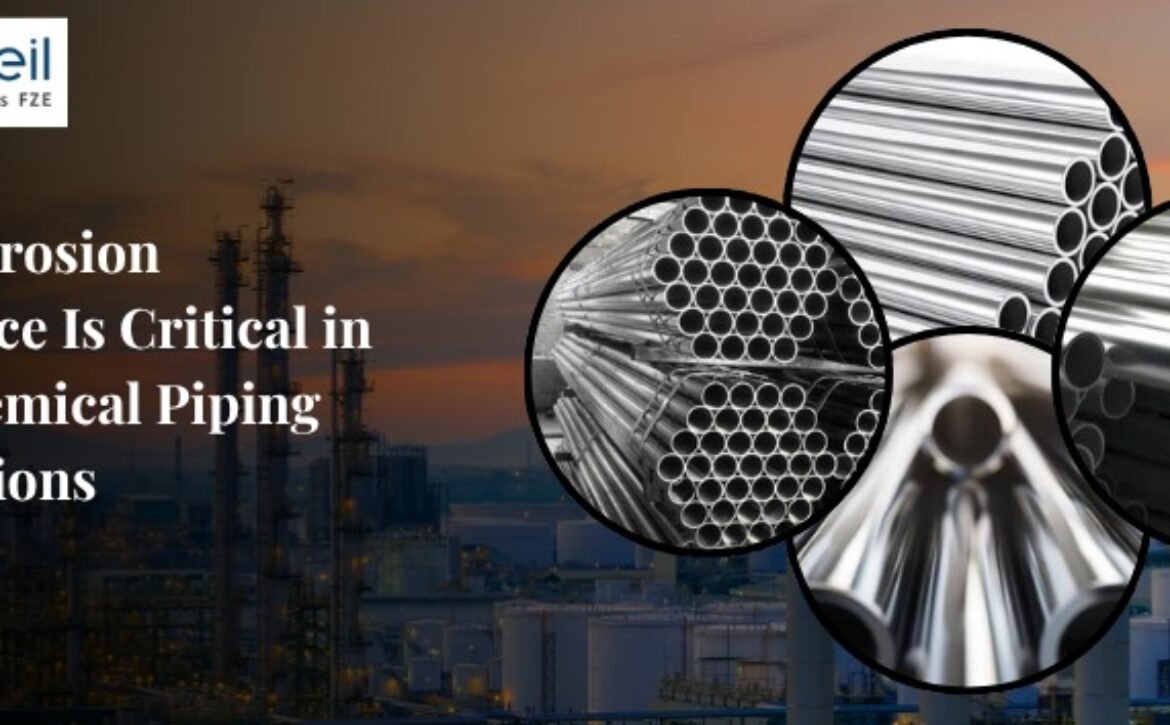
Why Corrosion Resistance Is Critical in Petrochemical Piping Applications

Petrochemical piping systems operate under some of the most demanding conditions in industrial processing. High temperatures, pressure fluctuations, hydrocarbons, acids, chlorides, moisture, sulfur-containing compounds and other aggressive process media can gradually attack piping materials and reduce their service life.
For this reason, corrosion resistance is a critical consideration when selecting pipes, flanges, pipe fittings, valves and other pressure-containing components for petrochemical applications.
Corrosion does more than affect the appearance of a metal surface. Depending on the mechanism and operating conditions, it can cause wall thinning, pitting, cracking, leakage, loss of mechanical integrity and unplanned shutdowns.
Material selection therefore needs to consider the complete service environment rather than simply choosing a material based on pressure or temperature.
Mcneil Alloys supplies industrial piping products in carbon steel, stainless steel, alloy steel, duplex, super duplex and nickel-based alloys for demanding applications across oil & gas, petrochemical, chemical processing, power and other industries.

What Is Corrosion in Petrochemical Piping?

Corrosion is the deterioration of a material caused by interaction with its surrounding environment.
In petrochemical piping, corrosion can occur internally, externally, or at localized areas such as welds, joints and crevices.
Common factors that contribute to corrosion include:
Water and moisture
Chlorides
Acids
Sulfur-containing compounds
Oxygen
Carbon dioxide
High temperatures
Contaminants
Chemical process fluids
Marine or coastal environments
Poor material compatibility
Incorrect fabrication or surface treatment
The specific corrosion mechanism depends on the process chemistry, temperature, pressure, material and operating conditions.
ASME’s technical literature on corrosion and materials in hydrocarbon production identifies corrosion threats, material selection and corrosion mitigation as important parts of hydrocarbon facility engineering and integrity management.

Why Corrosion Resistance Matters in Petrochemical Piping

A petrochemical plant can contain hundreds or thousands of metres of interconnected piping.
If the selected material has inadequate corrosion resistance, degradation can progressively affect:
Pipe walls
Elbows
Tees
Reducers
Flanges
Valves
Welded joints
Instrumentation connections
Pumps and equipment connections
The resulting problems can include:
Reduced wall thickness
Localized holes or pits
Leakage
Loss of pressure containment
Contamination
Reduced flow capacity
Increased maintenance requirements
Unplanned shutdowns
Replacement costs
Safety and environmental risks
Corrosion-resistant material selection is therefore closely connected to piping reliability and long-term plant operation.

Common Types of Corrosion in Petrochemical Piping

Different environments can produce different corrosion mechanisms.
1. General Corrosion
General corrosion occurs relatively uniformly across a metal surface.
Over time, continuous metal loss can reduce the wall thickness of a pipe or fitting.
This can become particularly important in systems where the component is expected to remain in service for many years.
2. Pitting Corrosion
Pitting is a localized form of corrosion that produces small cavities or pits in the metal.
The visible affected area can be relatively small, but individual pits can penetrate deeply into the material.
Pitting resistance is particularly important in environments containing chlorides.
Mcneil Alloys identifies stainless steel 316 pipe fittings as suitable for demanding environments involving saltwater, chemicals and industrial fluids, with corrosion and pitting resistance among their relevant properties.
3. Crevice Corrosion
Crevice corrosion can occur in confined areas where stagnant fluid or deposits develop.
Potential locations include:
Flange interfaces
Gasket areas
Bolted connections
Lap joints
Under deposits
Fitting connections
Material selection and good system design can help reduce susceptibility to localized corrosion.
4. Stress Corrosion Cracking
Stress corrosion cracking can occur when a susceptible material is exposed to a specific corrosive environment while subjected to tensile stress.
Chloride-containing environments are an important consideration for susceptible stainless steels.
Duplex and super duplex stainless steels are often considered where resistance to chloride-related corrosion mechanisms is required.
Mcneil Alloys states that Duplex 2205 and Super Duplex 2507 provide resistance to chloride stress corrosion cracking, pitting and crevice corrosion.
5. Erosion-Corrosion
High-velocity fluids, turbulence and suspended particles can accelerate material degradation.
Areas around:
Elbows
Tees
Reducers
Control valves
Flow restrictions
may experience increased turbulence.
The material must therefore be capable of handling both the chemical environment and the mechanical effects of fluid flow.
6. Corrosion Under Insulation
External corrosion can develop beneath insulation when moisture enters and remains trapped against the pipe surface.
This can be difficult to detect because the affected area is hidden beneath the insulation.
Proper insulation design, inspection and maintenance are therefore important parts of piping integrity management.

How Petrochemical Conditions Affect Material Selection

There is no single corrosion-resistant material that is suitable for every petrochemical application.
Material selection should consider:
Operating Factor Why It Matters
Process fluid Determines chemical compatibility
Chloride level Influences pitting and localized corrosion
Temperature Can accelerate corrosion and affect material strength
Pressure Determines mechanical requirements
Water content Can promote several corrosion mechanisms
Sulfur/H₂S Important for sour-service material selection
Flow velocity Can influence erosion-corrosion
pH Affects chemical attack
Marine exposure Increases chloride exposure
Welded construction Requires consideration of weld metallurgy and heat effects
Service life Influences lifecycle material selection
The objective is not simply to choose the most corrosion-resistant alloy available. The objective is to select a material that provides the required combination of corrosion resistance, mechanical strength, temperature capability, fabrication suitability and lifecycle value.

Stainless Steel in Petrochemical Piping

Stainless steel is widely used when corrosion resistance is required alongside mechanical performance and fabrication practicality.
Common grades include:
304
304L
316
316L
321
347
Mcneil Alloys supplies these stainless-steel grades in pipe fittings for applications including petrochemical plants, refineries, chemical processing, marine systems and other demanding industrial environments.
Stainless Steel 304
SS 304 provides general corrosion resistance and is widely used for industrial piping and process applications where the environment is not excessively aggressive.
Stainless Steel 316
SS 316 contains molybdenum, which improves resistance to localized corrosion compared with conventional 304 stainless steel.
It can be considered for applications involving:
Chloride exposure
Saltwater
Chemical processing
Petrochemical fluids
Marine environments
Stainless Steel 316L
316L is the low-carbon version of 316.
The lower carbon content can be beneficial for welded construction because it reduces the potential for sensitization associated with welding under applicable conditions.
Mcneil Alloys specifically positions 316L fittings for corrosive environments including chemical, petrochemical, marine and offshore applications.
Stainless Steel 321 and 347
High-temperature petrochemical systems may require stabilized stainless-steel grades.
321 uses titanium stabilization, while 347 uses niobium stabilization.
Mcneil Alloys describes 321 and 347 pipe fittings for high-temperature applications including petrochemical plants, chemical processing, refineries and heat exchangers.

Duplex Stainless Steel for Corrosion and Strength

Duplex stainless steels combine austenitic and ferritic metallurgical structures.
This combination provides a useful balance of:
High mechanical strength
Corrosion resistance
Resistance to chloride-related degradation
Pressure capability
Long service life
Duplex 2205
Duplex 2205 is commonly considered for demanding process environments where conventional austenitic stainless steels may not provide the required combination of strength and corrosion resistance.
Mcneil Alloys lists Duplex 2205 with approximately:
Chromium: 21–23%
Nickel: 4.5–6.5%
Molybdenum: 2.5–3.5%
Tensile strength: ≥620 MPa
Yield strength: ≥450 MPa
Temperature range listed by Mcneil Alloys: −50°C to +300°C
The listed standards include ASTM A182, ASTM A789 and ASME SA182.

Super Duplex 2507 for More Aggressive Environments

Super Duplex 2507 provides higher alloy content and higher mechanical strength than Duplex 2205.
Mcneil Alloys lists approximately:
Chromium: 24–26%
Nickel: 6–8%
Molybdenum: 3–5%
Nitrogen: 0.24–0.32%
Tensile strength: ≥800 MPa
Yield strength: ≥550 MPa
Temperature range listed: −50°C to +300°C
The material is positioned for aggressive, high-pressure and high-chloride applications where corrosion resistance and mechanical strength are both important.
Applications can include:
Offshore oil & gas
Seawater systems
Desalination
Petrochemical processing
Chemical plants
High-pressure process piping

Nickel Alloys for Severe Corrosion Service

Some petrochemical environments are too aggressive for conventional stainless steels.
In such situations, nickel-based alloys may be considered.
Examples include:
Inconel
Hastelloy
Monel
Incoloy
These materials can provide specialized combinations of corrosion resistance, high-temperature capability and mechanical performance.
Material selection must nevertheless be based on the actual process chemistry rather than simply selecting a nickel alloy because the service is classified as “corrosive.”

Corrosion Resistance and Flange Selection

Flanges are critical connection points in petrochemical piping.
A corrosion-resistant pipe connected to an unsuitable flange can still create a reliability problem.
Flange selection should consider:
Flange material
Process fluid
Pressure
Temperature
Corrosion environment
Flange facing
Gasket material
Bolting
Welding requirements
Applicable standard
Mcneil Alloys supplies flanges in materials including carbon steel, alloy steel, stainless steel, duplex, super duplex and nickel alloys for demanding energy and petrochemical applications. Its current project-focused flange information also highlights the importance of material condition, facing accuracy, traceability and documentation.

Corrosion Resistance of Pipe Fittings

Pipe fittings are particularly important because changes in flow direction can increase turbulence and localized stresses.
Common fittings include:
45° elbows
90° elbows
180° elbows
Equal tees
Reducing tees
Concentric reducers
Eccentric reducers
Crosses
Caps
Stub ends
Couplings
The fitting material should be compatible with the pipe and process environment.
Mcneil Alloys supplies stainless steel, duplex, super duplex, alloy steel and other piping materials for industrial applications.

Why Material Traceability Matters

Corrosion-resistant alloys only provide their expected performance when the supplied material actually meets the specified chemistry and mechanical requirements.
Material traceability can therefore be important for critical petrochemical projects.
Documentation may include:
Material Test Certificates
Heat numbers
Chemical composition
Mechanical test results
PMI reports
Dimensional inspection
NDT reports
Hydrostatic testing
Third-party inspection records
Mcneil Alloys’ project-oriented supply information emphasizes heat-number traceability, inspection and documentation for demanding piping applications.

The Role of PMI in Corrosion-Resistant Piping

Positive Material Identification, or PMI, is used to verify the alloy composition of materials.
This can be particularly important when multiple stainless steel, duplex or nickel alloy grades are present on a project site.
PMI can help verify that:
The correct material was supplied
Materials have not been incorrectly mixed
Specified alloying elements are present
Components can be traced to project documentation
For critical petrochemical piping, material verification can form an important part of quality assurance.

Welding and Corrosion Resistance

Welding can influence the corrosion performance of piping materials.
Important considerations include:
Welding procedure
Filler metal
Heat input
Interpass temperature
Post-weld treatment where required
Weld inspection
Heat-affected zone behavior
This is especially relevant for stainless steel and duplex stainless steel.
For example, duplex stainless steel requires appropriate control of welding parameters because the resulting metallurgical balance can influence mechanical and corrosion properties.
The material’s corrosion resistance therefore needs to be considered not only in its base-metal condition but also after fabrication.

Corrosion Resistance vs Initial Cost

A common misconception is that the least expensive material always provides the lowest project cost.
A lower-cost material can become more expensive over the complete service life if it requires:
Frequent replacement
Corrosion monitoring
Repairs
Coating maintenance
Additional inspection
Production shutdowns
Emergency intervention
A higher-alloy material may have a greater initial purchase price while providing a longer service life or reduced maintenance requirement in the right application.
The appropriate comparison should therefore consider total lifecycle cost, not only initial material price.

How Corrosion Can Affect Petrochemical Plant Reliability

Corrosion can gradually reduce the reliability of a piping network.
A simplified chain can look like:
Aggressive Environment → Material Degradation → Wall Loss/Pitting → Reduced Integrity → Leakage or Failure → Maintenance/Downtime
Preventing this progression requires a combination of:
Correct material selection
Corrosion assessment
Appropriate fabrication
Inspection
Monitoring
Maintenance
Operating control
Material selection is one part of a broader corrosion-management strategy.

How to Select Corrosion-Resistant Piping Materials

A practical material-selection process can include the following steps.
Step 1: Identify the Process Medium
Determine whether the piping carries:
Hydrocarbons
Water
Steam
Acids
Alkaline chemicals
Sour gas
Chloride-containing fluids
Seawater
Mixed-phase fluids
Step 2: Establish Operating Conditions
Document:
Pressure
Temperature
Flow velocity
Temperature cycling
Pressure cycling
Normal and upset conditions
Step 3: Identify Corrosion Threats
Consider:
General corrosion
Pitting
Crevice corrosion
Stress corrosion cracking
Erosion-corrosion
Sulfide-related damage
Corrosion under insulation
Galvanic corrosion
Step 4: Compare Candidate Materials
Depending on the application, candidates may include:
Carbon steel
304/304L stainless steel
316/316L stainless steel
321/347 stainless steel
Duplex 2205
Super Duplex 2507
Monel
Inconel
Hastelloy
Other specialized alloys
Step 5: Verify Fabrication Requirements
Check:
Welding
Heat treatment
Forming
Machining
Surface finish
Inspection requirements
Step 6: Establish Inspection and Documentation
Define requirements for:
PMI
MTCs
NDT
Hydrotesting
Dimensional inspection
Traceability
Third-party inspection

Carbon Steel vs Corrosion-Resistant Alloys

Carbon steel remains widely used in petrochemical infrastructure because it can provide useful mechanical performance and cost advantages.
However, it may require additional corrosion-management measures depending on the environment.
Corrosion-resistant alloys may provide advantages where the process environment creates a greater corrosion threat.
Material General Characteristics Typical Considerations
Carbon Steel Strength and cost efficiency May require corrosion-control measures
SS 304/304L General corrosion resistance Moderate industrial environments
SS 316/316L Improved localized corrosion resistance Chlorides, chemicals, marine environments
SS 321/347 High-temperature stainless grades Elevated-temperature process service
Duplex 2205 High strength + corrosion resistance Chloride and demanding process environments
Super Duplex 2507 Very high strength + aggressive corrosion resistance High-chloride and severe service
Nickel Alloys Specialized corrosion/high-temperature performance Highly demanding chemical environments
This comparison is a general material-selection guide. Actual suitability must be determined from the process chemistry, operating conditions and applicable engineering requirements.

Petrochemical Applications Where Corrosion Resistance Is Important

Corrosion-resistant piping materials may be required in:
Refineries
Refinery systems can expose piping to hydrocarbons, chemicals, sulfur-containing compounds and elevated temperatures.
Petrochemical Processing Plants
Chemical processing streams may contain aggressive fluids that require carefully selected piping materials.
Oil & Gas Processing
Produced fluids and process streams can contain water, salts, gases and other corrosive constituents.
Offshore Facilities
Offshore piping is exposed to marine atmospheres and potentially chloride-rich environments.
Desalination and Water Treatment
High-chloride water and seawater can create significant corrosion challenges.
Chemical Plants
Chemical composition, concentration and temperature can strongly influence material compatibility.

Mcneil Alloys for Corrosion-Resistant Petrochemical Piping

Mcneil Alloys provides piping products across several material categories to address different industrial service requirements.
Its current portfolio includes:
Stainless steel pipe fittings
Duplex 2205 fittings
Super Duplex 2507 fittings
Alloy steel fittings
Stainless steel flanges
Duplex and super duplex components
Nickel-alloy products
Industrial pipes and related piping components
Mcneil Alloys’ published product information positions Duplex 2205 and Super Duplex 2507 for demanding corrosive and high-pressure environments, while its stainless-steel fittings include grades such as 316L, 321 and 347 for chemical, petrochemical and high-temperature applications.
The company also supplies piping materials for oil & gas, petrochemical, chemical, power, marine and offshore applications.

Best Practices for Reducing Corrosion in Petrochemical Piping

A reliable corrosion-control strategy can include:
Select materials based on actual process chemistry.
Consider temperature and pressure alongside corrosion exposure.
Evaluate chloride and sour-service conditions.
Use appropriate corrosion-resistant alloys where required.
Verify material identity through documentation and PMI.
Use qualified welding procedures.
Control fluid velocity where erosion-corrosion is a concern.
Inspect high-risk areas regularly.
Monitor wall thickness where applicable.
Maintain insulation and external protective systems.
Avoid incompatible material combinations where galvanic corrosion may occur.
Maintain complete material traceability.

Frequently Asked Questions

Why is corrosion resistance important in petrochemical piping?
Corrosion can cause wall thinning, pitting, cracking and leakage, potentially reducing piping integrity and increasing maintenance and downtime. Selecting materials with appropriate corrosion resistance helps address the specific threats presented by the process environment.
Which stainless steel is commonly considered for corrosive petrochemical service?
Grades such as 316 and 316L may be considered where improved localized corrosion resistance is required compared with 304 grades. The correct material depends on the actual process chemistry and operating conditions.
Is Duplex 2205 suitable for petrochemical piping?
Duplex 2205 combines high mechanical strength with corrosion resistance and is used for demanding applications. Mcneil Alloys lists it for high-pressure and corrosive environments and identifies resistance to chloride stress corrosion cracking, pitting and crevice corrosion.
When is Super Duplex 2507 considered?
Super Duplex 2507 can be considered for aggressive environments requiring a combination of high strength and strong resistance to localized and chloride-related corrosion.
Is stainless steel always better than carbon steel for petrochemical piping?
Not necessarily. Material selection depends on the specific process environment, mechanical requirements, temperature, corrosion mechanism, fabrication requirements and lifecycle economics. Carbon steel can remain appropriate for many services when the overall corrosion-control strategy supports its use.
What is PMI in petrochemical piping?
PMI, or Positive Material Identification, is a method used to verify the alloy composition of a material. It can help confirm that the supplied piping component corresponds to the specified material grade.
How does temperature affect corrosion?
Temperature can influence the rate and mechanism of corrosion and can also affect the mechanical properties and allowable service conditions of piping materials. Therefore, corrosion assessment should consider both process chemistry and temperature.
What documentation is important for corrosion-resistant piping?
Depending on project requirements, documentation can include Material Test Certificates, heat-number traceability, chemical and mechanical test results, PMI, dimensional inspection, NDT and pressure-test records.

Conclusion

Corrosion resistance is critical in petrochemical piping because the process environment can continuously challenge the material’s mechanical integrity and service life.
The correct material cannot be selected by looking at pressure or temperature alone. Engineers must consider the process fluid, chloride exposure, chemical composition, temperature, flow conditions, corrosion mechanisms, welding requirements and expected service life.
Stainless steel grades such as 316L, stabilized grades such as 321 and 347, Duplex 2205, Super Duplex 2507 and nickel-based alloys each provide different combinations of corrosion resistance and mechanical performance. Mcneil Alloys’ current product portfolio covers several of these material families for demanding petrochemical, oil & gas, chemical, offshore and industrial applications.
The most effective approach is therefore to treat material selection as part of the overall piping integrity and corrosion-management strategy. When the correct alloy is combined with appropriate fabrication, inspection, traceability and maintenance practices, petrochemical piping systems can achieve the reliability required for demanding continuous-service operations.

Read More
admin October 3, 2026 0 Comments

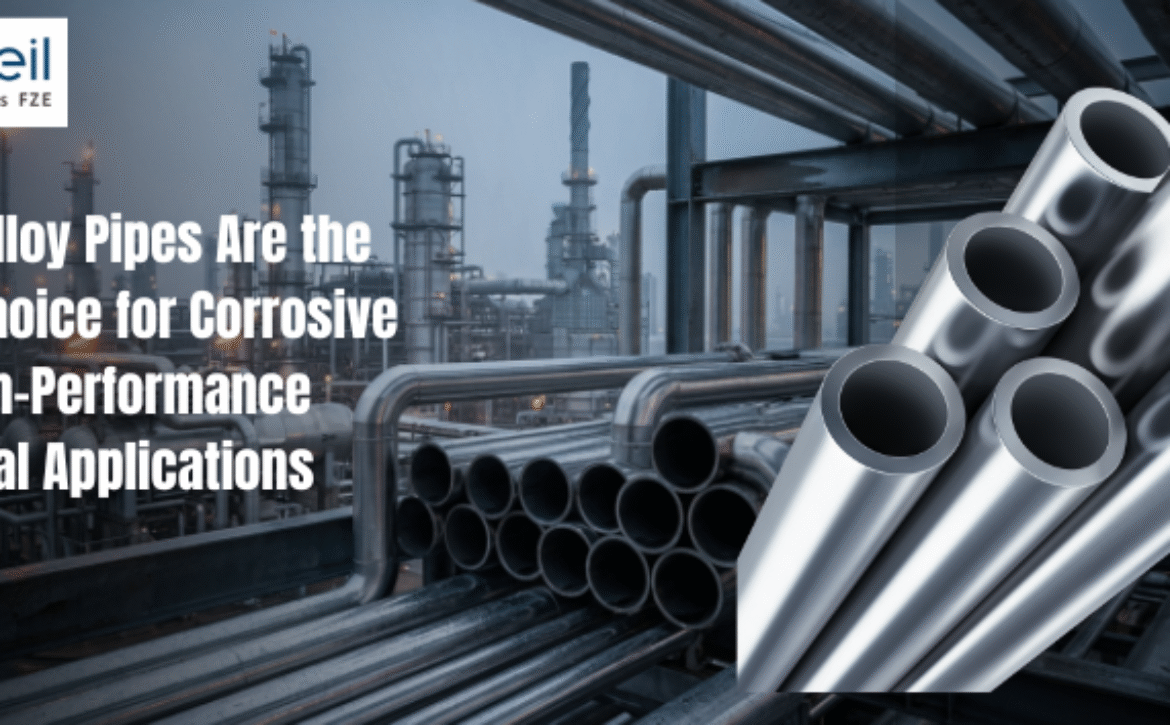
Why Hastelloy Pipes Are the Preferred Choice for Corrosive and High-Performance Industrial Applications

Introduction

Industries operating in highly corrosive and chemically aggressive environments require materials that can withstand extreme conditions while maintaining reliability and performance. From chemical processing plants and offshore platforms to power generation facilities and petrochemical industries, selecting the right piping material is crucial for ensuring operational safety and long service life.

Among the most trusted nickel-based alloys available today, Hastelloy Pipes stand out for their exceptional resistance to corrosion, oxidation, and harsh chemical exposure.

As a leading manufacturer, supplier, exporter, and stockist, Mcneil Alloys offers premium-quality Hastelloy Pipesdesigned to meet the demanding requirements of modern industries worldwide.


What Are Hastelloy Pipes?

Hastelloy Pipes are high-performance nickel-molybdenum-chromium alloy pipes developed specifically for environments where conventional stainless steel and other alloys may fail.

These pipes are engineered to provide:

  • Outstanding corrosion resistance
    • Excellent mechanical strength
    • Superior resistance to pitting and crevice corrosion
    • High-temperature performance
    • Long service life in aggressive environments

Because of these properties, Hastelloy pipes are widely used in critical industrial applications where reliability is essential.


Key Features of Hastelloy Pipes

Exceptional Corrosion Resistance

One of the primary reasons industries choose Hastelloy pipes is their ability to resist corrosion caused by:

  • Sulfuric acid
    • Hydrochloric acid
    • Phosphoric acid
    • Chlorides
    • Seawater
    • Oxidizing chemicals
    • Reducing agents

This makes them ideal for highly corrosive processing environments.


Excellent High-Temperature Strength

Many industrial operations involve elevated temperatures and pressure conditions.

Hastelloy Pipes maintain their mechanical properties even under extreme thermal stress, making them suitable for:

  • Heat exchangers
    • Chemical reactors
    • Power plants
    • Petrochemical facilities


Resistance to Pitting and Crevice Corrosion

Traditional metals often suffer localized corrosion in aggressive environments.

Hastelloy alloys offer superior protection against:

  • Pitting corrosion
    • Crevice corrosion
    • Stress corrosion cracking
    • Intergranular attack

This significantly extends service life and reduces maintenance costs.


Outstanding Weldability

Hastelloy pipes can be fabricated and welded effectively without compromising corrosion resistance.

Benefits include:

  • Easy installation
    • Reduced fabrication complexity
    • Strong welded joints
    • Improved project efficiency


Types of Hastelloy Pipes Offered by Mcneil Alloys

Hastelloy C276 Pipes

Hastelloy C276 Pipes are among the most widely used grades due to their exceptional resistance to both oxidizing and reducing environments.

Applications include:

  • Chemical processing plants
    • Waste treatment facilities
    • Pollution control systems
    • Marine environments


Hastelloy C22 Pipes

Hastelloy C22 Pipes provide excellent protection against aggressive chemicals and chloride-containing environments.

Advantages include:

  • Superior versatility
    • High corrosion resistance
    • Excellent durability


Hastelloy B2 Pipes

Hastelloy B2 Pipes are specifically designed for reducing environments, particularly hydrochloric acid applications.

Industries using B2 pipes include:

  • Chemical processing
    • Acid production facilities
    • Specialty manufacturing plants


Hastelloy B3 Pipes

Hastelloy B3 Pipes offer enhanced thermal stability and improved fabrication characteristics compared to previous grades.

Common applications include:

  • Chemical reactors
    • Process equipment
    • Acid handling systems


Hastelloy X Pipes

Hastelloy X Pipes are known for their excellent oxidation resistance and high-temperature strength.

Widely used in:

  • Gas turbine systems
    • Aerospace applications
    • Industrial furnaces
    • Heat treatment equipment


Applications of Hastelloy Pipes

Chemical Processing Industry

Chemical plants frequently handle aggressive substances that can quickly damage standard materials.

Hastelloy pipes are used for:

  • Acid transfer systems
    • Chemical reactors
    • Process piping
    • Storage facilities


Petrochemical Industry

Petrochemical operations require materials capable of resisting corrosive chemicals and extreme temperatures.

Applications include:

  • Refinery units
    • Processing plants
    • Heat exchangers
    • Transfer pipelines


Oil and Gas Industry

Offshore and onshore facilities depend on corrosion-resistant piping systems.

Hastelloy pipes are used for:

  • Offshore platforms
    • Production facilities
    • Subsea systems
    • Gas processing plants


Marine Industry

Marine environments present constant exposure to saltwater and corrosive conditions.

Applications include:

  • Shipbuilding
    • Marine piping systems
    • Offshore vessels
    • Seawater handling systems


Power Generation Plants

Power facilities require durable piping capable of handling high pressure and elevated temperatures.

Common applications include:

  • Boiler systems
    • Heat recovery units
    • Steam lines
    • Cooling systems


Pharmaceutical Industry

The pharmaceutical sector relies on contamination-free and corrosion-resistant piping systems.

Applications include:

  • Process piping
    • Clean manufacturing systems
    • Chemical transfer lines


Benefits of Choosing Hastelloy Pipes

Longer Service Life

Superior corrosion resistance helps reduce replacement frequency and maintenance expenses.

Reduced Downtime

Reliable performance minimizes unexpected failures and production interruptions.

Enhanced Safety

Strong resistance to aggressive chemicals reduces operational risks.

Cost Savings Over Time

Although the initial investment may be higher, the long-term durability often results in lower lifecycle costs.

Versatile Applications

Suitable for a wide range of industries and operating environments.


Why Choose Mcneil Alloys for Hastelloy Pipes?

Comprehensive Product Range

Mcneil Alloys supplies a complete range of Hastelloy pipe grades to meet diverse industrial requirements.

Strict Quality Standards

Products are manufactured and inspected according to international specifications and industry standards.

Global Supply Capabilities

Serving customers across multiple countries with reliable export and logistics support.

Ready Stock Availability

Maintaining inventory for faster delivery and urgent project requirements.

Technical Expertise

A knowledgeable team helps customers select the right material and specifications for their applications.

Competitive Pricing

Delivering premium-quality products while maintaining cost-effective procurement solutions.


Industries Served by Mcneil Alloys

  • Chemical Processing Plants
    • Petrochemical Industries
    • Refineries
    • Oil & Gas Facilities
    • Offshore Platforms
    • Marine Industry
    • Power Generation Plants
    • Pharmaceutical Facilities
    • Water Treatment Plants
    • Fertilizer Plants
    • Aerospace Applications
    • Industrial Manufacturing Facilities


Conclusion

When corrosion resistance, reliability, and long-term performance are critical, Hastelloy Pipes remain one of the best solutions available. Their ability to withstand aggressive chemicals, extreme temperatures, and demanding operating conditions makes them indispensable across a wide range of industries.

With a comprehensive inventory of Hastelloy C276 Pipes, Hastelloy C22 Pipes, Hastelloy B2 Pipes, Hastelloy B3 Pipes, and Hastelloy X Pipes, Mcneil Alloys continues to provide high-quality piping solutions that help industries achieve safe, efficient, and dependable operations.

Whether for chemical processing, oil and gas, marine, petrochemical, or power generation applications, Mcneil Alloys is your trusted partner for premium-quality Hastelloy Pipes.

Read More
admin June 15, 2026 0 Comments

Building Strong Industrial Connections: Stainless Steel Pipe Fittings Manufacturer, Supplier, and Exporter in UAE – Mcneil Alloys

In every industrial project, there are components that quietly determine long-term success. Stainless steel pipe fittings are one such backbone—often unseen, yet critical to safety, performance, and durability. From oil refineries and desalination plants to commercial infrastructure and chemical processing units, the quality of pipe fittings directly impacts efficiency and operational life.

This is where Mcneil Alloys steps in. Recognized as a reliable manufacturer, supplier, wholesaler, distributor, and exporter of stainless steel pipe fittings in the UAE, Mcneil Alloys combines technical expertise with a deep understanding of regional industrial needs. With a complete range of grades including 304, 304L, 316, 316L, 321, and 347, the company supports projects across the UAE and the wider Gulf region with confidence and consistency.

A Leading Stainless Steel Pipe Fittings Manufacturer You Can Trust

As an established manufacturer, Mcneil Alloys focuses on producing stainless steel pipe fittings that meet international standards and real-world site conditions. Each product is manufactured using high-quality raw materials, advanced machinery, and strict quality control procedures to ensure dimensional accuracy and mechanical strength.

Mcneil Alloys specializes in butt welding pipe fittings, engineered for leak-proof connections and smooth flow characteristics. These fittings are widely used in high-pressure and high-temperature environments where performance cannot be compromised. The company’s manufacturing approach emphasizes consistency, reliability, and long service life—qualities that contractors and engineers value deeply.

Complete Stainless Steel Pipe Fittings Range Under One Roof

One of the key strengths of Mcneil Alloys as a supplier and wholesaler is its ability to offer multiple stainless steel grades without compromising on availability or quality. This makes sourcing simpler and more efficient for clients managing diverse project requirements.

Stainless Steel 304 Pipe Fittings – Versatile and Widely Used

Stainless Steel 304 pipe fittings are known for their excellent balance of strength, corrosion resistance, and cost efficiency.

  • Good resistance to oxidation and corrosion in most environments

  • Smooth internal finish ideal for hygienic and fluid-handling systems

  • Easy fabrication and forming properties

  • Commonly supplied by Mcneil Alloys for construction and industrial projects across the UAE

These fittings are a popular choice for general-purpose piping systems where reliability and affordability matter.

Stainless Steel 304L Pipe Fittings – Designed for Welded Structures

Stainless Steel 304L is the low-carbon variant of 304, making it ideal for applications involving extensive welding.

  • Reduced risk of intergranular corrosion after welding

  • Maintains corrosion resistance in heat-affected zones

  • Suitable for pressure vessels, pipelines, and structural applications

  • Frequently distributed by Mcneil Alloys for fabrication-intensive projects

As an experienced distributor, Mcneil Alloys ensures these fittings meet both design and safety expectations.

Stainless Steel 316 Pipe Fittings – Strength in Harsh Conditions

Stainless Steel 316 pipe fittings are engineered for environments exposed to chemicals, moisture, and salt.

  • Enhanced resistance to chlorides due to molybdenum content

  • Ideal for marine, offshore, and chemical processing industries

  • Strong mechanical properties across a wide temperature range

  • Preferred grade for export projects handled by Mcneil Alloys

These fittings are often chosen where long-term corrosion resistance is critical.

Stainless Steel 316L Pipe Fittings – Reliable Performance After Welding

Stainless Steel 316L pipe fittings offer superior corrosion resistance along with improved weld integrity.

  • Low carbon content minimizes carbide precipitation

  • Excellent for pharmaceutical, desalination, and chemical plants

  • Long service life with minimal maintenance requirements

  • Supplied by Mcneil Alloys as a trusted supplier and exporter

This grade is ideal for complex piping systems that demand both strength and cleanliness.

Stainless Steel 321 Pipe Fittings – Stability at Elevated Temperatures

Stainless Steel 321 pipe fittings are titanium-stabilized, making them suitable for high-temperature applications.

  • Excellent resistance to thermal fatigue and oxidation

  • Prevents corrosion during prolonged heat exposure

  • Ideal for heat exchangers, exhaust systems, and refinery lines

  • Manufactured and supplied by Mcneil Alloys for demanding industries

These fittings are often selected for projects where temperature fluctuations are frequent.

Stainless Steel 347 Pipe Fittings – Built for Critical Applications

Stainless Steel 347 pipe fittings are designed for severe operating conditions requiring long-term strength.

  • Niobium stabilization enhances resistance to intergranular corrosion

  • Excellent creep resistance at elevated temperatures

  • Suitable for power plants and petrochemical facilities

  • Exported by Mcneil Alloys to GCC countries with full quality assurance

This grade is trusted for applications where safety and durability are paramount.

Butt Welding Pipe Fittings for Seamless Industrial Flow

Butt welding fittings form the core of many industrial piping systems. Mcneil Alloys manufactures a complete range of elbows, tees, reducers, caps, and custom fittings designed for precision alignment and strong welded joints.

These fittings offer:

  • Smooth flow with minimal pressure drop

  • High resistance to vibration and fatigue

  • Strong, permanent connections

  • Compatibility with high-pressure systems

As a reliable manufacturer and distributor, Mcneil Alloys ensures availability for both standard and project-specific requirements.

Supplying Stainless Steel Pipe Fittings Across the UAE

Mcneil Alloys has developed a strong presence as a supplier and wholesaler across major UAE industrial regions, including Dubai, Abu Dhabi, Sharjah, Fujairah, and Ras Al Khaimah.

Each region has unique industrial demands, from energy and infrastructure to manufacturing and logistics. Mcneil Alloys supports these markets with timely delivery, consistent stock availability, and technical assistance.

Exporter of Stainless Steel Pipe Fittings to the GCC Region

Beyond the UAE, Mcneil Alloys is a well-established exporter serving major Gulf markets. The company provides seamless export support to Saudi Arabia, Qatar, Oman, Kuwait, and Bahrain.

With experience in international logistics, documentation, and packaging standards, Mcneil Alloys ensures that every shipment reaches its destination safely and on schedule.

Why Mcneil Alloys Is the Preferred Manufacturer and Supplier

Clients choose Mcneil Alloys not just for products, but for reliability and partnership. As a trusted manufacturer, supplier, wholesaler, distributor, and exporter, the company delivers value at every stage of the supply chain.

Key advantages include:

  • Wide range of stainless steel grades and fittings

  • Strict quality control and material traceability

  • Competitive pricing for bulk and export orders

  • Strong distribution network across the UAE

  • Responsive customer support and technical guidance

Partner with Mcneil Alloys for Quality That Lasts

When your project demands strength, precision, and long-term performance, choosing the right stainless steel pipe fittings partner matters. Mcneil Alloys continues to support industries across the UAE and GCC with products that meet international standards and real-world demands.

If you are searching for a dependable stainless steel pipe fittings manufacturer, supplier, and exporter in the UAE, Mcneil Alloys is ready to support your requirements. Contact Mcneil Alloys today for a detailed quotation, technical consultation, or bulk supply inquiries. Build your piping systems with confidence—choose Mcneil Alloys for quality you can rely on.

Read More
admin December 25, 2025 0 Comments

Flow Control Evolved: Why UAE Industries Choose Mcneil Alloys for Critical Valve Applications

In every industrial plant—whether it’s a refinery in Abu Dhabi, a desalination facility in Sharjah, or an offshore oil platform near Oman—one thing remains constant: flow control determines the rhythm of the entire operation. The accuracy with which fluids are measured, regulated, isolated, or redirected can make the difference between seamless efficiency and costly downtime.

This is where Mcneil Alloys, a trusted Manufacturer, Supplier, and Exporter in UAE, has become a name associated with reliability, durability, and engineering excellence. For decades, we’ve supplied world-class Ball Valves, Needle Valves, and Manifold Valves to mission-critical projects across the region.

With a strong presence in Dubai, Abu Dhabi, Sharjah, Ajman, Ras Al Khaimah, Fujairah, and Umm Al Quwain—and supplying widely to Saudi Arabia, Qatar, Oman, Bahrain, and Kuwait—we deliver precision-engineered valve solutions built to withstand the Middle East’s toughest industrial conditions.

This blog takes you deep into the engineering brilliance behind our valves, explaining how each product contributes to safer, more efficient, and more intelligent industrial systems.


The Backbone of Industrial Systems – Why Valves Matter Now More Than Ever

Every drop of fluid that flows through a refinery, chemical plant, or power station must be controlled with exceptional accuracy. Modern industries in the UAE and GCC operate in challenging environments—extreme heat, corrosive chemicals, high-pressure pipelines, and nonstop operational demands.

In systems like these, a valve is more than a component.
It is:

  • A safety shield preventing leaks and failures
  • A precision device ensuring stable process conditions
  • A reliability partner that industries depend on
  • A long-term investment that must survive harsh climates

At Mcneil Alloys, we design valves not just to function—but to endure, outperform, and elevate the efficiency of entire industrial networks.

Let’s explore each valve category in depth.


Ball Valves – Engineered for Strength, Stability & Seamless Shut-Off

When industries need quick shut-off, smooth operation, and long-term sealing reliability, they turn to Ball Valves. These valves are a staple in refineries, petrochemical plants, water treatment facilities, and high-pressure pipelines across the GCC.

As a leading Ball Valve Manufacturer, Supplier, and Exporter in UAE, Mcneil Alloys creates ball valves built to deliver consistent performance even in the harshest environments of the Middle East.

How Ball Valves Transform Industrial Flow Control

Ball valves are admired for their simplicity, robustness, and low-torque operation. They provide a tight, bubble-proof seal that prevents leakage and ensures safe pipeline operation.

Key Features of Mcneil Alloys Ball Valves

✔ Heavy-Duty Material Construction
Our ball valves are crafted from high-grade stainless steel, carbon steel, and alloy steel—materials chosen for their corrosion resistance, thermal stability, and mechanical strength.

✔ Smooth and Reliable Operation
The fully machined, polished ball ensures:

  • effortless rotation
  • minimal friction
  • precise sealing
  • long-term operational stability

This makes the valve ideal for quick shut-off systems in oil, gas, water, and chemical lines.

✔ Versatile Industrial Applications
Industries rely on our ball valves in:

  • desalination plants
  • petrochemical units
  • chemical refineries
  • offshore platforms
  • gas skids
  • pipeline networks

Their adaptability makes them a preferred choice across UAE and GCC engineering sectors.

✔ Customizable Sizes, Ratings & Connection Types
Whether you need threaded, flanged, butt-weld, or socket-weld connections, Mcneil Alloys provides tailor-made solutions.

✔ Manufactured to International Standards
Built strictly to API, ASME, ANSI, and ISO standards, ensuring global acceptance and compliance.

✔ Safe, Low-Maintenance Design
The anti-blowout stem design enhances safety—especially crucial for high-pressure environments in Saudi Arabia, Qatar, and Oman.


Needle Valves – When Precision Matters More Than Power

In instrumentation, small adjustments create big differences. That’s why industries across Dubai, Abu Dhabi, Ras Al Khaimah, and Kuwait depend on Needle Valves —the masters of fine flow regulation.

As a trusted Needle Valve Manufacturer, Supplier, and Exporter in UAE, Mcneil Alloys delivers precision-engineered valves designed to control even the smallest flow variations with accuracy.

Why Needle Valves Are Essential for Instrumentation Systems

A needle valve’s tapered needle design allows operators to slowly and delicately adjust flow, making it indispensable in metering systems, sampling lines, chemical dosing, and high-accuracy instrumentation setups.

Key Features of Mcneil Alloys Needle Valves

✔ Robust Material Engineering for Harsh Conditions
Made with stainless steel, carbon steel, and alloy steel, our needle valves can handle corrosive chemicals, high temperatures, and aggressive industrial environments.

✔ Precision Flow Control for Instruments & Metering
The fine-threaded stem and sharp needle provide:

  • gradual flow adjustment
  • stable control
  • high repeatability
  • excellent metering accuracy

This is essential for sensitive systems in power plants, chemical dosing units, and analytical lines.

✔ Wide Application Across Multiple Industries
Needle valves from Mcneil Alloys are widely used in:

  • oil and gas pipelines
  • pressure gauge isolation
  • chemical injection systems
  • water purification plants
  • pneumatic and hydraulic circuits

✔ Customizable Options for Every Requirement
Offered in a range of:

  • pressure classes
  • sizes
  • end connections

to fit perfectly into customized instrumentation setups.

✔ International Standard Compliance
The valves are manufactured as per API, ANSI, ASME, and ISO norms to ensure reliability and international compatibility.

✔ Leak-Proof Operation & Long Service Life
Designed with high-quality sealing and durable internals for long-term performance with minimal maintenance.


Manifold Valves – Compact, Safe & Highly Efficient

In modern instrumentation, space-saving compact solutions are in high demand. This is where Manifold Valves shine. As a leading Manifold Valve Manufacturer, Supplier, and Exporter in UAE, Mcneil Alloys delivers manifolds designed for accuracy, isolation, equalizing, and venting functions—all within one strong, compact body.

How Manifold Valves Improve Industrial Accuracy

A manifold valve combines multiple valves into one assembly, reducing leak points and simplifying instrumentation layouts. It is widely used with pressure transmitters, gauges, and differential pressure indicators.

Key Features of Mcneil Alloys Manifold Valves

✔ One-Piece Forged Body for Maximum Strength
This seamless body construction eliminates weld joints and ensures long-term leak-tight performance.

✔ Cold Rolled Stem Threads for High Accuracy
Enhanced durability and dimensional precision, especially beneficial for high-cycle operations in refineries and power plants.

✔ Packing Below Stem Threads
Prevents lubrication washout and protects threads from corrosive fluids—improving operational longevity.

✔ Anti-Blowout Stem for High-Pressure Safety
Essential in hazardous zones where safety cannot be compromised.

✔ Stainless Steel Lock Pin for Secure Assembly
Prevents accidental loosening and maintains consistent operational integrity.

✔ 100% Pressure Tested Before Dispatch
Every valve undergoes:

  • seat leak testing
  • shell testing
  • gland sealing checks

ensuring total reliability before installation.


Why UAE & GCC Industries Rely on Mcneil Alloys

From large onshore refineries in Abu Dhabi to offshore rigs near Qatar, industries choose Mcneil Alloys because we offer:

  • Engineering excellence backed by global standards
  • Materials selected for Middle East climate and corrosion conditions
  • Precision manufacturing for critical applications
  • Custom-built solutions for unique industrial needs
  • Fast supply and dedicated support across the UAE and GCC

Our strong distribution network across Dubai, Abu Dhabi, Sharjah, Ajman, Ras Al Khaimah, Fujairah, and Umm Al Quwain, along with active supply to Saudi Arabia, Qatar, Oman, Bahrain, and Kuwait, ensures timely delivery and uninterrupted support for complex industrial projects.


Conclusion: The Future of Flow Control Begins with Reliable Engineering

Valves may be small components in the grand scheme of industrial machinery, but their impact is enormous. Whether it’s the rugged dependability of a ball valve, the fine-tuned accuracy of a needle valve, or the intelligent compactness of a manifold valve, the right valve elevates the safety, efficiency, and reliability of the entire system.

As industries across the UAE and GCC continue to grow, Mcneil Alloys remains committed to providing reliable, durable, and precision-engineered flow control solutions that meet global expectations and regional challenges.


Ready to enhance your industrial flow-control systems?

Connect with Mcneil Alloys today for high-performance Ball Valves, Needle Valves, and Manifold Valves engineered for reliability across the UAE and GCC.
Request a quote now and let our experts assist you with the perfect solution for your project.

Read More
admin December 9, 2025 0 Comments