Manufacturer & Exporters of:
Instrumentation Pipe Fittings & Valves

Category: Uncategorized

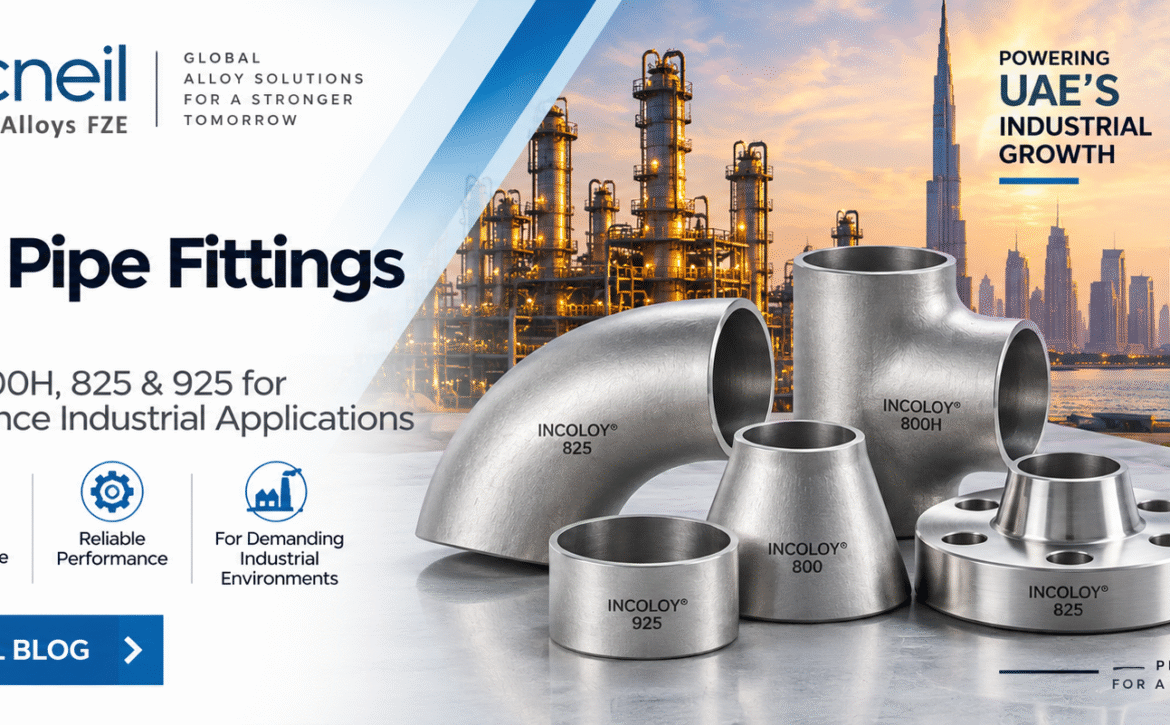
Incoloy Pipe Fittings in UAE: Grades 800, 800H, 825 & 925 for High-Performance Industrial Applications

Industrial facilities in the UAE operate in demanding environments where piping components may be exposed to high temperatures, aggressive chemicals, pressure, chlorides, seawater and long operating cycles. For these applications, conventional materials may not always provide the required combination of corrosion resistance, thermal stability and mechanical strength.

Incoloy Pipe Fittings are nickel-based alloy fittings developed for demanding industrial service. They are used to connect, redirect, branch, reduce and terminate piping systems in applications where high-temperature performance, corrosion resistance and long-term reliability are important.

Mcneil Alloys manufactures, supplies and exports Incoloy Pipe Fittings in the UAE in Incoloy 800, 800H, 825 and 925 grades. The company’s published range includes precision-manufactured butt-weld fittings for oil & gas, petrochemical, chemical processing, power generation, offshore, marine and other critical industrial applications.

What Are Incoloy Pipe Fittings?

Incoloy Pipe Fittings are fittings manufactured from nickel-based alloys containing combinations of nickel, iron, chromium and other alloying elements depending on the grade.

These fittings are designed for piping systems where material performance is important under conditions such as:

  • Elevated temperatures
  • High pressure
  • Corrosive process fluids
  • Chloride-containing environments
  • Marine exposure
  • Acidic environments
  • Sour-service conditions
  • Continuous thermal cycling

Common Incoloy fitting configurations include elbows, tees, reducers, caps and stub ends. Mcneil Alloys’ UAE product page specifically describes its range as butt-welding pipe fittings manufactured to ASTM B366 / ASME SB366.

Why Are Incoloy Pipe Fittings Important for UAE Industries?

The UAE has a large industrial base covering oil & gas, refining, petrochemical processing, power generation, desalination, marine operations and chemical manufacturing.

These facilities can expose piping components to combinations of heat, pressure and corrosive media. Material selection therefore has a direct impact on reliability, maintenance requirements and operating life.

Incoloy grades provide different performance characteristics, allowing engineers to select a suitable alloy according to the application’s temperature, corrosion and mechanical requirements.

Mcneil Alloys supplies Incoloy pipe fittings throughout key UAE industrial locations including Dubai, Abu Dhabi, Sharjah, Fujairah and Ras Al Khaimah, with supply extending across the wider GCC.

Incoloy Pipe Fitting Grades Available from Mcneil Alloys

Mcneil Alloys’ UAE range includes four major grades:

  1. Incoloy 800
  2. Incoloy 800H
  3. Incoloy 825
  4. Incoloy 925

Each grade is suited to different combinations of temperature, corrosion and mechanical requirements.


Incoloy 800 Pipe Fittings

Incoloy 800, identified as UNS N08800, is a nickel-iron-chromium alloy used for high-temperature industrial applications.

Mcneil Alloys specifies ASTM B366 / ASME SB366 for its Incoloy 800 fittings, with a published size range of ½ inch to 24 inches and a maximum operating temperature listed up to 1100°F (593°C).

Key Characteristics of Incoloy 800

  • High-temperature performance
  • Good thermal stability
  • Resistance to surface degradation during prolonged heat exposure
  • Mechanical integrity during thermal cycling
  • Suitability for corrosive industrial atmospheres
  • Compatibility with butt-weld piping systems

Applications of Incoloy 800 Pipe Fittings

Mcneil Alloys identifies applications including:

  • Heat exchangers
  • Nuclear power plants
  • Furnace components
  • Oil & gas processing
  • Petrochemical facilities
  • Chemical manufacturing
  • Thermal power facilities
  • Industrial furnace systems

For UAE projects involving sustained thermal exposure, Incoloy 800 can be considered where the operating conditions match the grade’s capabilities.


Incoloy 800H Pipe Fittings

Incoloy 800H, identified by Mcneil Alloys as UNS N08810, is intended for sustained high-temperature applications where creep and rupture resistance are important.

The company’s product information describes 800H as a controlled-carbon version of Incoloy 800 developed for improved creep resistance and strength during prolonged exposure to elevated temperatures.

Technical Specifications

Parameter Incoloy 800H
UNS N08810
Standard ASTM B366 / ASME SB366
Size Range ½” to 24″
Maximum Temperature Listed Up to 1000°C
Carbon Content 0.05%–0.10%
Construction Butt-weld fittings

Applications

Incoloy 800H pipe fittings are suitable for applications such as:

  • Reformer systems
  • Pressure vessels
  • Heat-treatment equipment
  • Power generation
  • Petrochemical facilities
  • Oil & gas processing
  • Chemical processing
  • Furnace and thermal systems

The grade is particularly relevant where piping components experience prolonged high-temperature exposure and maintaining strength over time is important.


Incoloy 825 Pipe Fittings

Incoloy 825, or UNS N08825, is a nickel-iron-chromium alloy with additions of molybdenum and copper. It is intended for applications where corrosion resistance is a major consideration.

Mcneil Alloys lists ASTM B366 / ASME SB366 as the manufacturing standard and a size range of ½ inch to 24 inches for its Incoloy 825 pipe fittings.

Key Characteristics of Incoloy 825

  • Strong resistance to acidic corrosion
  • Resistance to chloride-containing environments
  • Suitable for marine exposure
  • Resistance to sulfuric and phosphoric acid environments
  • Good mechanical stability at elevated temperatures
  • Suitability for butt-weld piping systems

Applications of Incoloy 825 Pipe Fittings

Incoloy 825 can be considered for:

  • Chemical processing plants
  • Acid production facilities
  • Desalination plants
  • Offshore platforms
  • Marine systems
  • Oil & gas processing
  • Petrochemical facilities
  • Pollution-control equipment
  • Power-generation facilities

Mcneil Alloys specifically identifies marine exhaust systems, acid production plants and pollution-control equipment among its applications.

For the UAE, this makes Incoloy 825 particularly relevant to applications involving chemical processing, marine exposure and desalination-related environments.


Incoloy 925 Pipe Fittings

Incoloy 925, identified as UNS N09925, is a precipitation-hardened nickel alloy designed for applications requiring a combination of high strength and corrosion resistance.

Mcneil Alloys lists ASTM B366 / ASME SB366 and a size range of ½ inch to 12 inches for its Incoloy 925 pipe fittings.

Technical Specifications

Parameter Incoloy 925
UNS N09925
Standard ASTM B366 / ASME SB366
Size Range ½” to 12″
Hardening Precipitation-hardened
Corrosion Resistance Sulfide stress corrosion and seawater exposure
Typical Applications Oilfield piping, valve components, industrial fasteners

Applications of Incoloy 925

Incoloy 925 pipe fittings can be considered for:

  • Oilfield piping
  • Offshore installations
  • Upstream oil & gas
  • Downstream oil & gas
  • Petrochemical processing
  • Chemical transfer systems
  • Marine equipment
  • High-pressure industrial applications

Its combination of strength and corrosion resistance makes it particularly relevant to demanding oilfield and offshore environments.

Incoloy 800 vs 800H vs 825 vs 925

Grade Primary Strength Typical Applications
Incoloy 800 High-temperature stability Heat exchangers, furnaces, power systems
Incoloy 800H Long-term high-temperature creep resistance Reformers, pressure vessels, thermal systems
Incoloy 825 Corrosion and acid resistance Chemical, marine, desalination, pollution control
Incoloy 925 High strength + corrosion resistance Oilfield, offshore and pressure-intensive applications

The correct grade should be selected according to the actual operating temperature, pressure, process chemistry, corrosion mechanism and applicable project specifications.

Types of Incoloy Pipe Fittings

Incoloy fittings are available in different configurations to accommodate piping layouts and connection requirements.

Incoloy Elbows

Elbows change the direction of piping while maintaining the flow path.

Common configurations include:

  • 45° elbows
  • 90° elbows
  • Long-radius elbows
  • Short-radius elbows

Incoloy Tees

Tees create branch connections in piping systems.

They may be selected as:

  • Equal tees
  • Reducing tees

Incoloy Reducers

Reducers connect pipes with different nominal diameters.

Common configurations include:

  • Concentric reducers
  • Eccentric reducers

Incoloy Caps

Caps close the end of piping systems and can be used for permanent or project-specific termination.

Incoloy Stub Ends

Stub ends are used with compatible flange arrangements and can be useful where piping systems require specific dismantling or connection arrangements.

Mcneil Alloys’ product information specifically identifies butt-weld fittings such as elbows, tees, reducers, caps and stub ends in its Incoloy range.

Incoloy Pipe Fittings for Oil & Gas in UAE

The UAE’s oil and gas industry requires piping components capable of operating under demanding process conditions.

Incoloy fittings can be considered for applications involving:

  • Process piping
  • Oilfield systems
  • Refinery equipment
  • Offshore platforms
  • Chemical transfer lines
  • High-temperature process systems
  • Sour-service applications
  • Corrosive environments

Incoloy 925 is particularly positioned by Mcneil Alloys for oilfield and offshore applications requiring high strength and corrosion resistance, while Incoloy 800 and 800H are positioned toward high-temperature industrial service.

Incoloy Pipe Fittings for Petrochemical Plants

Petrochemical facilities combine high temperatures with chemically aggressive process environments.

Incoloy fittings can be used in selected applications such as:

  • Process piping
  • Heat exchangers
  • Furnace systems
  • Chemical transfer lines
  • Thermal processing equipment
  • Process-control systems
  • High-temperature piping

The specific Incoloy grade should be matched to the process fluid and operating conditions rather than selected solely by industry or application name.

Incoloy Pipe Fittings for Chemical Processing

Chemical plants may expose piping systems to acids, chlorides and other aggressive chemicals.

Incoloy 825 is particularly relevant to applications where resistance to acidic and chloride-containing environments is important. Mcneil Alloys identifies sulfuric and phosphoric acid resistance, marine environments and pollution-control applications among its characteristics and uses.

Incoloy Pipe Fittings for Desalination and Marine Applications

Desalination and marine facilities can involve chloride-rich environments and continuous exposure to water and process chemicals.

Incoloy 825 can be considered for selected applications involving:

  • Desalination systems
  • Marine equipment
  • Marine exhaust systems
  • Offshore platforms
  • Corrosive process piping

For particularly demanding offshore and seawater applications, Incoloy 925 is also positioned by Mcneil Alloys for resistance to sulfide stress corrosion and seawater exposure.

Incoloy Pipe Fitting Specifications

Mcneil Alloys’ UAE product page identifies ASTM B366 / ASME SB366 as the manufacturing standard for the four grades.

Grade UNS Standard Published Size Range
Incoloy 800 N08800 ASTM B366 / ASME SB366 ½”–24″
Incoloy 800H N08810 ASTM B366 / ASME SB366 ½”–24″
Incoloy 825 N08825 ASTM B366 / ASME SB366 ½”–24″
Incoloy 925 N09925 ASTM B366 / ASME SB366 ½”–12″

Actual dimensions, wall thickness, fitting geometry, end preparation and project requirements should be confirmed before procurement.

How to Select Incoloy Pipe Fittings in UAE

Selecting the correct Incoloy grade requires an engineering assessment of the service environment.

1. Identify the Operating Temperature

For high-temperature systems, determine both normal operating and design temperatures.

Incoloy 800 and 800H are particularly associated with elevated-temperature applications.

2. Determine Operating Pressure

Pressure requirements influence fitting dimensions, wall thickness, configuration and material selection.

3. Understand the Process Chemistry

Identify:

  • Acids
  • Chlorides
  • Sulfur compounds
  • Seawater
  • Hydrocarbons
  • Other aggressive chemicals

4. Select the Correct Alloy

Use the actual service conditions to determine whether 800, 800H, 825 or 925 is appropriate.

5. Select Fitting Configuration

Specify whether the piping design requires:

  • Elbows
  • Tees
  • Reducers
  • Caps
  • Stub ends
  • Other butt-weld configurations

6. Confirm Applicable Standards

For Mcneil Alloys’ published Incoloy range, ASTM B366 / ASME SB366 is specified. Project-specific standards may require additional documentation or inspection.

7. Confirm Traceability and Inspection Requirements

For critical UAE oil & gas and petrochemical projects, material certificates, inspection requirements and traceability should be established before ordering.

Why Choose Mcneil Alloys for Incoloy Pipe Fittings in UAE?

Mcneil Alloys positions itself as a manufacturer, supplier and exporter of Incoloy pipe fittings in the UAE, offering 800, 800H, 825 and 925 grades for high-temperature and corrosive industrial applications.

Key advantages include:

  • Complete Incoloy 800, 800H, 825 and 925 range
  • Precision-manufactured butt-weld fittings
  • ASTM B366 / ASME SB366 manufacturing standard
  • Applications across oil & gas and petrochemical industries
  • Solutions for high-temperature service
  • Corrosion-resistant alloy options
  • UAE-wide supply coverage
  • GCC export capabilities
  • Technical support for project requirements

Mcneil Alloys’ broader UAE operations identify supply coverage across Dubai, Abu Dhabi, Sharjah, Fujairah and Ras Al Khaimah, while its wider business serves GCC markets.

Incoloy Pipe Fittings Supplier in Dubai, Abu Dhabi & UAE

For UAE industrial projects, Mcneil Alloys supplies Incoloy pipe fittings across major industrial locations.

Dubai

Suitable for petrochemical, industrial, infrastructure and process-industry requirements.

Abu Dhabi

Relevant to oil & gas, energy and petrochemical projects.

Sharjah

Supports manufacturing and industrial piping requirements.

Fujairah

Relevant to marine, oil storage, terminal and energy-related applications.

Ras Al Khaimah

Supports industrial and manufacturing applications requiring high-performance piping materials.

Mcneil Alloys specifically identifies these UAE locations in its Incoloy pipe fitting supply coverage.

Frequently Asked Questions

What are Incoloy Pipe Fittings?

Incoloy Pipe Fittings are nickel-based alloy fittings designed for demanding high-temperature, corrosive and pressure-intensive industrial piping applications.

Which Incoloy grades does Mcneil Alloys supply?

Mcneil Alloys’ UAE product page lists Incoloy 800, 800H, 825 and 925.

What standard is used for these Incoloy fittings?

The product page specifies ASTM B366 / ASME SB366 for the listed Incoloy pipe fitting grades.

What is Incoloy 800 used for?

Incoloy 800 fittings are used for high-temperature applications including heat exchangers, furnace components, power-generation systems and other thermal industrial equipment.

What is the difference between Incoloy 800 and 800H?

In the Mcneil Alloys product description, 800H is positioned for sustained high-temperature service with enhanced creep and rupture resistance compared with standard 800.

What is Incoloy 825 used for?

Incoloy 825 is suited to applications requiring corrosion resistance in aggressive chemical and marine environments, including chemical processing, acid production, desalination and pollution-control systems.

What is Incoloy 925 used for?

Incoloy 925 is a precipitation-hardened alloy used for applications requiring high strength and corrosion resistance, including oilfield piping and offshore systems.

What sizes are available?

Mcneil Alloys lists ½” to 24″ for Incoloy 800, 800H and 825, while Incoloy 925 is listed from ½” to 12″.

Does Mcneil Alloys supply butt-weld Incoloy fittings?

Yes. The company’s product page describes its Incoloy range as precision-manufactured butt-weld pipe fittings, including elbows, tees, reducers, caps and stub ends.

Conclusion

Incoloy Pipe Fittings in UAE provide high-performance material options for industrial piping systems exposed to elevated temperatures, aggressive chemicals, pressure and corrosive environments.

Mcneil Alloys supplies Incoloy 800, 800H, 825 and 925 Pipe Fittings according to the requirements described on its UAE product page. The grades address different service priorities: 800 and 800H for high-temperature applications, 825 for demanding corrosion and chemical environments, and 925 for applications requiring a combination of high strength and corrosion resistance.

For UAE oil & gas, petrochemical, chemical, power, marine and offshore projects, the correct fitting should be selected according to the actual operating temperature, pressure, process chemistry, corrosion mechanism, dimensions and applicable standards.

With its range of Incoloy grades and butt-weld fitting configurations, Mcneil Alloys provides Incoloy Pipe Fittings for industrial applications across Dubai, Abu Dhabi, Sharjah, Fujairah, Ras Al Khaimah and the wider UAE/GCC market.

Read More
admin September 7, 2026 0 Comments

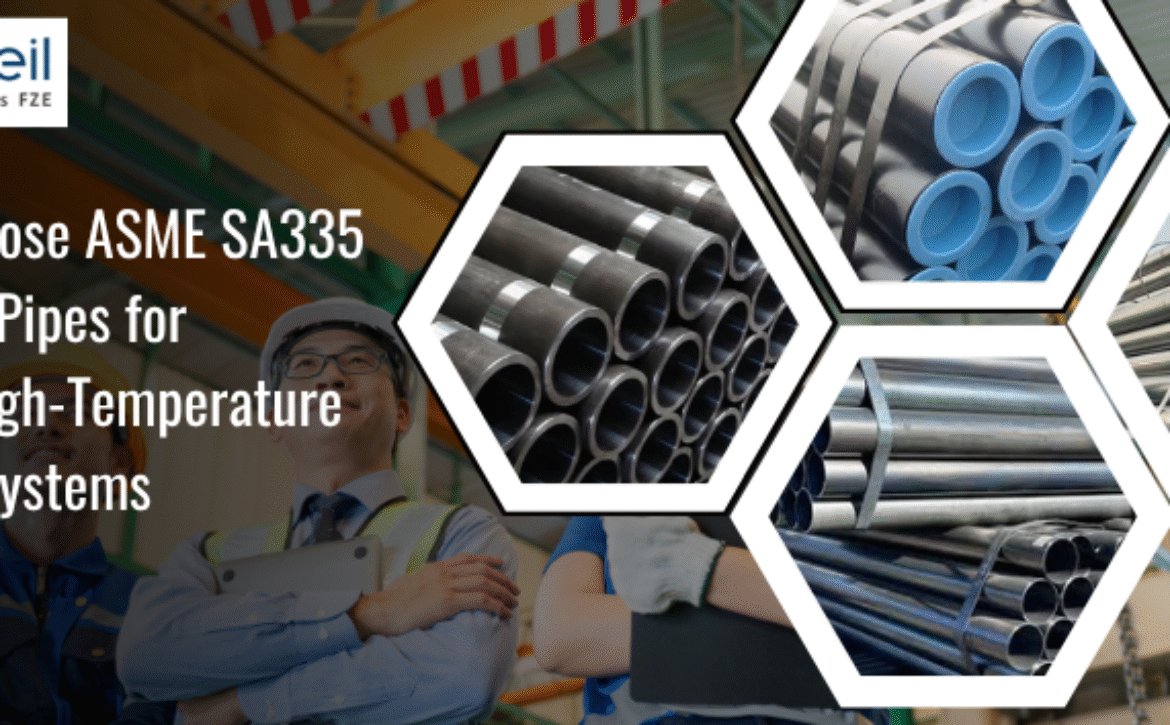
How to Choose ASME SA335 Alloy Steel Pipes for Kuwait’s High-Temperature Industrial Systems

Kuwait’s oil, gas, refining, petrochemical and power-generation industries depend on piping systems that can perform reliably under high temperatures, pressure and continuous operating conditions. In these environments, choosing the right pipe material is not simply a matter of selecting a standard size—it requires careful consideration of temperature, pressure, thermal cycling, service life and the requirements of the complete piping system.

This is where ASME SA335 Alloy Steel Pipes are particularly relevant.

Manufactured from chromium-molybdenum alloy steel, ASME SA335 P5, P9, P11, P22 and P91 pipes are designed for demanding elevated-temperature applications. These grades are used in systems such as boilers, superheaters, steam lines, reheaters, refinery process lines and high-temperature industrial equipment. Mcneil Alloys supplies these grades for high-temperature and high-pressure applications and supports both regional and export requirements.

For buyers in Kuwait, understanding the differences between P5, P9, P11, P22 and P91 can make material selection more precise and help match the pipe to actual operating conditions.

Why ASME SA335 Pipes Matter for Kuwait’s Industrial Sector

Kuwait has a strong industrial base centered around oil and gas, refining, petrochemicals, power generation and associated process industries. Many of these facilities contain piping systems exposed to elevated temperatures and pressure for extended operating periods.

Typical service conditions can include:

  • High-temperature steam
  • High-pressure process fluids
  • Thermal cycling
  • Continuous plant operation
  • Hot hydrocarbon processing
  • Boiler operation
  • Superheated steam
  • Reheater service
  • Refinery process systems

Under these conditions, ordinary carbon steel may not provide the material performance required by the engineering specification.

ASME SA335 alloy steel pipes offer a chromium-molybdenum material option for applications where high-temperature strength, thermal stability, oxidation resistance and long-term service performance are important.

Mcneil Alloys identifies P5, P9, P11, P22 and P91 for applications including power plants, refineries, petrochemical units, boilers, steam systems and other high-temperature process systems.


What Are ASME SA335 Alloy Steel Pipes?

ASME SA335 is associated with seamless ferritic alloy steel pipes intended for elevated-temperature service.

The grades commonly discussed for demanding industrial applications include:

  • SA335 P5
  • SA335 P9
  • SA335 P11
  • SA335 P22
  • SA335 P91

The primary difference between these grades is their alloy composition and resulting performance characteristics.

Chromium contributes to oxidation and high-temperature performance, while molybdenum contributes to strength and resistance to degradation under elevated-temperature conditions.

Mcneil Alloys describes its SA335 range as chromium-molybdenum steel grades selected for heat resistance, mechanical strength and stability in demanding industrial environments.


P5, P9, P11, P22 or P91: Which Grade Is Right for Kuwait?

There is no single SA335 grade that is ideal for every application.

The appropriate material depends on:

  1. Operating temperature
  2. Design pressure
  3. Thermal cycling
  4. Process conditions
  5. Required service life
  6. Creep considerations
  7. Applicable engineering codes
  8. Heat-treatment requirements
  9. Inspection requirements
  10. Project specifications

A refinery process line may require a different grade from a high-pressure steam system, while a supercritical power application may require a higher-performance grade such as P91.


ASME SA335 P5 Pipes for Refinery and Heat-Transfer Applications

ASME SA335 P5 is a chromium-molybdenum alloy steel pipe grade used for elevated-temperature applications where thermal stability and resistance to oxidation are important.

Mcneil Alloys lists P5 with:

  • Chromium: 4–6%
  • Molybdenum: 0.45–0.65%
  • Temperature range: up to 600°C
  • Tensile strength: ≥ 415 MPa
  • Yield strength: ≥ 205 MPa
  • Hardness: ≤ 85 HRB
  • Standard: ASTM A335 / ASME SA335

Where Can P5 Be Used in Kuwait?

P5 may be considered for:

  • Refinery piping
  • Heat exchangers
  • Boilers
  • High-temperature process lines
  • Industrial heating systems
  • Petrochemical equipment

For Kuwait refinery and petrochemical projects, P5 selection should be based on the actual temperature and pressure conditions specified by the project engineer.


ASME SA335 P9 Pipes for Higher-Temperature Service

ASME SA335 P9 contains a higher chromium content than P5 and is used where elevated-temperature operation and oxidation resistance are important.

Mcneil Alloys specifies:

  • Chromium: 8–10%
  • Molybdenum: 0.9–1.1%
  • Temperature range: up to 650°C
  • Tensile strength: ≥ 415 MPa
  • Yield strength: ≥ 205 MPa
  • Hardness: ≤ 90 HRB
  • Standard: ASTM A335 / ASME SA335

Typical P9 Applications

P9 alloy steel pipes can be used in:

  • Refinery process lines
  • Power plants
  • High-temperature piping
  • Steam-related systems
  • Petrochemical facilities
  • Industrial heat-transfer systems

For Kuwait’s continuously operating industrial facilities, P9 can be evaluated when the engineering specification requires a higher chromium alloy for elevated-temperature service.


ASME SA335 P11 Pipes for Steam and Boiler Systems

P11 alloy steel pipe is commonly associated with high-temperature and high-pressure steam applications.

Mcneil Alloys lists P11 with:

  • Chromium: 1–1.5%
  • Molybdenum: 0.44–0.65%
  • Temperature range: up to 600°C
  • Tensile strength: ≥ 415 MPa
  • Yield strength: ≥ 205 MPa
  • Hardness: ≤ 85 HRB
  • Standard: ASTM A335 / ASME SA335

P11 Applications in Kuwait

P11 can be considered for:

  • Boilers
  • Steam pipelines
  • Superheaters
  • Power-generation systems
  • High-pressure steam service
  • Industrial process plants

Its combination of chromium and molybdenum makes it suitable for applications where temperature and pressure operate together over extended periods.


ASME SA335 P22 Pipes for Main Steam and Reheater Systems

When operating conditions become more severe, ASME SA335 P22 is commonly considered for applications involving higher thermal stress and demanding service conditions.

Mcneil Alloys specifies:

  • Chromium: 1.9–2.6%
  • Molybdenum: 0.87–1.13%
  • Temperature range: up to 650°C
  • Tensile strength: ≥ 415 MPa
  • Yield strength: ≥ 205 MPa
  • Hardness: ≤ 90 HRB
  • Standard: ASTM A335 / ASME SA335

P22 Applications

P22 pipes are commonly associated with:

  • Main steam lines
  • Reheater systems
  • Power plants
  • Refinery piping
  • High-temperature process systems
  • Critical steam piping

For Kuwait’s power and refinery infrastructure, P22 can be evaluated when the piping system is exposed to significant temperature, pressure and thermal cycling.


ASME SA335 P91 Pipes for Advanced High-Temperature Systems

ASME SA335 P91 is a higher-performance alloy steel grade designed for demanding temperature and pressure conditions.

Mcneil Alloys lists:

  • Chromium: 8–9.5%
  • Molybdenum: 0.85–1.05%
  • Additional alloying elements including vanadium and niobium
  • Temperature range: up to 700°C
  • Tensile strength: ≥ 620 MPa
  • Yield strength: ≥ 440 MPa
  • Hardness: ≤ 100 HRB
  • Standard: ASTM A335 / ASME SA335

Where Is P91 Used?

P91 is intended for highly demanding applications such as:

  • Supercritical power plants
  • Ultra-supercritical systems
  • High-temperature steam piping
  • Advanced power-generation systems
  • Critical high-pressure piping
  • Industrial systems requiring high creep resistance

For Kuwait projects involving demanding steam and power-generation conditions, P91 may be considered when the engineering specification requires its higher strength and creep-performance characteristics.


P5 vs P9 vs P11 vs P22 vs P91

Understanding the practical difference between the grades is important when preparing a piping material specification.

Grade Chromium Molybdenum Mcneil Alloys Listed Temperature Typical Applications
P5 4–6% 0.45–0.65% Up to 600°C Refineries, heat exchangers, boilers
P9 8–10% 0.9–1.1% Up to 650°C Refinery and power systems
P11 1–1.5% 0.44–0.65% Up to 600°C Boilers, steam lines, superheaters
P22 1.9–2.6% 0.87–1.13% Up to 650°C Main steam, reheaters, power plants
P91 8–9.5% 0.85–1.05% + V/Nb Up to 700°C Supercritical and advanced power systems

The values above are based on Mcneil Alloys’ published SA335 product information. Actual allowable design conditions must always be established according to the applicable code, material specification and engineering design.


ASME SA335 Pipes for Kuwait’s Oil & Gas Industry

Kuwait’s oil and gas infrastructure requires piping materials capable of operating reliably across processing, refining and supporting systems.

SA335 alloy steel pipes can be considered for applications involving:

  • High-temperature refinery piping
  • Steam systems
  • Process heating
  • Boiler systems
  • Heat-transfer equipment
  • High-temperature hydrocarbon service
  • Petrochemical process units

The choice between P5, P9, P11, P22 and P91 should be based on the specific process conditions rather than simply selecting the highest alloy grade.


SA335 Alloy Steel Pipes for Kuwait Refineries

Refineries operate numerous systems where temperature and pressure can place significant demands on piping materials.

Typical areas where alloy steel piping may be specified include:

Refinery Process Lines

Hot process fluids can require piping materials designed for elevated-temperature operation.

Steam Systems

Boilers, superheaters and steam distribution networks require materials appropriate for their pressure and temperature conditions.

Heat Exchangers

Heat-transfer systems can experience sustained temperatures and thermal cycling.

Reheater Systems

Reheater piping can operate under severe thermal conditions, making appropriate alloy selection essential.

Maintenance and Shutdown Projects

Replacement piping must match the existing system’s material specification, dimensions and engineering requirements.


SA335 Pipes for Kuwait’s Power Generation Sector

Power-generation systems can place some of the highest demands on industrial piping.

Depending on the design, SA335 grades can be used for:

  • Boiler piping
  • Superheater lines
  • Reheater lines
  • Main steam systems
  • High-pressure steam
  • High-temperature process piping

P11 and P22 are particularly associated with boiler and steam applications, while P91 is used for more demanding high-temperature power systems. Mcneil Alloys identifies boilers, superheaters, steam lines, reheaters and power plants among the applications of its SA335 range.


How to Select the Right SA335 Grade for a Kuwait Project

Selecting an alloy steel pipe should begin with the operating conditions.

1. Check the Operating Temperature

Determine:

  • Normal operating temperature
  • Maximum temperature
  • Design temperature
  • Temperature fluctuations
  • Thermal cycling frequency

A pipe grade suitable for moderate elevated-temperature service may not be suitable for a system operating at substantially higher temperatures.

2. Check Design Pressure

Pressure affects the required pipe dimensions, wall thickness and material selection.

The pipe should be selected according to the applicable pressure-temperature design requirements.

3. Evaluate Thermal Cycling

Repeated heating and cooling can generate thermal stress.

This is especially important for:

  • Main steam lines
  • Reheater systems
  • Boiler piping
  • Power-generation systems
  • Process systems with frequent startups and shutdowns

4. Consider Long-Term Service

For continuous-duty systems, material performance over long operating periods can be more important than initial purchase cost.

5. Confirm the Project Standard

The purchase specification should clearly identify the required:

  • ASTM/ASME standard
  • Grade
  • Pipe size
  • Schedule
  • Wall thickness
  • Length
  • Heat treatment
  • Testing
  • Inspection
  • Certification

6. Match the Fittings and Flanges

The pipe should not be considered separately from the complete piping system.

Fittings, flanges, valves and other pressure-containing components should be compatible with the specified material, pressure class and operating conditions.


Seamless ASME SA335 Pipes for High-Pressure Applications

SA335 alloy steel pipes are associated with seamless construction for elevated-temperature service.

Seamless piping is widely specified in demanding industrial applications because the construction does not contain a longitudinal welded seam.

For Kuwait projects, however, seamless construction is only one part of the procurement specification. Grade, dimensions, heat treatment, testing, inspection and certification should all be verified before purchase.

Mcneil Alloys’ product range includes ASTM/ASME A335 alloy steel grades including P1, P5, P9, P11, P12, P22, P23 and P91 across its broader pipe portfolio.


Quality Documentation for SA335 Pipes in Kuwait

For refinery, petrochemical and power projects, documentation and traceability can be just as important as the physical pipe.

Depending on project requirements, buyers may request:

  • Material Test Certificates
  • Chemical composition reports
  • Mechanical test results
  • Heat-treatment records
  • Hydrostatic test reports
  • Non-destructive testing reports
  • PMI reports
  • Dimensional inspection reports
  • Third-party inspection
  • Traceability documentation

Mcneil Alloys states that SA335 pipes can be supplied with material test certificates and, where required, additional testing such as PMI, NDT and supplementary inspection reports.


Why Source SA335 Alloy Steel Pipes from Mcneil Alloys?

Mcneil Alloys supplies ASME SA335 alloy steel pipes for high-temperature and high-pressure industrial applications and supports both regional and export projects.

Its published P5, P9, P11, P22 and P91 range is positioned for:

  • Power plants
  • Refineries
  • Petrochemical units
  • Boiler systems
  • Steam lines
  • Reheater systems
  • High-temperature industrial piping

The company also states that it coordinates supply from the UAE for local and export projects and focuses on appropriate grade selection, heat treatment, inspection-ready documentation and traceability.

Mcneil Alloys’ broader product range also includes alloy steel pipes in ASTM/ASME A335 grades P1, P5, P9, P11, P12, P22, P23 and P91.

For Kuwait buyers, this makes Mcneil Alloys a suitable supplier to approach when the project requires a specific SA335 grade, technical documentation and export-oriented supply coordination.


Related Mcneil Alloys Products

For a complete industrial piping system, SA335 pipes are typically combined with compatible fittings, flanges and valves.

Mcneil Alloys’ product portfolio includes:

  • Alloy Steel Pipe Fittings
  • Stainless Steel Pipes
  • Stainless Steel Pipe Fittings
  • Flanges
  • Instrumentation Tube Fittings
  • Instrumentation Valves
  • Monel Pipes
  • Inconel Pipes
  • Chrome Moly Pipes

Its website also maintains Kuwait-specific product sections for pipe fittings, tube fittings, flanges and instrumentation valves, supporting broader industrial procurement requirements in the Kuwait market.


Frequently Asked Questions About ASME SA335 Pipes in Kuwait

What are ASME SA335 alloy steel pipes used for?

ASME SA335 alloy steel pipes are used for elevated-temperature and high-pressure applications including boilers, steam lines, power plants, refineries, reheaters and petrochemical process systems.

Which SA335 grades does Mcneil Alloys supply?

Mcneil Alloys’ focused SA335 page covers P5, P9, P11, P22 and P91. Its broader alloy steel pipe portfolio also lists P1, P12 and P23.

Which SA335 grade is best for steam applications?

P11, P22 and P91 can be considered for different steam applications depending on the design temperature, pressure, thermal cycling and project specification. The correct grade should be determined from the actual engineering requirements.

What is the difference between P11 and P22?

P22 contains higher chromium and molybdenum ranges than P11 and is positioned for more severe high-temperature service, including main steam and reheater applications.

What is P91 alloy steel pipe used for?

P91 is intended for demanding temperature and pressure applications where high strength and creep resistance are important. Mcneil Alloys identifies supercritical power plants and advanced industrial systems among its applications.

Can SA335 pipes be used in Kuwait refineries?

Yes. SA335 grades can be specified for appropriate refinery process piping, steam systems, heat exchangers and other high-temperature applications, provided the selected grade meets the project’s engineering requirements.

What documents are available with SA335 pipes?

Material Test Certificates with chemical and mechanical test information can be supplied, while PMI, NDT and additional inspection documentation can be arranged according to project requirements.

How should I select an SA335 pipe for a Kuwait project?

Consider operating and design temperature, pressure, thermal cycling, process conditions, required service life, pipe dimensions, applicable standards, heat treatment and inspection requirements before finalizing the grade.

Does Mcneil Alloys export SA335 pipes to Kuwait?

Mcneil Alloys states that it supports export projects from the UAE, and its website specifically maintains Kuwait-focused industrial product sections.


Conclusion

For Kuwait’s refinery, petrochemical, oil and gas and power-generation industries, choosing a suitable high-temperature piping material is essential for maintaining dependable long-term operation.

ASME SA335 P5, P9, P11, P22 and P91 alloy steel pipes provide different levels of high-temperature performance for applications ranging from refinery piping and heat exchangers to boilers, steam lines, reheaters and advanced power-generation systems.

P5 and P9 can be considered for selected elevated-temperature refinery and process applications, P11 is widely associated with boiler and steam systems, P22 is suited to more demanding steam and thermal-cycle applications, and P91 is designed for particularly demanding high-temperature and high-pressure service.

The right grade should always be selected according to the actual operating conditions and applicable engineering specification rather than simply choosing a higher grade.

For Kuwait-based EPC contractors, refinery operators, petrochemical companies, power-generation projects and industrial procurement teams, Mcneil Alloys provides access to ASME SA335 alloy steel pipe grades with technical documentation and export supply support from the UAE.

Read More
admin September 3, 2026 0 Comments

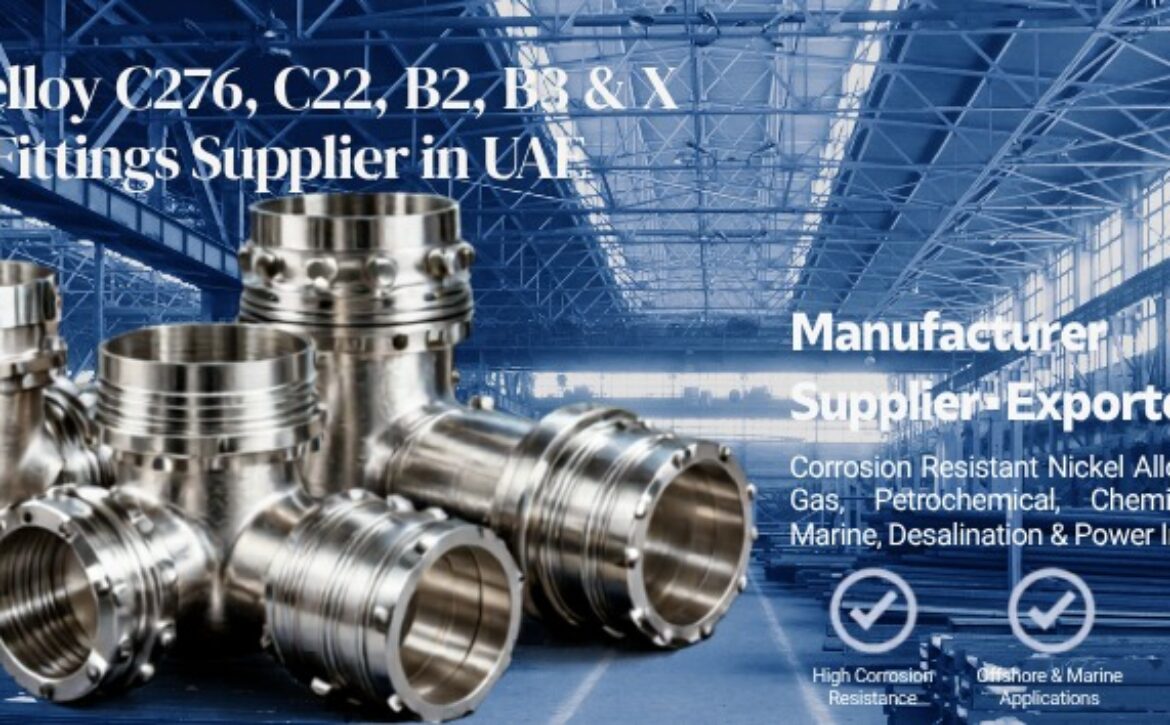
Hastelloy C276, C22, B2, B3 & X Pipe Fittings Suppliers in UAE – High Corrosion Resistant Nickel Alloy Solutions

Introduction

The UAE is home to some of the world’s largest petrochemical plants, refineries, offshore oil platforms, desalination facilities, LNG terminals, chemical processing plants, and power generation projects. These industries require materials capable of withstanding highly aggressive chemicals, corrosive media, extreme temperatures, and challenging operating environments.

Hastelloy Pipe Fittings are among the most trusted nickel alloy piping components for critical industrial applications where corrosion resistance and reliability are essential.

Mcneil Alloys is a leading manufacturer, supplier, stockist, and exporter of Hastelloy C276 Pipe Fittings, Hastelloy C22 Pipe Fittings, Hastelloy B2 Pipe Fittings, Hastelloy B3 Pipe Fittings, and Hastelloy X Pipe Fittings throughout the UAE and GCC region.

We supply premium-quality Hastelloy fittings to Dubai, Abu Dhabi, Sharjah, Fujairah, Ras Al Khaimah, Ajman, Al Ain, Jebel Ali Free Zone (JAFZA), Khalifa Industrial Zone Abu Dhabi (KIZAD), Ruwais Industrial Complex, and major industrial projects across the Middle East.

Why Hastelloy Pipe Fittings Are Used Across UAE Industries

Industrial facilities throughout the UAE often handle:

✔ Sulfuric acid

✔ Hydrochloric acid

✔ Chloride-containing environments

✔ High-temperature process fluids

✔ Sour gas processing

✔ Aggressive chemical media

✔ Offshore seawater exposure

Hastelloy alloys offer exceptional corrosion resistance, making them ideal for applications where conventional stainless steel materials may fail.

Hastelloy C276 Pipe Fittings Suppliers in UAE

What is Hastelloy C276?

Hastelloy C276 Pipe Fittings are among the most widely used corrosion-resistant nickel alloy fittings. They provide outstanding resistance against oxidizing and reducing chemicals.

Available Products

Benefits

✔ Exceptional corrosion resistance

✔ Excellent resistance to pitting and crevice corrosion

✔ Suitable for chloride-rich environments

✔ Long service life

Industries Served

  • Petrochemical Plants
  • Chemical Processing Facilities
  • Offshore Oil Platforms
  • Refineries
  • Desalination Plants

Hastelloy C22 Pipe Fittings Suppliers in UAE

High Performance Corrosion Resistant Alloy

Hastelloy C22 Pipe Fittings offer superior protection against both oxidizing and reducing environments.

Applications

  • Chemical Manufacturing
  • Pharmaceutical Plants
  • Specialty Chemical Processing
  • Waste Treatment Facilities
  • Marine Systems

Advantages

✔ Outstanding resistance to wet chlorine

✔ Superior oxidation resistance

✔ Excellent fabrication properties

✔ Enhanced durability in harsh environments

Hastelloy B2 Pipe Fittings Suppliers in UAE

Designed for Hydrochloric Acid Applications

Hastelloy B2 Pipe Fittings provide exceptional resistance to hydrochloric acid across a wide range of temperatures and concentrations.

Industries

  • Acid Production Plants
  • Chemical Processing
  • Fertilizer Manufacturing
  • Pharmaceutical Facilities

Key Features

✔ Excellent resistance to hydrochloric acid

✔ High thermal stability

✔ Superior corrosion performance

Hastelloy B3 Pipe Fittings Suppliers in UAE

Advanced Corrosion Resistant Alloy

Hastelloy B3 Pipe Fittings improve upon the performance of B2 alloy by offering enhanced thermal stability and fabrication characteristics.

Applications

  • Chemical Processing Plants
  • Acid Handling Systems
  • Industrial Manufacturing
  • Specialty Chemical Production

Benefits

✔ Improved mechanical properties

✔ Better fabrication performance

✔ Excellent resistance to chemical attack

Hastelloy X Pipe Fittings Suppliers in UAE

High Temperature Alloy Pipe Fittings

Hastelloy X Pipe Fittings are widely used where exceptional heat resistance and oxidation resistance are required.

Industries

  • Aerospace
  • Gas Turbines
  • Industrial Furnaces
  • Power Generation
  • Thermal Processing Plants

Advantages

✔ Excellent high-temperature strength

✔ Superior oxidation resistance

✔ Long-term thermal stability

✔ Reliable performance under extreme conditions

UAE Cities We Supply Hastelloy Pipe Fittings To

Abu Dhabi – Oil & Gas & Petrochemical Capital

Major Industrial Areas

  • Mussafah Industrial Area
  • KIZAD
  • Ruwais Industrial Complex
  • ADNOC Facilities

Industries

  • Oil & Gas
  • LNG Processing
  • Petrochemicals
  • Refineries
  • Offshore Projects

Dubai – EPC & Industrial Trading Hub

Major Industrial Zones

  • Jebel Ali Free Zone (JAFZA)
  • Dubai Industrial City
  • Dubai Maritime City
  • Al Quoz Industrial Area

Industries

  • EPC Contracting
  • Marine Engineering
  • Industrial Infrastructure
  • Energy Projects

Sharjah – Engineering & Manufacturing Center

Industrial Areas

  • Sharjah Industrial Area
  • Hamriyah Free Zone

Industries

  • Heavy Fabrication
  • Manufacturing
  • Process Engineering
  • Industrial Equipment Production

Fujairah – Marine & Energy Hub

Industries

  • Oil Storage Terminals
  • Marine Engineering
  • Shipping
  • Offshore Services
  • Petrochemical Facilities

Ras Al Khaimah – Heavy Industry Hub

Industries

  • Cement Manufacturing
  • Industrial Utilities
  • Engineering Projects
  • Process Industries

Ajman – Fabrication & Industrial Services

Industries

  • Mechanical Engineering
  • Industrial Fabrication
  • Construction Projects

Al Ain – Utility & Processing Industries

Industries

  • Water Treatment
  • Food Processing
  • Agricultural Infrastructure
  • Utility Projects

Major UAE Industries Using Hastelloy Pipe Fittings

Oil & Gas Industry

Hastelloy Pipe Fittings are widely used in upstream, midstream, and downstream oil and gas facilities where corrosion resistance is critical.

Petrochemical Industry

Ideal for handling aggressive chemicals, hydrocarbons, and corrosive process fluids.

Chemical Processing Industry

Used extensively in reactors, pipelines, storage systems, and processing units.

Offshore & Marine Industry

Provides outstanding performance in seawater and chloride-rich environments.

LNG Industry

Suitable for extreme temperatures and highly demanding process conditions.

Desalination Industry

Used in systems exposed to saltwater and corrosive treatment chemicals.

Power Generation Industry

Applied in boilers, turbines, heat exchangers, and high-temperature piping systems.

Why Choose Mcneil Alloys UAE

✔ Complete range of Hastelloy Pipe Fittings

✔ International quality standards

✔ Competitive project pricing

✔ Fast UAE-wide delivery

✔ Large ready stock inventory

✔ Material test certificates available

✔ Technical engineering support

✔ Global export capabilities

✔ Custom manufacturing solutions

Benefits of Hastelloy Pipe Fittings

📈 Exceptional corrosion resistance

📈 Extended service life

📈 Reduced maintenance costs

📈 Improved operational safety

📈 High-temperature performance

📈 Resistance to aggressive chemicals

📈 Long-term reliability

Export Markets We Serve

Mcneil Alloys exports Hastelloy Pipe Fittings to:

  • UAE
  • Saudi Arabia
  • Qatar
  • Oman
  • Kuwait
  • Bahrain
  • Iraq
  • Egypt
  • South Africa
  • Europe
  • Southeast Asia

Contact Mcneil Alloys UAE

Website:

https://mcneilalloys.ae/hastelloy-c276-c22-b2-b3-x-pipe-fittings/

Contact our team today for technical specifications, project requirements, bulk orders, and competitive pricing on Hastelloy C276, C22, B2, B3, and Hastelloy X Pipe Fittings.

Frequently Asked Questions

What are the advantages of Hastelloy Pipe Fittings over stainless steel fittings?
Hastelloy Pipe Fittings offer superior resistance to corrosion, oxidation, pitting, and stress corrosion cracking, making them ideal for highly aggressive chemical environments where stainless steel may not perform effectively.

Can Hastelloy C276 Pipe Fittings handle acidic environments?
Yes, Hastelloy C276 Pipe Fittings are specifically designed to withstand a wide range of corrosive acids, including sulfuric acid, hydrochloric acid, and phosphoric acid, making them suitable for chemical processing plants.

Are Hastelloy C22 Pipe Fittings suitable for pharmaceutical applications?
Yes, Hastelloy C22 Pipe Fittings are commonly used in pharmaceutical and specialty chemical manufacturing due to their excellent corrosion resistance and ability to maintain product purity.

What temperature range can Hastelloy X Pipe Fittings withstand?
Hastelloy X Pipe Fittings are engineered for high-temperature service and can perform reliably in environments exceeding 1000°C, depending on operating conditions and system design.

Do Hastelloy Pipe Fittings require special maintenance?
Hastelloy fittings generally require minimal maintenance due to their exceptional corrosion resistance, helping reduce downtime and long-term operating costs.

Which industries commonly use Hastelloy Pipe Fittings?
Industries such as chemical processing, petrochemicals, marine engineering, power generation, aerospace, pollution control, and oil & gas rely on Hastelloy fittings for critical applications.

Are custom sizes available for Hastelloy Pipe Fittings?
Yes, custom dimensions, wall thicknesses, pressure ratings, and specialized configurations can be manufactured to meet project-specific requirements.

Can Hastelloy Pipe Fittings be used in high-pressure systems?
Yes, Hastelloy fittings are known for their excellent mechanical strength and are widely used in high-pressure pipelines, reactors, heat exchangers, and processing systems.

How do Hastelloy fittings perform in chloride-rich environments?
Hastelloy alloys offer exceptional resistance to chloride-induced pitting, crevice corrosion, and stress corrosion cracking, making them suitable for marine and desalination applications.

Why choose Mcneil Alloys for Hastelloy Pipe Fittings in the UAE?
Mcneil Alloys provides premium-quality Hastelloy fittings, competitive pricing, reliable delivery schedules, comprehensive documentation, and technical support for industrial projects across the UAE and international markets.


Read More
admin June 9, 2026 0 Comments

Why Project Lead Times Fail: A Procurement Manager’s Guide to Managing Alloy Supply Chains

It’s 4:30 PM on a Thursday. You’re scanning your project tracker, and everything looks green. The welders are booked, the site prep in Ruwais or Jebel Ali is finishing up, and your high-pressure alloy pipes are supposedly “in transit.” Then the phone rings. It’s your supplier with that specific tone of voice that usually precedes a disaster.

Suddenly, your eight-week lead time has ballooned into fourteen. The “slight delay” just triggered a domino effect of liquidated damages (LDs), idle labor costs, and a very difficult conversation with your project director. At Mcneil Alloys, we’ve seen this script play out too many times. In 2026, the global alloy supply chain isn’t just a logistics challenge—it’s a high-stakes game of strategy.


  1. The “Specialty Melt” Bottleneck

One of the biggest misconceptions in procurement is treating high-performance alloys like standard carbon steel. Carbon steel is a commodity; it’s being produced somewhere in the world every second of every day. Super Duplex, Inconel, and Hastelloy are different.

These materials are produced in “campaigns” or “melts.” A mill might only melt a specific grade of Super Duplex once every three months.

  • The Trap: If your order misses the “window” for that specific melt by even a few days, you aren’t just delayed by a week—you are pushed to the next campaign.
  • The 2026 Reality: Many traders promise lead times based on historical data. They tell you eight weeks because that’s what it was last year, ignoring the fact that the mill’s current melt schedule is already overbooked with aerospace or green energy orders.
  1. The Documentation Trap: Why the Pipe is Ready but the Shipment Isn’t

In the modern UAE industrial landscape, a pipe is only as good as the paper behind it. We often see situations where fifty tons of high-grade seamless pipe are physically sitting on a warehouse floor, perfectly manufactured and ready to go. But they don’t move. Why?

  • Mill Test Certificate (MTC) Errors: A single typo in a heat number or a chemical composition percentage can stop a shipment at customs for weeks.
  • Third-Party Inspection (TPI) Delays: In 2026, ADNOC and Aramco standards have become even more rigorous. Coordinating an inspector to visit the mill, verify the pressure tests, and sign off on the release note can add 15% to your lead time if not managed aggressively.
  • The Lesson: When a supplier gives you a lead time, ask if that includes “Documentation and Release.” If it doesn’t, add two weeks to your internal calendar immediately.
  1. The “Ex-Works” vs. “DDP” Illusion

Procurement managers often focus on the price at the factory gate (Ex-Works). But in a world of shifting shipping lanes and port congestion, the “last mile” is where timelines go to die.

  • Port Congestion: Even a small backlog at a major hub can turn a three-day clearance into a ten-day ordeal.
  • Freight Volatility: In 2026, shipping containers for heavy industrial loads are in high demand. If your supplier hasn’t pre-booked space on a vessel, your “finished” pipes might sit on a dock in Europe or Asia waiting for a spot to open up.


How to Take Control of Your 2026 Timeline

You cannot control the global nickel market or the speed of a cargo ship, but you can change how you source.

  • Engage During the FEED Stage: Don’t wait for the final approved drawings to start talking to your material partner. At Mcneil Alloys, we can tell you which alloys are currently “tight” in the market six months before you need them.
  • The Strategic Pivot (Material Substitution): Sometimes, the exact grade specified by a junior engineer has a 20-week lead time, while a superior (but slightly more expensive) grade is available in stock. The extra $5,000 spent on material might save you $50,000 in project delay penalties.
  • Verify “Physical” Stock: Stop accepting “back-to-back” quotes where a trader is just calling a mill. Ask for a photo of the material with a current date stamp or a copy of the existing MTC. If they have the metal, they have the paper.


Conclusion:

In the end, the cheapest quote is often the one that costs you the most. A supplier who offers an “optimistic” lead time to win a contract is effectively gambling with your project’s reputation.

At Mcneil Alloys, we believe in radical transparency. We would rather lose a contract by telling you the truth about a 12-week lead time than win it by lying about an 8-week one. In the UAE’s high-pressure industrial environment, the most valuable asset you can have isn’t a low price—it’s a partner who respects your deadline as much as you do.


Read More
admin March 27, 2026 0 Comments

The Valve Inspection Checklist: Don’t Let a “Good Deal” Ruin Your Pipeline

When you are staring at a row of stainless steel valves on a pallet, they all look pretty much the same. They are shiny, heavy, and have the right markings stamped on the side. But in the industrial world, what you see is rarely what you get.

A valve that looks perfect on the warehouse floor can become a liability the moment it is subjected to 6,000 PSI or corrosive chemicals. At Mcneil Alloys, we’ve seen how a single skipped verification step can lead to a million-dollar shutdown. Verifying quality isn’t just about ticking a box; it’s about ensuring that the component you’re installing won’t fail when your crew’s safety is on the line.


Why Verification is Your Best Insurance Policy

A valve is a mechanical assembly with moving parts, seals, and precise tolerances. Unlike a length of pipe, which is static, a valve has to perform an action under stress. If the internal casting is porous or the seat material is substandard, the failure won’t happen during the “unboxing”—it will happen during commissioning.

For 2026 projects, where timelines are tighter than ever, the real goal of verification is predictability. You aren’t just looking for defects; you are looking for the confidence that the valve will operate for its entire service life without needing an emergency replacement.


Four Critical Checks Before the Valve Leaves the Supplier

  • 1. The Documentation Audit (The “Paper Trail”): Never accept a valve without its Mill Test Certificate (MTC). This document should link the heat number on the valve body back to the original batch of metal. If the numbers don’t match, or the certificate looks generic, that’s your first red flag.
  • 2. Visual and Dimensional Inspection: Look at the “finish” of the valve. High-quality manufacturers take pride in their machining. Check for:
    • Smoothness of the stem threads.
    • Sharpness of the flange serrations.
    • Uniformity of the casting (no pits or tiny “sand holes”).
  • 3. The Seat Leakage Test: Ask for the test reports. Whether it is a Hydrostatic test (using water) or a Pneumatic test (using air), you need to know the valve achieved a “bubble-tight” shut-off at its rated pressure.
  • 4. Positive Material Identification (PMI): In a world of mixed-up global supply chains, verify the alloy. A quick PMI gun scan ensures that the “316 Stainless Steel” you paid for isn’t actually a cheaper grade that will rust in six months.


Situations Where High-Level Verification is Non-Negotiable

  • High-Pressure Gas Lines: Where a tiny leak can turn into a major hazard.
  • Offshore Environments: Where salt air eats through substandard coatings in weeks.
  • Corrosive Chemical Processing: Where the wrong seal material will melt or swell.
  • High-Cycle Operations: Where the valve is opened and closed dozens of times a day.


The Real Cost of “Skipping the Check”

It is tempting to save time by trusting the trader’s word, especially when you are behind schedule. But “trust” isn’t a technical specification. The cost of a technician visiting a remote site to replace a $50 valve can easily climb into the thousands when you factor in travel, downtime, and labor.

High-quality valves carry a slightly higher initial value because they have been through these rigorous checks before they reach you. At Mcneil Alloys, we believe that reliability is a financial metric. A valve that passes every test today is a valve you won’t have to think about for the next ten years.


Conclusion

A valve is the gatekeeper of your system. The decision to verify its quality before purchase is the difference between a smooth operation and an unexpected disaster.

If your project demands certainty and long-term performance, take the time to audit the paperwork, scan the material, and verify the pressure tests. The right choice is the one that lets you sleep at night, knowing the “gatekeeper” is doing its job perfectly.


Read More
admin March 16, 2026 0 Comments

Inconel and Monel Pipes: A Practical Guide for High-Demand Industrial Projects

When pipelines fail, the cost is never just material loss it’s downtime, safety risk, and reputation. That’s why industries operating in extreme environments don’t compromise on pipe material selection.

At Mcneil Alloys, our team regularly works with EPC contractors, refinery engineers, and procurement teams across Saudi Arabia, UAE, Qatar, Kuwait, Oman, and Bahrain. One thing is clear: when conditions are harsh, Inconel and Monel pipes are often the safest and smartest choices.

In this guide, we explain what Inconel and Monel pipes are, how they differ, where they perform best, and how to choose the right one for your application from a real-world, project-focused perspective.


Why Pipe Material Selection Matters More Than Ever?

Pipes are the backbone of any industrial system. Whether you’re transporting oil, gas, chemicals, steam, or seawater, the wrong material choice can lead to:

  • Premature corrosion
  • Heat-related deformation
  • Leakage and pressure failure
  • Costly shutdowns

This is especially true in Gulf region climates, where high temperatures, salinity, and corrosive media are common. That’s why many projects in the Middle East rely heavily on nickel alloy pipes like Inconel and Monel.


What Are Inconel Pipes?

Inconel pipes are made from nickel-based superalloys engineered to perform under extreme heat and pressure. Unlike standard stainless steel, Inconel maintains its strength even when exposed to very high temperatures.

Core Properties of Inconel Pipes

  • Outstanding resistance to high-temperature oxidation
  • Excellent mechanical strength at elevated temperatures
  • Resistance to stress corrosion cracking
  • Performs well in acidic and chemical environments
  • Long operational life in demanding conditions

Common grades such as Inconel 600, 625, 718, and 825 are widely used in power plants, refineries, and petrochemical industries.

As an experienced Inconel pipe manufacturer, our team ensures precise metallurgy, uniform wall thickness, and strict testing before supply and export.


What Are Monel Pipes?

Monel pipes are nickel–copper alloy pipes known for their exceptional corrosion resistance, particularly in marine and chemical environments. They are a preferred solution when saltwater, brine, or aggressive chemicals are involved.

Core Properties of Monel Pipes

  • Exceptional resistance to seawater and salt corrosion
  • High strength and toughness
  • Resistant to hydrofluoric acid and alkalis
  • Performs reliably in marine atmospheres
  • Durable even with continuous fluid exposure

Grades like Monel 400 and Monel K500 are widely specified in offshore and coastal projects.

As a trusted Monel pipe supplier and exporter, we deliver pipes that perform consistently in aggressive environments common across Gulf countries.


Inconel vs Monel Pipes: Understanding the Real Difference

Choosing between Inconel and Monel pipes isn’t about which alloy is “better”—it’s about which alloy is right for your operating conditions.

  1. Performance at High Temperatures
  • Inconel pipes are designed for extreme heat, making them ideal for furnaces, heat exchangers, and power generation systems.
  • Monel pipes can handle moderate heat but are not intended for sustained high-temperature exposure.


  1. Corrosion Resistance in Marine Environments
  • Monel pipes excel in seawater, offshore, and coastal environments.
  • Inconel pipes resist oxidation well but are not as effective as Monel in salt-heavy conditions.


  1. Mechanical Strength & Durability
  • Inconel maintains structural strength even under thermal cycling.
  • Monel offers excellent toughness and corrosion resistance but prioritizes chemical stability over heat resistance.


  1. Cost & Lifecycle Value
  • Inconel pipes typically have a higher initial cost due to complex alloy composition.
  • Monel pipes are more cost-efficient for marine and chemical applications.

Our team at Mcneil Alloys always helps clients evaluate total lifecycle cost, not just material price.


When Should You Use Inconel Pipes?

Inconel pipes are the right choice when your project involves:

  • Extremely high operating temperatures
  • High-pressure steam or gas
  • Power generation systems
  • Petrochemical processing units
  • Oil & gas refineries
  • Heat exchangers and reactors

They are widely used in Saudi Arabian refineries, UAE power plants, and Qatar petrochemical complexes, where heat resistance is critical.


When Should You Use Monel Pipes?

Monel pipes are ideal when corrosion is the dominant concern, especially in:

  • Offshore oil & gas platforms
  • Seawater pipelines
  • Desalination plants
  • Chemical transfer systems
  • Marine and shipbuilding projects

Projects across Oman, Kuwait, Bahrain, and coastal UAE regions frequently specify Monel pipes for long-term corrosion protection.


Industries That Commonly Use Inconel & Monel Pipes

Our pipes are supplied to a wide range of industries, including:

  • Oil & Gas (onshore and offshore)
  • Petrochemical & refineries
  • Power generation
  • Marine & shipbuilding
  • Chemical processing
  • Desalination plants


Why Clients Across the Gulf Trust Mcneil Alloys

Over the years, our team has worked with buyers and engineers from Dubai, Abu Dhabi, Riyadh, Dammam, Doha, Muscat, and Manama. What they value most is reliability.

What We Focus On

  • Consistent raw material quality
  • Dimensional accuracy
  • International standard compliance
  • Custom sizes and grades
  • Export-ready packaging
  • On-time delivery

Whether you need pipes for a refinery shutdown or a new offshore project, we make sure quality never becomes a question mark.

Conclusion

Choosing the right pipe material is not just a technical decision—it is a long-term investment in safety, performance, and operational stability. Inconel and Monel pipes are both high-performance nickel alloys, but each serves a very different purpose depending on operating conditions.

If your project involves extreme temperatures, high pressure, and thermal stress, Inconel pipes provide unmatched strength and reliability. On the other hand, when corrosion resistance, seawater exposure, and chemical stability are the primary concerns, Monel pipes deliver proven performance, especially in marine and offshore environments.


Read More
admin January 29, 2026 0 Comments

Key Benefits of Approved Pipes and Their Uses in the UAE Market

What Are Approved Pipes in the UAE?

In the UAE, approved pipes refer to piping systems that are officially tested and accepted by recognized authorities, consultants, and end users before they are allowed on a project site. By 2026, approval is not just about meeting a standard—it is about proving reliability in real operating conditions common to the UAE, such as high temperatures, pressure, and corrosive environments.

These pipes are typically certified to international standards like ASTM, API, and ISO, and are also approved by major local authorities and end users such as ADNOC, DEWA, and leading oil & gas operators and EPC contractors.

An approved pipe in the UAE means the material has passed strict checks for strength, corrosion resistance, pressure rating, and long-term durability. It also confirms that the pipe is suitable for critical applications like oil & gas pipelines, refineries, power plants, water networks, and industrial utilities.

For project owners, approved pipes reduce operational risk. For engineers, they ensure design compliance. And for contractors, they make inspections and final approvals smoother because the pipe already meets UAE project and authority requirements.


Uses of Approved Pipes

In the UAE’s oil, gas, and energy sectors, approved pipes are not chosen by chance. They are selected based on past performance, strict technical checks, and end-user trust. Each approval reflects where and how the pipe will be used in real operating conditions.


Oil and Gas Field Pipelines : In oil and gas fields, approved pipes are mainly used for flowlines and pipelines that carry crude oil and gas under continuous pressure.
For example, PDO Approved Pipes specified by Petroleum Development Oman are commonly used in upstream projects where corrosion resistance and long service life are critical.

Long-Distance Gas Transportation : Gas transmission projects require pipes that can handle high pressure and operate safely over long distances.
Projects associated with Dolphin Energy typically specify Dolphin Approved Pipes, as they are suitable for large-scale gas pipelines and demanding operating conditions. 

Refinery and Processing Facilities : In refineries and processing plants, pipes are exposed to heat, chemicals, and continuous operation. TotalEnergies Approved Pipes, specified by TotalEnergies, are used in such facilities to ensure stable performance, safety, and compliance with strict quality standards.

 Power Plants and Industrial Units : Approved pipes are also used in power plants and industrial units for boiler lines, cooling systems, and utility services. Their ability to perform under high temperature and pressure makes them reliable for continuous industrial use.

 Water Injection and Utility Systems : In oil fields and industrial sites, approved pipes are used for water injection, firewater, and utility lines. Their leak-free joints and corrosion resistance help reduce maintenance and ensure long-term reliability.


Core Benefits of Using Approved Pipes


  1. Strong Resistance to Rust and Chemicals : Approved pipes are made to resist rust, corrosion, and chemical damage caused by water, gas, and industrial fluids. This helps the pipes perform reliably in harsh conditions and increases their working life.
  2. Environmentally Friendly and Fully Recyclable : These pipes are produced using recyclable materials that support sustainable construction. They help reduce environmental impact while meeting modern safety and environmental standards.
  3. Safe for Water and Human Health : Approved pipes are tested to ensure they do not contaminate water or release harmful substances. This makes them suitable for drinking water, food-grade, and sensitive industrial applications.
  4. Tight, Leak-Free Performance : Strict manufacturing and pressure testing ensure strong joints and consistent pipe thickness. This provides reliable, leak-free operation and reduces maintenance and repair costs.
  5. High Resistance to Fire and Heat : Approved pipes are designed to withstand high temperatures and fire exposure without sudden failure. This improves overall system safety in buildings and industrial facilities during fire conditions.


Conclusion

Approved pipes are essential for safe and reliable projects in the UAE. They meet strict authority and end-user requirements, perform well in harsh conditions, and reduce long-term risk. Choosing approved pipes ensures compliance, durability, and confidence throughout the project lifecycle.


Read More
admin January 15, 2026 0 Comments

Understanding Flanges: Key Benefits and Applications in the UAE Market

Introduction

When you work with piping systems every day, you quickly realize that small components often carry the biggest responsibility. One such component is the flange. It may not look complex, but without flanges, most industrial pipelines in the UAE simply would not function safely or efficiently.

In the United Arab Emirates, industries operate under demanding conditions. High temperatures, pressure-intensive systems, coastal corrosion, and strict safety regulations are part of daily operations. Whether it is an oil refinery, a desalination plant, a high-rise building, or an industrial factory, flanges quietly hold systems together.


What a Flange Really Does

A flange is used to join two sections of pipe or equipment together in a way that is strong, sealed, and easy to open when needed. Instead of welding everything permanently, flanges allow systems to be assembled, inspected, and repaired without cutting pipes.

Two flanges are placed facing each other, a gasket is inserted between them, and bolts are tightened around the flange holes. This creates a tight seal that can handle pressure, heat, and movement.

In UAE projects, this flexibility is extremely valuable. Systems are often expanded, modified, or maintained over time. Flanges make this possible without shutting down entire operations.


Why Flanges Are Preferred in UAE Projects

From experience, flanges are widely preferred in the UAE for a few clear reasons:

  • Projects are large-scale and long-term
  • Maintenance access is always required
  • Safety regulations are strict
  • Downtime is expensive


Common Flange Types You See on UAE Sites

Instead of listing every flange type available in textbooks, let’s focus on what is actually used on UAE sites.

Weld Neck Flanges
These are very common in oil & gas pipelines. They are strong, reliable, and suitable for high pressure and high temperature. You’ll see them in refineries, gas processing plants, and offshore platforms.

Slip-On Flanges
These are easier to install and are often used in water lines, fire-fighting systems, and low-pressure services. Contractors like them because they save installation time.

Blind Flanges
Used to close pipe ends. In UAE projects, blind flanges are often installed for future expansion or testing purposes.

Socket Weld Flanges
Typically used in smaller-diameter, high-pressure systems. You’ll find them in instrumentation and utility lines.

Each type serves a purpose, and selecting the wrong one can lead to unnecessary problems later.


Key Benefits of Flanges

  1. Easy Maintenance in Real Conditions

In theory, all systems are designed perfectly. In reality, pipes need cleaning, valves need replacement, and inspections are mandatory. Flanges allow teams to open systems without cutting or damaging pipes.

In large UAE plants, this saves significant time and avoids costly shutdowns.


  1. Strength You Can Trust

Flanges are designed to handle pressure, vibration, and thermal expansion. In oil, gas, and steam systems, this strength is critical.

When installed correctly, a flange joint remains stable for years, even in harsh desert or offshore environments.


  1. Reliable Sealing

Leaks are not just a maintenance issue—they are a safety risk. With the right gasket and bolting, flanges provide a secure seal that prevents leakage of oil, gas, chemicals, or hot water.

This is especially important in UAE facilities that follow international safety and environmental standards.


  1. Material Options for Every Environment

One reason flanges are so widely used in the UAE is the availability of materials suitable for different conditions:

  • Carbon Steel for general industrial use
  • Stainless Steel for corrosion resistance
  • Alloy Steel for high temperature and pressure
  • Duplex & Super Duplex for marine and desalination environments

This flexibility allows engineers to choose exactly what their system needs—nothing more, nothing less.


Where Flanges Are Used in the UAE

Oil & Gas Sector

The UAE’s oil and gas industry depends heavily on flanges. From wellheads to refineries, flanges connect pipelines, valves, pressure vessels, and equipment.

Because failure is not an option in this sector, high-quality flanges are always preferred over cheaper alternatives.


Construction and Infrastructure

In cities like Dubai and Abu Dhabi, flanges are used in:

  • Chilled water lines
  • HVAC systems
  • Fire protection pipelines
  • Potable and drainage water systems

Water Treatment & Desalination Plants

Water is critical in the UAE. Desalination plants operate continuously and face aggressive conditions due to saltwater and chemicals.

Flanges used here must resist corrosion and remain leak-free for long periods. Stainless steel and special alloy flanges are commonly chosen for this reason.


Power Generation

Power plants rely on flanges in steam lines, cooling systems, and fuel pipelines. Any failure can lead to shutdowns, so reliability is key.

Flanges allow regular inspection while maintaining system integrity.


Industrial Manufacturing

Factories across the UAE use flanges in compressed air systems, process pipelines, and chemical handling lines. Their modular nature helps industries adapt layouts as production needs change.


Why the UAE Market Demands Quality Flanges

From experience, UAE buyers are very quality-focused. This is driven by:

  • Harsh operating conditions
  • Long project lifecycles
  • International audits and certifications
  • Safety-first project culture

How to Choose the Right Flange for UAE Use

When selecting flanges, decision-makers should always consider:

  • Operating pressure and temperature
  • Environment (desert, coastal, offshore)
  • Required standards (ASME, ANSI, DIN, BS)
  • Material compatibility
  • Supplier reliability and documentation

Conclusion

Flanges are not just metal ringsthey are critical safety and performance components. In the UAE’s fast-moving industrial landscape, flanges support everything from energy production to clean water and modern infrastructure.

Understanding how flanges work, where they are used, and why quality matters helps businesses make smarter, safer decisions. As UAE projects continue to grow in size and complexity, dependable flanges will remain an essential part of every successful system.


Read More
admin January 15, 2026 0 Comments

Pipes in the UAE Market: Benefits, Uses, and Industry Importance

Overview

Pipes are everywhere, but most people only notice them when something goes wrong. In the UAE, pipes work silently behind walls, under the ground, and across industrial sites moving oil, gas, water, steam, air, and chemicals every single day.

Unlike flashy equipment, pipes do not get attention. Yet without them, no refinery would run, no tower would get chilled water, and no desalination plant would deliver clean drinking water. In the United Arab Emirates, pipes are not just construction materials; they are long-term assets that must perform reliably in tough conditions.


Pipes Are Chosen Once, But They Work for Decades

In most UAE projects, pipes are installed with the expectation that they will last 15, 20, or even 30 years. Once buried or enclosed inside structures, replacing them becomes expensive and disruptive.

Because of this, engineers and buyers in the UAE do not choose pipes casually. The focus is always on:

  • Long service life
  • Safety under pressure
  • Resistance to heat and corrosion
  • Easy availability of replacements


What Makes Pipes Different from Each Other

At first glance, pipes may all look similar. In reality, their performance depends on a few key factors:

Material – Determines strength, corrosion resistance, and temperature limits
Thickness (Schedule) – Affects pressure handling
Manufacturing Type – Seamless or welded
Application – Oil, water, gas, steam, chemicals


Pipe Materials Commonly Used in the UAE

Instead of listing every possible grade, here is what is actually used on UAE sites.

Carbon Steel Pipes
These are widely used in oil & gas, fire-fighting systems, and industrial plants. They are strong, cost-effective, and suitable for high-pressure applications when properly coated.

Stainless Steel Pipes
Used where corrosion resistance is important. You will find them in water treatment plants, food industries, and chemical facilities. Coastal and offshore projects also prefer stainless steel.

Alloy Steel Pipes
Chosen for high-temperature and high-pressure services such as steam lines and power plants.

Duplex & Super Duplex Pipes
Used mainly in marine, offshore, and desalination environments where saltwater corrosion is a serious concern.


Where Pipes Are Used in Daily UAE Operations

Oil & Gas Facilities

Pipes form the backbone of the UAE’s energy sector. They transport crude oil, natural gas, and refined products across long distances and within processing plants.

Here, pipe quality is non-negotiable. Even a small failure can cause shutdowns, safety risks, and financial losses.


High-Rise Buildings and Urban Projects

In cities like Dubai and Abu Dhabi, pipes run through every building, carrying chilled water, potable water, drainage, and fire protection lines.

Developers prefer piping systems that are reliable, easy to maintain, and compliant with local regulations.


Water and Desalination Plants

Fresh water is essential in the UAE. Desalination plants operate non-stop, and their piping systems must handle saltwater, chemicals, and pressure without failure.

This is why corrosion-resistant pipes are heavily used in this sector.


Power Generation

In power plants, pipes carry steam, cooling water, fuel, and exhaust systems. They operate under extreme temperatures and pressure.

Here, pipe failure is not just a maintenance issue it can lead to plant shutdowns.


Industrial Manufacturing

Factories use pipes for compressed air, chemicals, cooling water, and process fluids. The flexibility of piping layouts helps industries adapt as production needs change.


Why the UAE Climate Changes Pipe Selection

The UAE environment is demanding. High temperatures, humidity near the coast, sand exposure, and salty air all affect pipe performance.

Because of this, pipe selection in the UAE often includes:

  • Extra corrosion allowance
  • Protective coatings and linings
  • Higher material grades
  • Strict testing and certification


Pipes and Standards: Why They Matter

Most UAE projects follow international standards such as ASTM, ASME, and API. These standards ensure that pipes meet required strength, chemical composition, and testing procedures.

For buyers, certified pipes provide confidence. For engineers, they ensure system compatibility. For project owners, they reduce long-term risk.


Practical Advice When Choosing Pipes in the UAE

From real project experience, these points matter most:

  • Never select pipes based on price alone
  • Always match material to the environment
  • Check test certificates and traceability
  • Consider future maintenance and expansion
  • Work with suppliers who understand UAE requirements


Pipes Are Not Visible, But They Are Critical

Once installed, pipes disappear behind walls, underground, or inside plants. But they continue working every hour of every day.

In the UAE, where systems must perform without interruption, pipes are trusted to do their job quietly and safely. Choosing the right pipes is not about trends it is about reliability, safety, and long-term value.


Final Words

Pipes may not be the most visible part of a project, but they are one of the most important. In the UAE’s industrial and infrastructure landscape, pipes connect everything energy, water, air, and production.

When selected with care and understanding, pipes become assets that support operations for decades. That is why UAE projects focus on quality, standards, and suitability rather than shortcuts.


Read More
admin January 15, 2026 0 Comments

Why Do Industrial Projects Fail When Nuts & Bolts Are Ignored?

In industrial projects, strength is not defined only by steel beams, pipelines, or machinery. It is defined by how securely everything is held together. Nuts and bolts may be small components, but they are the foundation of safety, stability, and long-term performance in almost every industrial system.

Across the UAE and Gulf countries, industries operate under extreme heat, high humidity, corrosive coastal air, and heavy mechanical loads. In such conditions, fasteners are not simple accessories — they are critical engineering elements.

At Mcneil Alloys, we manufacture, supply, and export premium-quality nuts and bolts that are engineered to perform reliably in demanding industrial environments across the UAE, Saudi Arabia, Qatar, Oman, Kuwait, and Bahrain.


What Are Nuts and Bolts? 

Nuts and bolts are mechanical fasteners used to join two or more components securely. A bolt is a threaded shaft that passes through aligned holes in parts, while a nut is threaded internally and tightened onto the bolt to create clamping force.

This clamping force is what holds structures, machines, and systems together. The reliability of that force determines whether an installation remains stable for decades — or fails prematurely.

In industrial applications, nuts and bolts are used in:

  • Structural steel connections
  • Pipelines and flanged joints
  • Heavy machinery assembly
  • Pressure vessels and refineries
  • Marine and offshore structures
  • Construction and infrastructure projects

Because these applications involve vibration, pressure, temperature changes, and corrosion, industrial nuts and bolts must be precisely manufactured and made from suitable materials.


Why Industrial Nuts & Bolts Matter More Than People Think

In many failures investigated in industrial plants, the root cause is not design error — it is fastening failure. Incorrect material, poor thread quality, or low tensile strength can cause loosening, leakage, misalignment, or even catastrophic collapse.

That is why experienced engineers and procurement teams focus heavily on:

  • Material grade selection
  • Tensile strength and load capacity
  • Corrosion resistance
  • Manufacturing accuracy
  • Long-term durability

McNeil Alloys manufactures nuts and bolts with these exact priorities in mind.


Designed for UAE & Gulf Climate Conditions

The Gulf region presents one of the toughest environments for industrial hardware. Fasteners must perform under:

  • Extreme heat exceeding 45°C
  • High humidity and saline air in coastal zones
  • Sand and dust exposure
  • Chemical contact in oil & gas and refineries
  • Continuous vibration in heavy machinery

Standard fasteners may work temporarily, but long-term reliability requires carefully engineered materials and finishes.

Our nuts and bolts are developed specifically to meet the environmental and operational challenges of Gulf countries, ensuring stable performance even after years of service.


Premium Materials Used in Our Nuts & Bolts

Material quality defines fastener performance. At McNeil Alloys, we manufacture nuts and bolts using carefully selected grades based on application requirements.

Stainless Steel Nuts & Bolts

Ideal for corrosion resistance, stainless steel fasteners are widely used in marine, chemical, food processing, and coastal installations. They offer long service life with minimal maintenance.

Alloy Steel Nuts & Bolts

For high-load and high-stress applications, alloy steel fasteners provide superior tensile strength and fatigue resistance. These are commonly used in refineries, heavy machinery, and structural assemblies.

Carbon Steel Nuts & Bolts

Carbon steel fasteners are suitable for general industrial and construction applications where high strength and cost efficiency are required.

Each material is processed with strict control to ensure mechanical consistency and dimensional accuracy.

High-Tensile Fasteners for Critical Industrial Applications

In oil & gas plants, refineries, and heavy engineering projects, fasteners are subjected to continuous stress, pressure, and vibration. For these applications, high-tensile nuts and bolts are essential.

McNeil Alloys supplies fasteners that offer:

  • High load-bearing capacity
  • Strong resistance to loosening
  • Stability under temperature fluctuations
  • Long-term joint integrity

These properties are critical for safety-sensitive installations where fastener failure is not acceptable.


Industries We Serve Across UAE & Gulf Countries

Oil & Gas Industry

Pipelines, flanges, pressure vessels, and structural supports rely heavily on high-strength, corrosion-resistant fasteners. Our nuts and bolts are suitable for upstream, midstream, and downstream oil & gas applications.

Refineries & Petrochemical Plants

Refinery environments involve chemicals, pressure, and heat. Fasteners used here must maintain integrity under continuous exposure. McNeil Alloys supplies fasteners engineered for these demanding conditions.

Construction & Infrastructure

From commercial buildings to industrial structures, reliable fastening is essential for long-term safety. Our fasteners are widely used in steel structures, bridges, and infrastructure projects across the Gulf.

Marine & Offshore Applications

Saltwater exposure accelerates corrosion. Stainless steel and specially treated fasteners from McNeil Alloys are ideal for marine equipment, ports, and offshore installations.

Heavy Machinery & Maintenance

Maintenance operations require fasteners that allow repeated assembly without damage. Our precision-manufactured nuts and bolts ensure reliable fit and performance during servicing.

Precision Manufacturing Backed by Engineering Experience

Manufacturing accuracy is critical in industrial fasteners. Even minor deviations in thread pitch or diameter can lead to improper torque, uneven load distribution, or premature failure.

At Mcneil Alloys, our manufacturing process focuses on:

  • Accurate threading and tolerances
  • Consistent mechanical properties
  • Proper heat treatment where required
  • Surface finishes that enhance durability

Every stage of production is carefully monitored to ensure that each nut and bolt performs exactly as intended in real-world applications.


Supplying Projects Across the Gulf Region

As a manufacturer, supplier, and exporter, McNeil Alloys supports projects across:

  • United Arab Emirates (UAE)
  • Saudi Arabia
  • Qatar
  • Oman
  • Kuwait
  • Bahrain

We understand the logistical, documentation, and quality requirements involved in supplying fasteners to large industrial projects in the Gulf. Our export-ready processes ensure smooth delivery and dependable supply for both small orders and large-scale projects.


Nuts & Bolts The Silent Guardians of Industrial Safety

Fastener supply is not just about price or availability. It is about confidence. Engineers and project managers need assurance that the components they install today will still perform years later.

McNeil Alloys focuses on building long-term relationships by offering:

  • Application-specific fastener solutions
  • Consistent quality across batches
  • Reliable supply timelines
  • Technical understanding of industrial needs

This approach has made us a trusted choice for clients across the UAE and Gulf countries.

Conclusion: Reliable Fastening for Gulf Industries

In industrial systems, reliability is built joint by joint, bolt by bolt. Nuts and bolts may be small, but they determine the strength, safety, and longevity of entire installations. For industries operating in the challenging environments of the UAE and Gulf countries, fasteners must be more than standard components. They must be engineered, tested, and trusted.

If you are looking for a reliable nuts & bolts manufacturer, supplier, and exporter in the UAE and Gulf region, Mcneil Alloys stands ready to support your project with fastening solutions you can trust.

Read More
admin January 9, 2026 0 Comments