
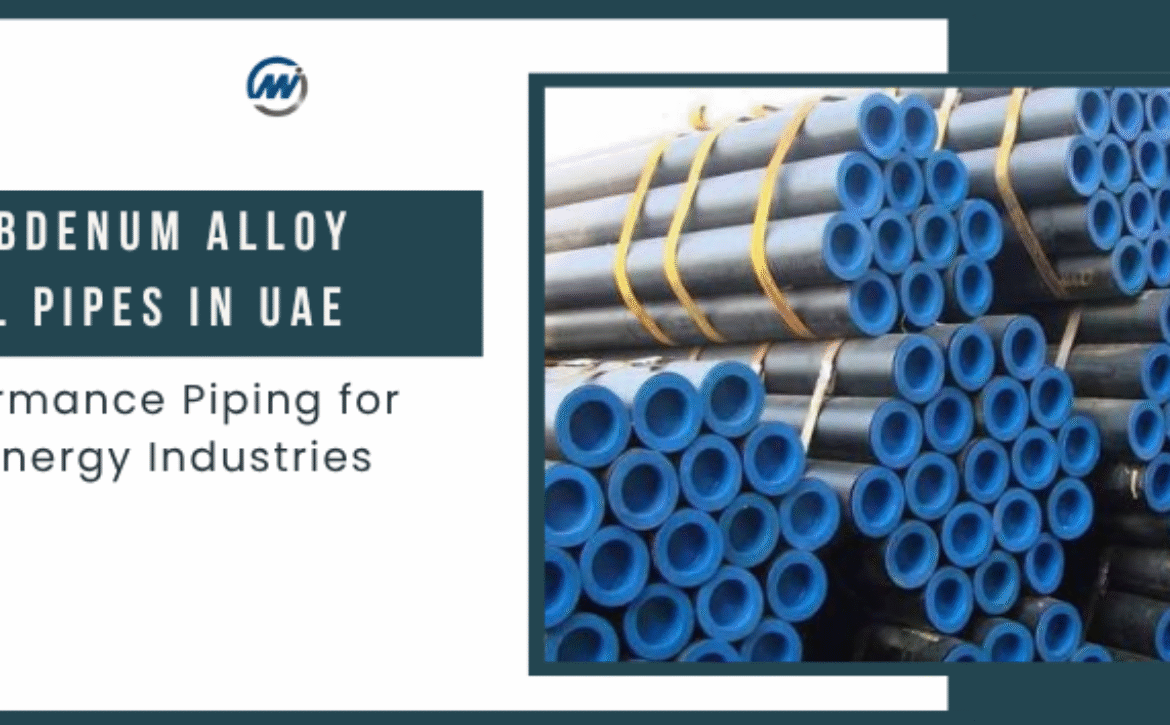
Molybdenum Alloy Steel Pipes in UAE: High-Performance Piping for Oil, Gas & Energy Industries
Introduction: Built for UAE’s Extreme Industrial Conditions
Let’s be practical—industries in the UAE don’t operate under normal conditions. High temperatures, continuous operations, and demanding environments mean materials must perform without compromise.
That’s why molybdenum alloy steel pipes (ASTM A335 P5, P9, P11, P22, P91) are widely used across the region. These pipes are engineered to handle extreme heat, pressure, and long operational cycles, making them ideal for oil refineries, petrochemical plants, and power generation systems.
What Are Molybdenum Alloy Steel Pipes?
ASTM A335 alloy steel pipes are seamless ferritic pipes designed specifically for high-temperature and high-pressure applications. They are often referred to as chrome moly pipes due to their chromium and molybdenum composition.
These pipes are manufactured as per ASTM A335 / ASME SA335 standards, ensuring consistent performance in critical industrial systems.
Key Features
- Seamless construction for higher strength and reliability
• Designed for extreme temperature environments
• Suitable for welding, bending, and fabrication
• Available in grades like P5, P9, P11, P22, P91
These pipes are widely used in industries such as power plants, refineries, and petrochemical units.
Why Chromium and Molybdenum Matter
The performance of these pipes comes from a carefully balanced alloy composition.
Key Elements
| Element | Function |
| Chromium (Cr) | Improves oxidation and corrosion resistance |
| Molybdenum (Mo) | Enhances high-temperature strength |
| Carbon (C) | Adds hardness and durability |
| Manganese (Mn) | Improves toughness |
Molybdenum plays a key role in improving creep strength and resistance to deformation, which is critical for long-term high-temperature service.
Mechanical Properties That Deliver Reliability
These pipes are designed to maintain performance even under extreme stress.
| Property | Typical Value |
| Tensile Strength | ≥ 415 MPa |
| Yield Strength | ≥ 205 MPa |
| Temperature Resistance | Up to ~750°C |
| Creep Resistance | Excellent |
They maintain structural integrity even during prolonged exposure to heat and pressure, making them ideal for industrial use.
Key Advantages of Molybdenum Alloy Steel Pipes
High Temperature Resistance
Ideal for boilers, furnaces, and steam pipelines.
Strong Under Pressure
Maintains stability in high-pressure systems.
Excellent Creep Resistance
Prevents deformation over long-term operation.
Corrosion and Oxidation Resistance
Chromium enhances durability in harsh environments.
Long Service Life
Reduces downtime and maintenance costs.
Technical Specifications Overview
| Specification | Details |
| Standard | ASTM A335 / ASME SA335 |
| Grades | P5, P9, P11, P22, P91 |
| Type | Seamless Alloy Steel Pipe |
| Size Range | ½″ to 36″ NB |
| Wall Thickness | SCH 40 to SCH XXS |
| Manufacturing | Hot Rolled / Cold Drawn |
| End Type | Plain / Beveled / Threaded |
These specifications ensure compatibility with large-scale industrial systems.
Industrial Applications in UAE
The UAE’s industrial ecosystem is heavily focused on energy, oil, and infrastructure—exactly where these pipes perform best.
Oil & Gas Industry
Used in refineries, offshore pipelines, and hydrocarbon transport.
Petrochemical Plants
Handles high-temperature and corrosive chemical processes.
Power Generation
Critical for boilers, superheaters, and steam lines.
Refineries
Used in cracking units and heat exchangers.
Industrial Projects & Infrastructure
Supports large-scale piping systems in heavy industries.
Grades like P11, P22, and P91 are commonly used in power and petrochemical industries, while P5 and P9 are widely used in refineries.
Understanding the Different Grades
ASTM A335 P5
- Good oxidation resistance
• Used in refineries and moderate high-temperature systems
ASTM A335 P9
- Higher chromium content
• Better heat resistance
• Suitable for petrochemical applications
ASTM A335 P11
- Balanced strength and durability
• Widely used in boilers and power plants
ASTM A335 P22
- Strong creep resistance
• Ideal for high-pressure steam systems
ASTM A335 P91
- Advanced alloy composition
• Exceptional performance in extreme temperature environments
Quick Grade Comparison
| Grade | Key Strength | Best Application |
| P5 | Oxidation resistance | Refineries |
| P9 | Heat resistance | Petrochemical plants |
| P11 | Balanced strength | Boilers |
| P22 | High pressure resistance | Power plants |
| P91 | Extreme performance | Advanced energy systems |
Quality Testing and Assurance
To ensure safety and performance, these pipes undergo strict quality checks:
- Chemical composition testing
• Mechanical strength testing
• Hydrostatic pressure testing
• Ultrasonic and radiographic inspection
• Positive Material Identification (PMI)
• Dimensional inspection
These tests ensure consistent quality in demanding industrial environments.
Conclusion
Molybdenum alloy steel pipes (ASTM A335 P5, P9, P11, P22, P91) are designed for industries where heat, pressure, and reliability are non-negotiable. Their chromium-molybdenum composition delivers strength, durability, and resistance to extreme conditions.
In the UAE, where industries operate under intense environmental and operational stress, these pipes are essential for maintaining safe, efficient, and long-lasting piping systems.
If the requirement is high performance under extreme conditions, these pipes remain one of the most trusted solutions in modern industrial infrastructure.
