Manufacturer & Exporters of:
Instrumentation Pipe Fittings & Valves

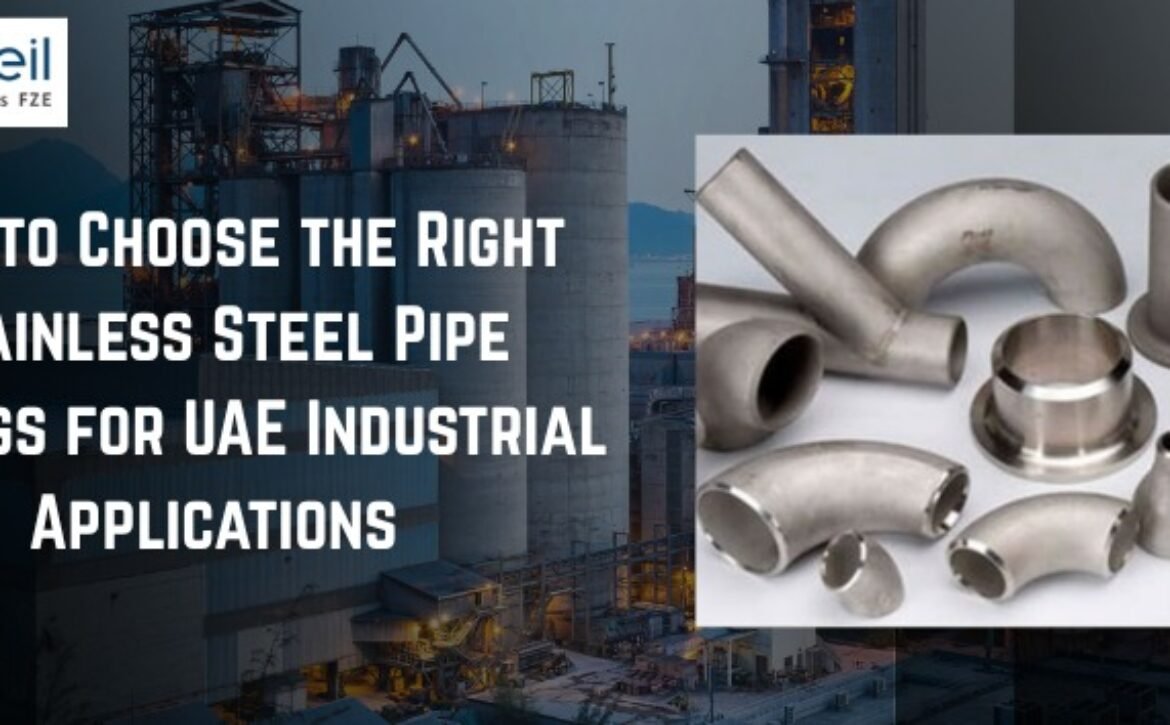
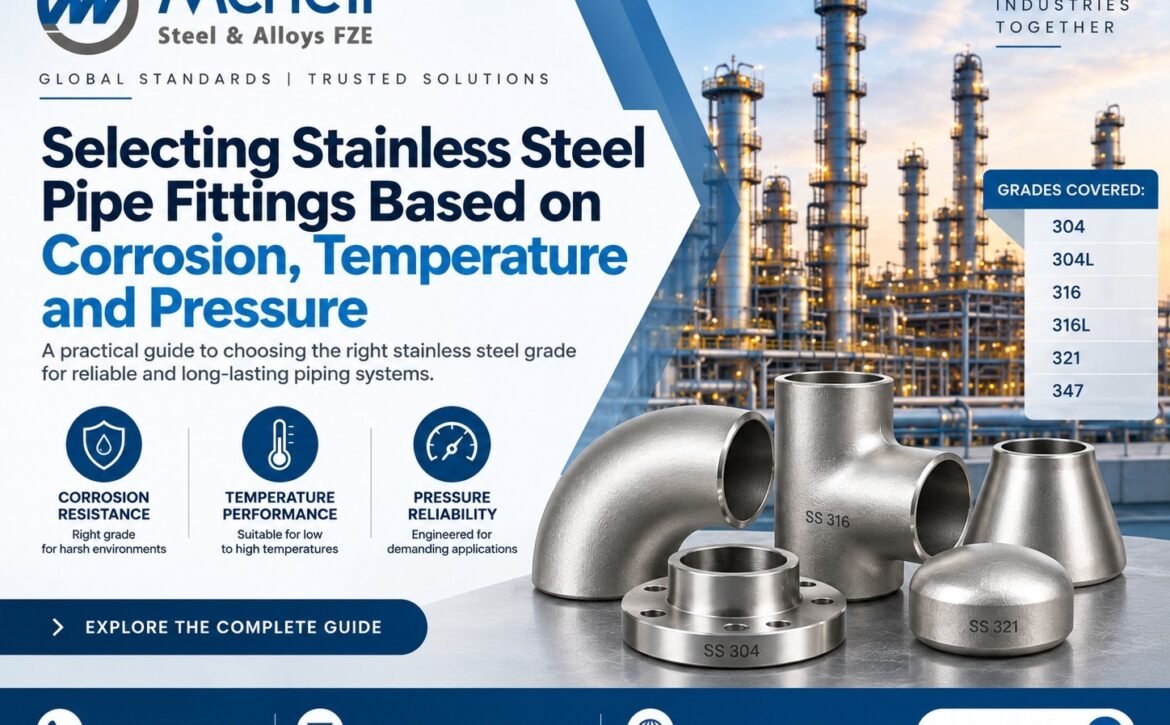
Selecting Stainless Steel Pipe Fittings Based on Corrosion, Temperature and Pressure: Mcneil Alloys

Industrial piping systems in the UAE can operate under a combination of corrosive chemicals, elevated temperatures, high pressure, chlorides, seawater and continuous operating cycles. Selecting stainless steel pipe fittings only by size or availability can result in material mismatch and premature deterioration.

The correct fitting grade should be selected according to the actual corrosion environment, operating temperature, pressure, fluid chemistry, welding requirements and applicable piping standards.

Mcneil Alloys supplies stainless steel pipe fittings in grades including 304, 304L, 316, 316L, 321 and 347, with applications across oil & gas, petrochemical, offshore, desalination, power generation, marine and industrial processing sectors in the UAE. Its published range includes elbows, tees, reducers, caps, stub ends and crosses, with specifications including ASTM A403 / ASME SA403 and ASME dimensional standards. 

Why Proper Stainless Steel Pipe Fitting Selection Matters

Pipe fittings are critical connection components in a piping system. They must maintain dimensional integrity and provide reliable connections while exposed to the same service conditions as the pipe.

Incorrect material selection can contribute to:

  • Corrosion and pitting
  • Crevice corrosion
  • Intergranular corrosion
  • Loss of mechanical strength
  • Weld-related sensitization
  • Premature leakage
  • Increased maintenance requirements
  • Reduced service life

The fitting material should therefore be selected based on the complete operating environment, rather than simply choosing the most commonly used stainless steel grade.

Three Primary Factors for Selecting Stainless Steel Pipe Fittings

A practical selection process should begin with three fundamental parameters:

  1. Corrosion resistance
  2. Operating temperature
  3. Operating pressure

Other factors such as welding, fluid velocity, chloride concentration, cyclic loading and project standards should then be incorporated into the final material selection.

1. Selecting Stainless Steel Pipe Fittings Based on Corrosion

Corrosion resistance is often the first consideration when selecting stainless steel fittings.

Different stainless steel grades provide different levels of resistance depending on the process environment.

Important factors include:

  • Chloride concentration
  • Seawater exposure
  • Acidic chemicals
  • Alkaline solutions
  • Hydrocarbons
  • Process gases
  • Humidity
  • Chemical concentration
  • Temperature
  • Fluid velocity
  • Exposure duration

Stainless Steel 304 for General Corrosion Resistance

SS 304 is widely used where general corrosion resistance and mechanical performance are required.

Mcneil Alloys describes its 304 fittings for applications including oil & gas, petrochemical, water treatment, food processing, HVAC and marine systems. The published range includes ASTM A403 / ASME SA403 fittings from 1/2″ NB to 48″ NB. 

Typical applications include:

  • General process piping
  • Water systems
  • Food-processing facilities
  • HVAC
  • Industrial piping
  • Selected oil & gas applications

However, 304 should not automatically be selected for every corrosive environment. Chloride-rich and marine applications may require consideration of 316 or 316L.

2. When to Select Stainless Steel 304L

SS 304L is the low-carbon version of 304.

Its lower carbon content makes it particularly useful where welding is an important part of fabrication. Mcneil Alloys describes 304L fittings as suitable for corrosive and high-temperature industrial environments and identifies their low-carbon construction as helping resist carbide precipitation during welding. 

304L can be considered for:

  • Welded process piping
  • Petrochemical systems
  • Oil & gas facilities
  • Water treatment
  • Food and beverage systems
  • HVAC
  • Industrial process equipment

304 vs 304L

Factor SS 304 SS 304L
Basic alloy family Austenitic stainless steel Austenitic stainless steel
Carbon Standard 304 carbon level Lower carbon
Corrosion resistance Good general resistance Similar general resistance
Welding Good Particularly suitable for welded construction
Sensitization consideration Requires attention during certain welding conditions Lower carbon helps reduce sensitization risk
Typical focus General industrial service Welded fabrication

3. Selecting Stainless Steel 316 for Chloride and Marine Environments

SS 316 contains molybdenum, which improves resistance to localized corrosion compared with 304 in many chloride-containing environments.

This makes 316 relevant to applications involving:

  • Seawater
  • Saltwater
  • Chlorides
  • Chemical processing
  • Marine environments
  • Offshore facilities
  • Water treatment

Mcneil Alloys specifically positions SS 316 pipe fittings for applications involving saltwater, chemicals and industrial fluids, including marine, oil & gas, petrochemical and water-treatment systems. 

For UAE projects exposed to seawater or significant chloride conditions, 316 may be evaluated where its corrosion-resistance characteristics meet the project requirements.

4. When to Select Stainless Steel 316L

SS 316L combines the corrosion-resistance characteristics of 316 with a lower carbon content.

This makes it particularly relevant when fittings are welded and corrosion resistance in the welded area is important.

Mcneil Alloys identifies 316L applications including:

  • Marine systems
  • Chemical plants
  • Petrochemical facilities
  • Offshore oil & gas
  • Water-treatment systems
  • Food-processing pipelines

The company describes its 316L fittings as low-carbon products designed to help prevent carbide precipitation during welding. 

316 vs 316L

Factor SS 316 SS 316L
Corrosion resistance High High
Molybdenum Yes Yes
Carbon Standard 316 level Lower carbon
Welding Suitable with proper procedures Particularly suitable for welded construction
Chloride service Commonly considered Commonly considered
Marine applications Yes Yes
Chemical processing Yes Yes

5. Selecting Stainless Steel 321 for Elevated Temperature

When temperature becomes a major design factor, conventional stainless steel grades may not always be the most appropriate choice.

SS 321 is a titanium-stabilized austenitic stainless steel. The stabilization is intended to reduce sensitization concerns during elevated-temperature exposure.

Mcneil Alloys positions 321 pipe fittings for:

  • Power plants
  • Petrochemical plants
  • Chemical-processing units
  • Refineries
  • Industrial heat exchangers

The company’s product information identifies high-temperature corrosion and oxidation resistance as key characteristics. 

SS 321 may therefore be evaluated when a piping system combines:

  • Elevated temperature
  • Thermal cycling
  • Corrosive service
  • Welding
  • Long operating periods

6. Selecting Stainless Steel 347 for High-Temperature Service

SS 347 is another stabilized austenitic stainless steel, using niobium for stabilization.

It is associated with applications where fittings must withstand elevated temperatures while maintaining resistance to sensitization.

Mcneil Alloys identifies applications including:

  • Power generation
  • Petrochemical processing
  • Chemical plants
  • Refineries
  • Industrial heat exchangers

The company’s published information describes SS 347 fittings as suitable for high-temperature corrosion and oxidation resistance and demanding industrial applications. 

Stainless Steel Grade Selection Based on Corrosion and Temperature

Grade Primary Selection Consideration Typical Applications
304 General corrosion resistance Industrial, water, food, HVAC
304L General corrosion resistance + welded fabrication Process and welded systems
316 Chloride and localized corrosion resistance Marine, offshore, chemical
316L Chloride resistance + welded fabrication Marine, chemical, petrochemical
321 Elevated-temperature service Heat exchangers, refinery, power
347 Elevated-temperature service + stabilization Power, refinery, petrochemical

This table is a material-selection framework rather than a universal grade-selection rule. Actual service conditions must be evaluated before specifying the fitting material.

7. Selecting Stainless Steel Pipe Fittings Based on Pressure

Temperature and corrosion are only part of the selection process. Operating pressure must also be evaluated.

Pressure affects:

  • Fitting wall thickness
  • Schedule
  • Connection configuration
  • Design class
  • Fitting dimensions
  • Welding requirements
  • Material strength
  • Applicable piping code

Mcneil Alloys’ published stainless steel fitting range includes SCH 10 through SCH XXS, with sizes from 1/2″ NB to 48″ NB. 

The fitting should therefore be selected according to the piping system’s design pressure, not merely its normal operating pressure.

Operating Pressure vs Design Pressure

These should not be treated as identical.

Operating pressure is the pressure normally experienced during operation.

Design pressure is the pressure used for engineering and component selection under the applicable design code.

The fitting must be suitable for the applicable design conditions.

8. Consider Temperature and Pressure Together

Temperature can affect the mechanical performance of stainless steel.

A fitting operating at ambient temperature may have different allowable conditions from the same fitting operating at an elevated temperature.

For this reason, material selection should consider:

Temperature + Pressure + Material Grade + Fitting Geometry + Applicable Code

For example, an application involving high temperature and high pressure may require a different material and fitting specification from a low-temperature, low-pressure water line.

9. Consider the Process Fluid

The fluid inside the piping system can significantly influence material selection.

Before selecting a stainless steel fitting, identify:

  • Fluid composition
  • Chloride concentration
  • Acid concentration
  • Alkalinity
  • Sulfur compounds
  • Hydrocarbon content
  • Water content
  • Operating temperature
  • Operating pressure
  • Flow velocity

A fitting suitable for clean water may not be appropriate for an aggressive chemical process.

10. Consider Chloride Exposure

Chlorides are particularly important for stainless steel selection.

UAE industrial facilities may encounter chloride exposure through:

  • Seawater
  • Brackish water
  • Marine environments
  • Desalination processes
  • Coastal atmospheres
  • Chemical solutions

Where chloride-induced pitting or crevice corrosion is a concern, 316 and 316L may be evaluated instead of 304-family grades, depending on the actual chloride concentration and service conditions.

Material selection should also consider temperature and concentration because corrosion behavior can change significantly with service conditions.

11. Consider Welding Requirements

Welding can influence stainless steel material selection.

During certain welding operations, chromium carbide precipitation can occur in susceptible stainless steel grades, potentially reducing corrosion resistance near the weld.

Low-carbon grades such as:

  • 304L
  • 316L

are commonly considered for welded applications where reduced sensitization risk is important.

For elevated-temperature applications, stabilized grades such as 321 and 347 can also be evaluated according to the applicable design and fabrication requirements.

12. Select the Correct Fitting Configuration

Material grade alone does not determine whether a fitting is suitable.

The correct configuration must also be selected.

Common stainless steel pipe fittings include:

Stainless Steel Elbows

Used to change piping direction.

Common configurations include:

  • 45° elbows
  • 90° elbows
  • Long-radius elbows
  • Short-radius elbows

Stainless Steel Tees

Used to create branch connections.

They can be:

  • Equal tees
  • Reducing tees

Stainless Steel Reducers

Used to connect pipes with different nominal diameters.

Common configurations include:

  • Concentric reducers
  • Eccentric reducers

Stainless Steel Caps

Used to close the end of a piping system.

Stainless Steel Stub Ends

Used with compatible flange arrangements where a removable flange connection is required.

Stainless Steel Crosses

Used where four-way branching is required.

Mcneil Alloys’ published stainless steel fitting range includes elbows, tees, reducers, caps, stub ends and crosses. 

13. Confirm the Applicable Standards

The fitting should comply with the standards specified by the project.

Mcneil Alloys’ published stainless steel pipe fitting specifications include:

  • ASTM A403 / ASME SA403
  • ASME B16.9
  • ASME B16.11
  • ASME B16.28
  • MSS-SP-43

The company’s published range includes seamless, welded and fabricated forms, with bevelled, plain or threaded ends and schedules ranging from SCH 10 to SCH XXS. 

Project-specific requirements may require additional inspection, testing, certification or dimensional standards.

14. Consider the UAE Operating Environment

Stainless steel fittings used in UAE projects may face a combination of:

  • High ambient temperatures
  • Coastal humidity
  • Chloride exposure
  • Seawater
  • Industrial chemicals
  • High operating pressure
  • Thermal cycling
  • Continuous operation

Therefore, a fitting selected for an indoor utility system may not be suitable for an offshore or desalination application.

The selection process should always start with the actual service environment.

Stainless Steel Pipe Fittings for Oil & Gas Applications

Oil & gas facilities require piping components capable of handling hydrocarbons, pressure, temperature and potentially corrosive fluids.

Potential applications include:

  • Process piping
  • Refinery systems
  • Petrochemical plants
  • Offshore platforms
  • Instrumentation systems
  • Chemical transfer
  • Utility piping
  • High-pressure process systems

304 and 304L can be considered for suitable general applications, while 316 and 316L may be evaluated for chloride-rich or more corrosive service.

For high-temperature refinery and thermal applications, 321 and 347 may be considered when their characteristics match the operating conditions. Mcneil Alloys identifies all six grades across its UAE stainless steel fitting range. 

Stainless Steel Pipe Fittings for Petrochemical Plants

Petrochemical systems can combine:

  • High temperature
  • High pressure
  • Hydrocarbons
  • Chemicals
  • Thermal cycling
  • Corrosive environments

This makes material selection particularly important.

Engineers should evaluate the process fluid, temperature, pressure and corrosion mechanism before choosing between 304, 304L, 316, 316L, 321 and 347.

Stainless Steel Pipe Fittings for Marine and Offshore Applications

Marine and offshore installations can involve continuous exposure to seawater and chloride-containing environments.

316 and 316L are commonly evaluated for such applications because molybdenum improves resistance to localized corrosion compared with 304 in many chloride environments.

Potential applications include:

  • Offshore platforms
  • Marine process systems
  • Seawater systems
  • Shipbuilding
  • Marine instrumentation
  • Offshore oil & gas

Stainless Steel Pipe Fittings for Desalination

Desalination systems can expose components to seawater, concentrated brines, chlorides and treatment chemicals.

Material selection should consider:

  • Chloride concentration
  • Temperature
  • Pressure
  • Water chemistry
  • Flow velocity
  • Cleaning chemicals
  • Corrosion mechanism

316 or 316L may be considered for selected applications, but the actual water chemistry and design conditions must determine whether the grade is adequate.

Stainless Steel Pipe Fittings for Power Generation

Power-generation facilities can involve elevated temperatures, pressure and thermal cycling.

For higher-temperature systems, stabilized grades such as 321 and 347 can be evaluated.

Typical applications include:

  • Heat exchangers
  • Thermal systems
  • Process piping
  • Power-generation equipment
  • Steam-related systems
  • High-temperature auxiliary piping

Mcneil Alloys identifies power generation and industrial heat exchangers among the applications for its stainless steel 321 and 347 fittings. 

Practical Stainless Steel Pipe Fitting Selection Checklist

Before purchasing stainless steel pipe fittings, verify the following:

Material

  • Required stainless steel grade
  • Applicable material specification
  • Heat number and traceability

Corrosion

  • Process fluid
  • Chloride concentration
  • Seawater exposure
  • Acid or alkaline exposure
  • Expected corrosion mechanism

Temperature

  • Minimum design temperature
  • Normal operating temperature
  • Maximum design temperature
  • Thermal cycling

Pressure

  • Normal operating pressure
  • Design pressure
  • Pressure class where applicable
  • Required schedule

Dimensions

  • Nominal pipe size
  • Outside diameter
  • Wall thickness
  • Fitting geometry
  • End preparation

Fabrication

  • Seamless or welded construction
  • Welding requirements
  • Heat treatment
  • Inspection requirements

Standards

  • ASTM specification
  • ASME specification
  • Dimensional standard
  • Project-specific requirements

Common Mistakes When Selecting Stainless Steel Pipe Fittings

Choosing 304 for Every Application

304 is versatile, but it is not universally appropriate for chloride-rich or highly corrosive environments.

Choosing 316 Without Evaluating the Actual Chemistry

316 offers enhanced resistance in many chloride environments, but the specific concentration, temperature and exposure conditions still need to be assessed.

Ignoring Welding Requirements

The difference between standard and low-carbon grades can become important in welded construction.

Selecting Based Only on Temperature

A fitting may withstand the temperature but still be unsuitable for the process chemistry.

Selecting Based Only on Pressure

Pressure capability cannot be considered independently of material, temperature, dimensions and applicable design code.

Ignoring the Fitting Standard

A material grade alone does not establish dimensional compatibility or pressure suitability.

Why Choose Mcneil Alloys for Stainless Steel Pipe Fittings in UAE?

Mcneil Alloys identifies itself as a manufacturer, supplier and exporter of stainless steel pipe fittings in the UAE, with grades including 304, 304L, 316, 316L, 321 and 347. Its published range covers applications in oil & gas, petrochemical, offshore, desalination, power, marine and industrial processing. 

The published product range includes:

  • Stainless Steel 304 Pipe Fittings
  • Stainless Steel 304L Pipe Fittings
  • Stainless Steel 316 Pipe Fittings
  • Stainless Steel 316L Pipe Fittings
  • Stainless Steel 321 Pipe Fittings
  • Stainless Steel 347 Pipe Fittings
  • Elbows
  • Tees
  • Reducers
  • Caps
  • Stub ends
  • Crosses
  • Seamless fittings
  • Welded fittings
  • Fabricated fittings

Mcneil Alloys states that it supplies stainless steel pipe fittings across Abu Dhabi, Dubai, Sharjah, Fujairah and Ras Al Khaimah. 

Stainless Steel Pipe Fittings Supplier in Dubai, Abu Dhabi & UAE

Dubai

Stainless steel fittings can support Dubai’s industrial, petrochemical, infrastructure, marine and process-sector requirements.

Abu Dhabi

Oil & gas, refinery and petrochemical facilities can require corrosion-resistant fittings designed for demanding pressure and temperature conditions.

Sharjah

Stainless steel pipe fittings can support manufacturing, industrial processing and infrastructure projects.

Fujairah

Marine, oil-storage, terminal and energy-related facilities can require stainless steel fittings capable of operating in chloride and coastal environments.

Ras Al Khaimah

Industrial and manufacturing facilities can use stainless steel fittings for process, utility and fluid-handling applications.

Frequently Asked Questions

How do I select stainless steel pipe fittings?

Start by identifying the fluid chemistry, corrosion conditions, operating temperature, design pressure, pipe dimensions, welding requirements and applicable standards. Then select the stainless steel grade and fitting configuration that meet those conditions.

Which stainless steel grade is best for corrosion resistance?

There is no single grade that is best for every corrosive environment. 304 provides general corrosion resistance, while 316 and 316L offer enhanced resistance to many chloride-containing environments. The actual process chemistry must determine the selection.

Is 316 better than 304 for marine applications?

316 contains molybdenum and generally provides better resistance to localized corrosion in many chloride environments than 304. However, actual seawater chemistry, temperature and service conditions should be evaluated before specifying the grade.

When should 304L or 316L be selected?

The low-carbon grades can be considered when welding is significant and reducing the risk of weld-related sensitization is important.

Which stainless steel grades are suitable for high-temperature applications?

321 and 347 are stabilized austenitic stainless steel grades associated with elevated-temperature applications. Actual operating conditions and engineering requirements should determine the final selection.

What standards are used for stainless steel pipe fittings?

Mcneil Alloys’ published range specifies ASTM A403 / ASME SA403, along with dimensional standards including ASME B16.9, ASME B16.11, ASME B16.28 and MSS-SP-43. 

What sizes are available?

Mcneil Alloys’ published stainless steel pipe fitting range covers 1/2″ NB to 48″ NB, with schedules from SCH 10 to SCH XXS. Exact availability should be confirmed for the required grade and configuration. 

Conclusion

Selecting stainless steel pipe fittings requires more than choosing a material based on price or availability. The correct selection should consider corrosion, temperature, pressure, process chemistry, welding, dimensions and applicable standards together.

SS 304 and 304L can be considered for many general industrial and welded applications, while 316 and 316L are relevant to many chloride, marine, offshore and chemical environments. For elevated-temperature service, 321 and 347 can be evaluated because of their stabilized metallurgy and suitability for demanding thermal applications. 

For UAE oil & gas, petrochemical, chemical, marine, desalination, power-generation and industrial projects, engineers should establish the complete operating envelope before specifying a stainless steel pipe fitting.

Mcneil Alloys supplies 304, 304L, 316, 316L, 321 and 347 stainless steel pipe fittings in configurations including elbows, tees, reducers, caps, stub ends and crosses, with published specifications covering ASTM A403 / ASME SA403 and relevant ASME/MSS dimensional standards. 

Read More
admin September 19, 2026 0 Comments

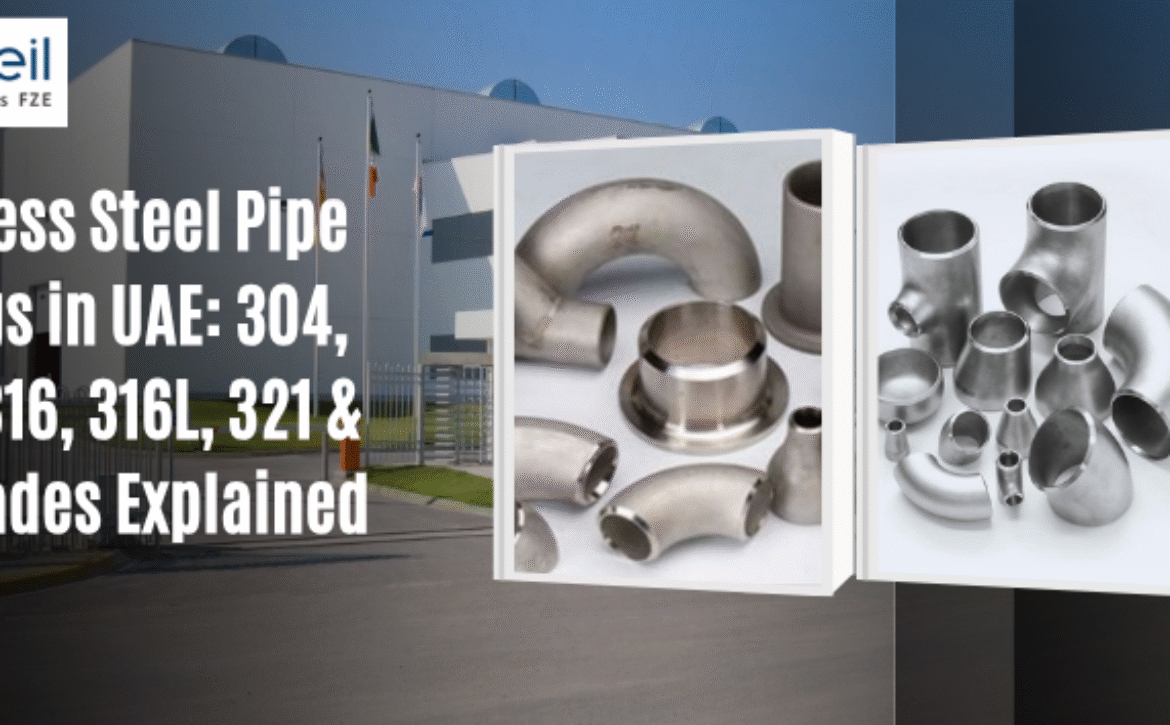
Stainless Steel Pipe Fittings in UAE: 304, 304L, 316, 316L, 321 & 347 Grades Explained

Stainless Steel Pipe Fittings are essential components in industrial piping systems where reliable connections, corrosion resistance, dimensional accuracy, and long-term service performance are required. In the UAE, industries such as oil & gas, petrochemical processing, desalination, marine engineering, power generation, water treatment, and industrial processing rely on stainless steel fittings for demanding fluid-handling applications.

Mcneil Alloys manufactures, supplies, and exports Stainless Steel Pipe Fittings in UAE in grades including SS 304, 304L, 316, 316L, 321, and 347. The fittings are available in configurations such as elbows, tees, reducers, caps, stub ends, and crosses, with options for seamless, welded, and fabricated construction. The published product range covers sizes from 1/2″ NB to 48″ NB and schedules from SCH 10 to SCH XXS.

What Are Stainless Steel Pipe Fittings?

Stainless Steel Pipe Fittings are components used to connect pipes and create changes in direction, branching, diameter, or termination within a piping system.

They help engineers design piping networks that can safely transport liquids, gases, chemicals, steam, and other process media.

Common stainless steel pipe fittings include:

  • 45° Elbows
  • 90° Elbows
  • 180° Elbows
  • Equal Tees
  • Reducing Tees
  • Concentric Reducers
  • Eccentric Reducers
  • Pipe Caps
  • Stub Ends
  • Crosses
  • Custom-Fabricated Fittings

Depending on the application, fittings may be supplied with bevelled, plain, or threaded ends. Mcneil Alloys lists ASTM A403 / ASME SA403 as the material specification and ASME B16.9, B16.11, B16.28, and MSS-SP-43 among the applicable standards.

Why Stainless Steel Pipe Fittings Are Important in the UAE

The UAE has major industrial sectors operating in hot, humid, saline, and chemically demanding environments. Piping systems used in offshore facilities, refineries, desalination plants, petrochemical units, and marine installations need materials that can withstand corrosion and maintain mechanical integrity.

Stainless steel fittings offer several advantages for these environments, including:

  • Strong corrosion resistance
  • Good mechanical strength
  • Resistance to oxidation
  • Long service life
  • Reliable performance in demanding conditions
  • Good weldability for appropriate grades
  • Compatibility with standardized piping systems
  • Reduced maintenance requirements

Mcneil Alloys specifically identifies oil & gas facilities, petrochemical plants, offshore platforms, desalination units, power stations, marine systems, and industrial processing networks among the applications for its stainless steel pipe fittings in the UAE.

Stainless Steel Pipe Fitting Grades

Different stainless steel grades provide different combinations of corrosion resistance, weldability, temperature performance, and mechanical properties. Selecting the right grade is therefore essential for the service conditions of the piping system.

SS 304 Pipe Fittings

Stainless Steel 304 is one of the most widely used stainless steel grades for general industrial applications. It provides a combination of corrosion resistance, strength, durability, and versatility.

Mcneil Alloys lists SS 304 pipe fittings for applications including oil & gas pipelines, petrochemical plants, water treatment facilities, food processing, HVAC systems, and marine applications. The published composition reference includes approximately 18% chromium and 8% nickel.

Applications of SS 304 Pipe Fittings

SS 304 fittings can be used in:

  • Industrial piping
  • Water treatment
  • Food and beverage systems
  • HVAC networks
  • Petrochemical systems
  • General process piping
  • Marine applications

SS 304L Pipe Fittings

SS 304L is the low-carbon version of 304 stainless steel. Its lower carbon content makes it particularly useful for applications involving welding.

The reduced carbon level helps minimize carbide precipitation and sensitization during welding, making SS 304L a practical choice for fabricated and welded piping systems.

Mcneil Alloys lists SS 304L pipe fittings for oil & gas, petrochemical, water treatment, food and beverage, and HVAC applications.

Key Advantages of SS 304L

  • Excellent weldability
  • Good corrosion resistance
  • Resistance to oxidation
  • Reliable mechanical performance
  • Suitable for fabricated piping systems
  • Long-term industrial service

SS 316 Pipe Fittings

SS 316 offers enhanced corrosion resistance compared with 304 in many demanding environments. It is particularly useful where exposure to chlorides, saltwater, chemicals, or aggressive industrial fluids is expected.

Mcneil Alloys highlights SS 316 pipe fittings for marine projects, oil & gas pipelines, petrochemical plants, water treatment facilities, and food processing systems.

Applications of SS 316 Pipe Fittings

  • Marine piping
  • Offshore facilities
  • Oil & gas systems
  • Petrochemical plants
  • Water treatment
  • Chemical processing
  • Industrial fluid transportation

For UAE applications involving seawater, offshore exposure, or chloride-containing environments, SS 316 may be preferred over 304 when the service conditions justify the additional corrosion resistance.

SS 316L Pipe Fittings

SS 316L is the low-carbon version of 316 stainless steel. It combines the corrosion resistance associated with 316 with improved suitability for welded construction.

The low-carbon composition helps reduce sensitization during welding, making 316L particularly useful for fabricated piping networks and systems requiring extensive welding.

Mcneil Alloys lists SS 316L pipe fittings for marine, oil & gas, petrochemical, water treatment, and food-processing applications.

Benefits of SS 316L

  • Excellent corrosion resistance
  • Strong resistance to pitting and chemical exposure
  • Good weldability
  • Suitable for marine environments
  • Reliable performance in industrial piping
  • Long operational life

SS 321 Pipe Fittings

SS 321 is a titanium-stabilized stainless steel grade designed for applications involving elevated temperatures.

The titanium stabilization helps reduce sensitization and intergranular corrosion during high-temperature service and welding.

Mcneil Alloys identifies SS 321 pipe fittings for power plants, petrochemical facilities, chemical processing units, refinery pipelines, and industrial heat exchangers.

Applications of SS 321 Pipe Fittings

  • Power generation
  • Petrochemical processing
  • Refineries
  • Chemical plants
  • Heat exchangers
  • High-temperature industrial piping

SS 321 can therefore be considered when a piping system requires stainless steel corrosion resistance along with improved performance under elevated-temperature conditions.

SS 347 Pipe Fittings

SS 347 is a stabilized stainless steel grade containing niobium. Stabilization helps improve resistance to sensitization and intergranular corrosion during prolonged high-temperature exposure.

Mcneil Alloys offers SS 347 pipe fittings for power generation, petrochemical processing, chemical plants, refineries, and industrial heat exchangers.

Applications of SS 347 Pipe Fittings

  • Power plants
  • Refineries
  • Petrochemical facilities
  • Chemical processing
  • Heat exchangers
  • High-temperature piping

SS 347 is particularly relevant when the piping system is exposed to prolonged elevated temperatures and requires a stabilized stainless steel material.

SS 304 vs 304L vs 316 vs 316L vs 321 vs 347

Grade Main Characteristic Typical Applications
SS 304 General-purpose corrosion resistance Industrial, food, water, HVAC
SS 304L Low carbon and weld-friendly Welded piping, process systems
SS 316 Enhanced corrosion resistance Marine, chemical, oil & gas
SS 316L Low carbon with enhanced corrosion resistance Welded marine and chemical systems
SS 321 Titanium-stabilized for elevated temperatures Power, refinery, heat exchangers
SS 347 Niobium-stabilized for high-temperature service Power, refinery, petrochemical

The correct selection should be based on actual temperature, pressure, process fluid, corrosion exposure, welding requirements, and project specifications rather than grade popularity alone.

Specifications of Stainless Steel Pipe Fittings

Mcneil Alloys publishes a broad stainless steel pipe fitting range with the following specifications:

Specification Details
Material Grades SS 304, 304L, 316, 316L, 321, 347
Material Standard ASTM A403 / ASME SA403
Size Range 1/2″ NB to 48″ NB
Construction Seamless / Welded / Fabricated
Schedule SCH 10 to SCH XXS
Forms Elbow, Tee, Reducer, Cap, Stub End, Cross
Ends Bevelled / Plain / Threaded
Standards ASME B16.9, B16.11, B16.28, MSS-SP-43

Custom configurations can also be considered according to project requirements.

Types of Stainless Steel Pipe Fittings

Stainless Steel Elbows

Elbows are used to change the direction of piping. Common configurations include 45° and 90° elbows, with long- and short-radius options depending on system requirements.

They are commonly used in:

  • Process piping
  • Oil & gas systems
  • Water treatment
  • Petrochemical facilities
  • Industrial plants

Stainless Steel Tees

Tees provide branch connections within a piping network.

They can be supplied as:

  • Equal tees
  • Reducing tees

They are useful for distributing process fluids between different sections of a piping system.

Stainless Steel Reducers

Reducers connect pipes with different nominal diameters.

Two common configurations are:

  • Concentric reducers
  • Eccentric reducers

The appropriate configuration depends on piping layout, fluid characteristics, and engineering requirements.

Stainless Steel Caps

Caps are used to close or terminate pipe sections. They can be used during permanent piping installation or for system isolation and protection.

Stainless Steel Stub Ends

Stub ends are commonly used with lap-joint flange arrangements and can simplify installation and maintenance in selected piping systems.

Stainless Steel Crosses

Cross fittings provide four connection points and are used in piping layouts requiring multiple branches from a central location.

Applications of Stainless Steel Pipe Fittings in UAE

Oil & Gas Industry

The UAE’s oil and gas sector requires piping systems capable of transporting hydrocarbons and process fluids under demanding operating conditions.

Stainless steel fittings can be used in:

  • Process piping
  • Oil transportation systems
  • Gas processing
  • Instrumentation-related piping
  • Refinery units
  • Offshore installations

SS 316 and 316L can be considered where chloride and marine exposure are important factors.

Petrochemical Industry

Petrochemical plants handle hydrocarbons, chemicals, solvents, and other process media.

Stainless steel pipe fittings can support:

  • Process lines
  • Chemical transfer
  • Heat exchangers
  • Reactor systems
  • Utility piping
  • Process equipment connections

Desalination and Water Treatment

Desalination is particularly important in the UAE. Piping systems in desalination facilities can experience exposure to saline water and corrosive environments.

Stainless steel fittings are therefore used in selected water treatment and desalination applications where corrosion resistance and long service life are required.

Power Generation

Power plants use piping systems for water, steam, cooling systems, process fluids, and other utilities.

SS 321 and SS 347 can be particularly relevant to selected high-temperature applications, while 304 and 316 grades can be used for appropriate general and corrosive service conditions.

Marine and Offshore Systems

Marine environments expose piping systems to seawater, chlorides, humidity, and corrosive conditions.

SS 316 and 316L are often considered for these environments because of their enhanced corrosion resistance compared with conventional 304 grades.

Chemical Processing

Chemical processing facilities require materials selected according to the specific chemicals, concentrations, temperature, and operating conditions involved.

Stainless steel fittings can provide a durable connection solution for appropriate chemical-processing applications.

How to Select the Right Stainless Steel Pipe Fitting

Choosing the correct fitting requires consideration of several technical factors.

1. Select the Correct Grade

Determine whether the application requires:

  • General corrosion resistance
  • Enhanced chloride resistance
  • Low-carbon weldability
  • High-temperature stability
  • Stabilized stainless steel performance

2. Check Pipe Size

Mcneil Alloys lists sizes from 1/2″ NB to 48″ NB for the grades covered on its product page.

The fitting must match the pipe’s nominal size and dimensional requirements.

3. Determine the Schedule

The pipe fitting schedule affects wall thickness and compatibility with the piping system.

Mcneil Alloys lists SCH 10 through SCH XXS for the published range.

4. Consider Temperature

For elevated-temperature applications, grades such as SS 321 and 347 may be considered where their stabilized construction suits the operating environment.

5. Evaluate Corrosion Exposure

Consider:

  • Chlorides
  • Seawater
  • Chemicals
  • Moisture
  • Process fluids
  • Atmospheric exposure

For chloride-rich or marine environments, 316/316L may be more suitable than 304/304L depending on the specific service conditions.

6. Confirm Applicable Standards

Always confirm the required ASTM, ASME, ANSI, or project-specific standard before purchasing pipe fittings.

Mcneil Alloys lists ASTM A403 / ASME SA403, along with ASME B16.9, B16.11, B16.28, and MSS-SP-43 for its stainless steel pipe fitting range.

Stainless Steel Pipe Fittings Manufacturer and Supplier in UAE

Mcneil Alloys provides stainless steel pipe fittings for industrial projects throughout the UAE. Its published supply presence includes Abu Dhabi, Dubai, Sharjah, Fujairah, and Ras Al Khaimah.

The company offers grades including:

  • SS 304
  • SS 304L
  • SS 316
  • SS 316L
  • SS 321
  • SS 347

Its wider product portfolio also covers stainless steel pipes, alloy steel pipes, nickel alloys, duplex steel, instrumentation fittings, flanges, valves, and other industrial piping products.

Why Choose Mcneil Alloys?

For UAE industrial projects, Mcneil Alloys offers:

  • Multiple stainless steel grades
  • Wide size availability
  • Seamless and welded options
  • Fabricated fittings
  • Multiple fitting configurations
  • Internationally recognized specifications
  • Dimensional precision
  • Industrial application expertise
  • UAE-wide supply capability
  • Custom fitting solutions

The company’s product page states that its stainless steel fittings undergo quality checks and are manufactured to international standards for dimensional accuracy and reliable service.

Frequently Asked Questions

What grades of stainless steel pipe fittings does Mcneil Alloys offer?

Mcneil Alloys lists SS 304, 304L, 316, 316L, 321, and 347 stainless steel pipe fittings.

What is the standard for these stainless steel pipe fittings?

The published material specification is ASTM A403 / ASME SA403, with dimensional standards including ASME B16.9, B16.11, B16.28, and MSS-SP-43.

What sizes are available?

The published range covers 1/2″ NB to 48″ NB, with schedules from SCH 10 to SCH XXS.

Which stainless steel grade is suitable for marine applications?

SS 316 and 316L are commonly considered for marine and chloride-exposed applications because they offer enhanced corrosion resistance. The final grade should be selected according to the actual service environment.

What is the difference between SS 304L and SS 316L?

Both are low-carbon stainless steel grades. 304L is based on 304, while 316L provides enhanced corrosion resistance for many chloride and chemical environments due to its molybdenum-containing composition.

Why are SS 321 and SS 347 used in high-temperature applications?

Both grades are stabilized stainless steels. SS 321 uses titanium stabilization, while SS 347 uses niobium stabilization. This helps improve resistance to sensitization and intergranular corrosion during suitable high-temperature service.

Can stainless steel pipe fittings be customized?

Mcneil Alloys offers multiple configurations and identifies custom-fabricated fittings within its published product range. Project-specific dimensions and configurations should be confirmed with the manufacturer.

Conclusion

Stainless Steel Pipe Fittings in UAE are widely used where piping systems require corrosion resistance, strength, dimensional accuracy, and dependable long-term performance. The selection of SS 304, 304L, 316, 316L, 321, or 347 depends on the operating environment and technical requirements of the application.

SS 304 and 304L are versatile options for general industrial and welded applications, while SS 316 and 316L are better suited to many chloride, marine, and chemical environments. SS 321 and 347 provide stabilized stainless steel options for selected high-temperature applications.

Mcneil Alloys supplies these stainless steel pipe fittings across the UAE in a broad range of sizes, schedules, configurations, and construction types, supporting industries including oil & gas, petrochemical, desalination, power generation, marine, water treatment, and industrial processing.

Read More
admin September 10, 2026 0 Comments

Stainless Steel Pipe Fittings in UAE: Grades 304, 316, 316L, 321 & 347

Stainless Steel Pipe Fittings in UAE are widely used in industrial piping systems where corrosion resistance, strength, durability, and reliable connections are essential. Mcneil Alloys supplies stainless steel pipe fittings in grades 304, 316, 316L, 321, and 347 for industrial applications across the UAE.
These stainless steel fittings are suitable for applications where piping systems must withstand moisture, elevated temperatures, chemicals, and demanding operating conditions.

Stainless Steel 304 Pipe Fittings in UAE

Stainless Steel 304 Pipe Fittings are among the most widely used stainless steel fittings for general industrial applications.
They offer good corrosion resistance, strength, formability, and durability, making them suitable for:
Industrial piping
Chemical processing
Food processing
Water systems
General engineering
Process industries
Petrochemical applications
SS 304 pipe fittings in UAE are commonly selected when a combination of corrosion resistance, mechanical performance, and cost effectiveness is required.

Stainless Steel 316 Pipe Fittings in UAE

Stainless Steel 316 Pipe Fittings offer improved corrosion resistance compared with SS 304, particularly in environments where chlorides and corrosive chemicals are present.
They are suitable for applications such as:
Chemical processing
Marine environments
Petrochemical plants
Oil & gas facilities
Pharmaceutical industries
Water treatment
Process piping
For demanding industrial environments in the UAE, SS 316 pipe fittings can be considered where enhanced corrosion resistance is required.

Stainless Steel 316L Pipe Fittings in UAE

Stainless Steel 316L Pipe Fittings are the low-carbon version of 316 stainless steel.
The reduced carbon content makes 316L particularly useful for welded piping systems where resistance to sensitization and intergranular corrosion is important.
Common applications include:
Chemical plants
Pharmaceutical plants
Food processing
Petrochemical facilities
Process piping
Marine applications
Water treatment systems
Mcneil Alloys supplies SS 316L pipe fittings in UAE for industrial piping and process applications.

Stainless Steel 321 Pipe Fittings in UAE

Stainless Steel 321 Pipe Fittings are stabilized with titanium and are designed for applications involving elevated temperatures.
They can be considered for:
High-temperature piping
Heat exchangers
Petrochemical plants
Chemical processing
Thermal processing equipment
Furnace components
Industrial process systems
The titanium stabilization helps improve resistance to intergranular corrosion after exposure to elevated temperatures.

Stainless Steel 347 Pipe Fittings in UAE

Stainless Steel 347 Pipe Fittings are stabilized with niobium and are designed for elevated-temperature applications.
Typical applications include:
High-temperature piping
Heat exchangers
Petrochemical processing
Chemical plants
Refinery applications
Power-generation equipment
Thermal processing systems
SS 347 pipe fittings in UAE can be selected for applications where high-temperature performance and resistance to intergranular corrosion are important.

304 vs 316 vs 316L vs 321 vs 347 Pipe Fittings

Grade Key Characteristic Typical Applications
SS 304 General corrosion resistance Industrial, food, water systems
SS 316 Enhanced corrosion resistance Marine, chemical, oil & gas
SS 316L Low carbon, welding-friendly Pharmaceutical, chemical, process piping
SS 321 Titanium stabilized High-temperature applications
SS 347 Niobium stabilized High-temperature process systems
The appropriate grade depends on the process medium, temperature, pressure, corrosion environment, welding requirements, and applicable project specifications.

Stainless Steel Pipe Fittings Applications in UAE

Stainless steel pipe fittings are used across numerous UAE industries, including:
Oil & Gas
Stainless steel fittings can be used in process piping, instrumentation systems, hydrocarbon processing, and other suitable oil & gas applications.
Petrochemical Industry
Grades such as 316, 316L, 321, and 347 can be considered for applications involving corrosive chemicals and elevated temperatures.
Chemical Processing
Stainless steel pipe fittings provide corrosion resistance for suitable chemical processing systems.
Power Generation
High-temperature grades such as SS 321 and SS 347 can be used in appropriate high-temperature piping and equipment.
Water Treatment
SS 304, 316, and 316L fittings are used in suitable water and process-fluid systems where corrosion resistance is required.
Pharmaceutical Industry
SS 316L pipe fittings are commonly considered for hygienic and corrosion-sensitive process applications.

Types of Stainless Steel Pipe Fittings

Depending on the piping configuration, stainless steel fittings are available in various forms, including:
Stainless Steel Elbows
Stainless Steel Tees
Stainless Steel Crosses
Stainless Steel Reducers
Stainless Steel Couplings
Stainless Steel Unions
Stainless Steel Caps
Stainless Steel Nipples
Stainless Steel Stub Ends
Stainless Steel Pipe Bends
The exact fitting configuration, dimensions, wall thickness, connection type, and standards should be specified according to the project requirement.

How to Select Stainless Steel Pipe Fittings in UAE

Before purchasing stainless steel pipe fittings in UAE, consider:
1. Stainless Steel Grade
Select 304, 316, 316L, 321, or 347 according to the service conditions.
2. Operating Temperature
For elevated-temperature applications, grades such as 321 and 347 may be considered.
3. Corrosion Environment
Consider exposure to:
Chlorides
Seawater
Chemicals
Moisture
Hydrocarbons
Process fluids
4. Pressure Rating
Confirm the required pressure class or rating for the piping system.
5. Dimensions
Specify nominal pipe size, wall thickness, schedule, and fitting dimensions.
6. Connection Type
Determine whether the project requires butt-weld, socket-weld, threaded, or another connection configuration.
7. Applicable Standards
Confirm the required ASTM, ASME, ANSI, or project-specific specifications.

Why Choose Mcneil Alloys for Stainless Steel Pipe Fittings in UAE?

Mcneil Alloys offers stainless steel pipe fittings in 304, 316, 316L, 321, and 347 grades for industrial applications in the UAE.
The range can support requirements involving:
Corrosion-resistant piping
High-temperature service
Chemical processing
Oil & gas
Petrochemical applications
Power generation
Water treatment
Industrial process systems
For project procurement, customers should provide the required grade, fitting type, size, schedule, pressure rating, connection, quantity, and applicable standard to determine the appropriate product.

Conclusion

Stainless Steel Pipe Fittings in UAE are essential components for industrial piping systems requiring corrosion resistance, mechanical strength, and dependable performance.
SS 304 and 316 pipe fittings are widely considered for general and corrosion-sensitive applications, while 316L is particularly useful for welded and hygienic process systems. SS 321 and SS 347 pipe fittings are better suited to selected elevated-temperature applications.
Mcneil Alloys supplies Stainless Steel 304, 316, 316L, 321, and 347 Pipe Fittings in UAE for industrial, chemical, petrochemical, oil & gas, power, water treatment, and process applications.

Read More
admin August 31, 2026 0 Comments

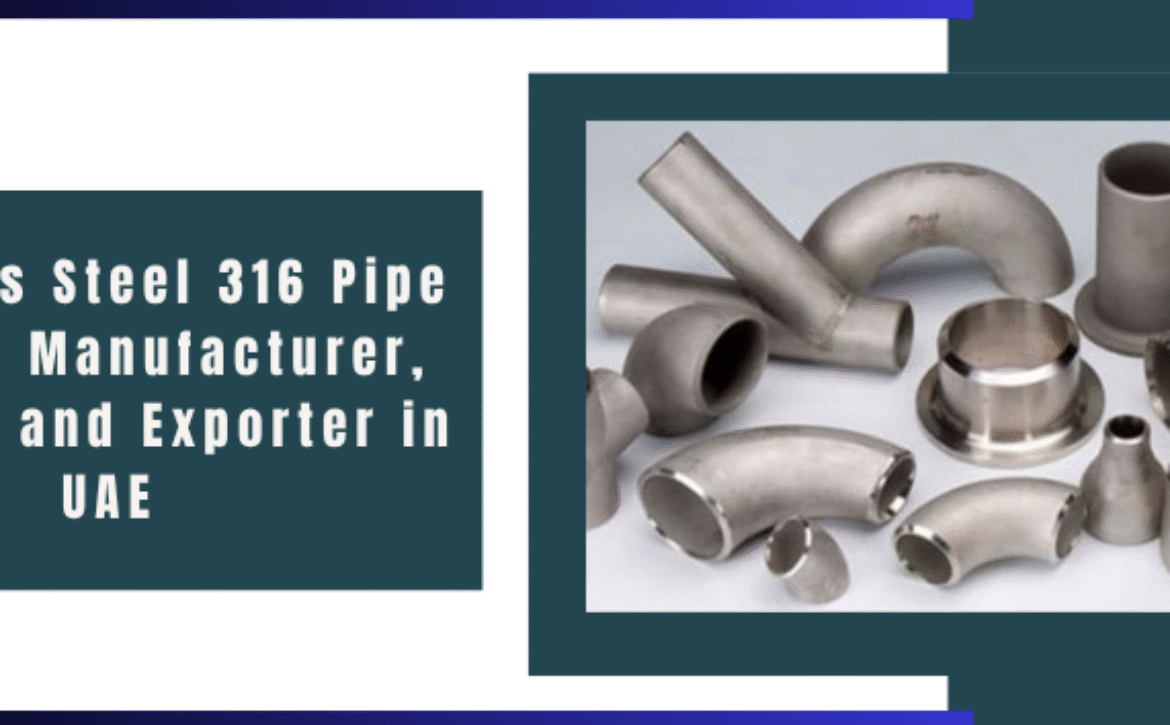
Stainless Steel 316 Pipe Fittings Manufacturer, Supplier and Exporter in UAE

The UAE is home to some of the Middle East’s most demanding industrial sectors, including oil and gas, petrochemicals, marine engineering, desalination, water treatment, power generation, chemical processing, and industrial manufacturing. These industries require piping components that can withstand corrosion, pressure, temperature variations, chemicals, moisture, and demanding operating conditions.

Stainless Steel 316 Pipe Fittings are widely selected for such applications because of their excellent corrosion resistance, particularly in environments containing chlorides, saltwater, and aggressive chemicals.

Mcneil Alloys is a manufacturer, supplier, and exporter of Stainless Steel 316 Pipe Fittings in the UAE, offering fittings for critical industrial piping and fluid-handling applications. The company supplies SS 316 fittings in multiple configurations and manufactures them according to recognized international standards.

What Are Stainless Steel 316 Pipe Fittings?

Stainless Steel 316 Pipe Fittings are components used to connect, redirect, branch, reduce, or terminate stainless steel piping systems. They are manufactured from Grade 316 austenitic stainless steel, which contains chromium, nickel, and molybdenum.

The addition of molybdenum gives SS 316 improved resistance to pitting and crevice corrosion compared with commonly used SS 304 in many chloride-containing environments.

This makes Stainless Steel 316 Pipe Fittings particularly suitable for UAE applications involving seawater, humidity, chemicals, offshore environments, and industrial fluids.

Mcneil Alloys supplies SS 316 fittings in configurations including elbows, tees, reducers, caps, stub ends, crosses, and other fitting requirements.

Why Choose Stainless Steel 316 Pipe Fittings in the UAE?

The UAE’s climate and industrial environment can place significant demands on piping systems. High temperatures, humidity, coastal exposure, saltwater, and aggressive industrial fluids make corrosion resistance an important consideration when selecting piping materials.

1. Excellent Corrosion Resistance

SS 316 offers excellent resistance to corrosion and is particularly useful in environments where exposure to moisture, chemicals, and chlorides can occur.

2. High Resistance to Pitting and Crevice Corrosion

The molybdenum content of Stainless Steel 316 improves resistance to localized corrosion, making it suitable for many marine, offshore, desalination, and chemical-processing applications.

3. Suitable for Marine Environments

The UAE has extensive coastal infrastructure and marine operations. SS 316 fittings can be used in suitable marine piping systems where resistance to saltwater-related corrosion is important.

4. High Strength and Durability

Stainless Steel 316 provides a useful combination of mechanical strength, durability, and corrosion resistance for demanding industrial piping systems.

5. Suitable for High-Pressure Applications

When correctly specified according to the required dimensions, schedule, pressure rating, and design conditions, SS 316 fittings can be used in high-pressure industrial piping systems.

6. Hygienic and Easy to Maintain

The smooth, corrosion-resistant stainless steel surface makes SS 316 suitable for applications where cleanliness and hygiene are important, including selected food-processing and pharmaceutical systems.

ASTM A403 WP 316 Pipe Fittings Specifications

Mcneil Alloys lists its Stainless Steel 316 Pipe Fittings under ASTM A403 / ASME SA403 and provides multiple sizes, schedules, forms, and end configurations.

Specification Details
Material Grade Stainless Steel 316
ASTM Specification ASTM A403
ASME Specification ASME SA403
Size Range 1/2″ NB to 48″ NB
Type Seamless / Welded / Fabricated
Forms Elbow, Tee, Reducer, Cap, Stub End, Cross
Schedule SCH 10 to SCH XXS
Ends Bevelled / Plain / Threaded
Standards ASME B16.9, B16.11, B16.28, MSS-SP-43

Specific availability can vary according to size, configuration, manufacturing method, and project requirements.

Chemical Composition of Stainless Steel 316

Stainless Steel 316 contains chromium, nickel, and molybdenum. Mcneil Alloys’ published material information lists approximately 16–18% chromium, 10–14% nickel, and 2–3% molybdenum for ASTM A403 WP 316.

Element ASTM A403 WP 316
Carbon (C) 0.08% max
Manganese (Mn) 2.00% max
Phosphorus (P) 0.045% max
Sulfur (S) 0.03% max
Silicon (Si) 1.00% max
Nickel (Ni) 10.0–14.0%
Chromium (Cr) 16.0–18.0%
Molybdenum (Mo) 2.0–3.0%

The applicable material standard and project documentation should always be verified for the specific order.

Types of Stainless Steel 316 Pipe Fittings

Different industrial piping systems require different fitting configurations. Mcneil Alloys offers SS 316 fittings in several forms.

Stainless Steel 316 Elbows

SS 316 elbows are used to change the direction of flow within a piping system. They are commonly used in process, marine, chemical, oil and gas, and industrial piping.

Stainless Steel 316 Tees

Tees provide branch connections within piping systems. They are used where a main pipeline needs to connect to an additional process or utility line.

Stainless Steel 316 Reducers

Reducers connect pipes of different diameters and allow controlled transitions between piping sizes.

Stainless Steel 316 Caps

Caps are used to close or terminate pipe sections and can be useful during system isolation, fabrication, and future expansion.

Stainless Steel 316 Stub Ends

Stub ends are used with suitable flange arrangements and can simplify certain piping installation and maintenance requirements.

Stainless Steel 316 Crosses

Cross fittings provide multiple branch connections and are used in specialized piping layouts.

Mcneil Alloys lists elbows, tees, reducers, caps, stub ends, and crosses among its SS 316 pipe fitting forms.

Applications of Stainless Steel 316 Pipe Fittings in UAE

Stainless Steel 316 Pipe Fittings are used across a wide range of industries in the UAE.

Oil and Gas Industry

The UAE’s oil and gas industry requires corrosion-resistant piping components for processing, transportation, utilities, and related infrastructure.

SS 316 fittings can be used in appropriately specified:

  • Process piping
  • Utility lines
  • Fluid transfer systems
  • Offshore installations
  • Equipment connections
  • Corrosive service applications

Petrochemical Plants

Petrochemical facilities handle chemicals and process fluids under demanding conditions. SS 316 fittings can provide corrosion resistance and durability for suitable process and utility applications.

Marine and Offshore Applications

Marine environments expose equipment to moisture and chlorides. The molybdenum content of SS 316 makes it particularly useful for applications where resistance to localized corrosion is important.

Applications can include:

  • Marine piping
  • Offshore platforms
  • Shipbuilding systems
  • Seawater-related systems
  • Coastal industrial infrastructure

Desalination and Water Treatment

Desalination is particularly important in the UAE. Piping systems in desalination and water-treatment facilities may encounter saline water and corrosive environments.

SS 316 fittings can be selected for suitable systems where enhanced corrosion resistance is required.

Chemical Processing

Chemical plants require piping materials that can withstand specific process fluids and operating environments. Stainless Steel 316 can be considered for applications requiring good resistance to corrosion and chemical exposure.

Food and Beverage Processing

SS 316 fittings can be used in suitable food-processing systems where corrosion resistance, durability, and hygienic characteristics are important.

Power Generation

Power plants use extensive networks of process and utility piping. SS 316 fittings can be used in selected applications requiring corrosion-resistant piping connections.

Stainless Steel 316 Pipe Fittings for Dubai

Dubai’s industrial, construction, marine, hospitality, water-treatment, and infrastructure sectors create demand for reliable corrosion-resistant piping components.

SS 316 fittings can be suitable for projects where piping systems are exposed to humidity, coastal conditions, chemicals, or demanding industrial fluids.

Mcneil Alloys supplies Stainless Steel 316 Pipe Fittings for UAE industrial requirements, with its product information specifically identifying oil and gas, petrochemical, marine, water treatment, and industrial piping applications.

Stainless Steel 316 Pipe Fittings for Abu Dhabi

Abu Dhabi is a major center for the UAE’s energy and industrial infrastructure. Oil and gas facilities, petrochemical plants, offshore projects, utilities, and water infrastructure require high-quality piping components.

Stainless Steel 316 fittings can provide an effective solution for appropriately engineered applications requiring enhanced resistance to corrosion, pitting, and aggressive environments.

Stainless Steel 316 Pipe Fittings for Sharjah and Other Emirates

SS 316 pipe fittings are also relevant to industrial and infrastructure projects across Sharjah, Fujairah, Ras Al Khaimah, Ajman, Umm Al Quwain, and other UAE locations.

Mcneil Alloys states that it supplies stainless steel pipe fittings across major UAE industrial markets including Abu Dhabi, Dubai, Sharjah, Fujairah, and Ras Al Khaimah.

Stainless Steel 316 vs Stainless Steel 304 Pipe Fittings

Both SS 304 and SS 316 are widely used stainless steel grades, but their performance differs depending on the environment.

The key difference is that SS 316 contains molybdenum, which provides improved resistance to pitting and localized corrosion in many chloride-containing environments.

Feature SS 304 SS 316
General corrosion resistance Excellent Excellent
Molybdenum No Yes
Chloride resistance Good Better
Marine applications Limited/suitable depending on conditions Generally preferred for suitable applications
Chemical environments Suitable for many applications Better for many aggressive environments
Cost Generally lower Generally higher

For UAE projects involving seawater, coastal exposure, offshore environments, or aggressive chemicals, SS 316 may be preferred where the engineering requirements justify its use.

How to Select the Right SS 316 Pipe Fittings

Choosing the correct pipe fitting requires more than selecting the material grade. Buyers and engineers should evaluate the complete operating environment.

1. Operating Pressure

Determine the design and operating pressure before selecting the fitting dimensions and schedule.

2. Operating Temperature

Temperature affects material performance and should be considered during specification.

3. Fluid or Chemical

The chemical composition of the transported medium should be reviewed to determine whether SS 316 provides adequate corrosion resistance.

4. Pipe Size

The fitting size must match the connected piping system.

5. Schedule and Wall Thickness

Select the appropriate schedule based on pressure, temperature, pipe dimensions, and applicable engineering requirements.

6. Fitting Configuration

Choose the appropriate elbow, tee, reducer, cap, stub end, cross, or other configuration according to the piping layout.

7. Manufacturing Standard

Verify compliance with the required ASTM, ASME, ANSI, or project-specific standards.

Quality Considerations When Buying SS 316 Pipe Fittings in UAE

For critical industrial applications, buyers should evaluate the manufacturer’s quality systems and documentation rather than selecting fittings based solely on price.

Important considerations include:

  • ASTM A403 / ASME SA403 compliance
  • Material traceability
  • Chemical composition
  • Mechanical properties
  • Dimensional accuracy
  • Surface quality
  • Required testing and inspection
  • Material Test Certificates
  • Manufacturing standards
  • Proper packaging
  • Delivery requirements
  • Technical support

For oil and gas, petrochemical, marine, and water-treatment projects, appropriate documentation and traceability are particularly important.

Why Choose Mcneil Alloys for Stainless Steel 316 Pipe Fittings in UAE?

Mcneil Alloys manufactures, supplies, and exports Stainless Steel 316 Pipe Fittings for demanding industrial applications in the UAE. Its published product range includes multiple SS 316 fitting configurations and sizes, manufactured according to ASTM A403 / ASME SA403 and applicable dimensional standards.

The company identifies applications across oil and gas, petrochemical, marine, water treatment, food processing, and industrial piping systems.

Key advantages include:

  • Stainless Steel 316 Pipe Fittings
  • ASTM A403 / ASME SA403 specifications
  • Multiple fitting configurations
  • Wide size and schedule range
  • Seamless, welded, and fabricated options
  • International dimensional standards
  • UAE-based supply capabilities
  • Applications across critical industrial sectors
  • Export capabilities across Gulf and international markets

Mcneil Alloys lists its UAE branch in the SAIF Zone, Sharjah, supporting its UAE supply operations.

Conclusion

Stainless Steel 316 Pipe Fittings are an important component of corrosion-resistant piping systems used throughout the UAE. Their combination of strength, durability, corrosion resistance, and improved resistance to pitting makes them suitable for many demanding applications.

From oil and gas and petrochemical facilities to marine projects, desalination plants, water-treatment systems, chemical processing facilities, food-processing units, and industrial infrastructure, SS 316 fittings can provide reliable piping connections when correctly specified.

Mcneil Alloys supplies ASTM A403 Stainless Steel 316 Pipe Fittings in UAE in multiple configurations, sizes, schedules, and end types to support demanding industrial piping requirements.

For companies looking for a Stainless Steel 316 Pipe Fittings Manufacturer, Supplier and Exporter in UAE, Mcneil Alloys provides stainless steel piping solutions designed for demanding industrial and fluid-handling applications.

Frequently Asked Questions

1. Who is a Stainless Steel 316 Pipe Fittings supplier in UAE?

Mcneil Alloys is a manufacturer, supplier, and exporter of Stainless Steel 316 Pipe Fittings in the UAE, serving industrial applications across oil and gas, petrochemical, marine, water treatment, and other sectors.

2. What is ASTM A403 WP 316?

ASTM A403 WP 316 is a specification for wrought austenitic stainless steel pipe fittings, with WP 316 being the Grade 316 material designation.

3. Why is SS 316 preferred for marine applications?

SS 316 contains molybdenum, which improves resistance to pitting and crevice corrosion in many chloride-containing environments. This makes it a suitable choice for appropriately specified marine and coastal applications.

4. What types of SS 316 pipe fittings are available?

Common types include elbows, tees, reducers, caps, stub ends, and crosses. Mcneil Alloys lists these configurations for its SS 316 fitting range.

5. What standards are used for Stainless Steel 316 Pipe Fittings?

Mcneil Alloys lists ASTM A403 / ASME SA403 as the material specification and ASME B16.9, B16.11, B16.28, and MSS-SP-43 among the applicable standards.

6. What sizes of SS 316 Pipe Fittings are available?

The published UAE product page lists a size range of 1/2″ NB to 48″ NB, with availability depending on the fitting type and project requirements.

7. Where are Stainless Steel 316 Pipe Fittings used in the UAE?

SS 316 fittings are used in oil and gas, petrochemical, marine, water treatment, desalination, food processing, chemical processing, power generation, and industrial piping applications.

8. What is the difference between SS 316 and SS 316L?

SS 316L is the low-carbon version of SS 316 and is commonly selected when welding requirements make the lower carbon content advantageous. The choice should be based on the project’s fabrication and service requirements.

Read More
admin August 20, 2026 0 Comments