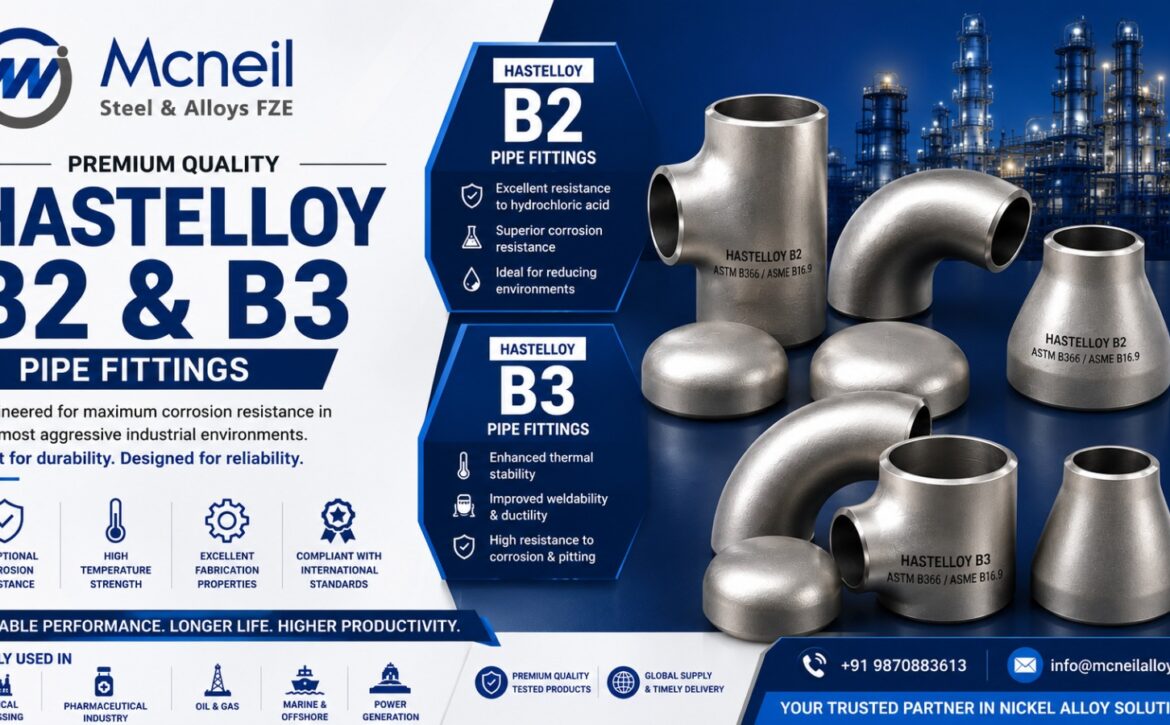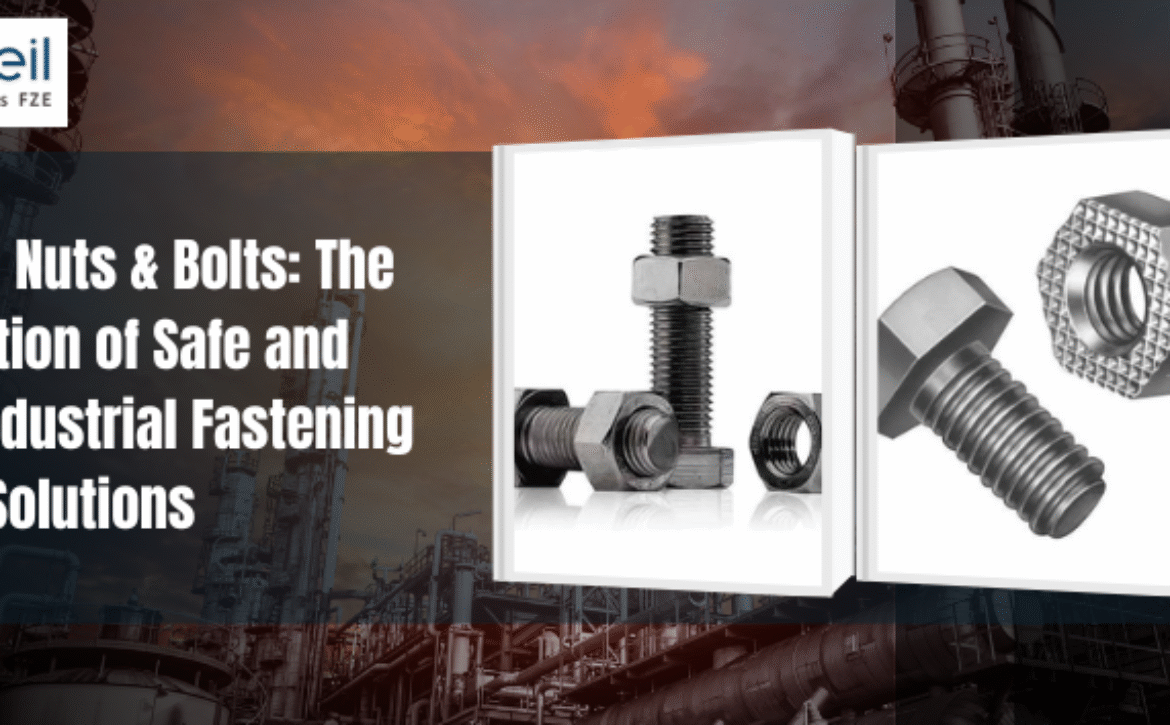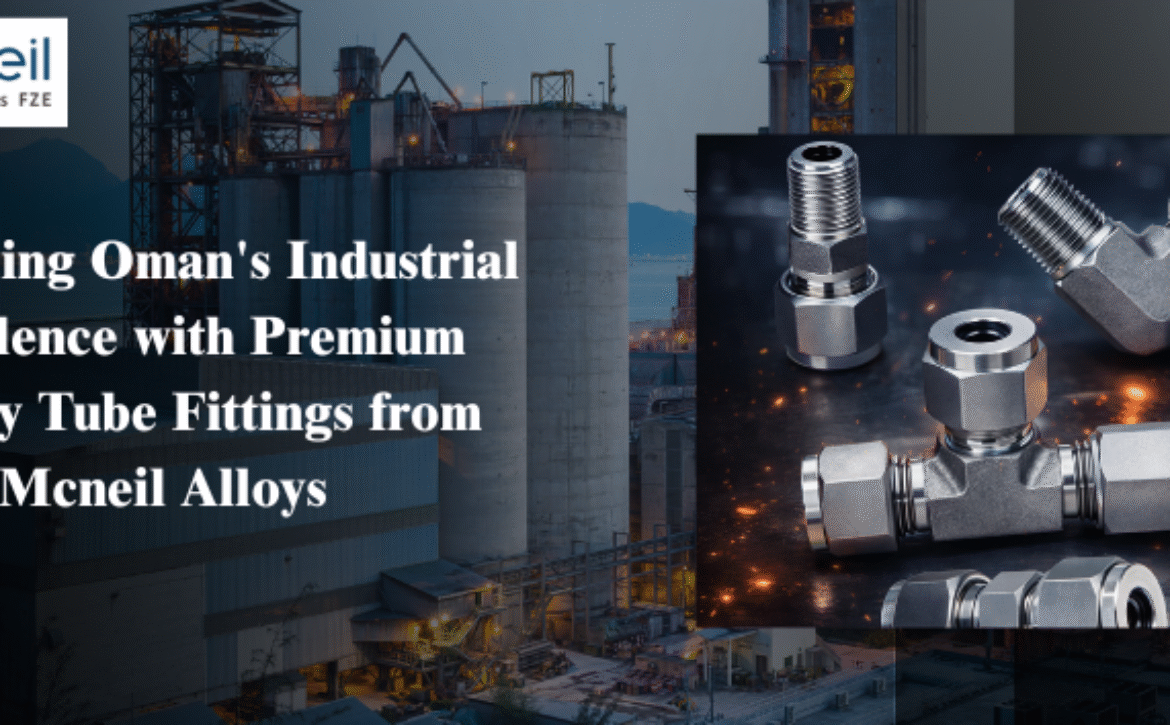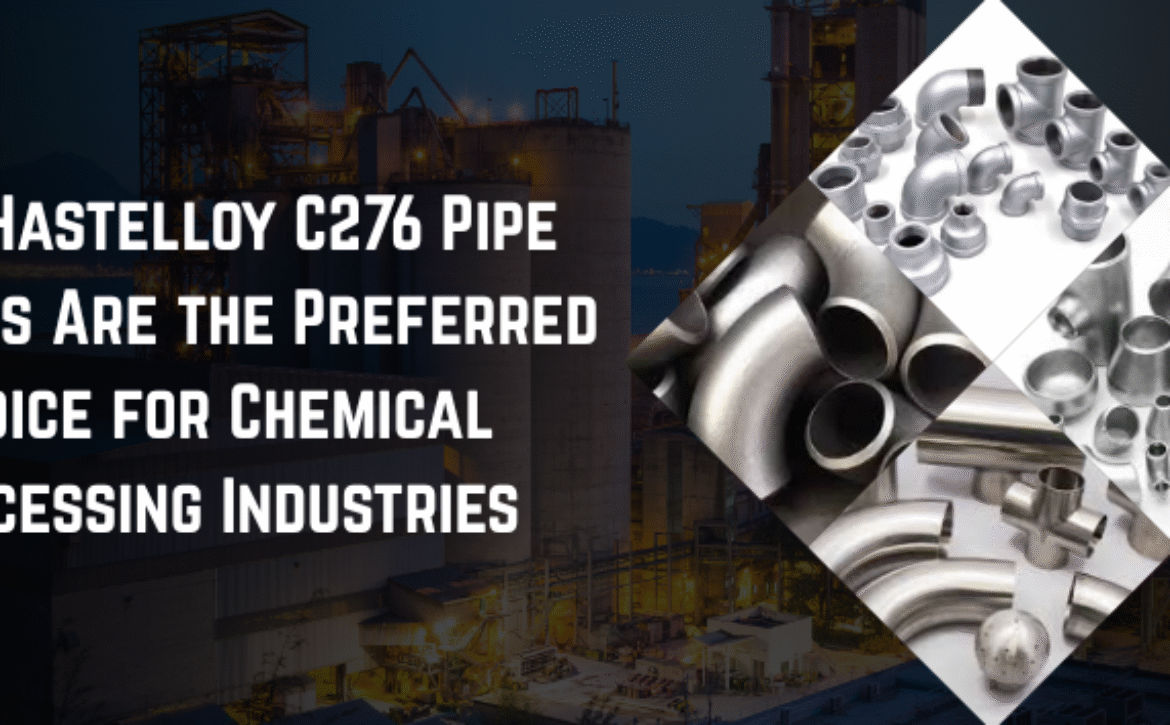
Manufacturer & Exporters of:
Instrumentation Pipe Fittings & Valves

Why Project Lead Times Fail: A Procurement Manager’s Guide to Managing Alloy Supply Chains

It’s 4:30 PM on a Thursday. You’re scanning your project tracker, and everything looks green. The welders are booked, the site prep in Ruwais or Jebel Ali is finishing up, and your high-pressure alloy pipes are supposedly “in transit.” Then the phone rings. It’s your supplier with that specific tone of voice that usually precedes a disaster.

Suddenly, your eight-week lead time has ballooned into fourteen. The “slight delay” just triggered a domino effect of liquidated damages (LDs), idle labor costs, and a very difficult conversation with your project director. At Mcneil Alloys, we’ve seen this script play out too many times. In 2026, the global alloy supply chain isn’t just a logistics challenge—it’s a high-stakes game of strategy.


  1. The “Specialty Melt” Bottleneck

One of the biggest misconceptions in procurement is treating high-performance alloys like standard carbon steel. Carbon steel is a commodity; it’s being produced somewhere in the world every second of every day. Super Duplex, Inconel, and Hastelloy are different.

These materials are produced in “campaigns” or “melts.” A mill might only melt a specific grade of Super Duplex once every three months.

  • The Trap: If your order misses the “window” for that specific melt by even a few days, you aren’t just delayed by a week—you are pushed to the next campaign.
  • The 2026 Reality: Many traders promise lead times based on historical data. They tell you eight weeks because that’s what it was last year, ignoring the fact that the mill’s current melt schedule is already overbooked with aerospace or green energy orders.
  1. The Documentation Trap: Why the Pipe is Ready but the Shipment Isn’t

In the modern UAE industrial landscape, a pipe is only as good as the paper behind it. We often see situations where fifty tons of high-grade seamless pipe are physically sitting on a warehouse floor, perfectly manufactured and ready to go. But they don’t move. Why?

  • Mill Test Certificate (MTC) Errors: A single typo in a heat number or a chemical composition percentage can stop a shipment at customs for weeks.
  • Third-Party Inspection (TPI) Delays: In 2026, ADNOC and Aramco standards have become even more rigorous. Coordinating an inspector to visit the mill, verify the pressure tests, and sign off on the release note can add 15% to your lead time if not managed aggressively.
  • The Lesson: When a supplier gives you a lead time, ask if that includes “Documentation and Release.” If it doesn’t, add two weeks to your internal calendar immediately.
  1. The “Ex-Works” vs. “DDP” Illusion

Procurement managers often focus on the price at the factory gate (Ex-Works). But in a world of shifting shipping lanes and port congestion, the “last mile” is where timelines go to die.

  • Port Congestion: Even a small backlog at a major hub can turn a three-day clearance into a ten-day ordeal.
  • Freight Volatility: In 2026, shipping containers for heavy industrial loads are in high demand. If your supplier hasn’t pre-booked space on a vessel, your “finished” pipes might sit on a dock in Europe or Asia waiting for a spot to open up.


How to Take Control of Your 2026 Timeline

You cannot control the global nickel market or the speed of a cargo ship, but you can change how you source.

  • Engage During the FEED Stage: Don’t wait for the final approved drawings to start talking to your material partner. At Mcneil Alloys, we can tell you which alloys are currently “tight” in the market six months before you need them.
  • The Strategic Pivot (Material Substitution): Sometimes, the exact grade specified by a junior engineer has a 20-week lead time, while a superior (but slightly more expensive) grade is available in stock. The extra $5,000 spent on material might save you $50,000 in project delay penalties.
  • Verify “Physical” Stock: Stop accepting “back-to-back” quotes where a trader is just calling a mill. Ask for a photo of the material with a current date stamp or a copy of the existing MTC. If they have the metal, they have the paper.


Conclusion:

In the end, the cheapest quote is often the one that costs you the most. A supplier who offers an “optimistic” lead time to win a contract is effectively gambling with your project’s reputation.

At Mcneil Alloys, we believe in radical transparency. We would rather lose a contract by telling you the truth about a 12-week lead time than win it by lying about an 8-week one. In the UAE’s high-pressure industrial environment, the most valuable asset you can have isn’t a low price—it’s a partner who respects your deadline as much as you do.


Read More
admin March 27, 2026 0 Comments

Pressure Rating Explained: What Class 150, 300, 600 Really Means?


In industrial piping systems, terms like Class 150, Class 300, and Class 600 frequently appear in specifications,
purchase orders, and technical discussions. While these numbers are widely used, they are often misunderstood.

At Mcneil Alloys, we work closely with clients across the UAE and GCC to ensure the correct
selection of pressure-rated components for critical applications.

What is Pressure Rating?

Pressure rating refers to the maximum pressure a flange or fitting can safely withstand at a given temperature.

  • As temperature increases, pressure tolerance decreases
  • Ratings are defined by standards such as ASME B16.5
  • Pressure classes represent ranges, not exact PSI values

This means that a Class 300 flange does not mean it can handle exactly 300 PSI.

Understanding Class 150, 300, and 600

Class 150 – Low to Moderate Pressure Applications

  • Approx. up to 285 PSI at ambient temperature
  • Lightweight and cost-effective
  • Used in water systems, HVAC, and low-pressure oil lines

Class 300 – Medium Pressure Applications

  • Approx. up to 740 PSI at ambient temperature
  • Stronger and more durable
  • Used in chemical plants, petrochemical industries, and steam systems

Class 600 – Ideal for critical high-pressure operations

  • Approx. up to 1480 PSI at ambient temperature
  • Heavy-duty construction
  • Used in oil & gas, steam lines, and power plants

Why Temperature Matters

Temperature plays a major role in pressure capacity.

  • A Class 300 flange at 38°C may handle around 740 PSI
  • At 400°C, its pressure capacity drops significantly

This happens because materials lose strength at higher temperatures.

Material Selection is Equally Important

Pressure rating is influenced not only by class but also by the material used.

  • Carbon Steel – Standard industrial applications
  • Stainless Steel – Corrosion resistance
  • Alloy / Duplex Steel – High strength and harsh environments

Common Mistakes to Avoid

  • Assuming Class 300 equals 300 PSI
  • Ignoring temperature effects
  • Choosing lower class only to reduce cost
  • Not matching ratings across components

How to Choose the Right Pressure Class

  • Operating pressure
  • Maximum temperature
  • Type of fluid
  • Industry standards
  • Application criticality

How Mcneil Alloys Supports Your Projects

  • Expert guidance based on ASME standards
  • Wide range from Class 150 to 2500
  • Materials: Carbon Steel, Stainless Steel, Duplex, Alloy
  • Fast delivery across UAE & GCC

Final Thoughts

Understanding pressure ratings is essential for safety, performance, and long-term reliability.

  • Efficient system operation
  • Reduced maintenance
  • Improved safety

If you’re unsure which pressure class is right for your application, expert guidance can make all the difference.


Read More
admin March 23, 2026 0 Comments

What is the Difference Between Forged and Plate Flanges?

If you’ve worked with piping systems long enough, you know one thing — not all flanges are created equal.

On paper, forged and plate flanges might look similar. Same shape, same function, same connection purpose. But in real industrial conditions — high pressure, temperature variation, corrosive environments — the difference between the two becomes very clear.

Choosing the wrong type doesn’t just affect performance; it can lead to leakage, maintenance issues, or even system failure. That’s why understanding how these flanges are made and where they should be used is more than just technical knowledge — it’s a practical decision that impacts long-term reliability.

Let’s break it down in a straightforward way.

What are Forged Flanges?

Forged flanges are made by shaping metal under high pressure, usually at elevated temperatures. Instead of cutting from a sheet, the material is compressed and formed into shape.

This process changes the internal structure of the metal. It aligns the grain flow, making the flange stronger and more resistant to stress. In simple terms — the material becomes tougher from the inside, not just the surface.

From a practical point of view, forged flanges are built for demanding conditions. They’re commonly used in oil & gas lines, refineries, and high-pressure systems where failure is not an option.

You’ll notice that forged flanges tend to feel more “solid” in machining and handling — that’s because of their dense structure.

What are Plate Flanges?

Plate flanges are much simpler in terms of manufacturing. They are cut directly from flat steel plates and then machined to the required dimensions.

There’s no forging involved, which means the internal grain structure of the metal remains as it was in the original plate. While this is perfectly fine for many applications, it doesn’t offer the same strength as forged material.

From a buyer’s perspective, plate flanges are attractive because they are more economical and easier to produce, especially in larger sizes. That’s why you’ll often see them used in water lines, low-pressure systems, or non-critical applications.


The Real Differences That Matter

Instead of just listing technical points, here’s what actually matters when you’re selecting between the two:

Strength and Reliability: Forged flanges clearly outperform plate flanges here. If your system deals with pressure fluctuations or heavy loads, forged is the safer option.

Plate flanges can handle normal conditions, but they’re not designed for extreme stress.


Manufacturing Approach: Forged flanges are shaped under pressure — plate flanges are cut from sheets.

This one difference is the reason everything else changes — strength, durability, and performance.


Cost vs Performance: Plate flanges are cheaper, no doubt. But the real question is — what’s the cost of failure?

In low-risk systems, saving cost makes sense. In critical systems, it usually doesn’t.


Application Suitability: From experience, the decision usually comes down to application:

  • Forged flanges → High pressure, high temperature, critical lines
  • Plate flanges → Utility lines, water systems, low-pressure applications


Size Consideration: If you’re dealing with very large diameters, plate flanges are often more practical and readily available.

Forged flanges are typically used within standard size ranges due to manufacturing limitations.


When Should You Choose Forged Flanges?: If your project involves anything critical — oil pipelines, chemical processing, steam lines — forged flanges are the safer bet. They handle stress better, last longer, and reduce the chances of unexpected issues. In industries where downtime is expensive, this matters a lot.


When Do Plate Flanges Make Sense? : Plate flanges work well when the system is straightforward and not under heavy stress.

For example, water pipelines or general industrial services where conditions are stable. In such cases, they offer a good balance between cost and functionality.


Conclusion

At the end of the day, the difference between forged and plate flanges comes down to how much reliability your system needs.

Forged flanges give you strength, durability, and confidence in critical operations. Plate flanges give you flexibility and cost savings for less demanding applications.

There’s no “one-size-fits-all” answer — the right choice depends on where and how the flange will be used. But one thing is clear: understanding this difference upfront can save a lot of trouble later.


Read More
admin March 18, 2026 0 Comments

The Valve Inspection Checklist: Don’t Let a “Good Deal” Ruin Your Pipeline

When you are staring at a row of stainless steel valves on a pallet, they all look pretty much the same. They are shiny, heavy, and have the right markings stamped on the side. But in the industrial world, what you see is rarely what you get.

A valve that looks perfect on the warehouse floor can become a liability the moment it is subjected to 6,000 PSI or corrosive chemicals. At Mcneil Alloys, we’ve seen how a single skipped verification step can lead to a million-dollar shutdown. Verifying quality isn’t just about ticking a box; it’s about ensuring that the component you’re installing won’t fail when your crew’s safety is on the line.


Why Verification is Your Best Insurance Policy

A valve is a mechanical assembly with moving parts, seals, and precise tolerances. Unlike a length of pipe, which is static, a valve has to perform an action under stress. If the internal casting is porous or the seat material is substandard, the failure won’t happen during the “unboxing”—it will happen during commissioning.

For 2026 projects, where timelines are tighter than ever, the real goal of verification is predictability. You aren’t just looking for defects; you are looking for the confidence that the valve will operate for its entire service life without needing an emergency replacement.


Four Critical Checks Before the Valve Leaves the Supplier

  • 1. The Documentation Audit (The “Paper Trail”): Never accept a valve without its Mill Test Certificate (MTC). This document should link the heat number on the valve body back to the original batch of metal. If the numbers don’t match, or the certificate looks generic, that’s your first red flag.
  • 2. Visual and Dimensional Inspection: Look at the “finish” of the valve. High-quality manufacturers take pride in their machining. Check for:
    • Smoothness of the stem threads.
    • Sharpness of the flange serrations.
    • Uniformity of the casting (no pits or tiny “sand holes”).
  • 3. The Seat Leakage Test: Ask for the test reports. Whether it is a Hydrostatic test (using water) or a Pneumatic test (using air), you need to know the valve achieved a “bubble-tight” shut-off at its rated pressure.
  • 4. Positive Material Identification (PMI): In a world of mixed-up global supply chains, verify the alloy. A quick PMI gun scan ensures that the “316 Stainless Steel” you paid for isn’t actually a cheaper grade that will rust in six months.


Situations Where High-Level Verification is Non-Negotiable

  • High-Pressure Gas Lines: Where a tiny leak can turn into a major hazard.
  • Offshore Environments: Where salt air eats through substandard coatings in weeks.
  • Corrosive Chemical Processing: Where the wrong seal material will melt or swell.
  • High-Cycle Operations: Where the valve is opened and closed dozens of times a day.


The Real Cost of “Skipping the Check”

It is tempting to save time by trusting the trader’s word, especially when you are behind schedule. But “trust” isn’t a technical specification. The cost of a technician visiting a remote site to replace a $50 valve can easily climb into the thousands when you factor in travel, downtime, and labor.

High-quality valves carry a slightly higher initial value because they have been through these rigorous checks before they reach you. At Mcneil Alloys, we believe that reliability is a financial metric. A valve that passes every test today is a valve you won’t have to think about for the next ten years.


Conclusion

A valve is the gatekeeper of your system. The decision to verify its quality before purchase is the difference between a smooth operation and an unexpected disaster.

If your project demands certainty and long-term performance, take the time to audit the paperwork, scan the material, and verify the pressure tests. The right choice is the one that lets you sleep at night, knowing the “gatekeeper” is doing its job perfectly.


Read More
admin March 16, 2026 0 Comments

The Invisible Line Item: How New Carbon Taxes are Quietly Reshaping Your Flange Quotes

Imagine opening a quote for a standard batch of stainless steel flanges. The dimensions are exactly what you specified. The material grade is identical to what you ordered last year. But the final number at the bottom has climbed significantly.

It isn’t just the price of iron ore, and it isn’t a temporary spike in shipping. There is a new, quiet player at the table: the carbon tax.

At Mcneil Alloys, we are seeing a major shift in how piping projects are budgeted for 2026. For years, carbon emissions were something discussed in boardrooms or environmental reports. Today, they are a direct line item that dictates the landed cost of every imported flange.


The New Reality of “Dirty” vs. “Clean” Steel

In the world of industrial piping, we are used to talking about pressure ratings and chemical compositions. But as we move through 2026, a new metric has become just as important—the carbon intensity of the mill where your flange was forged.

This is largely due to the Carbon Border Adjustment Mechanism, often called CBAM.If a flange is produced in a region with lower environmental standards or using older, coal-heavy furnaces, it now carries a financial penalty when it enters certain markets.

The goal is simple: to level the playing field so that manufacturers using cleaner, more expensive technology aren’t undercut by those using high-pollution methods.

Why the “Cheapest” Flange is Often the Most Expensive

We have seen this play out in real-time. A procurement manager finds a supplier offering flanges at a significantly lower rate than the market average. However, because that mill uses outdated technology, the carbon tax applied at the border is massive.

By the time the shipment clears customs, that “cheap” flange costs more than a premium part sourced from a modern, low-emission mill. At Mcneil Alloys, we believe the 2026 market is finally forcing a change in perspective: Sustainability is no longer a luxury—it is a financial strategy.


The Documentation Burden: You Are Buying Data, Not Just Metal

One of the biggest hidden costs isn’t the tax itself, but the paperwork required to prove the carbon footprint.

  • Verified Reports: You aren’t just buying metal anymore; you are buying data. Each shipment now requires a detailed report of the emissions generated during its creation.
  • The Penalty of Silence: If your supplier cannot provide verified data, the authorities often apply a “default” tax rate, which is usually the highest possible penalty.
  • Compliance Delays: Missing carbon documentation can lead to weeks of delays at the port, which is a project killer for EPC contractors on a tight schedule.


How to Protect Your 2026 Piping Budget

You don’t have to be an environmental expert to navigate these changes, but you do need to be a strategic buyer.

  • Audit Your Mills: Start asking your suppliers about their furnace types. Electric arc furnaces generally carry a much lower carbon tax than traditional blast furnaces.
  • Request Carbon Data at the RFQ Stage: Do not wait until the goods are on the water to ask for emissions data. Make it a requirement of the quote.
  • Look for Regional Consistency: Sourcing from mills that already comply with high international standards ensures that your “total landed cost” remains predictable.

Conclusion

The 2026 market is teaching us that the cheapest flange on the spreadsheet is rarely the cheapest one in the warehouse. Carbon taxes are no longer a “future concern”—they are an active part of your project’s financial health.

At Mcneil Alloys, we help you look beyond the surface of the metal to ensure your supply chain is compliant, efficient, and protected from these hidden costs. We don’t just ship flanges; we provide the technical and regulatory certainty you need to keep your project in the green.


Read More
admin March 9, 2026 0 Comments

How Raw Material Fluctuations Will Shape 2026 Piping Project

In the industrial world, the price of a flange or a length of seamless pipe is never truly static. For procurement managers and EPC contractors planning for the 2026 fiscal year, the challenge isn’t just about finding the right technical specification—it is about navigating the shifting sands of global raw material costs.

At Mcneil Alloys, we recognize that a piping budget drafted today can look very different by the time the project reaches the installation stage. As a Pipe and flanges manufacturer and exporter in uae Understanding why these fluctuations happen and how to plan for them is the difference between a project that stays in the green and one that faces unexpected financial hurdles.

The Invisible Link: How Raw Material Shifts Can Stall Your Project

A pipe is more than just a shaped piece of metal. It is a complex combination of iron ore, nickel, chromium, and energy. When the global market for any of these components shifts, the ripple effect is felt immediately on the factory floor and eventually in your project’s bottom line.

For 2026, several factors are converging to create a unique pricing environment:

  • Market Volatility: Supply chain stability and energy costs in manufacturing hubs are playing a massive role in baseline pricing.
  • Specialized Demand: The rising need for high-performance alloys in green energy and deep-sea extraction is tightening availability.
  • The Reliability Factor: When a project budget is set, the team isn’t just looking at a quote; they are looking at the stability of the supply chain.
  • Hidden Costs of Delay: A lag in raw material availability doesn’t just raise the price—it extends the project timeline, which is often the most expensive outcome of all.

Why Your 2026 Budget Needs a Foundation, Not Just a Quote

Deciding when to buy is just as important as deciding what to buy. Depending on your project’s risk profile, you may choose to lock in costs early or maintain a flexible approach.

Early Material Securing (Locking in Costs)

This approach is valuable when project timelines leave no margin for inflationary surprises. The advantage lies in predictability:

  • Fixed-price contracts become much easier to manage.
  • Production slots at the mill are guaranteed well in advance.
  • Technical documentation is cleared before the first weld happens.
  • Shipping schedules remain predictable, avoiding last-minute air-freight costs.
  • Inventory risks are shifted away from the site and back to the supplier.

Flexible Procurement (Economical Sourcing)

Flexible sourcing works effectively when the application allows for a longer lead time and the operational risk is manageable:

  • Ideal for non-critical utility lines and water systems.
  • Useful for long-term phased infrastructure projects where sections can be delayed.
  • Most economical for standard carbon steel networks where supply is plentiful.
  • Practical for building up maintenance and repair stock over time.

The Estimation Stage: Where Hidden Costs Become Visible

Most budget comparisons happen during the tender review, but the real financial evaluation occurs when the material actually arrives. During the estimation phase, minor variations in the cost of nickel or molybdenum can significantly alter the price of stainless steel or Duplex pipes.

  • Inventory Buffers: Established manufacturers often have the inventory depth to absorb small market shocks, providing a buffer for the buyer.
  • Price at Time of Shipment: Sourcing from volatile markets often leads to clauses where the final price is determined only when the truck leaves the dock. On a large project, even small percentage shifts can lead to massive budget overruns.
  • Documentation Integrity: Modern industrial projects rely on mill test certificates and third-party inspections. Choosing the lowest possible price often means a drop in documentation quality, leading to rejected materials and doubling your actual costs.

Understanding the True Cost Beyond the Invoice

The budget for a 2026 piping project includes more than the purchase price. It includes indirect factors like inspection coordination, clearance time, and the potential for replacement.

High-quality piping and valves may carry a slightly higher initial value, but they reduce the uncertainty of the project. Many project managers now consider reliability as a financial metric that is just as important as the unit rate. Reliability over the years often outweighs a short-term procurement advantage, especially when you consider that plants are built to last thirty years or more.


Conclusion

A piping budget is a complex puzzle, but it is ultimately about predictability. The decision on how to handle 2026 raw material fluctuations is a choice between taking a gamble or building a foundation.

If your project demands certainty, immediate support, and long-term consistency, early collaboration with a trusted manufacturer offers the best budget insurance. If the system allows for flexibility and a larger planning buffer, a phased procurement approach can control costs effectively. The right choice is the one that keeps the project moving forward without the fear of a mid-year budget collapse.


Read More
admin March 3, 2026 0 Comments

Domestic vs Imported Flanges in Industrial Projects: Understanding Cost, Quality, Risk and Long-Term Reliability Before You Decide

In piping systems, flanges rarely look complicated. They are round, standardized components with defined dimensions and pressure ratings. Yet, during installation or plant operation, they often become the difference between smooth commissioning and unexpected shutdown.

When procurement begins, buyers typically face one recurring comparison  domestic flanges vs imported flanges. At first glance the decision appears financial because imported material usually offers a lower purchase price. However, in real projects, the outcome depends less on the invoice and more on reliability, availability, and accountability.

This article explains the decision from a practical industry viewpoint: what actually happens during inspection, fit-up, operation, and maintenance.


Why the Origin of a Flange Changes Project Experience

Domestic flanges are produced within the same country as the installation site. This allows direct communication with the manufacturer, quicker clarification of drawings, and immediate response if deviations appear.

Imported flanges may meet the same ASTM or ASME standards on paper, but the supply chain becomes longer — involving shipping schedules, customs clearance, documentation exchange, and coordination across time zones. The material itself may be acceptable, yet the distance introduces uncertainty.

So the real comparison is not simply quality versus price. It is control versus dependency.

When a pipeline is ready for welding and one flange does not align, the team does not compare standards — they compare response time.


Situations Where Domestic Flanges Provide Operational Confidence

Domestic sourcing becomes valuable when project timelines or safety requirements leave little margin for delay. The advantage lies in responsiveness rather than just manufacturing.

  • Inspection agencies can visit the facility easily
  • Dimensional corrections can be handled quickly
  • Traceability verification is straightforward
  • Replacement during shutdown is faster
  • Installation alignment tends to be more consistent
  • Logistics risks remain minimal

For high-pressure or hazardous service pipelines, these practical benefits often outweigh minor price differences because downtime cost exceeds material savings.


Situations Where Imported Flanges Can Be Economical and Practical

Imported flanges are not inherently unsuitable. They work effectively when the application allows flexibility and procurement planning includes buffer time.

  • Suitable for water distribution and utility lines
  • Useful in large-volume low-risk piping networks
  • Economical for projects with strict budget targets
  • Acceptable when spare stock is maintained
  • Practical for temporary or non-critical installations

With proper inspection and reliable sourcing channels, they can serve well where operational risk remains limited.


Installation Stage: Where Differences Become Visible

Most flange comparisons happen during quotation review, but the real evaluation occurs on the shop floor. During fit-up, minor variations in machining tolerances affect bolt alignment and welding preparation. Each additional adjustment consumes time.

Domestic manufacturers often produce repeatedly for similar regional projects, so machining practices align closely with contractor expectations. This consistency reduces rework during assembly.

Imported materials sometimes vary between shipments when multiple traders or mills are involved. The grade marking remains identical, yet fit-up effort changes. Over hundreds of joints, even small adjustments extend installation schedules significantly.


Documentation and Technical Clarification Time

Modern industrial projects rely heavily on documentation — mill test certificates, PMI reports, and inspection approvals. When a consultant raises a query, response speed matters as much as document accuracy.

Domestic suppliers can usually respond the same day, revise certificates, or coordinate with inspectors quickly. Imported shipments may also have correct paperwork, but verification takes longer due to communication gaps and logistics coordination.

For EPC contractors working with fixed deadlines, waiting for document clarification can delay hydrotesting and commissioning.


Understanding the True Cost Beyond the Purchase Price

Imported flanges often appear economical during tender comparison because the unit rate is lower. However, project cost includes indirect factors:

inspection coordination, clearance time, storage delays, and possible replacement schedules. A single rejected component can delay multiple teams  welders, inspectors, and testing crews  multiplying costs.

Domestic flanges may carry a slightly higher purchase value but reduce uncertainty. Many project managers consider them financially safer when schedule adherence matters more than minimal savings.


Long-Term Maintenance and Availability Considerations

Plants operate for decades. During maintenance shutdowns, teams require identical replacements quickly. Domestic manufacturers typically maintain repeat production standards, simplifying spare procurement years later.

Imported sourcing may shift manufacturing origins over time, creating dimensional variation during future maintenance. Even small mismatches extend downtime during planned shutdowns.

Reliability over years often outweighs short-term procurement advantage.


Making a Balanced Procurement Decision

Rather than choosing one category universally, experienced engineers match the sourcing strategy to application risk. Critical systems benefit from accountable local manufacturing, while utility systems can safely optimize cost through imports.

A thoughtful combination often delivers the most efficient result — reliability where necessary and economy where acceptable.


Conclusion

A flange is a simple component, but it connects complex operations. The decision between domestic and imported is ultimately about predictability.

If your project demands certainty, immediate support, and long-term consistency, domestic sourcing offers operational assurance. If the system allows tolerance and planning buffer, imported sourcing can control budget effectively.

The right choice is the one that keeps the plant operating smoothly — not only on commissioning day, but throughout its service life.


Read More
admin February 23, 2026 0 Comments

Alloy Steel vs Stainless Steel Pipes: Key Differences and When to Use Each

In industrial projects, the choice of piping material directly affects performance, safety, and long-term cost. From high-temperature steam lines in power plants to corrosion-prone chemical processing units, every environment demands a material that can withstand its specific challenges. Alloy steel and stainless steel are two of the most widely used options because both offer superior properties compared to conventional carbon steel. However, their strengths are very different, and selecting the right one requires a clear understanding of how each material behaves in real operating conditions.

Why Does the Right Pipe Material Matter More Than You Think?

In industrial projects, piping is often seen as a standard component — until something goes wrong. A material that cannot handle the operating temperature, pressure, or surrounding environment can lead to unexpected shutdowns, rising maintenance costs, and serious safety risks.

That is why the debate between alloy steel and stainless steel pipes is not just a technical comparison. It is a decision that directly affects performance, durability, and the overall lifecycle cost of a project. Each material is designed for a different purpose, and understanding where it performs best is the key to building a reliable system.

What Makes Alloy Steel a Powerhouse for High-Temperature Applications?

Alloy steel is not just modified carbon steel — it is a material engineered for extreme service conditions. With the addition of elements such as chromium and molybdenum, it gains the strength required to operate under continuous high pressure and elevated temperatures.

This is the reason it is widely used in power plants, refineries, and petrochemical facilities. In these environments, pipes carry superheated steam or high-temperature process fluids for years without losing their structural stability. Ordinary materials would slowly deform under such conditions, but alloy steel maintains its strength and resists creep, making it a dependable solution for critical operations.

Why Is Stainless Steel the First Choice in Corrosive Environments?

While alloy steel is known for strength, stainless steel is known for survival in aggressive surroundings. Its chromium content forms a protective surface layer that shields it from rust, chemicals, and moisture. Even if the surface is scratched, the layer rebuilds itself, which is why stainless steel lasts so long in harsh environments.

This self-protecting property makes it the preferred material in desalination plants, marine pipelines, chemical processing units, and hygienic industries such as food and pharmaceuticals. In these sectors, corrosion resistance is not just an advantage — it is a necessity.

Stainless steel is selected when the environment itself is the biggest threat to the piping system.

Is Strength or Corrosion Resistance More Important for Your Application?

One of the most common mistakes in material selection is assuming that higher strength automatically means better performance. In reality, the operating environment decides what “better” actually means.

In high-temperature steam lines, alloy steel delivers unmatched reliability. In chemical transport pipelines exposed to corrosive media, stainless steel provides a longer and safer service life.

This is why these two materials are not competitors. They are solutions for completely different industrial challenges.

How Do They Perform in Real Industrial Conditions?

In power generation facilities, alloy steel proves its value every day. It operates for long periods under extreme heat without losing its shape or mechanical properties. This kind of performance is essential for maintaining efficiency and preventing costly downtime.

In contrast, stainless steel dominates in offshore and coastal installations where constant exposure to salt-laden air would quickly damage other materials. Its resistance to corrosion significantly reduces maintenance requirements and extends the life of the system.

Each material performs exceptionally — but only in the environment it was designed for.

What About Fabrication, Welding, and Installation?

From a fabrication perspective, stainless steel offers greater flexibility. It can be welded and formed into complex shapes with relative ease, which makes it suitable for projects with intricate piping layouts.

Alloy steel requires more controlled welding procedures, often involving preheating and post-weld heat treatment. While this adds time to the installation process, it ensures that the material retains its high-temperature strength and long-term reliability.

So the choice here is not about convenience — it is about ensuring performance in service.

Does the Higher Initial Cost Always Mean Higher Project Cost?

At first glance, stainless steel appears more expensive because of its alloying elements, particularly chromium and nickel. Alloy steel is often more economical for high-temperature applications where corrosion resistance is not the primary concern.

However, the real cost of a piping system is calculated over its entire life. In corrosive environments, stainless steel reduces maintenance, replacement, and downtime costs. In high-temperature service, alloy steel provides long-term durability and efficiency.

The smarter choice is the one that delivers the best lifecycle value, not just the lowest purchase price.

Where Is Each Material Commonly Used?

Alloy steel is the backbone of high-temperature and high-pressure systems. It is found in:

  • Thermal power plants
  • Refineries
  • Petrochemical processing units
  • High-pressure steam pipelines

Stainless steel, on the other hand, is essential in:

  • Chemical industries
  • Marine and offshore applications
  • Water treatment and desalination plants
  • Food and pharmaceutical processing

So, How Do You Make the Right Choice?

Selecting between alloy steel and stainless steel is not about choosing the stronger or more expensive option. It is about understanding the service conditions in detail — temperature, pressure, type of fluid, environmental exposure, and expected lifespan.

When these factors are evaluated correctly, the result is a piping system that performs efficiently, lasts longer, and requires less maintenance.

Conclusion: The Right Material Is the One That Matches the Environment

Alloy steel and stainless steel pipes are both engineered for performance, but their strengths lie in different areas. Alloy steel delivers unmatched reliability in high-temperature and high-pressure applications, while stainless steel provides exceptional durability in corrosive and moisture-rich environments.


Read More
admin February 13, 2026 0 Comments

Why 7 Out of 10 Alloy Purchases Fail — And How to Avoid Being One of Them

Alloy procurement is rarely a simple buying decision. It sits at the intersection of design intent, operating conditions, compliance requirements, and supplier capability. When any one of these elements is misunderstood or overlooked, the result is often material rejection, delayed commissioning, or premature failure in service.

Despite advancements in material science and global availability of alloy products, a significant percentage of alloy purchases still fail to meet project expectations. These failures are not random. They follow a predictable pattern rooted in technical misjudgment and process gaps.


When the Grade Is Selected Before the Application Is Fully Understood

One of the earliest mistakes occurs during grade selection. In many projects, an alloy grade is chosen based on familiarity or previous use rather than a detailed review of current operating conditions. While a material like ASTM A312 TP316L may perform adequately in moderate environments, it can fail rapidly in chloride-rich or high-temperature service where more resistant alloys are required.

This issue becomes more critical in high-pressure or high-temperature systems, where carbon steel grades such as ASTM A106 Gr.B are mistakenly used beyond their intended limits. In such cases, alloy steels like ASTM A335 P11 or P22 provide better creep resistance and long-term stability.

Failures at this stage are rarely immediate. They develop gradually, making them costly and difficult to correct once the system is operational.


How Correct Grades Still Fail Due to Wrong Product Standards

Even when the alloy grade itself is correct, failures often occur because the product form or manufacturing standard does not match the design requirement. Pipes, fittings, flanges, and forgings may share similar material designations, but they are governed by different standards with specific mechanical and dimensional requirements.

For example, using ASTM A312 pipes in applications that require ASTM A790 duplex pipes can result in insufficient strength and corrosion resistance. Similarly, specifying ASTM A182 F316 flanges instead of F51 or F53 can lead to mechanical inadequacy in high-stress systems.

These discrepancies typically surface during inspection, where non-compliance leads to rejection despite the material appearing acceptable on the surface.


The Hidden Risk Behind “Equivalent Grade” Substitutions

Equivalent grade substitution is often presented as a solution to cost or availability constraints. While some grades appear interchangeable, true equivalence requires matching chemical composition, mechanical properties, heat treatment, and code acceptance.

Problems arise when substitutions are made based solely on nominal composition or naming similarity. Minor variations in molybdenum, nickel, or nitrogen content can significantly affect corrosion resistance, toughness, and service life. In regulated industries, even small deviations can result in non-approval by inspectors or end users.

Once an equivalent grade is installed, reversing the decision is rarely simple, especially after welding or system integration.


Why Documentation and Traceability Decide Material Acceptance

In critical projects, alloy material is only as acceptable as its documentation. Many technically sound materials fail approval due to incomplete or incorrect paperwork. Mill Test Certificates that do not comply with EN 10204 3.1, missing heat numbers, or inconsistent markings are among the most common reasons for rejection.

Traceability ensures that the supplied material matches the tested and certified product. Without it, even premium alloys lose credibility during inspection. Documentation failures typically surface late in the procurement cycle, when corrective actions are expensive and time-consuming.


Where Duplex and Super Duplex Alloys Go Wrong

Duplex and super duplex stainless steels offer excellent strength and corrosion resistance, but they are sensitive to processing and heat treatment. Grades such as UNS S32205, S32750, and S32760 require precise control of ferrite-austenite balance to maintain performance.

Improper solution annealing, uncontrolled cooling, or unqualified welding procedures can degrade corrosion resistance and toughness. These failures often remain hidden until the material is exposed to aggressive service conditions, at which point replacement becomes unavoidable.


Nickel Alloy Failures Caused by Incomplete Corrosion Evaluation

Nickel alloys are selected for extreme environments, yet failures still occur when corrosion mechanisms are not fully evaluated. Choosing Inconel 600 instead of Inconel 625, or Hastelloy C276 instead of C22, can lead to inadequate resistance against localized corrosion or chemical attack.

Such errors are often driven by cost considerations or incomplete understanding of process media. Once installed, nickel alloy failures carry a high replacement cost, making upfront technical validation essential.


The One Section That Explains How to Avoid the 70 Percent

Most alloy purchase failures can be prevented by applying a structured technical approach before placing the order:

  • Define full operating conditions, including temperature, pressure, and chemical exposure
  • Select alloy grade and product standard together, not independently
  • Avoid undocumented equivalent grade substitutions
  • Ensure full material traceability with EN 10204 3.1 certification
  • Specify inspection and testing requirements at the purchase stage
  • Work with suppliers who provide technical support, not just material supply

These steps shift alloy procurement from a transactional activity to a controlled engineering process.


Final Thought: Alloy Purchasing Is a Technical Responsibility

Alloy failures rarely stem from defective materials. They result from decisions made early in the procurement process without full technical validation. When grade selection, standards, documentation, and inspection are aligned, alloy materials perform as intended throughout their service life.

In high-risk applications, alloy procurement is not just about availability or price. It is about engineering discipline, compliance, and long-term reliability.


Read More
admin February 10, 2026 0 Comments

Inconel and Monel Pipes: A Practical Guide for High-Demand Industrial Projects

When pipelines fail, the cost is never just material loss it’s downtime, safety risk, and reputation. That’s why industries operating in extreme environments don’t compromise on pipe material selection.

At Mcneil Alloys, our team regularly works with EPC contractors, refinery engineers, and procurement teams across Saudi Arabia, UAE, Qatar, Kuwait, Oman, and Bahrain. One thing is clear: when conditions are harsh, Inconel and Monel pipes are often the safest and smartest choices.

In this guide, we explain what Inconel and Monel pipes are, how they differ, where they perform best, and how to choose the right one for your application from a real-world, project-focused perspective.


Why Pipe Material Selection Matters More Than Ever?

Pipes are the backbone of any industrial system. Whether you’re transporting oil, gas, chemicals, steam, or seawater, the wrong material choice can lead to:

  • Premature corrosion
  • Heat-related deformation
  • Leakage and pressure failure
  • Costly shutdowns

This is especially true in Gulf region climates, where high temperatures, salinity, and corrosive media are common. That’s why many projects in the Middle East rely heavily on nickel alloy pipes like Inconel and Monel.


What Are Inconel Pipes?

Inconel pipes are made from nickel-based superalloys engineered to perform under extreme heat and pressure. Unlike standard stainless steel, Inconel maintains its strength even when exposed to very high temperatures.

Core Properties of Inconel Pipes

  • Outstanding resistance to high-temperature oxidation
  • Excellent mechanical strength at elevated temperatures
  • Resistance to stress corrosion cracking
  • Performs well in acidic and chemical environments
  • Long operational life in demanding conditions

Common grades such as Inconel 600, 625, 718, and 825 are widely used in power plants, refineries, and petrochemical industries.

As an experienced Inconel pipe manufacturer, our team ensures precise metallurgy, uniform wall thickness, and strict testing before supply and export.


What Are Monel Pipes?

Monel pipes are nickel–copper alloy pipes known for their exceptional corrosion resistance, particularly in marine and chemical environments. They are a preferred solution when saltwater, brine, or aggressive chemicals are involved.

Core Properties of Monel Pipes

  • Exceptional resistance to seawater and salt corrosion
  • High strength and toughness
  • Resistant to hydrofluoric acid and alkalis
  • Performs reliably in marine atmospheres
  • Durable even with continuous fluid exposure

Grades like Monel 400 and Monel K500 are widely specified in offshore and coastal projects.

As a trusted Monel pipe supplier and exporter, we deliver pipes that perform consistently in aggressive environments common across Gulf countries.


Inconel vs Monel Pipes: Understanding the Real Difference

Choosing between Inconel and Monel pipes isn’t about which alloy is “better”—it’s about which alloy is right for your operating conditions.

  1. Performance at High Temperatures
  • Inconel pipes are designed for extreme heat, making them ideal for furnaces, heat exchangers, and power generation systems.
  • Monel pipes can handle moderate heat but are not intended for sustained high-temperature exposure.


  1. Corrosion Resistance in Marine Environments
  • Monel pipes excel in seawater, offshore, and coastal environments.
  • Inconel pipes resist oxidation well but are not as effective as Monel in salt-heavy conditions.


  1. Mechanical Strength & Durability
  • Inconel maintains structural strength even under thermal cycling.
  • Monel offers excellent toughness and corrosion resistance but prioritizes chemical stability over heat resistance.


  1. Cost & Lifecycle Value
  • Inconel pipes typically have a higher initial cost due to complex alloy composition.
  • Monel pipes are more cost-efficient for marine and chemical applications.

Our team at Mcneil Alloys always helps clients evaluate total lifecycle cost, not just material price.


When Should You Use Inconel Pipes?

Inconel pipes are the right choice when your project involves:

  • Extremely high operating temperatures
  • High-pressure steam or gas
  • Power generation systems
  • Petrochemical processing units
  • Oil & gas refineries
  • Heat exchangers and reactors

They are widely used in Saudi Arabian refineries, UAE power plants, and Qatar petrochemical complexes, where heat resistance is critical.


When Should You Use Monel Pipes?

Monel pipes are ideal when corrosion is the dominant concern, especially in:

  • Offshore oil & gas platforms
  • Seawater pipelines
  • Desalination plants
  • Chemical transfer systems
  • Marine and shipbuilding projects

Projects across Oman, Kuwait, Bahrain, and coastal UAE regions frequently specify Monel pipes for long-term corrosion protection.


Industries That Commonly Use Inconel & Monel Pipes

Our pipes are supplied to a wide range of industries, including:

  • Oil & Gas (onshore and offshore)
  • Petrochemical & refineries
  • Power generation
  • Marine & shipbuilding
  • Chemical processing
  • Desalination plants


Why Clients Across the Gulf Trust Mcneil Alloys

Over the years, our team has worked with buyers and engineers from Dubai, Abu Dhabi, Riyadh, Dammam, Doha, Muscat, and Manama. What they value most is reliability.

What We Focus On

  • Consistent raw material quality
  • Dimensional accuracy
  • International standard compliance
  • Custom sizes and grades
  • Export-ready packaging
  • On-time delivery

Whether you need pipes for a refinery shutdown or a new offshore project, we make sure quality never becomes a question mark.

Conclusion

Choosing the right pipe material is not just a technical decision—it is a long-term investment in safety, performance, and operational stability. Inconel and Monel pipes are both high-performance nickel alloys, but each serves a very different purpose depending on operating conditions.

If your project involves extreme temperatures, high pressure, and thermal stress, Inconel pipes provide unmatched strength and reliability. On the other hand, when corrosion resistance, seawater exposure, and chemical stability are the primary concerns, Monel pipes deliver proven performance, especially in marine and offshore environments.


Read More
admin January 29, 2026 0 Comments