Manufacturer & Exporters of:
Instrumentation Pipe Fittings & Valves

From Oil Fields to Mega Infrastructure: Why Kuwait Depends on High-Performance Industrial Tubes

Introduction: Kuwait’s Industrial Strength Runs on Reliable Tubing Systems

Let’s get straight to it — Kuwait is one of the Middle East’s most important industrial and energy-driven economies.

With large-scale investments in:

  • Oil & gas production
    • Petrochemical processing
    • Refinery expansion
    • Marine infrastructure
    • Power generation
    • Construction megaprojects

the country requires industrial systems capable of operating under extreme environmental and operational conditions.

Across Kuwait’s industrial facilities, tubing systems regularly face:

  • High pressure
    • Extreme temperatures
    • Corrosive environments
    • Chloride exposure
    • Continuous operational cycles
    • Aggressive process chemicals

Under these demanding conditions, ordinary tubing materials often fail because of corrosion, thermal fatigue, and pressure instability.

That’s exactly why industries across Kuwait increasingly rely on high-performance industrial tubes engineered for strength, durability, and long operational reliability.


Why Industrial Tubes Are Critical for Modern Industrial Systems

Industrial tubes play a major role in maintaining safe and efficient industrial operations.

They are widely used for:

  • Fluid transportation
    • Instrumentation systems
    • Hydraulic applications
    • Heat exchanger systems
    • Gas transfer lines
    • Structural applications

Without reliable tubing systems, industries face serious operational risks including:

  • Leakage
    • Corrosion failures
    • Pressure instability
    • Process interruptions
    • Increased maintenance costs

That’s why selecting the right industrial tubing material directly impacts operational efficiency and industrial safety.


Why Kuwait Industries Require High-Performance Tubes

Kuwait’s industrial operations regularly function under harsh environmental conditions involving:

  • High ambient temperatures
    • Salty marine atmosphere
    • Aggressive petrochemical processing
    • High-pressure steam systems
    • Corrosive industrial chemicals

These conditions demand tubing systems capable of maintaining structural integrity and leak-proof performance over long operational periods.

Industries across Kuwait therefore prefer premium industrial tubes manufactured using advanced materials such as:

  • Stainless Steel
    • Alloy Steel
    • Carbon Steel
    • Nickel Alloys
    • Copper Nickel Alloys


Key Advantages of Industrial Tubes

Excellent Corrosion Resistance

Industrial tubes used in Kuwait must resist:

  • Saltwater corrosion
    • Chloride attack
    • Oxidation
    • Chemical exposure
    • Moisture-related damage

This improves long-term industrial reliability.


High Pressure Capability

Modern industrial systems require tubing solutions capable of operating safely under high-pressure conditions without leakage or structural failure.


Superior Heat Resistance

Alloy and stainless steel tubes perform exceptionally well under elevated temperatures and thermal cycling conditions.


Long Operational Life

High-quality industrial tubes help industries reduce:

  • Maintenance downtime
    • Replacement frequency
    • Leakage risks
    • Operational disruptions

This improves plant productivity and long-term cost efficiency.

Technical Specifications Table

Parameter Specification
Product Type Industrial Tubes
Tube Types Seamless / Welded
Material Types Stainless Steel, Carbon Steel, Alloy Steel, Nickel Alloy
Standards ASTM / ASME / ANSI
Size Range ¼” to 24”
Thickness SCH 10 to SCH XXS
Applications Oil & Gas, Power, Chemical & Marine Industries


Major Types of Tubes Used in Kuwait Industries

Stainless Steel Tubes

Stainless steel tubes are widely preferred for industries requiring corrosion resistance and hygienic performance.

Key Features

  • Excellent corrosion resistance
    • Smooth internal surface
    • High durability
    • Long service life

Applications

  • Chemical plants
    • Food processing industries
    • Pharmaceutical systems
    • Water treatment facilities

Stainless steel tubes provide reliable performance under corrosive industrial conditions.


Carbon Steel Tubes

Carbon steel tubes are known for their mechanical strength and economical industrial performance.

Advantages

  • High pressure capability
    • Strong structural stability
    • Good weldability
    • Cost-effective solution

Used In

  • Structural systems
    • Industrial utility lines
    • Oil & gas systems
    • Construction projects

Carbon steel tubes remain essential across Kuwait’s infrastructure and industrial projects.


Alloy Steel Tubes

Alloy steel tubes contain chromium and molybdenum elements that improve thermal stability and pressure capability.

Features

  • Excellent heat resistance
    • Superior creep strength
    • High-pressure stability
    • Strong mechanical durability

Applications

  • Boilers
    • Refineries
    • Steam systems
    • Power generation plants

Alloy steel tubes are critical for high-temperature industrial operations.


Nickel Alloy Tubes

Nickel alloy tubes are engineered for aggressive chemical and offshore environments.

Key Benefits

  • Exceptional corrosion resistance
    • Superior heat resistance
    • Chloride protection
    • Long operational durability

Common Uses

  • Offshore oil platforms
    • Petrochemical plants
    • Marine systems
    • Chemical processing facilities

Nickel alloy tubes perform exceptionally well under harsh industrial environments.


Seamless vs Welded Tubes

Feature Seamless Tubes Welded Tubes
Strength Higher Moderate-High
Pressure Capability Excellent Good
Structural Integrity Superior Good
Cost Higher More economical
Best Use Critical systems Utility applications

Seamless tubes are generally preferred for high-pressure and temperature-intensive operations.


Tube Material Comparison Table

Material Corrosion Resistance Heat Resistance Pressure Capability Best Application
Stainless Steel Excellent High High Chemical & marine
Carbon Steel Moderate Moderate High Structural systems
Alloy Steel High Excellent Very High Boilers & power plants
Nickel Alloy Exceptional Excellent Excellent Offshore & petrochemical


Why Tubes Are Essential Across Kuwait Industries

Oil & Gas Industry

Used in:

  • Refinery systems
    • Offshore operations
    • Hydraulic lines
    • Process piping systems


Petrochemical Plants

Require corrosion-resistant tubes capable of handling aggressive chemicals safely.


Power Generation Facilities

Use alloy steel tubes for steam systems and high-temperature operations.

Marine Infrastructure

Kuwait’s marine and offshore industries require corrosion-resistant tubing systems capable of resisting seawater exposure.


Construction & Infrastructure Projects

Carbon steel and stainless steel tubes support structural and industrial utility systems.


Water Treatment Plants

Stainless steel tubes maintain hygienic and corrosion-resistant water processing systems.


Manufacturing Process of Industrial Tubes

Production Steps

  • Raw material selection
    • Tube extrusion and rolling
    • Seamless or welded manufacturing
    • Heat treatment
    • Surface finishing
    • Dimensional inspection
    • Pressure testing

This ensures dimensional accuracy, pressure reliability, and industrial durability.


Quality Testing & Inspection

Every industrial tube undergoes extensive testing including:

  • Hydrostatic testing
    • Ultrasonic testing
    • PMI testing
    • Mechanical analysis
    • Corrosion resistance testing
    • Dimensional verification

These tests ensure compliance with ASTM, ASME, and international industrial standards.


Why High-Performance Tubes Are Important for Kuwait’s Future Infrastructure

As Kuwait continues investing in energy, industrial, and infrastructure expansion, the demand for reliable tubing systems continues growing rapidly.

Industrial tubes provide:

  • Pressure stability
    • Corrosion protection
    • Long operational life
    • Reduced maintenance costs
    • Improved industrial safety

That’s exactly why high-performance industrial tubes remain critical across Kuwait’s growing industrial infrastructure.


Conclusion

Industrial tubes are essential for maintaining safe, reliable, and efficient operations across Kuwait’s rapidly expanding industrial sectors.

From offshore oil platforms and petrochemical plants to power generation systems and marine infrastructure, industries require tubing systems capable of handling pressure, heat, corrosion, and continuous operational stress.

Their ability to perform reliably under harsh industrial environments makes high-performance industrial tubes one of the most important components of Kuwait’s modern industrial infrastructure.

Read More
admin May 27, 2026 0 Comments

Built for UAE’s Extreme Industrial Conditions: Why Molybdenum Steel Pipes Are Essential for High-Temperature Operations

Introduction: UAE Industries Need Piping Systems That Survive Extreme Heat & Pressure

Let’s get straight to it — industries across the UAE operate under some of the toughest industrial conditions in the world.

From offshore oil fields and refineries to petrochemical complexes and thermal power plants, industrial systems in the UAE regularly face:

  • Extreme temperatures
    • High-pressure steam systems
    • Corrosive processing environments
    • Continuous operational stress
    • Thermal cycling and oxidation

Under these conditions, standard carbon steel pipes often fail due to heat fatigue, oxidation, pressure stress, and creep damage.

That’s exactly why Molybdenum Steel Pipes have become critical across the UAE’s industrial infrastructure.

Mcneil Alloys is a trusted manufacturer, supplier, exporter, stockist, and wholesaler of ASTM A335 / ASME SA335 Molybdenum Steel Pipes in grades P5, P9, P11, P22, and P91 for high-temperature and high-pressure industrial applications across the UAE.


What Are Molybdenum Steel Pipes?

Molybdenum Steel Pipes are alloy steel pipes manufactured using chromium and molybdenum alloy compositions specifically designed for elevated temperature service.

These pipes are widely used in industries requiring:

  • High creep strength
    • Thermal stability
    • Oxidation resistance
    • Pressure handling capability
    • Long-term durability under heat

ASTM A335 covers seamless ferritic alloy-steel pipes intended for high-temperature applications.

Mcneil Alloys supplies precision-engineered chrome moly steel pipes for critical industrial systems operating under demanding conditions.


Why UAE Industries Depend on Molybdenum Steel Pipes

The UAE’s industrial economy heavily depends on sectors such as:

  • Oil & gas
    • Petrochemical processing
    • LNG infrastructure
    • Thermal power generation
    • Marine engineering
    • Refinery systems

These industries require piping systems capable of handling:

  • Superheated steam
    • Thermal expansion
    • High-pressure transfer
    • Oxidizing atmospheres
    • Aggressive industrial environments

That’s why Molybdenum Steel Pipes supplied by Mcneil Alloys are widely preferred across industrial facilities in Dubai, Abu Dhabi, Sharjah, and other major UAE industrial hubs.


Why Mcneil Alloys Molybdenum Steel Pipes Stand Out

Excellent High-Temperature Resistance

One of the biggest advantages of chrome moly steel pipes is their ability to maintain mechanical strength under elevated temperatures.

Grades like P91 are specifically engineered for high creep resistance and thermal stability.

This makes them ideal for:

  • Boilers
    • Steam pipelines
    • Heat exchangers
    • Superheaters
    • Thermal processing systems


Superior Pressure Handling Capability

Mcneil Alloys Molybdenum Steel Pipes are designed for high-pressure industrial operations requiring strong structural integrity and leak-proof performance.


Strong Oxidation & Corrosion Resistance

The chromium and molybdenum composition improves resistance against:

  • Oxidation
    • Sulfidation
    • Thermal scaling
    • Corrosive steam exposure

This increases operational reliability in harsh UAE industrial environments.


Long Operational Life

Mcneil Alloys pipes help industries reduce:

  • Maintenance downtime
    • Pressure-related failures
    • Pipe replacement frequency
    • Operational interruptions

This improves long-term plant efficiency and lowers maintenance costs.


Technical Specifications Table

Parameter Specification
Product Type Molybdenum Steel Pipes
Manufacturer Mcneil Alloys
Grades P5, P9, P11, P22, P91
Standards ASTM A335 / ASME SA335
Pipe Type Seamless
Size Range ½” NB to 36” NB
Schedule SCH 20 to SCH XXS
Applications Boilers, Refineries, Power Plants

Mcneil Alloys manufactures alloy steel pipes according to international ASTM and ASME standards for high-temperature service applications.


Understanding ASTM A335 Molybdenum Steel Grades

ASTM A335 P5 Pipes

P5 Molybdenum Steel Pipes provide excellent oxidation resistance and thermal stability.

Common Applications

  • Refineries
    • Boilers
    • Superheaters
    • Petrochemical systems

P5 pipes are ideal for moderate to high-temperature industrial operations.


ASTM A335 P9 Pipes

P9 pipes contain higher chromium content, improving heat and oxidation resistance.

Advantages

  • Strong creep resistance
    • Superior thermal stability
    • High-temperature durability

Widely used in refinery and furnace systems.


ASTM A335 P11 Pipes

P11 pipes are among the most widely used chrome moly steel grades for industrial steam systems.

Features

  • Good weldability
    • Excellent toughness
    • High pressure resistance

Used extensively in power plants and boiler systems.


ASTM A335 P22 Pipes

P22 pipes provide enhanced thermal fatigue resistance and pressure stability.

Applications

  • Superheaters
    • Reheaters
    • Heat exchangers
    • Thermal power systems

P22 is widely used in UAE thermal infrastructure projects.


ASTM A335 P91 Pipes

P91 is one of the most advanced chrome moly alloy grades designed for extreme industrial environments.

Key Benefits

  • Exceptional creep strength
    • Superior thermal fatigue resistance
    • High-pressure steam capability
    • Outstanding heat resistance

P91 pipes are widely used in modern thermal power plants and critical steam systems.


Grade Comparison Table

Grade Heat Resistance Pressure Capability Best Application
P5 High High Refineries
P9 Very High High Furnaces & heaters
P11 Excellent Excellent Boilers & steam systems
P22 Excellent Very High Thermal power plants
P91 Extreme Exceptional Superheated steam systems


Chemical Composition Comparison Table

Grade Chromium Content Molybdenum Content
P5 4.00 – 6.00% 0.45 – 0.65%
P9 8.00 – 10.00% 0.90 – 1.10%
P11 1.00 – 1.50% 0.44 – 0.65%
P22 1.90 – 2.60% 0.87 – 1.13%
P91 8.00 – 9.50% 0.85 – 1.05%


Mechanical Properties Table

Grade Tensile Strength Yield Strength
P11 ≥ 415 MPa ≥ 205 MPa
P22 ≥ 415 MPa ≥ 205 MPa
P91 585 – 760 MPa ≥ 415 MPa


Why Molybdenum Steel Pipes Perform Better Than Carbon Steel Pipes

Property Molybdenum Steel Pipes Carbon Steel Pipes
Heat Resistance Excellent Moderate
Creep Strength Superior Limited
Pressure Stability Very High Moderate
Thermal Fatigue Resistance Excellent Lower
Oxidation Resistance High Moderate

That’s why industries across the UAE increasingly prefer chrome moly steel pipes for high-temperature systems.


Industrial Applications Across the UAE

Oil & Gas Industry

Used in:

  • Refinery piping systems
    • Offshore processing units
    • High-pressure steam systems


Petrochemical Plants

Provide stable performance under aggressive chemical and thermal conditions.


Thermal Power Plants

Used in:

  • Superheaters
    • Reheaters
    • Boiler systems
    • Steam pipelines


LNG Infrastructure

Suitable for high-temperature gas processing applications.


Industrial Furnace Systems

Provide oxidation resistance and thermal durability under extreme heat exposure.

Mcneil Alloys supplies Molybdenum Steel Pipes globally for these demanding industrial sectors.


Manufacturing Process at Mcneil Alloys

Mcneil Alloys follows strict quality-controlled production procedures to ensure industrial reliability.

Production Steps

  • Alloy steel raw material selection
    • Seamless pipe extrusion
    • Heat treatment
    • Surface finishing
    • Dimensional inspection
    • Hydrostatic testing
    • Final quality verification

This ensures high dimensional accuracy, pressure resistance, and long-term operational performance.


Quality Testing & Inspection

Every Molybdenum Steel Pipe supplied by Mcneil Alloys undergoes:

  • Ultrasonic testing
    • Hydrostatic testing
    • PMI testing
    • Mechanical analysis
    • Hardness testing
    • Dimensional verification

These tests ensure compliance with ASTM, ASME, and international industrial standards.


Why UAE Industries Trust Mcneil Alloys

Industries across the UAE trust Mcneil Alloys because of its focus on:

  • Premium alloy steel quality
    • Precision engineering
    • Ready stock availability
    • International standard compliance
    • Global export capability
    • High-temperature industrial solutions
    • Long operational reliability

Mcneil Alloys continues to support critical industrial infrastructure across the UAE and Gulf region.


Conclusion

Molybdenum Steel Pipes in grades P5, P9, P11, P22, and P91 are essential for industries operating under high-temperature and high-pressure conditions across the UAE.

From oil refineries and LNG plants to power generation facilities and petrochemical systems, these pipes deliver the thermal stability, creep resistance, and pressure performance required for modern industrial operations.

That’s exactly why industries continue to rely on Mcneil Alloys, a trusted manufacturer, supplier, exporter, stockist, and wholesaler delivering high-performance chrome moly steel pipes for critical industrial infrastructure.

Read More
admin May 24, 2026 0 Comments

Why Kuwait’s Industrial Sector Depends on Stainless Steel Tube Fittings for Corrosion-Resistant Performance

Introduction: In Kuwait’s Harsh Industrial Climate, Reliability Matters

Let’s get straight to it — Kuwait’s industrial sector operates in one of the harshest environments in the Gulf region.

Industries across Kuwait regularly face:

  • High ambient temperatures
    • Corrosive coastal conditions
    • Sand and moisture exposure
    • Chemical processing environments
    • Continuous high-pressure operations

Under these conditions, piping systems require components capable of maintaining long-term durability and leak-proof performance.

That’s exactly why stainless steel tube fittings have become essential across Kuwait’s oil & gas, petrochemical, marine, and infrastructure industries.

Mcneil Alloys is a trusted manufacturer, supplier, exporter, and stockist of Stainless Steel 304, 304L, 316, 316L, 321, and 347 tube fittings, delivering precision-engineered solutions for critical industrial systems across Kuwait and the Gulf region.


What Are Stainless Steel Tube Fittings?

Stainless steel tube fittings are precision-engineered components used to connect, regulate, redirect, or terminate tubing systems in industrial applications.

These fittings help industries maintain:

  • Leak-proof connections
    • Stable pressure flow
    • Corrosion resistance
    • System flexibility
    • Long operational life

Tube fittings are widely used in instrumentation systems, hydraulic systems, gas lines, chemical transfer systems, and process piping applications.

Mcneil Alloys manufactures stainless steel tube fittings designed for demanding industrial environments requiring precision and reliability.


Why Kuwait Industries Prefer Stainless Steel Tube Fittings

Kuwait’s industries demand piping systems capable of handling extreme operating conditions without failure.

That’s why stainless steel tube fittings supplied by Mcneil Alloys are widely used across:

  • Oil & gas facilities
    • Refineries
    • Petrochemical plants
    • Offshore systems
    • Desalination plants
    • Power generation facilities

These fittings provide superior corrosion resistance and pressure stability under aggressive environmental conditions.


Key Advantages of Mcneil Alloys Stainless Steel Tube Fittings

Excellent Corrosion Resistance

Kuwait’s coastal and industrial environment exposes piping systems to:

  • Salt-laden air
    • Chlorides
    • Chemicals
    • Moisture
    • High humidity

Stainless steel tube fittings resist corrosion effectively, making them ideal for long-term industrial performance.

SS 316 and SS 316L provide superior chloride resistance compared to SS 304 grades due to molybdenum content.


High Pressure Capability

Mcneil Alloys tube fittings are designed for high-pressure instrumentation and industrial systems requiring stable and leak-proof performance.


Superior Heat Resistance

Grades like SS 321 and SS 347 perform exceptionally well under elevated temperatures and thermal cycling conditions.


Long Operational Life

These fittings help industries reduce:

  • Corrosion-related failures
    • Maintenance downtime
    • Leakage risks
    • Replacement frequency

This improves operational efficiency and long-term cost savings.


Technical Specifications Table

Parameter Specification
Product Type Stainless Steel Tube Fittings
Manufacturer Mcneil Alloys
Grades SS 304, 304L, 316, 316L, 321, 347
Standards ASTM / ASME / ANSI
Types Compression / Instrumentation / Ferrule Fittings
Size Range 1/8” to 2”
Connection Type Threaded / Compression
Pressure Rating High-pressure compatible

Mcneil Alloys manufactures stainless steel tube fittings according to international industrial quality standards.


Understanding Stainless Steel Grades

Stainless Steel 304 Tube Fittings

SS 304 is one of the most widely used stainless steel grades globally because of its:

  • Good corrosion resistance
    • Excellent formability
    • Strong mechanical properties
    • Cost-effective performance

304 stainless steel is commonly used in industrial and food-grade applications.


Stainless Steel 304L Tube Fittings

SS 304L contains lower carbon content, improving weldability and reducing intergranular corrosion risks after welding.

Best Applications

  • Welded process systems
    • Chemical pipelines
    • Industrial instrumentation systems


Stainless Steel 316 Tube Fittings

SS 316 contains molybdenum, improving:

  • Chloride resistance
    • Acid resistance
    • Marine durability
    • Chemical corrosion resistance

316 stainless steel is widely used in marine and petrochemical applications because of superior corrosion resistance.


Stainless Steel 316L Tube Fittings

SS 316L offers lower carbon content with enhanced weldability and corrosion resistance.

This grade is commonly preferred in offshore and high-purity industrial systems.


Stainless Steel 321 Tube Fittings

SS 321 contains titanium, improving high-temperature stability and resistance to weld decay.

Common Uses

  • Thermal processing systems
    • Heat exchangers
    • Power generation plants


Stainless Steel 347 Tube Fittings

SS 347 contains niobium for improved resistance against intergranular corrosion during welding and elevated temperature exposure.

Suitable for:

  • Refineries
    • Aerospace systems
    • High-temperature process piping


Stainless Steel Grade Comparison Table

Grade Corrosion Resistance Heat Resistance Best Application
SS 304 Good Moderate Utility systems
SS 304L Good Moderate Welded systems
SS 316 Excellent High Marine & chemical
SS 316L Excellent High Offshore & high-purity systems
SS 321 Very Good Excellent Thermal systems
SS 347 Excellent Excellent Refineries & process plants


Types of Tube Fittings Manufactured by Mcneil Alloys

Elbows

Used to change flow direction safely within tubing systems.


Tees

Allow multidirectional flow distribution.


Reducers

Connect tubing systems of different diameters while maintaining pressure stability.


Unions

Provide easier installation and maintenance access.


Ferrule Fittings

Ensure secure and leak-proof tube connections under pressure.

Mcneil Alloys manufactures all major tube fitting configurations for industrial systems across Kuwait.


Why Kuwait’s Oil & Gas Sector Uses Stainless Steel Tube Fittings

Kuwait’s oil & gas infrastructure operates under extreme conditions involving:

  • High-pressure systems
    • Corrosive gases
    • Offshore exposure
    • Thermal stress

That’s why industries prefer stainless steel tube fittings supplied by Mcneil Alloys for critical instrumentation and process piping applications.


Industrial Applications in Kuwait

Oil & Gas Industry

Used in:
• Instrumentation systems
• Hydraulic tubing
• Gas distribution systems
• Offshore platforms


Petrochemical Plants

Provide corrosion resistance under aggressive chemical processing conditions.


Desalination Plants

Suitable for chloride-rich environments and seawater handling systems.


Power Generation Industry

Used in steam systems and high-temperature instrumentation lines.


Marine & Offshore Systems

Provide excellent seawater and corrosion resistance.

Mcneil Alloys supplies stainless steel tube fittings globally for these demanding industrial sectors.

Manufacturing Process at Mcneil Alloys

Mcneil Alloys follows strict quality-controlled manufacturing procedures to ensure reliable industrial performance.

Production Steps

  • Raw material selection
    • Precision machining
    • Threading and forming
    • Surface finishing
    • Heat treatment
    • Pressure testing
    • Final inspection

This ensures dimensional accuracy and leak-proof performance under demanding operating conditions.


Quality Testing & Inspection

Every fitting supplied by Mcneil Alloys undergoes:

  • Hydrostatic testing
    • Pressure testing
    • PMI testing
    • Mechanical analysis
    • Corrosion resistance testing
    • Dimensional verification

These tests ensure compliance with ASTM, ASME, and international industrial standards.


Why Industries Trust Mcneil Alloys

Industries across Kuwait trust Mcneil Alloys because of its focus on:

  • Premium-quality stainless steel
    • Precision engineering
    • Ready stock availability
    • Global export capability
    • Leak-proof industrial solutions
    • Long-term operational reliability

Mcneil Alloys continues to deliver high-performance stainless steel tube fittings for industrial infrastructure projects across the Gulf region.


Conclusion

Stainless steel tube fittings play a critical role in maintaining safe, efficient, and leak-proof industrial piping systems across Kuwait’s demanding industrial sectors.

From oil & gas facilities and petrochemical plants to offshore systems and desalination projects, industries require fittings capable of handling pressure, corrosion, and extreme environmental conditions.

That’s exactly why industries continue to rely on Mcneil Alloys, a trusted manufacturer, supplier, exporter, and stockist delivering precision-engineered stainless steel tube fittings built for long-term industrial reliability.

Read More
admin May 23, 2026 0 Comments

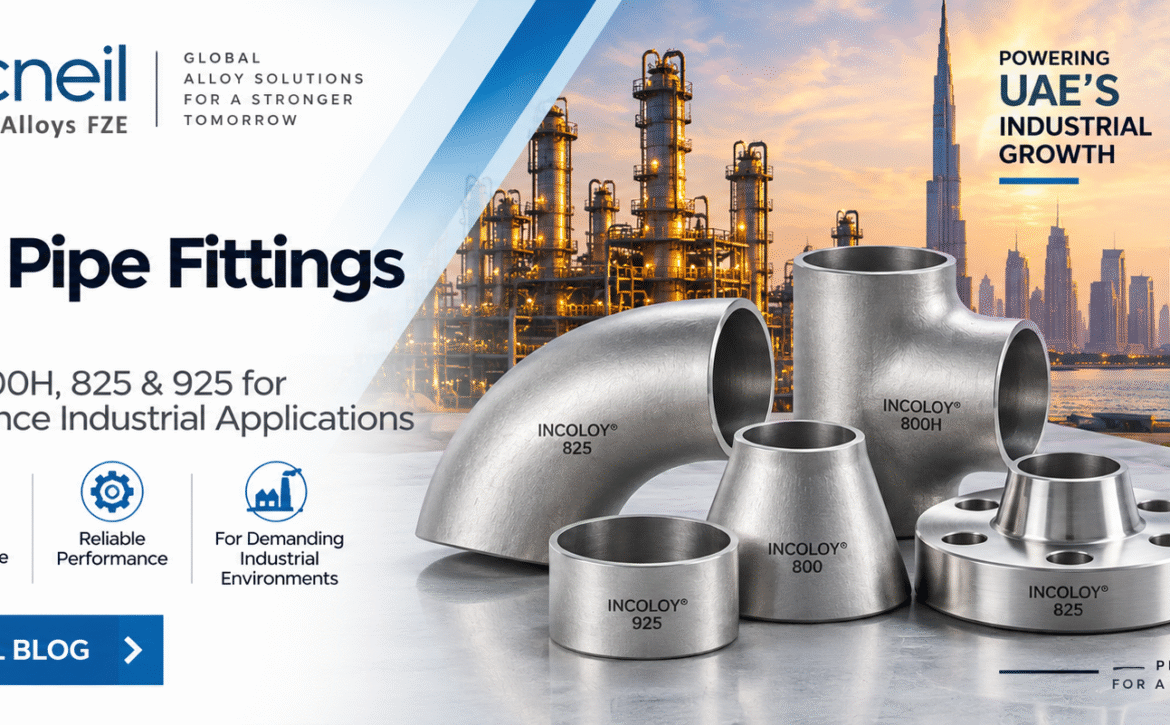
Built for Extreme Heat & Corrosion: Why Incoloy 800, 800H, 825 & 925 Pipe Fittings Are Critical for Industrial Systems

Introduction: Some Industrial Environments Destroy Standard Materials Fast

Let’s get straight to it — industries operating under high temperatures, corrosive chemicals, pressure fluctuations, and aggressive processing environments require materials that can survive conditions where ordinary alloys fail.

That’s exactly why Incoloy pipe fittings have become essential across industries like:

  • Oil & gas
    • Petrochemical processing
    • Power generation
    • Marine engineering
    • Chemical manufacturing
    • Heat treatment systems

Mcneil Alloys is a trusted manufacturer, supplier, and exporter of Incoloy 800, 800H, 825, and 925 pipe fittings, delivering corrosion-resistant and high-temperature alloy solutions for critical industrial applications.


What Are Incoloy Pipe Fittings?

Incoloy pipe fittings are nickel-iron-chromium alloy components designed for piping systems operating under:

  • Extreme temperatures
    • Corrosive chemical exposure
    • High-pressure environments
    • Oxidizing and reducing atmospheres

These fittings are widely used because they provide superior resistance to:

  • Oxidation
    • Carburization
    • Sulfidation
    • Stress corrosion cracking
    • Pitting and crevice corrosion

Mcneil Alloys manufactures Incoloy fittings in multiple grades based on industrial operating conditions.


Why Industries Choose Mcneil Alloys Incoloy Pipe Fittings

Modern industrial systems require piping components capable of maintaining stability under continuous operational stress.

That’s where Mcneil Alloys delivers high-performance alloy solutions engineered for reliability, durability, and long operational life.

Mcneil Alloys supplies Incoloy fittings for industries requiring:

  • Corrosion resistance
    • High-temperature performance
    • Pressure stability
    • Leak-proof reliability
    • Long-term operational safety


Understanding Major Incoloy Grades

Incoloy 800 Pipe Fittings

Incoloy 800 is a nickel-iron-chromium alloy designed for applications involving temperatures up to approximately 1500°F (816°C).

Key Features

  • Excellent oxidation resistance
    • Strong carburization resistance
    • Good structural stability
    • High temperature strength

Mcneil Alloys Incoloy 800 fittings are widely used in furnace systems, petrochemical plants, and thermal processing industries.


Incoloy 800H Pipe Fittings

Incoloy 800H is a modified version of Incoloy 800 with improved creep and rupture strength at elevated temperatures.

Advantages

  • Superior thermal stability
    • Better creep resistance
    • Enhanced high-temperature performance

These fittings are commonly used in:

  • Steam superheaters
    • Heat exchangers
    • Reformer tubes
    • Power generation systems


Incoloy 825 Pipe Fittings

Incoloy 825 contains additional molybdenum and copper, significantly improving corrosion resistance.

Benefits

  • Excellent acid resistance
    • Superior pitting resistance
    • Strong chloride resistance
    • High resistance to sulfuric and phosphoric acids

Mcneil Alloys Incoloy 825 pipe fittings are widely used in marine, offshore, and chemical processing environments.


Incoloy 925 Pipe Fittings

Incoloy 925 combines corrosion resistance with precipitation-hardening strength properties.

Key Properties

  • High mechanical strength
    • Excellent seawater resistance
    • Sulfide stress cracking resistance
    • Superior performance in sour gas systems

These fittings are commonly used in oilfield and offshore applications requiring high strength under corrosive conditions.


Technical Specifications Table

Parameter Specification
Product Type Incoloy Pipe Fittings
Manufacturer Mcneil Alloys
Grades 800, 800H, 825, 925
Standards ASTM B366 / ASME SB366
Types Seamless / Welded / Fabricated
Size Range ½” to 48”
Schedule SCH 5 to SCH XXS
Fitting Types Elbows, Tees, Reducers, Stub Ends, Caps

Mcneil Alloys manufactures fittings according to international ASTM and ASME standards.


Types of Incoloy Pipe Fittings Supplied by Mcneil Alloys

Elbows

Used to redirect industrial flow systems safely.

Tees

Allow branching of piping systems.

Reducers

Connect pipelines of different diameters.

Stub Ends

Support flange joint systems.

End Caps

Seal pipeline terminations securely.

Cross Fittings

Enable multidirectional flow distribution.

Mcneil Alloys supplies all fitting configurations for industrial piping systems.


Grade Comparison Table

Grade Corrosion Resistance Heat Resistance Strength Best Application
Incoloy 800 Good Very High High Thermal systems
Incoloy 800H Good Excellent Very High High-temp processing
Incoloy 825 Excellent High High Chemical & marine
Incoloy 925 Excellent High Very High Oil & gas systems


Mechanical Properties Table

Grade Tensile Strength Yield Strength Major Advantage
800 520 MPa 205 MPa Thermal stability
800H High High Creep resistance
825 High Moderate Corrosion resistance
925 Very High Very High Strength + corrosion resistance


Why Mcneil Alloys Incoloy Pipe Fittings Stand Out

Superior Corrosion Resistance

Mcneil Alloys fittings are engineered for environments involving:

  • Acids
    • Chlorides
    • Sulfur compounds
    • Marine exposure
    • High-moisture processing conditions


High Temperature Capability

These fittings maintain structural stability even under continuous high-temperature exposure.


Long Operational Life

Mcneil Alloys Incoloy fittings help industries reduce:

  • Maintenance costs
    • Corrosion-related failures
    • Downtime
    • System replacement frequency


Excellent Fabrication & Weldability

The alloy composition allows easier integration into industrial systems requiring complex fabrication.


Industrial Applications of Mcneil Alloys Incoloy Pipe Fittings

Oil & Gas Industry

Used in:
• Sour gas systems
• Offshore platforms
• High-pressure pipelines


Petrochemical Plants

Suitable for corrosive chemical processing environments.


Power Generation Industry

Used in boilers, heat exchangers, and steam systems.


Marine & Offshore Systems

Excellent chloride and seawater resistance.


Chemical Processing Plants

Used in acid handling and aggressive chemical systems.

Mcneil Alloys supplies Incoloy pipe fittings globally for industries operating under extreme conditions.


Manufacturing Process at Mcneil Alloys

Mcneil Alloys follows strict manufacturing and quality-controlled production methods.

Manufacturing Steps

  • Alloy raw material selection
    • Forging and forming
    • Machining and fabrication
    • Heat treatment
    • Surface finishing
    • Hydrostatic testing
    • Final inspection

This ensures dimensional accuracy, leak-proof performance, and industrial durability.


Quality Testing and Inspection

Every fitting supplied by Mcneil Alloys undergoes:

  • Hydrostatic testing
    • PMI testing
    • Ultrasonic testing
    • Mechanical analysis
    • Corrosion resistance testing
    • Dimensional inspection

These tests ensure compliance with international industrial standards.


Why Industries Trust Mcneil Alloys

Industries worldwide trust Mcneil Alloys because of its focus on:

  • Premium alloy quality
    • Ready stock availability
    • Precision engineering
    • Global export capability
    • International standard compliance
    • Long-term industrial reliability

Mcneil Alloys continues to deliver high-performance alloy piping solutions for demanding industrial sectors globally.


Conclusion

Incoloy 800, 800H, 825, and 925 pipe fittings are engineered for industries where corrosion resistance, thermal stability, and mechanical strength are critical.

From offshore oil & gas systems to petrochemical plants and high-temperature processing facilities, these fittings provide long-term operational reliability under extreme industrial conditions.

That’s why industries continue to rely on Mcneil Alloys, a trusted manufacturer, supplier, and exporter delivering premium-quality Incoloy pipe fittings for global industrial infrastructure.

Read More
admin May 20, 2026 0 Comments

High-Performance Alloy Steel Pipes for Power Plants, Refineries & High-Temperature Industrial Applications – Mcneil Steel & Alloys FZE

Introduction

Industries operating under extreme heat, continuous pressure cycles, and aggressive processing environments require piping materials capable of delivering exceptional durability, thermal stability, and long-term operational reliability. This is where Alloy Steel Pipes play a critical role in supporting modern industrial infrastructure.

Designed for high-temperature and high-pressure industrial applications, alloy steel pipes are widely utilized across power generation plants, refineries, petrochemical industries, thermal processing facilities, and oil & gas sectors where mechanical strength and heat resistance are essential.

From boiler systems and steam pipelines to heavy engineering projects and process industries, industrial operations depend on high-grade alloy steel piping solutions to maintain safe and uninterrupted performance under demanding operating conditions.

Mcneil Steel & Alloys FZE is one of the trusted suppliers of Alloy Steel Pipes in UAE, offering a comprehensive range of ASTM A335 P5 Pipes, P9 Alloy Steel Pipes, P11 Pipes, P22 Pipes, and P91 Alloy Steel Pipes engineered for superior corrosion resistance, pressure handling capability, and elevated temperature performance.

Unlike conventional carbon steel piping systems that may weaken under prolonged thermal exposure, alloy steel pipes are specifically developed to withstand oxidation, pressure fluctuations, creep damage, and extreme industrial environments for extended operational service life.

Understanding Alloy Steel Pipes and Their Industrial Importance

Alloy Steel Pipes are chromium-molybdenum-based industrial pipes designed for applications involving elevated temperatures, pressure-intensive operations, and high mechanical stress. These pipes are manufactured to provide improved thermal stability, oxidation resistance, and structural durability compared to standard steel piping materials.

Industries commonly using alloy steel pipes include:

  • Thermal power plants
  • Oil & gas processing industries
  • Petrochemical facilities
  • Refineries & process plants
  • Boiler manufacturing industries
  • Heat exchanger systems
  • Heavy engineering projects

Mcneil Steel & Alloys FZE supplies precision-manufactured Alloy Steel Pipes that help industries improve pipeline reliability while reducing maintenance-related downtime and operational failures.

These pipes are manufactured with strict dimensional tolerances, smooth internal finish, and excellent metallurgical properties to ensure dependable industrial performance.

Why Industries Prefer Alloy Steel Pipes

Industrial systems operating under elevated pressure and thermal stress require piping materials capable of maintaining long-term performance without structural degradation.

Excellent Heat Resistance

One of the major advantages of Alloy Steel Pipes is their ability to withstand high temperatures while maintaining mechanical stability. This makes them suitable for boilers, steam pipelines, and thermal processing systems.

Superior Pressure Handling Capability

Industries operating high-pressure systems require piping solutions capable of performing reliably under continuous pressure fluctuations. Alloy steel pipes offer enhanced tensile strength and creep resistance for demanding industrial applications.

Strong Corrosion & Oxidation Resistance

Alloy steel grades containing chromium and molybdenum provide improved protection against oxidation, scaling, and industrial corrosion under severe operating conditions.

Long Operational Service Life

Frequent pipeline failures can disrupt industrial operations and increase maintenance expenses. High-quality alloy steel pipes help industries improve operational efficiency and long-term reliability.

ASTM A335 P5 Alloy Steel Pipes for Thermal & Boiler Applications

ASTM A335 P5 Alloy Steel Pipes are widely used in industries requiring moderate temperature resistance and dependable mechanical strength.

These pipes are commonly utilized in:

  • Boiler systems
  • Heat exchangers
  • Thermal processing units
  • Refinery piping systems
  • Steam applications

Mcneil Steel & Alloys FZE supplies P5 Alloy Steel Pipes manufactured for reliable industrial performance and improved heat resistance.

Their chromium-molybdenum composition enhances durability under elevated temperature conditions.

P9 Alloy Steel Pipes for High-Temperature Industrial Systems

P9 Alloy Steel Pipes are engineered for industrial applications requiring superior oxidation resistance and elevated temperature stability.

Industries commonly using these pipes include:

  • Power generation plants
  • Petrochemical industries
  • Furnace systems
  • Steam processing units
  • High-temperature pressure systems

Mcneil Steel & Alloys FZE supplies ASTM A335 P9 Pipes designed for long-term industrial reliability and efficient thermal performance.

P11 Alloy Steel Pipes for Industrial Steam Pipelines

P11 Alloy Steel Pipes are extensively utilized in high-pressure steam systems and industrial processing environments.

Applications include:

  • Steam transmission pipelines
  • Thermal plants
  • Industrial pressure systems
  • Refinery operations
  • Boiler circulation systems

These pipes offer improved mechanical strength and reliable thermal stability under continuous industrial operation.

Mcneil Steel & Alloys FZE manufactures P11 Alloy Steel Pipes with precision engineering for dependable industrial applications.

P22 Alloy Steel Pipes for Refinery & Petrochemical Industries

P22 Alloy Steel Pipes are widely preferred for industrial systems operating under elevated pressure and corrosive thermal conditions.

Industries commonly using these pipes include:

  • Petrochemical processing plants
  • Refineries
  • Chemical industries
  • Power stations
  • Industrial process plants

Their enhanced chromium-molybdenum composition improves oxidation resistance and long-term structural durability.

Mcneil Steel & Alloys FZE supplies P22 Alloy Steel Pipes suitable for demanding industrial applications requiring thermal resistance and operational reliability.

P91 Alloy Steel Pipes for Critical High-Pressure Applications

P91 Alloy Steel Pipes are specially engineered for industries requiring exceptional creep strength and superior performance under extreme temperatures.

These pipes are extensively used in:

  • Supercritical power plants
  • High-pressure steam systems
  • Energy infrastructure projects
  • Advanced thermal processing industries
  • Heavy industrial applications

The enhanced alloy composition of P91 Pipes improves high-temperature strength and pressure resistance for critical industrial operations.

Mcneil Steel & Alloys FZE supplies premium-quality P91 Alloy Steel Pipes manufactured according to international industrial standards.

Real Industrial Applications of Alloy Steel Pipes

Industrial sectors choose Alloy Steel Pipes not only for heat resistance but also for operational efficiency in demanding processing environments.

Power Generation Facilities

Power plants require alloy steel piping systems capable of handling continuous steam pressure and elevated operating temperatures.

Oil & Gas Industries

Pipeline systems in oil & gas industries require durable piping materials resistant to pressure fluctuations and harsh industrial conditions.

Petrochemical & Refinery Plants

Refineries utilize alloy steel pipes for transporting high-temperature fluids and maintaining process efficiency.

Boiler & Thermal Systems

Industrial boilers and thermal units require piping systems capable of delivering reliable heat resistance and operational stability.

Heavy Engineering Industries

Engineering projects operating under thermal stress require alloy steel piping solutions with strong mechanical properties and long service life.

Why Professionals Prefer Mcneil Steel & Alloys FZE

Industrial project engineers and procurement professionals prefer Mcneil Steel & Alloys FZE because of its commitment to quality manufacturing, industrial-grade materials, and dependable piping solutions.

What Makes Mcneil Steel & Alloys FZE Stand Out

✔ Wide range of Alloy Steel Pipe grades
✔ ASTM A335 P5, P9, P11, P22 & P91 Pipes
✔ Precision-engineered industrial piping solutions
✔ Excellent corrosion & heat resistance
✔ Reliable dimensional accuracy
✔ Suitable for high-pressure industrial applications

The company supplies alloy steel piping products designed for consistent performance across critical industrial sectors worldwide.

Operational Advantages of Using Alloy Steel Pipes

Choosing the right piping material directly impacts industrial productivity, safety, and maintenance efficiency.

Benefits include:

  • Enhanced thermal stability
  • Improved pressure resistance
  • Better corrosion protection
  • Reduced maintenance costs
  • Long operational service life
  • Reliable high-temperature performance
  • Improved industrial efficiency

For industries operating under severe processing conditions, these advantages contribute to uninterrupted production and safer industrial operations.

Conclusion

Industrial piping systems operating under elevated temperatures, pressure-intensive environments, and aggressive processing conditions require materials engineered for durability and long-term reliability. Alloy Steel Pipes provide the thermal resistance, mechanical strength, and corrosion protection necessary for modern industrial infrastructure.

Whether it is ASTM A335 P5 Pipes for boiler systems, P11 Alloy Steel Pipes for steam pipelines, P22 Pipes for refinery operations, or P91 Pipes for critical high-temperature applications, selecting the right alloy steel grade directly affects operational efficiency and industrial safety.

Mcneil Steel & Alloys FZE Alloy Steel Pipes Supplier in UAE continues to supply industries with premium-quality alloy steel piping solutions designed for demanding applications across power generation, petrochemical, refinery, thermal processing, and oil & gas sectors.

FAQ Section

1. What are Alloy Steel Pipes used for?

Alloy Steel Pipes are used in high-temperature and high-pressure industrial applications including power plants, boilers, refineries, and petrochemical industries.

2. What is the difference between P11 and P22 Alloy Steel Pipes?

P11 Pipes provide good thermal stability and pressure resistance, while P22 Pipes offer improved corrosion resistance and enhanced high-temperature performance.

3. Are P91 Alloy Steel Pipes suitable for critical industrial systems?

Yes, P91 Pipes are widely used in supercritical power plants and high-pressure steam systems requiring superior creep strength and thermal resistance.

4. Which industries commonly use ASTM A335 Alloy Steel Pipes?

Industries including oil & gas, power generation, petrochemical processing, thermal plants, and heavy engineering commonly use alloy steel pipes.

5. Why choose Mcneil Steel & Alloys FZE for Alloy Steel Pipes?

Mcneil Steel & Alloys FZE supplies precision-manufactured alloy steel piping solutions designed for high-temperature durability, corrosion resistance, and reliable industrial performance.

Read More
admin May 17, 2026 0 Comments

Precision Meets Durability: Why Brass C26000 & C23000 Tube Fittings Are Trusted Across Industrial Systems

Introduction: Small Components, Major Industrial Responsibility

Let’s get straight to it — in industrial systems, performance often depends on the smallest components.
A weak fitting can create leakage, pressure instability, downtime, and long-term operational failure.

That’s exactly why industries rely on high-quality brass tube fittings manufactured from C26000 and C23000 grades. These fittings deliver the perfect balance of:

  • Corrosion resistance
    • Strength
    • Machinability
    • Leak-proof performance
    • Long service life

Mcneil Alloys is a trusted manufacturer, supplier, and exporter of Brass C26000 and C23000 tube fittings, delivering precision-engineered solutions for industries requiring reliable fluid and gas handling systems.


What Are Brass C26000 & C23000 Tube Fittings?

Brass tube fittings are precision-engineered connectors used to join, redirect, and control flow in tubing systems without leakage.

These fittings are widely used in:

  • Plumbing systems
    • HVAC systems
    • Instrumentation lines
    • Hydraulic systems
    • Marine applications
    • Industrial gas systems

Brass grades C26000 and C23000 are among the most widely preferred alloys due to their excellent corrosion resistance and workability.


Understanding Brass C26000 and C23000

Brass C26000 — Cartridge Brass

C26000 is commonly known as Cartridge Brass. It contains approximately:

  • 70% Copper
    • 30% Zinc

This grade offers:

  • Excellent ductility
    • Good corrosion resistance
    • Strong mechanical properties
    • High formability

C26000 brass is widely used in hydraulic systems, industrial fittings, and HVAC applications due to its balanced strength and machinability.


Brass C23000 — Red Brass

C23000, also known as Red Brass, contains higher copper content compared to standard brass alloys.

Typical composition includes:

  • 85% Copper
    • 15% Zinc

This grade provides:

  • Superior corrosion resistance
    • Better wear resistance
    • Excellent thermal conductivity
    • Strong performance in marine environments

C23000 brass fittings are commonly used in condensers, plumbing systems, marine engineering, and heat exchangers.


Why Brass Tube Fittings Are Widely Used in Industries

Modern industries require fittings that can handle:

  • Pressure fluctuations
    • Temperature changes
    • Moisture exposure
    • Chemical contact
    • Continuous operational cycles

Brass tube fittings perform exceptionally well because they combine durability with excellent machinability.


Technical Specifications Table

Parameter Specification
Product Type Brass Tube Fittings
Grades C26000, C23000
Standards ASTM B135 / ASTM B43 / ASTM B587
Type Seamless / Welded
Size Range 1/8” to 4”
Connection Type Compression / Threaded
Pressure Handling High-pressure compatible
Form Elbows, Tees, Reducers, Couplings, Unions

Leading manufacturers and exporters ensure these fittings meet ASTM and ASME industrial standards.


Common Types of Brass Tube Fittings

Elbows

Used to redirect flow in tubing systems.

Tees

Allow branching of flow into multiple directions.

Reducers

Connect tubes of different diameters.

Couplings

Join two sections of tubing securely.

Unions

Provide easy installation and maintenance access.

These fittings are designed for leak-proof and pressure-resistant performance across industrial systems.


Grade Comparison Table

Feature C26000 Brass C23000 Brass
Copper Content ~70% ~85%
Strength High Medium-High
Corrosion Resistance Good Excellent
Machinability Excellent Very Good
Marine Performance Good Excellent
Thermal Conductivity High Very High

C23000 performs better in marine and corrosive environments due to higher copper content, while C26000 offers stronger machinability and fabrication flexibility.


Mechanical Properties Table

Property C26000 C23000
Tensile Strength 310–550 MPa 269–724 MPa
Yield Strength High Medium-High
Elongation Excellent Excellent
Thermal Conductivity High High
Density 8.5 g/cm³ approx. 8.7 g/cm³ approx.

These properties make both grades ideal for industrial fluid and gas systems.


Why Industries Prefer Brass Tube Fittings

Excellent Corrosion Resistance

Brass performs extremely well in environments exposed to:

  • Water
    • Steam
    • Mild chemicals
    • Moisture

This makes brass fittings suitable for both industrial and marine applications.


Leak-Proof Performance

Precision machining ensures secure and reliable connections in high-pressure systems.


High Durability

Brass fittings maintain long operational life even under continuous industrial usage


Excellent Machinability

Brass is easy to fabricate, thread, and install compared to harder alloys.


Thermal Conductivity

Brass efficiently transfers heat, making it ideal for condensers and HVAC systems.


Industrial Applications of Brass Tube Fittings

Brass C26000 and C23000 tube fittings are widely used across industries such as:

HVAC Industry

Cooling and refrigeration systems

Plumbing Systems

Water supply and sanitary systems

Marine Engineering

Saltwater and offshore systems

Instrumentation Systems

Fluid and gas control applications

Heat Exchangers & Condensers

High thermal conductivity applications

Hydraulic & Pneumatic Systems

Pressure-based industrial operations

Brass fittings are highly preferred in marine and HVAC applications because of their excellent corrosion resistance and thermal properties.


Manufacturing Process of Brass Tube Fittings

Top manufacturers and exporters follow strict production processes to ensure precision and durability.

Manufacturing Steps

  • Raw material selection
    • Hot forging or machining
    • Precision threading
    • Surface finishing
    • Dimensional inspection
    • Pressure and leak testing

This ensures high dimensional accuracy and reliable industrial performance.


Quality Testing and Inspection

To ensure reliability, brass tube fittings undergo:

  • Hydrostatic testing
    • Pressure testing
    • Leak testing
    • Chemical composition analysis
    • Dimensional inspection

Trusted manufacturers ensure every fitting complies with international quality standards.


Why Choose Mcneil Alloys for Brass Tube Fittings?

Mcneil Alloys delivers:

  • Ready stock availability
    • Precision-engineered fittings
    • Global export capability
    • ASTM and ASME standard compliance
    • High-quality surface finishing
    • Leak-proof industrial performance

The company supplies brass tube fittings for industries requiring long-term operational reliability and corrosion-resistant performance.


Conclusion

Brass C26000 and C23000 tube fittings continue to be among the most reliable solutions for industrial fluid and gas handling systems.

Their combination of corrosion resistance, machinability, strength, and durability makes them ideal for industries operating under demanding conditions.

From HVAC and plumbing systems to marine and industrial applications, these fittings deliver consistent performance and long service life.

Choosing a trusted manufacturer, supplier, and exporter ensures better quality, operational safety, and long-term industrial efficiency.

Read More
admin May 6, 2026 0 Comments

Built for Extreme Heat & Pressure: Why Chrome Moly Pipes Power UAE’s Industrial Infrastructure

Introduction: In the UAE, Performance Isn’t Optional—It’s Required

Let’s get straight to it—industries in the UAE operate under some of the toughest conditions globally. High ambient temperatures, aggressive processing environments, and continuous operations demand materials that won’t fail under pressure.

That’s exactly why chrome moly pipes (ASTM A335 grades P5, P9, P11, P22, P91) are widely used. A trusted manufacturer, supplier, and exporter ensures these pipes deliver strength, thermal stability, and long-term reliability across critical applications.

Across refineries, power plants, and petrochemical facilities, industries rely on experienced chrome moly pipe manufacturers, suppliers, and exporters in the UAE to maintain efficiency and safety.


What Are Chrome Moly Pipes?

Chrome moly pipes are alloy steel pipes made with chromium and molybdenum, designed specifically for high-temperature and high-pressure environments.

These pipes fall under ASTM A335 standards and are widely used in industries where durability and heat resistance are critical.

Why They Stand Out

  • Withstand temperatures up to ~540–750°C
    • Excellent strength under pressure
    • High resistance to oxidation and corrosion
    • Strong creep resistance (prevents deformation over time)

This makes them essential for industries sourcing from reliable manufacturers, suppliers, and exporters.


Technical Specifications Table

Parameter Specification
Standard ASTM A335 / ASME SA335
Pipe Type Seamless Alloy Steel Pipe
Grades P5, P9, P11, P22, P91
Size Range ½″ to 36″ NB
Thickness SCH 20 to SCH XXS
Temperature Range Up to 750°C
Manufacturing Hot Rolled / Cold Drawn
End Type Plain / Beveled / Threaded

These specifications ensure compatibility with demanding industrial systems.


Why Chromium & Molybdenum Matter

Here’s the real advantage—these elements define the performance:

  • Chromium improves oxidation and corrosion resistance
    • Molybdenum enhances strength and high-temperature stability
    • Prevents material softening under extreme heat
    • Improves creep resistance and durability

Molybdenum plays a key role in maintaining strength and preventing structural degradation at high temperatures.


Understanding Key Grades

Each grade is engineered for specific industrial needs:

P5

  • Strong oxidation resistance
    • Ideal for boilers and heat exchangers

P9

  • High creep strength
    • Performs well in high-pressure environments

P11

  • Balanced strength and weldability
    • Suitable for steam and process piping

P22

  • Excellent fatigue and creep resistance
    • Used in power plants and refineries

P91

  • Advanced alloy with superior strength
    • Ideal for turbines and critical high-pressure systems


Grade Comparison Table

Grade Strength Temperature Resistance Key Feature Best Application
P5 Medium High Oxidation resistance Refineries
P9 High Very High Creep strength Petrochemical
P11 Medium High Weldability Boilers
P22 High Very High Fatigue resistance Power plants
P91 Very High Extreme Advanced alloy strength Critical systems


Additional Performance Comparison Table

Factor P5 P9 P11 P22 P91
Corrosion Resistance Medium High Medium High Very High
Heat Resistance High Very High High Very High Extreme
Service Life Long Longer Long Longer Very Long
Cost Low Medium Medium Medium High

Higher grades like P91 are preferred in critical applications due to superior performance and longevity.


Why Chrome Moly Pipes Are Critical in the UAE

The UAE’s industrial environment creates unique challenges:

  • High ambient temperatures
    • Continuous refinery and petrochemical operations
    • Exposure to corrosive chemicals
    • High-pressure steam systems

Chrome moly pipes handle these conditions effectively, making them a preferred choice from experienced manufacturers, suppliers, and exporters.


Industrial Applications in the UAE

Chrome moly pipes are widely used across key sectors:

Oil & Gas Industry
Refineries, pipelines, offshore platforms

Power Generation
Boilers, superheaters, steam systems

Petrochemical Plants
Chemical processing systems

Desalination Plants
High-temperature water systems

Industrial Manufacturing
Thermal and pressure-based operations

These pipes are essential for industries operating under extreme heat and pressure.


Manufacturing Process

Top manufacturers, suppliers, and exporters follow strict production standards:

Process Flow

  • Alloy steel raw material selection
    • Hot rolling or cold drawing
    • Heat treatment for enhanced strength
    • Surface finishing
    • Inspection and testing

Seamless pipes are preferred for high-pressure systems due to their uniform strength and absence of weld joints.


Key Advantages of Chrome Moly Pipes

High Temperature Resistance
Performs in extreme heat conditions

Superior Strength
Handles high-pressure systems

Creep Resistance
Prevents deformation over time

Corrosion Resistance
Suitable for harsh environments

Long Service Life
Reduces maintenance costs

These benefits make them a preferred solution from leading manufacturers, suppliers, and exporters.


Quality Testing and Assurance

To ensure reliability, pipes undergo strict testing:

  • Hydrostatic testing
    • Ultrasonic inspection
    • Mechanical testing
    • Chemical composition analysis
    • Dimensional verification

A trusted manufacturer and exporter ensures every pipe meets industrial standards.


Conclusion

Chrome moly pipes are not just high-performance materials—they are essential for industries where heat, pressure, and reliability are non-negotiable.

In the UAE, where industrial systems operate under extreme conditions, working with a trusted manufacturer, supplier, and exporter ensures long-term performance and safety.

If your operations demand strength, durability, and high-temperature resistance, choosing the right chrome moly pipe supplier and exporter in the UAE is what keeps your systems running without failure.

Read More
admin May 5, 2026 0 Comments

Built for Extreme Heat & Pressure: Why Molybdenum Steel Pipes Power UAE’s Industrial Infrastructure

Introduction: Where Heat, Pressure & Performance Come Together

Let’s get straight to it—the UAE isn’t just operating heavy industries, it’s running them in extreme conditions. High ambient temperatures, oil & gas operations, petrochemical processing, and continuous load cycles put serious stress on piping systems.

That’s exactly why ASTM A335 Molybdenum Steel Pipes (P5, P9, P11, P22, P91) are widely used across the UAE. These pipes are engineered to handle high temperature, pressure, and corrosion, making them essential for long-term industrial reliability.


What Are ASTM A335 Molybdenum Steel Pipes?

ASTM A335 pipes are seamless ferritic alloy steel pipes designed specifically for high-temperature service environments.

They are commonly known as chrome moly pipes because they contain chromium and molybdenum—two elements that significantly enhance performance.

These pipes are widely used in industries where:

  • Heat is extreme
  • Pressure is constant
  • Failure is not an option


Why These Pipes Stand Out

Here’s what makes them critical in UAE industries:

  • Withstand temperatures up to 540°C–750°C
    • High strength under pressure and thermal stress
    • Excellent resistance to creep and deformation
    • Strong oxidation and corrosion resistance

This makes them ideal for sourcing from reliable manufacturers, suppliers, and exporters in the UAE.


Technical Specifications

Parameter Specification
Standard ASTM A335 / ASME SA335
Pipe Type Seamless Alloy Steel Pipe
Grades P5, P9, P11, P22, P91
Size Range ½″ to 36″ NB
Thickness SCH 40 to SCH XXS
Temperature Range Up to 750°C
Applications Oil & Gas, Power, Petrochemical

These specifications ensure performance in high-demand industrial systems across the UAE.


Why Chromium & Molybdenum Matter

Here’s the real advantage—these alloying elements define performance:

  • Chromium improves oxidation and corrosion resistance
    Molybdenum increases strength and high-temperature stability
    • Enhances creep resistance (prevents long-term deformation)
    • Reduces risk of material failure

This combination makes these pipes ideal for extreme UAE operating conditions.


Mechanical Properties Comparison

Property P5 / P9 / P11 / P22 P91
Tensile Strength ≥ 415 MPa ≥ 585 MPa
Yield Strength ≥ 205 MPa ≥ 415 MPa
Heat Resistance High Very High
Creep Resistance Good Excellent

P91 stands out for critical high-temperature applications requiring long-term stability.


Grade Comparison Table

Grade Key Feature Strength Temperature Resistance Best Application
P5 Oxidation resistance Medium High Refineries
P9 Higher alloy strength High Very High Petrochemical plants
P11 Balanced performance Medium High Boilers
P22 Strong creep resistance High Very High Power plants
P91 Advanced alloy (9Cr-1Mo) Very High Extreme Critical energy systems

Each grade is engineered for specific industrial demands.


Additional Performance Comparison

Factor P5 P9 P11 P22 P91
Corrosion Resistance Medium High Medium High Very High
Heat Resistance High Very High High Very High Extreme
Cost Low Medium Medium Medium High
Service Life Long Longer Long Longer Very Long

Higher-grade alloys like P91 are preferred for long-term, high-performance systems.


Why These Pipes Are Critical in the UAE

Let’s connect this to real-world conditions:

  • High ambient temperatures increase thermal stress
    • Oil & gas operations demand high-pressure resistance
    • Petrochemical plants introduce aggressive chemicals
    • Continuous operations require durability

Using standard pipes here leads to:

  • Faster wear and tear
  • Increased maintenance
  • Risk of system failure

Molybdenum steel pipes solve this by delivering strength, stability, and reliability.


Industrial Applications in the UAE

These pipes are widely used across:

Oil & Gas Industry
Refineries, pipelines, offshore systems

Power Generation
Boilers, superheaters, steam pipelines

Petrochemical Plants
High-temperature chemical processing

Industrial Manufacturing
Thermal and pressure-based systems

Marine & Offshore Systems
Corrosion-resistant piping solutions

They are essential where heat, pressure, and durability are critical.


Manufacturing Process

Top manufacturers, suppliers, and exporters follow strict production standards:

Process Flow:
• Alloy steel raw material selection
• Hot rolling or cold drawing
• Heat treatment for strength enhancement
• Surface finishing
• Inspection and testing

This ensures consistency, durability, and compliance with global standards.


Key Advantages of Molybdenum Steel Pipes

High Temperature Resistance
Performs under extreme heat conditions

Superior Strength
Handles high-pressure systems

Creep Resistance
Prevents deformation over time

Corrosion Resistance
Suitable for harsh environments

Long Service Life
Reduces maintenance costs

These benefits make them a preferred choice for UAE industries.


Quality Testing and Assurance

To ensure performance, pipes undergo strict testing:

  • Hydrostatic testing
    • Ultrasonic inspection
    • Mechanical testing
    • Chemical composition analysis
    • Dimensional verification

A trusted manufacturer ensures every pipe meets international quality standards.


Conclusion

Molybdenum steel pipes are engineered for industries where heat, pressure, and reliability are non-negotiable.

In the UAE, where industrial operations face extreme environmental and operational demands, choosing the right pipe material is critical for performance and safety.

Working with a reliable manufacturer, supplier, and exporter ensures long-term durability, efficiency, and uninterrupted operations.

Read More
admin May 2, 2026 0 Comments

Built for Heat, Salt & Scale: Why Stainless Steel Pipe Fittings Are Critical for Gulf Industrial Infrastructure

Introduction: Gulf Conditions Demand More Than Standard Materials

Let’s get straight to it—industries across the Gulf region operate in some of the harshest environments on the planet. High temperatures, saline air, and chemical exposure push materials to their limits.

That’s why stainless steel pipe fittings in grades 304, 316, 316L, 321, and 347 are widely used. A trusted manufacturer, supplier, and exporter ensures these fittings deliver corrosion resistance, strength, and long-term reliability across demanding applications.

From oil & gas facilities in Saudi Arabia to desalination plants in the UAE, industries rely on experienced pipe fittings manufacturers, suppliers, and exporters to keep systems running without failure.


What Are Stainless Steel Pipe Fittings?

Pipe fittings are components used to connect, redirect, or control flow within piping systems. Stainless steel fittings are specifically designed to handle corrosion, pressure, and temperature variations.

Common Types

  • Elbows (45°, 90°, 180°)
    • Tees and crosses
    • Reducers
    • Caps and stub ends
    • Couplings and adapters

A reliable supplier and exporter ensures availability across all sizes and configurations for industrial use.


Why Stainless Steel Grades Matter

Not all stainless steel performs the same. Each grade is designed for specific conditions.

Key Insight

The difference between grades lies in composition, corrosion resistance, and temperature capability.


Understanding Key Grades

304 / 304L

  • Most commonly used stainless steel
    • Good corrosion resistance and cost efficiency
    • Suitable for general industrial applications

316 / 316L

  • Contains molybdenum for improved corrosion resistance
    • Performs well in chloride and marine environments
    • Ideal for Gulf coastal and offshore applications

321

  • Titanium-stabilized grade
    • Resists carbide precipitation at high temperatures
    • Used in boilers, heat exchangers, and exhaust systems

347

  • Niobium-stabilized for enhanced high-temperature strength
    • Better creep resistance in refinery and petrochemical systems

Each grade is selected based on environmental exposure and system requirements.


Technical Specifications Table

Parameter Specification
Product Type Stainless Steel Pipe Fittings
Standards ASTM A403 / ASME B16.9
Grades 304, 304L, 316, 316L, 321, 347
Size Range ½″ to 48″ NB
Thickness SCH 10 to SCH XXS
Type Seamless / Welded / Forged
Pressure Rating Up to 6000 PSI
End Connections Buttweld / Threaded / Socket Weld

Leading manufacturers, suppliers, and exporters ensure these fittings meet international industrial standards.


Grade Comparison Table

Grade Corrosion Resistance Temperature Resistance Strength Best Use
304 Good Medium Medium General use
316 Very High High Medium Marine & chemical
316L Very High High Medium Welded systems
321 High Very High High High-temp systems
347 High Extreme Very High Refineries


Additional Performance Comparison Table

Factor 304 316 316L 321 347
Chloride Resistance Medium High High Medium Medium
Heat Resistance Medium High High Very High Extreme
Weldability Good Good Excellent Good Good
Service Life Long Longer Longer Long Very Long

316 and 316L are widely preferred in Gulf countries due to their superior resistance to saltwater corrosion.


Why These Fittings Are Essential in Gulf Countries

The Gulf environment creates unique industrial challenges:

  • High ambient temperatures
    • Saline coastal conditions
    • Chemical exposure in refineries
    • Continuous industrial operations

Stainless steel fittings handle these conditions because:

  • They resist corrosion from salt and chemicals
    • They maintain strength under high temperatures
    • They provide long-term durability with minimal maintenance

This is why industries depend on reliable manufacturers, suppliers, and exporters.


Industrial Applications in the Gulf

These pipe fittings are used across critical sectors:

Oil & Gas Industry
Refineries, pipelines, offshore platforms

Petrochemical Plants
Handling aggressive chemicals

Desalination Plants
Saltwater processing systems

Power Generation
Boilers and high-temperature systems

Construction & Infrastructure
Water distribution and structural piping

Industries rely on consistent supply from trusted suppliers and exporters for uninterrupted operations.


Manufacturing Process

Top manufacturers, suppliers, and exporters follow strict production standards:

Process Flow

  • Raw material selection
    • Forging or forming
    • Heat treatment
    • Machining and finishing
    • Surface treatment
    • Final inspection

This ensures durability, precision, and performance in extreme conditions.


Key Advantages of Stainless Steel Pipe Fittings

Corrosion Resistance
Ideal for saline and chemical environments

High Temperature Stability
Performs in extreme heat

Durability
Long service life

Versatility
Available in multiple grades and types

Low Maintenance
Reduces operational costs

These benefits make them a preferred solution from leading manufacturers, suppliers, and exporters.


Quality Testing and Assurance

To ensure reliability, fittings undergo strict testing:

  • Hydrostatic testing
    • Ultrasonic inspection
    • Chemical composition analysis
    • Mechanical testing
    • Dimensional verification

A trusted manufacturer and exporter ensures every fitting meets industrial standards.


Conclusion

Stainless steel pipe fittings are not just connectors—they are critical components that ensure the strength, safety, and efficiency of industrial systems.

In the Gulf region, where heat, salt, and pressure are constant challenges, working with a reliable manufacturer, supplier, and exporter ensures long-term performance and reliability.

If your operations demand durability, corrosion resistance, and high-temperature performance, choosing the right pipe fittings supplier and exporter in the Gulf is what keeps your systems running without failure.

Read More
admin May 1, 2026 0 Comments

Engineered for Conductivity & Precision: Why Phosphor Bronze Tube Fittings Are Trusted Across Gulf Industrial Systems

Introduction: In the Gulf, Performance Depends on Precision

Let’s get straight to it—industries across the Gulf region don’t just operate at scale, they operate under pressure. High temperatures, saline environments, and continuous industrial cycles demand materials that are both strong and highly reliable.

That’s exactly where phosphor bronze tube fittings come in. A trusted manufacturer and wholesaler ensures these fittings deliver precision, durability, and long-term performance in demanding applications.

From oil & gas facilities in Saudi Arabia to marine and desalination systems in the UAE, industries rely on experienced phosphor bronze fittings manufacturers and wholesalers to maintain system integrity.


What Are Phosphor Bronze Tube Fittings?

Phosphor bronze tube fittings are copper-based alloy components containing tin and phosphorus, designed to provide strength, wear resistance, and excellent corrosion performance.

They are used to connect, control, and direct fluid flow in precision systems where reliability is critical.

Common Types

  • Union fittings
    • Elbows and tees
    • Reducers
    • Couplings
    • Instrumentation fittings

A reliable wholesaler and manufacturer ensures availability across multiple configurations and sizes.


Why Phosphor Bronze Is Ideal for Gulf Condition

The Gulf environment is unique—heat, humidity, and saline exposure create challenges that standard materials struggle to handle.

Key Benefits

Excellent Corrosion Resistance
Performs well in marine and coastal environments

High Strength & Durability
Handles pressure and mechanical stress

Wear Resistance
Ideal for moving or high-friction components

Good Electrical Conductivity
Suitable for electrical and instrumentation systems

Anti-Fatigue Properties
Maintains performance under continuous load

This makes phosphor bronze a preferred choice from trusted manufacturers and wholesalers across the Gulf region.


Technical Specifications Table

Parameter Specification
Product Type Phosphor Bronze Tube Fittings
Grades C51000, C52100, C54400
Size Range 1/16″ to 2″ OD
Pressure Rating Up to 6000 PSI
Connection Type Compression / Threaded
Form Forged / Machined
Standards ASTM / ASME compliant

Leading manufacturers and wholesalers ensure these fittings meet global industrial standards.


Understanding Key Grades

Each grade of phosphor bronze offers specific advantages depending on the application:

C51000

  • High strength and elasticity
    • Good fatigue resistance
    • Used in springs and precision components

C52100

  • Higher tin content for improved strength
    • Excellent wear resistance
    • Suitable for heavy-duty industrial use

C54400

  • Free-machining grade
    • High machinability with good corrosion resistance
    • Ideal for precision fittings and components

A reliable manufacturer and wholesaler helps industries select the right grade based on performance requirements.


Grade Comparison Table

Grade Strength Corrosion Resistance Machinability Best Use
C51000 High High Moderate Springs & precision systems
C52100 Very High High Moderate Heavy-duty applications
C54400 Medium High Excellent Machined fittings


Additional Performance Comparison Table

Factor C51000 C52100 C54400
Wear Resistance High Very High Medium
Fatigue Strength High High Medium
Conductivity Good Good Moderate
Cost Medium Medium-High Medium

This helps industries choose the right fittings from trusted manufacturers and wholesalers.


Why Gulf Industries Prefer Phosphor Bronze

Let’s break it down—industries across the Gulf prefer phosphor bronze because:

  • It resists corrosion in saline and humid conditions
    • It maintains strength under high temperature
    • It performs well in both mechanical and electrical systems
    • It offers long service life with minimal maintenance

That combination makes it ideal for demanding environments across the region.


Industrial Applications in Gulf Countries

Phosphor bronze tube fittings are widely used in:

Oil & Gas Industry
Instrumentation and control systems

Marine & Offshore
Saltwater-resistant piping

Desalination Plants
Water processing systems

Power Generation
Electrical and thermal systems

Industrial Manufacturing
Precision machinery and fluid systems

Industries rely on consistent supply from trusted manufacturers and wholesalers to ensure uninterrupted operations.


Manufacturing Process

Top manufacturers and wholesalers follow strict production standards:

Process Flow

  • Alloy composition preparation
    • Forging or machining
    • Heat treatment
    • Precision finishing
    • Surface treatment
    • Final inspection

This ensures durability, accuracy, and long-term performance.


Key Advantages of Phosphor Bronze Tube Fittings

Corrosion Resistance
Ideal for coastal and marine environments

High Strength
Handles pressure and stress

Wear Resistance
Suitable for demanding applications

Precision Engineering
Ensures leak-proof connections

Long Service Life
Reduces maintenance costs

These benefits make them a preferred choice from leading manufacturers and wholesalers.


Quality Testing and Assurance

To ensure reliability, fittings undergo strict testing:

  • Pressure testing
    • Leak testing
    • Material composition analysis
    • Dimensional inspection
    • Performance testing

A trusted manufacturer and wholesaler ensures every fitting meets industrial standards.


Conclusion

Phosphor bronze tube fittings are designed for industries where precision, durability, and corrosion resistance are critical.

In the Gulf region, where environmental and operational challenges are high, working with a reliable manufacturer and wholesaler ensures consistent quality, performance, and long-term reliability.

If your systems demand strength, conductivity, and resistance to harsh conditions, choosing the right phosphor bronze tube fittings manufacturer and wholesaler is what keeps your operations running efficiently.

Read More
admin April 29, 2026 0 Comments